Results by title

5 books match the query 'Counterterrorism'

cover of Deadly Refusals: Kurdish Decolonization in Times of Counterterrorism

Deadly Refusals

Kurdish Decolonization in Times of Counterterrorism

Serra M. Hakyemez

University of Minnesota Press, 2026

Revolutionary desire and decolonial struggle inside the heart of the carceral state

Deadly Refusals offers an intimate portrait of Kurdish decolonial struggle within the carceral and legal apparatuses of the Turkish state. Set in the counterterrorism courts and maximum-security prisons of Northern Kurdistan, Serra M. Hakyemez’s ethnography examines how prosecuted and imprisoned Kurds from different socioeconomic backgrounds organize in refusal of the criminalization and colonization of their political demands and desires. Through acts of self-criticism, revolutionary education, and comradely care, these prisoners articulate a political subjectivity that challenges the foundations of colonial power.

Based on more than seventeen years of ethnographic research—including interviews with former prisoners, lawyers, judges, and prosecutors; observations of more than one hundred court hearings; and analysis of prison memoirs, poetry, and legal archives—Deadly Refusals uncovers the mechanisms through which counterterrorism law reproduces the colonial state. Yet it is not solely a study of repression. Engaging psychoanalytic concepts of subject, desire, and ethics, Hakyemez illuminates how these carceral spaces also become sites of revolutionary responsibility. Here, refusal is not resignation but a political act in which the colonized self is killed—literally or figuratively—to make way for a larger collective subjectivity.

Using the interplay of comradeship and intimacy, political desire and ordinary pleasure, death and love, Deadly Refusals examines how Kurdish political prisoners forge multilayered relations of decolonization in an ongoing psychopolitical struggle. Hakyemez shows how both small gestures of withdrawal, restraint, and negation as well as radical acts like language protests, hunger strikes, and death protests become part of a shared struggle for alternative futures that state power cannot fully contain or comprehend.

Retail e-book files for this title are screen-reader friendly with images accompanied by short alt text and/or extended descriptions.
[more]
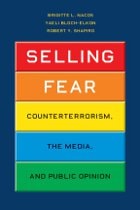
cover of Selling Fear: Counterterrorism, the Media, and Public Opinion

Selling Fear

Counterterrorism, the Media, and Public Opinion

Brigitte L. Nacos, Yaeli Bloch-Elkon, Robert Y. Shapiro

University of Chicago Press, 2011

While we’ve long known that the strategies of terrorism rely heavily on media coverage of attacks, Selling Fear is the first detailed look at the role played by media in counterterrorism—and the ways that, in the wake of 9/11, the Bush administration manipulated coverage to maintain a climate of fear.

            
Drawing on in-depth analysis of counterterrorism in the years after 9/11—including the issuance of terror alerts and the decision to invade Iraq—the authors present a compelling case that the Bush administration hyped fear, while obscuring civil liberties abuses and concrete issues of preparedness. The media, meanwhile, largely abdicated its watchdog role, choosing to amplify the administration’s message while downplaying issues that might have called the administration’s statements and strategies into question. The book extends through Hurricane Katrina, and the more skeptical coverage that followed, then the first year of the Obama administration, when an increasingly partisan political environment presented the media, and the public, with new problems of reporting and interpretation.

            
Selling Fear is a hard-hitting analysis of the intertwined failures of government and media—and their costs to our nation.
[more]
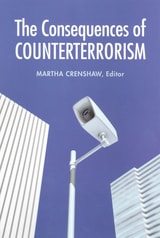
cover of The Consequences of Counterterrorism

The Consequences of Counterterrorism

Martha Crenshaw

Russell Sage Foundation, 2010
The 9/11 terrorist attacks opened America's eyes to a frightening world of enemies surrounding us. But have our eyes opened wide enough to see how our experiences compare with other nations' efforts to confront and prevent terrorism? Other democracies have long histories of confronting both international and domestic terrorism. Some have undertaken progressively more stringent counterterrorist measures in the name of national security and the safety of citizens. The Consequences of Counterterrorism examines the political costs and challenges democratic governments face in confronting terrorism. Using historical and comparative perspectives, The Consequences of Counterterrorism presents thematic analyses as well as case studies of Britain, France, Germany, Spain, Japan, and Israel. Contributor John Finn compares post-9/11 antiterrorism legislation in the United States, Europe, Canada, and India to demonstrate the effects of hastily drawn policies on civil liberties and constitutional norms. Chantal de Jonge Oudraat and Jean-Luc Marret assert that terrorist designation lists are more widespread internationally than ever before. The authors examine why governments and international organizations use such lists, how they work, and why they are ineffective tools. Gallya Lahav shows how immigration policy has become inextricably linked to security in the EU and compares the European fear of internal threats to the American fear of external ones. A chapter by Dirk Haubrich explains variation in the British government's willingness to compromise democratic principles according to different threats. In his look at Spain and Northern Ireland, Rogelio Alonso asserts that restricting the rights of those who perpetrate ethnonationalist violence may be acceptable in order to protect the rights of citizens who are victims of such violence. Jeremy Shapiro considers how the French response to terrorist threats has become more coercive during the last fifty years. Israel's "war model" of counterterrorism has failed, Ami Pedahzur and Arie Perliger argue, and is largely the result of the military elite's influence on state institutions. Giovanni Cappocia explains how Germany has protected basic norms and institutions. In contrast, David Leheny stresses the significance of change in Japan's policies. Preventing and countering terrorism is now a key policy priority for many liberal democratic states. As The Consequences of Counterterrorism makes clear, counterterrorist policies have the potential to undermine the democratic principles, institutions, and processes they seek to preserve.
[more]
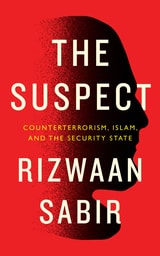
cover of The Suspect: Counterterrorism, Islam, and the Security State

The Suspect

Counterterrorism, Islam, and the Security State

Rizwaan Sabir

Pluto Press, 2021

'An instant classic. Sabir is an inspiration' Arun Kundnani, author of The Muslims are Coming!

What impact has two decades' worth of policing and counterterrorism had on the state of mind of Muslims in Britain? The Suspect draws on the author's lived experiences of being suspected of terrorism to take the reader on a journey through British counterterrorism practices and the policing of Muslims.

Rizwaan Sabir describes what led to his arrest for suspected terrorism, his time in detention, and the surveillance he was subjected to on release from custody, including stop and frisk on the roadside, detentions at the border, and monitoring by police and government departments throughout his research.

Writing publicly for the first time about the traumatizing mental health effects of these experiences, he argues that these harmful outcomes are not the result of errors in government planning, but the consequences of using a counterinsurgency warfare approach to surveillance. If we are to break this injustice, we need to resist counterterrorism policy and practice.
[more]
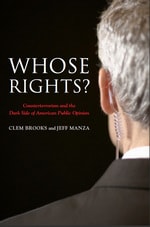
cover of Whose Rights?: Counterterrorism and the Dark Side of American Public Opinion

Whose Rights?

Counterterrorism and the Dark Side of American Public Opinion

Clem Brooks

Russell Sage Foundation, 2013

In the wake of the September 11 attacks, the U.S. government adopted a series of counterterrorism policies that radically altered the prevailing balance between civil liberties and security. These changes allowed for warrantless domestic surveillance, military commissions at Guantanamo Bay and even extralegal assassinations. Now, more than a decade after 9/11, these sharply contested measures appear poised to become lasting features of American government. What do Americans think about these policies? Where do they draw the line on what the government is allowed to do in the name of fighting terrorism? Drawing from a wealth of survey and experimental data, Whose Rights? explores the underlying sources of public attitudes toward the war on terror in a more detailed and comprehensive manner than has ever been attempted. In an analysis that deftly deploys the tools of political science and psychology, Whose Rights? addresses a vexing puzzle: Why does the counterterrorism agenda persist even as 9/11 recedes in time and the threat from Al Qaeda wanes? Authors Clem Brooks and Jeff Manza provocatively argue that American opinion, despite traditionally showing strong support for civil liberties, exhibits a “dark side” that tolerates illiberal policies in the face of a threat. Surveillance of American citizens, heightened airport security, the Patriot Act and targeted assassinations enjoy broad support among Americans, and these preferences have remained largely stable over the past decade. There are, however, important variations: Waterboarding and torture receive notably low levels of support, and counterterrorism activities sanctioned by formal legislation, as opposed to covert operations, tend to draw more favor. To better evaluate these trends, Whose Rights? examines the concept of “threat-priming” and finds that getting people to think about the specter of terrorism bolsters anew their willingness to support coercive measures. A series of experimental surveys also yields fascinating insight into the impact of national identity cues. When respondents are primed to think that American citizens would be targeted by harsh counterterrorism policies, support declines significantly. On the other hand, groups such as Muslims, foreigners, and people of Middle Eastern background elicit particularly negative attitudes and increase support for counterterrorism measures. Under the right conditions, Brooks and Manza show, American support for counterterrorism activities can be propelled upward by simple reminders of past terrorism plots and communication about disliked external groups. Whose Rights? convincingly argues that mass opinion plays a central role in the politics of contemporary counterterrorism policy. With their clarity and compelling evidence, Brooks and Manza offer much-needed insight into the policy responses to the defining conflict of our age and the psychological impact of terrorism.
[more]