Results by title
23 books match the query 'Courage'
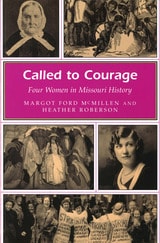
Called to Courage
Four Women in Missouri HistoryMargot Ford McMillen & Heather Roberson
University of Missouri Press, 2002
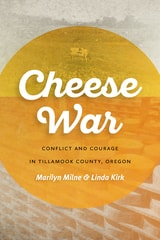
Cheese War
Conflict and Courage in Tillamook County, OregonMarilyn Milne
Oregon State University Press, 2022
On one side of the battle was Beale Dixon, head of Tillamook County Creamery Association. Dixon set up a scheme to offer low-interest, low-collateral loans from TCCA’s largest member cooperative, Tillamook Cheese & Dairy Association, to the supermarkets that stocked Tillamook products. Dixon argued it was a cheap, easy way to ensure good will—and continued purchases—in a tight market. On the other side was George Milne, a respected farmer and board president of the cooperative. Milne supported his board’s decision that loans would require board approval and bank oversight. Dixon mostly ignored those requirements.
The discovery of more financial irregularities soon spiraled into a community-wide dispute, exacerbated by a complex web of family and business relationships. The Cheese War raged for the better part of a decade across board meetings, courtrooms, and the community itself. While largely unknown outside of Tillamook County, the Cheese War was so divisive that some families remain fractured today.
Sisters Marilyn Milne and Linda Kirk, children of the Cheese War, saw how it absorbed their parents. As adults, they set out to learn more about what had happened. The authors conducted years of research and have integrated it with tales of their experiences as farm kids living through the all-consuming fight. As Americans become ever more interested in food supply chains and ethical consumption, here is the story of the very human factors behind one of Oregon’s most iconic brands.
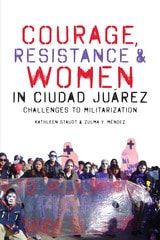
Courage, Resistance, and Women in Ciudad Juárez
Challenges to MilitarizationBy Kathleen Staudt and Zulma Y. Méndez
University of Texas Press, 2015
Ciudad Juárez has recently become infamous for its murder rate, which topped 3,000 in 2010 as competing drug cartels grew increasingly violent and the military responded with violence as well. Despite the atmosphere of intimidation by troops, police, and organized criminals, women have led the way in civil society activism, spurring the Juárez Resistance and forging powerful alliances with anti-militarization activists.
An in-depth examination of la Resistencia Juarense, Courage, Resistance, and Women in Ciudad Juárez draws on ethnographic research to analyze the resistance’s focus on violence against women, as well as its clash with the war against drugs championed by Mexican President Felipe Calderón with the support of the United States. Through grounded insights, the authors trace the transformation of hidden discourses into public discourses that openly challenge the militarized border regimes. The authors also explore the advocacy carried on by social media, faith-based organizations, and peace-and-justice activist Javier Sicilia while Calderón faced U.S. political schisms over the role of border trade in this global manufacturing site.
Bringing to light on-the-ground strategies as well as current theories from the fields of sociology, political anthropology, and human rights, this illuminating study is particularly significant because of its emphasis on the role of women in local and transnational attempts to extinguish a hot zone. As they overcome intimidation to become game-changing activists, the figures featured in Courage, Resistance, and Women in Ciudad Juárez offer the possibility of peace and justice in the wake of seemingly irreconcilable conflict.
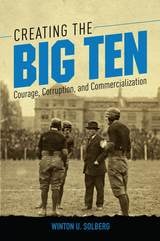
Creating the Big Ten
Courage, Corruption, and CommercializationWinton U Solberg
University of Illinois Press, 2018
Winton U. Solberg explores the relationship between higher education and collegiate football in the Big Ten's first fifty years. This formative era saw debates over eligibility and amateurism roil the sport. In particular, faculty concerned with academics clashed with coaches, university presidents, and others who played to win. Solberg follows the conference's successful early efforts to put the best interests of institutions and athletes first. Yet, as he shows, commercial concerns undid such work after World War I as sports increasingly eclipsed academics. By the 1940s, the Big Ten's impact on American sports was undeniable. It had shaped the development of intercollegiate athletics and college football nationwide while serving as a model for other athletic conferences.
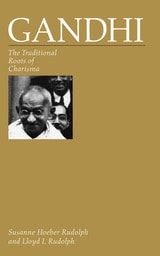
Gandhi
The Traditional Roots of CharismaSusanne Hoeber Rudolph and Lloyd I. Rudolph
University of Chicago Press, 1983
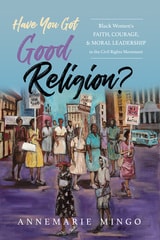
Have You Got Good Religion?
Black Women's Faith, Courage, and Moral Leadership in the Civil Rights MovementAnneMarie Mingo
University of Illinois Press, 2024
A depiction of moral imagination that resonates today, Have You Got Good Religion? reveals how Black Churchwomen’s understanding of God became action and transformed a nation.

On Manly Courage
A Study of Plato's LachesWalter T. Schmid. Foreword by George Kimball Plochmann
Southern Illinois University Press, 1992
Walter T. Schmid offers the first original interpretation of the Laches since Hermann Bonitz in the nineteenth century in the only full-length commentary on the Laches available in English.
Schmid divides the book into five main discussions: the historical background of the dialogue; the relation of form and content in a Platonic dialogue and specific structural and aesthetic features of the Laches; the first half of the dialogue, which introduces the characters and considers the theme of the education of young men; the inquiry with Laches, which examines the traditional Greek conception of military courage; and the inquiry with Nicias in which two nontraditional conceptions of courage are mooted, one closely associated with the sophistic movement in Athens, the other with Socrates himself. Furnishing a detailed paragraph-by-paragraph reading that traces Socrates’ ongoing quest for virtue and wisdom—a wisdom founded in the action of a whole human life—Schmid conclusively shows how and why the Laches fills an important niche in Plato’s moral theory.
Our Land is Made of Courage and Glory
Nationalist Performance of Nicaragua and GuatemelaE. J. Westlake
Southern Illinois University Press, 2005
Our Land Is Made of Courage and Glory: Nationalist Performance of Nicaragua and Guatemala adds to a growing and timely body of work on nationalist drama. Examining important twentieth-century plays that few people have written about in English, E. J. Westlake analyzes the phenomenon of nation as performance by focusing on the definition of a people, national metaphors, and the uses of national history.
Westlake discerns the common characteristics that constitute nationalist plays, a genre that seeks to legitimate the nature of a nation by defining its boundaries, race, language, citizens, and history. Particularly relevant in an era influenced by imperialism, migration, and globalization, the volume probes the concepts of nation and nationalism in the context of postcolonial literary and performance theory.
Our Land Is Made of Courage and Glory covers the political and theatrical history of Nicaragua and Guatemala. Westlake examines how the blending of races factors into nationalism with a look at the play El tren amarillo by Manuel Galich and uses Nobel laureate Miguel Ángel Asturias’s Soluna to show how nationalists appropriate Mayan culture to create a sense of the Guatemalan people and culture. She discusses the mapping of history as a linear progression in Alan Bolt’s Banana republic and as a cycle of patricide in Por los caminos van los campesinos by Pablo Cuadra. Westlake also suggests that Rolando Steiner’s La noche de Wiwilí, a play taken from an eyewitness account, acts as a site of official national memory, and she examines as well the canonizing of the folk ballet El Güegüence to further explore the notion of sites of memory versus lived memory.
Raising essential questions about the future of nationalism and nationalist performance, Our Land Is Made of Courage and Glory will be of interest to scholars and students in drama, Latin American theatre studies, political science, and history.
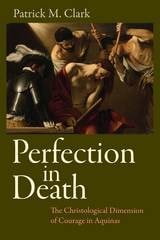
Perfection in Death
Patrick M. Clark
Catholic University of America Press, 2015
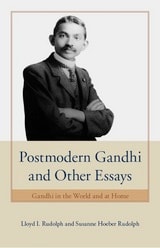
Postmodern Gandhi and Other Essays
Gandhi in the World and at HomeLloyd I. Rudolph and Susanne Hoeber Rudolph
University of Chicago Press, 2006
Gandhi, with his loincloth and walking stick, seems an unlikely advocate of postmodernism. But in Postmodern Gandhi, Lloyd and Susanne Rudolph portray him as just that in eight thought-provoking essays that aim to correct the common association of Gandhi with traditionalism.
Combining core sections of their influential book Gandhi: The Traditional Roots of Charisma with substantial new material, the Rudolphs reveal here that Gandhi was able to revitalize tradition while simultaneously breaking with some of its entrenched values and practices. Exploring his influence both in India and abroad, they tell the story of how in London the young activist was shaped by the antimodern “other West” of Ruskin, Tolstoy, and Thoreau and how, a generation later, a mature Gandhi’s thought and action challenged modernity’s hegemony. Moreover, the Rudolphs argue that Gandhi’s critique of modern civilization in his 1909 book Hind Swaraj was an opening salvo of the postmodern era and that his theory and practice of nonviolent collective action (satyagraha) articulate and exemplify a postmodern understanding of situational truth.
This radical interpretation of Gandhi's life will appeal to anyone who wants to understand Gandhi’s relevance in this century, as well as students and scholars of politics, history, charismatic leadership, and postcolonialism.
Private Fleming at Chancellorsville
The Red Badge of Courage and the Civil WarPerry Lentz
University of Missouri Press, 2006
Refugees in America
Stories of Courage, Resilience, and Hope in Their Own WordsLee T Bycel
Rutgers University Press, 2019
Each chapter of Refugees in America focuses on an individual from a different country, from a 93-year-old Polish grandmother who came to the United States after surviving the horrors of Auschwitz to a young undocumented immigrant from El Salvador who became an American college graduate, despite being born impoverished and blind. Some have found it easy to reinvent themselves in the United States, while others have struggled to adjust to America, with its new culture, language, prejudices, and norms.
Each of them speaks candidly about their experiences to author Lee T. Bycel, who provides illuminating background information on the refugee crises in their native countries. Their stories help reveal the real people at the center of political debates about US immigration.
Giving a voice to refugees from such far-flung locations as South Sudan, Guatemala, Syria, and Vietnam, this book weaves together a rich tapestry of human resilience, suffering, and determination.
Profits from the sale of this book will be donated to two organizations that are doing excellent refugee resettlement work and offer many opportunities to support refugees: HIAS (founded as the Hebrew Immigrant Aid Society) hias.org International Rescue Committee (IRC) rescue.org
Risk, Courage, and Women
Contemporary Voices in Prose and PoetryKaren A. Waldron
University of North Texas Press, 2007
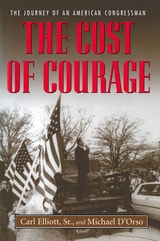
The Cost of Courage
The Journey of an American CongressmanCarl Elliott
University of Alabama Press, 2001
This deeply moving story chronicles the tenacity and vision that carried Carl Elliott from the hills of northwest Alabama to eight distinguished terms in the United States House of Representatives.
Born in a log cabin on a tenant farm in 1913, Carl Elliott worked his way through The University of Alabama during the Great Depression and was elected to Congress in 1948. With a no-nonsense philosophy of fairness and equal opportunity, he established himself as one of the most effective members of the House of Representatives during the 1950s. He was a progressive Democrat and he fought hard for the dirt farmers and coal miners he grew up with and who sent him to Congress.
In an era when racial segregationists dominated southern politics, Elliott worked with many of the important political leaders of the 20th century, including Presidents Truman, Eisenhower, and Kennedy and powerful House Speaker Sam Rayburn. He was instrumental in passing the National Defense Education Act of 1958, which continues to provide college loans to more than 20 million Americans. But his brave stand against racism and George Wallace in the 1966 Alabama gubernatorial race ruined him professionally (he never returned to elected office) and financially (he cashed in his congressional pension to help fund the campaign). Even as a destitute invalid in his old age, however, Elliott kept his dignity and integrity intact.
The life story of Carl Elliott is full of humor and wry wisdom and explains how he made his way across a stage as big as America, influencing its politics and future, and then emerged, belatedly, as an unsung hero of the fight for civil rights and equality.
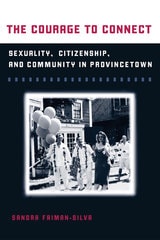
The Courage to Connect
Sexuality, Citizenship, and Community in ProvincetownSandra L. Faiman-Silva
University of Illinois Press, 2003
Based on over six years of fieldwork, Sandra L. Faiman-Silva's The Courage to Connect traces the transformation of the Cape Cod community of Provincetown from its nineteenth-century origins as a fishing town where Portuguese immigrants settled to its present status as a welcoming, sexually diverse tourist enclave. Faiman-Silva examines the community’s history and economy as well as how gay and straight cultures intersect in areas such as public education, local government, and law enforcement. Using queer and critical culture theory to deconstruct day-to-day local encounters, Faiman-Silva describes the causes of social conflicts and how these conflicts can be resolved. Capturing the pathos and joy of a community that has struggled to accommodate radical social changes, The Courage to Connect yields understanding of the ways in which communities can construct themselves to overcome differences.
The Courage to Suffer
A New Clinical Framework for Life's Greatest CrisesDaryl R. Van Tongeren
Templeton Press, 2020
Suffering is an inescapable part of life. Some suffering is so profound, so violating, or so dogged that it fundamentally changes people in indelible ways. Many existing therapeutic approaches, from a medical model, treat suffering as mental illness and seek a curative solution. However, such approaches often fail to examine the deep questions that suffering elicits (e.g., existential themes of death, isolation, freedom, identity, and meaninglessness) and the far-reaching ways in which suffering affects the lived experience of each individual.
In The Courage to Suffer, Daryl and Sara Van Tongeren introduce a new therapeutic framework that helps people flourish in the midst of suffering by cultivating meaning.
Drawing from scientific research, clinical examples, existential and positive psychology, and their own personal stories of loss and sorrow, Daryl and Sara’s integrative model blends the rich depth of existential clinical approaches with the growth focus of strengths-based approaches.Through cutting edge-research and clinical case examples, they detail five “phases of suffering” and how to work with a client's existential concerns at each phase to develop meaning. They also discuss how current research suggests to build a flourishing life, especially for those who have endured, and are enduring, suffering.
Daryl and Sara show how those afflicted with suffering, while acknowledging the reality of their pain, can still choose to live with hope.
The Courage to Welcome
Between principles and pragmatism in international affairsCatherine Ashton and Filippo Grandi
Haus Publishing, 2026
A timeless call amid the challenging nature of public service to find the familiar in the foreign.
What does it mean to lead with compassion in a world riven by fear, at a time when the responses to forced displacement hold the power to reshape communities? How can institutions and individuals sustain solidarity amid rising division?
This moving reflection of Filippo Grandi’s ten years as United Nations High Commissioner for Refugees and four decades spent working in humanitarian crises across the world addresses the growing complexity of forced displacement, its repercussions for international relations, and the challenges it poses for governments. Grandi calls for greater cooperation between nations and considers measures—along displacement routes and in host countries—which would provide lifesaving assistance to refugees as well as preserve international cooperation and goodwill. He suggests a universal responsibility not to exacerbate division but to work diligently on the space between pragmatism and principle.
Taking up this challenge, Catherine Ashton’s response to Grandi draws on her own distinguished leadership during some of the most important moments that have shaped contemporary diplomacy and suggests how enduring principles can be retained within the realities of public life.
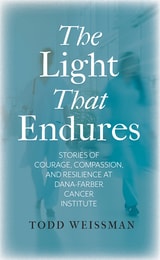
The Light That Endures
Stories of Courage, Compassion, and Resilience at Dana-Farber Cancer InstituteTodd Weissman
University of Massachusetts Press, 2026
Showing that everyday people offer the deepest, most relatable lessons in grace
Offering an intimate glimpse into the lives of individuals connected to one of the world’s foremost centers for cancer care and research, The Light That Endures reveals how ordinary people at Boston’s Dana-Farber Cancer Institute demonstrate extraordinary resilience in the face of life’s most challenging moments. Through eight captivating profiles, readers meet a world-renowned pediatric oncologist who rode on horseback at Eisenhower’s inauguration, delivered a secret message in Soviet-controlled Czechoslovakia, and hosted the future King of England; a florist-turned-nurse-turned-teacher whose life changed drastically after a chance encounter on a train; an administrator who has faced adversity his entire life, from a violent father, to confronting his own identity, to being held up at gunpoint; a teenage patient whose battle with cancer was just one of many challenges he has navigated; and a woman who, despite spending her life bringing comfort to others, wonders whether she’s been enough as she reflects after a terminal diagnosis.
These remarkable people, diverse in their backgrounds, share a common bond through cancer and Dana-Farber, that much is obvious. However, it is their quiet acts of grace and service—woven into both their professional paths and personal journeys—that more deeply unite them. Their stories reveal a deeper truth: despite hardship and loss, the arc of life bends toward goodness. Fractured childhoods, family estrangement, mental health strains, winding career paths, and the ever-present shadow of self-doubt are not just obstacles but catalysts. The individuals profiled have found hope and meaning in community and their work, shaping lives of purpose, service, and gratitude. More than a recounting of lives touched by cancer, The Light That Endures is a celebration of the profound impact of compassion and human connection. It captures the essence of Dana-Farber’s ethos, where a shared mission of care fosters an environment of empathy and hope.

The Making of an Artist
Desire, Courage, and CommitmentKristin G. Congdon
Intellect Books, 2018
Powerfully insightful and fully accessible, The Making of an Artist will be an invaluable resource for practicing artists, those just setting out on artistic careers, and art teachers alike.
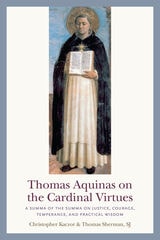
Thomas Aquinas on the Cardinal Virtues
A Summa of the Summa on Prudence, Justice, Temperance, and CourageChristopher Kaczor
Catholic University of America Press, 2020
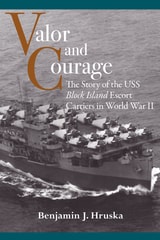
Valor and Courage
The Story of the USS Block Island Escort Carriers in World War IIBenjamin J. Hruska
University of Alabama Press, 2021
Recounts the stories of the USS Block Island CVE 21 and CVE 106 and their crews, many of whom served on both ships in the Atlantic and Pacific theatres
In Valor and Courage: The Story of the USS Block Island Escort Carriers in World War II Benjamin Hruska explores the history and commemoration of the USS Block Island—or, more properly, the Block Islands, as two escort carriers bore that name during WWII. The first, CVE 21, bears the distinction of having been the only American aircraft carrier sunk in the Atlantic Theatre after being torpedoed by a German U-boat off the coast of North Africa.
Of the CVE 21’s 957 crew members, six sailors were killed and eighteen injured in the strike, and four of the Block Island’s fighter pilots were lost later in the day searching for a safe place to land their planes. When the CVE 106 was commissioned to replace its predecessor, Captain Massie Hughes successfully persuaded the Navy to keep the CVE 21’s crew together in manning the new ship. After resurrection as the CVE 106, the Block Island was assigned to the Pacific theater where it fought until the end of the war. The saga of these two ships and the crew that navigated two very different theaters of war offers a unique lens on naval strategy and engineering as it evolved during WWII, especially as pertains to the escort carrier class—generally underappreciated both in naval studies and in public memory.
Using archival materials, dozens of oral histories, primary sources, and official records, Hruska traces the life of the Block Island from the CVE 21’s construction through its missions in the Atlantic, its work as an antisubmarine hunter, its destruction, and the lasting impact of those experiences on its crew. Hruska’s study juxtaposes traditional military history with an examination of the acts of remembrance and commemoration by veterans who served on the escort carriers, how those practices evolved over time, and how the meanings of personal wartime experiences and memories gradually shifted throughout that process.
When Conscience Calls
Moral Courage in Times of Confusion and DespairKristen Renwick Monroe
University of Chicago Press, 2023
What is moral courage? Why is it important and what drives it? An argument for why we should care about moral courage and how it shapes the world around us.
War, totalitarianism, pandemics, and political repression are among the many challenges and crises that force us to consider what humane people can do when the world falls apart. When tolerance disappears, truth becomes rare, and civilized discourse is a distant ideal, why do certain individuals find the courage to speak out when most do not?
When Conscience Calls offers powerful portraits of ordinary people performing extraordinary acts—be it confronting presidents and racist mobs or simply caring for and protecting the vulnerable. Uniting these portraits is the idea that moral courage stems not from choice but from one’s identity. Ultimately, Kristen Renwick Monroe argues bravery derives from who we are, our core values, and our capacity to believe we must change the world. When Conscience Calls is a rich examination of why some citizens embrace anger, bitterness, and fearmongering while others seek common ground, fight against dogma, and stand up to hate.
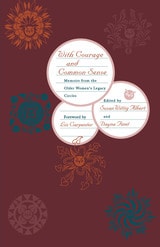
With Courage and Common Sense
Memoirs from the Older Women's Legacy CirclesEdited by Susan Wittig Albert and Dayna Finet
University of Texas Press, 2003
Women who were sixty or older at the turn of the twenty-first century have lived through some of recent history's most momentous moments—and yet these women often believe that their personal lives and stories are insignificant, not worthy of being recorded for future generations. To change that perception and capture some of these life stories before they are lost, the Story Circle Network, a national organization dedicated to helping women write about their lives, developed the Older Women's Legacy (OWL) Circle Memoir Workshops. During the first two years of the project (1998-2000), nearly 500 older women participated in workshops that offered them the opportunity and encouragement to reflect on and create written records of their lives.
With Courage and Common Sense presents an extensive selection of memoirs from the OWL Circle project. Organized thematically, they describe women's experiences of identity, place, work, family life, love and marriage, loss and healing, adventures great and small, major historical events, and legacies to keep and pass along. Taken as a whole, the memoirs chronicle far-reaching changes in the ways that women participated in the world during the twentieth century. They show how women learned to surmount obstacles, to courageously make the most of the opportunities that came their way, and to move quietly and wisely beyond the limits that were imposed upon them.