Results by title
143 books match the query 'Crisis' and 14 start with a
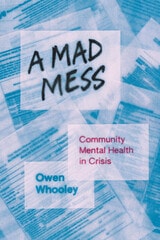
A Mad Mess
Community Mental Health in CrisisOwen Whooley
University of Chicago Press, 2026
A sobering assessment of the systematic failures of mental health work.
The United States is in the midst of a mental health crisis that cannot be ignored. Its effects are visible in overcrowded emergency rooms, homeless encampments, and frequent encounters between police and people with serious mental illness. And yet, our attempts to support people with mental illness—from medical care to housing support to basic hygiene—seem to never take meaningful hold despite the tireless work of professionals who attempt to help people bring together the pieces of a life. The problem is not in any individual effort though; it’s in the many ways these programs fail to work together. For those with serious mental illness, and those who work to ameliorate it, there is no system. There is only mess.
In A Mad Mess, sociologist Owen Whooley uncovers the exasperating barriers, bureaucratic mismatches, and threadbare resources that have made a mess of what should be a supportive system. Set in Albuquerque, New Mexico—a city whose struggles echo those of communities nationwide—the book reveals the challenges mental health workers face daily, from tedious paperwork to occasional violence. Whooley follows workers across local outpatient service organizations, specialized police mental health units, and a psychiatric emergency department. Despite mostly good intentions and sometimes heroic efforts, he shows why this important work so often ends in failure.
Written with deep sympathy and unflinching honesty, A Mad Mess reveals how the lack of a cohesive mental health system obstructs critical care and places roadblocks before front-line mental health workers at every turn. Most critically, for those who suffer from severe mental illness, these setbacks are a constant reminder that the institutions charged with helping them have left them on their own.
A Philosophy of Crisis
Miguel de Beistegui
University of Chicago Press, 2024
Crises abound—so many that it can be easy to lose perspective. In A Philosophy of Crisis, Miguel de Beistegui traces the intellectual development of ideas about crisis and identifies four distinct forms a crisis might take: crises of deviation, exception, contradiction, and extinction. Drawing on a range of examples (from economic crises to social uprisings, pandemics, and ecological devastation) and discourses (from ancient medicine to legal theory, political economy, philosophy, the earth sciences, and ecocriticism), A Philosophy of Crisis offers new conceptual tools for both understanding and avoiding the dangers of our crisis-saturated time.
A Study of Crisis
Michael Brecher and Jonathan Wilkenfeld
University of Michigan Press, 2000
The culmination of more than twenty years of research by Michael Brecher and Jonathan Wilkenfeld, the book analyzes crucial themes about crisis, conflict, and war and presents systematic knowledge about more than 400 crises, thirty-one protracted conflicts and almost 900 state participants. The authors explore many aspects of conflict, including the ethnic dimension, the effect of different kinds of political regimes--notably the question whether democracies are more peaceful than authoritarian regimes, and the role of violence in crisis management. They employ both case studies and aggregate data analysis in a Unified Model of Crisis to focus on two levels of analysis--hostile interactions among states, and the behavior of decision-makers who must cope with the challenge posed by a threat to values, time pressure, and the increased likelihood that military hostilities will engulf them.
This book will appeal to scholars in history, political science, sociology, and economics as well as policy makers interested in the causes and effects of crises in international relations. The rich data sets will serve researchers for years to come as they probe additional aspects of crisis, conflict and war in international relations.
Michael Brecher is R. B. Angus Professor of Political Science, McGill University. Jonathan Wilkenfeld is Professor and Chair of the Department of Government and Politics, University of Maryland. They are the coauthors of Crises in the Twentieth Century: A Handbook of International Crisis, among other books and articles.
A Thousand Screenplays
The French Imagination in a Time of CrisisSabine Chalvon-Demersay
University of Chicago Press, 1999
The time of crisis presented by the amateur writers was not one of war, famine, or disease—it was the millennial dilemma of representation. In a world plagued by alienation, individualization, and a lack of mobility, how can members of a society combat their declining senses of self?
Although the contestants wrote about life in France, their concerns and struggles have a distinctly universal ring. A lucid, witty writer, Chalvon-Demersay offers a clear, if still developing, photograph of the contemporary imagination.

A User's Guide to the Crisis of Civilization
And How to Save ItNafeez Mosaddeq Ahmed
Pluto Press, 2010
It often seems that different crises are competing to devastate civilisation. This book argues that financial meltdown, dwindling oil reserves, terrorism and food shortages need to be considered as part of the same ailing system.
Most accounts of our contemporary global crises such as climate change, or the threat of terrorism, focus on one area, or another, to the exclusion of others. Nafeez Mosaddeq Ahmed argues that the unwillingness of experts to look outside their own fields explains why there is so much disagreement and misunderstanding about particular crises. This book attempts to investigate all of these crises, not as isolated events, but as trends and processes that belong to a single global system. We are therefore not dealing with a 'clash of civilisations', as Huntington argued. Rather, we are dealing with a fundamental crisis of civilisation itself.
This book provides a stark warning of the consequences of failing to take a broad view of the problems facing the world and shows how catastrophe can be avoided.
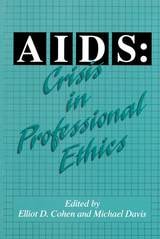
AIDS
Crisis in Professional Ethicsedited by Elliot D. Cohen and Michael Davis
Temple University Press, 1994
Do patients have the right to know their physician's HIV status?
Can a dentist refuse treatment to an HIV-positive patient?
How do educators determine whether to allow an HIV-positive child to attend school, and if they do, should the parents of other children be informed?
Should a counselor break confidentiality by disclosing to a wife that her husband is infected with HIV?
This collection of original essays carefully examines the difficult moral choices the AIDS pandemic has presented for many professionals—physicians, nurses, dentists, teachers and school administrators, business managers, psychotherapists, lawyers, clergy, journalists, and politicians. In the workplace, problems posed by HIV and AIDS have led to a reexamination of traditional codes of ethics. Providing systematic and reasoned discussions, the authors explore the moral, legal, and ethical issues involved in the reconsideration of policies, standards of conduct, and the practicality of balancing personal and professional ethics.
Contributors: Albert Flores, Joan C. Callahan, Jill Powell, Kenneth Kipnis, Al Gini, Howard Cohen, Martin Gunderson, Joseph A. Edelheit, Michael Pritchard, Vincent J. Samar, Sohair ElBaz, William Pardue, and the editors.
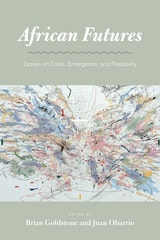
African Futures
Essays on Crisis, Emergence, and PossibilityEdited by Brian Goldstone and Juan Obarrio
University of Chicago Press, 2017
The experts in this book address Africa’s future as it is embedded within various social and cultural forms emerging on the continent today: the reconfiguration of the urban, the efflorescence of signs and wonders and gospels of prosperity, the assorted techniques of legality and illegality, lotteries and Ponzi schemes, apocalyptic visions, a yearning for exile, and many other phenomena. Bringing together social, political, religious, and economic viewpoints, the book reveals not one but multiple prospects for the future of Africa. In doing so, it offers a pathbreaking model of pluralistic and open-ended thinking and a powerful tool for addressing the vexing uncertainties that underlie so many futures around the world.
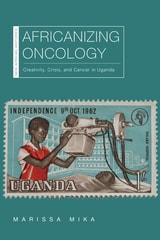
Africanizing Oncology
Creativity, Crisis, and Cancer in UgandaMarissa Mika
Ohio University Press, 2021

After the Crisis
Contemporary States of PhotographyEdited by Donatien Grau and Christoph Wiesner
Diaphanes, 2019
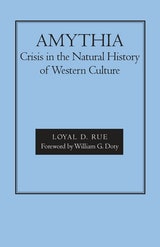
Amythia
Crisis in the Natural History of Western CultureLoyal D. Rue
University of Alabama Press, 1989
Amythia results when cosmology and morality are not effectively integrated by a root metaphor, and the only possibility for the future is to transpose the old Christian God as Person to a root metaphor that is even older in origin, the concept of the Covenant tradition inherited from Israel but now understood in a nonsupernaturalist manner.
Rue asserts that amythia is a critical condition within the natural history of Western culture. The argument of the book begins with a theoretical perspective on the place of human culture within the scope of natural history and proceeds to establish the conceptual foundations for a natural history of culture.
Following an overview of the natural history of Western culture to expose the origins and depth of the contemporary intellectual and moral crisis, Rue moves on to specify and justify the limits of distinctiveness and plausibility appropriate for the task of transposing Covenant tradition. Finally, an appeal is made to the mythmakers of contemporary culture to take up the challenge of amythia.

Animals and Death
Hunting, Modernity, and the Crisis of the WildCharles Stépanoff
HAU, 2026
Apostolic Religious Life in America Today
A Response to the CrisisRichard Gribble
Catholic University of America Press, 2011

Art and the Crisis of Marriage
Edward Hopper and Georgia O'KeeffeVivien Green Fryd
University of Chicago Press, 2002
Vivien Green Fryd argues that this crisis played a crucial role in the lives and works of two of America's most familiar and beloved artists, Georgia O'Keeffe (1887-1986) and Edward Hopper (1882-1967). Combining biographical study of their marriages with formal and iconographical analysis of their works, Fryd shows how both artists expressed the pleasures and perils of their relationships in their paintings. Hopper's many representations of Victorian homes in sunny, tranquil landscapes, for instance, take on new meanings when viewed in the context of the artist's own tumultuous marriage with Jo and the widespread middle-class fears that the new urban, multidwelling homes would contribute to the breakdown of the family. Fryd also persuasively interprets the many paintings of skulls and crosses that O'Keeffe produced in New Mexico as embodying themes of death and rebirth in response to her husband Alfred Stieglitz's long-term affair with Dorothy Norman.
Art and the Crisis of Marriage provides both a penetrating reappraisal of the interconnections between Georgia O'Keeffe's and Edward Hopper's lives and works, as well as a vivid portrait of how new understandings of family, gender, and sexuality transformed American society between the wars in ways that continue to shape it today.
Athens 415
The City in CrisisClara Shaw Hardy, with translations by Robert B. Hardy
University of Michigan Press, 2020
On a summer night in 415 BCE, unknown persons systematically mutilated most of the domestic “herms”—guardian statues of the god Hermes—in Athens. The reaction was immediate and extreme: the Athenians feared a terrifying conspiracy was underway against the city and its large fleet—and possibly against democracy itself. The city established a board of investigators, which led to informants, accusations, and flight by many of the accused. Ultimately, dozens were exiled or executed, their property confiscated.
This dramatic period offers the opportunity to observe the city in crisis. Sequential events allow us to see the workings of the major institutions of the city (assembly, council, law courts, and theater, as well as public and private religion). Remarkably, the primary sources for these tumultuous months name conspirators and informants from a very wide range of status-groups: citizens, women, slaves, and free residents. Thus the incident provides a particularly effective entry-point into a full multifaceted view of the way Athens worked in the late fifth century.
Designed for classroom use, Athens 415 is no potted history, but rather a source-based presentation of ancient urban life ideal for the study of a people and their institutions and beliefs. Original texts—all translated by poet Robert B. Hardy—are presented along with thoughtful discussion and analyses by Clara Shaw Hardy in an engaging narrative that draws students into Athens’ crisis.