Results by title
19 books match the query 'Critical Perspectives'
AI for Everyone?
Critical PerspectivesPieter Verdegem
University of Westminster Press, 2021
Editor Pieter Verdegem was shortlisted for best edited collection in the 2022 MeCCSA outstanding achievement awards. See https://uwestminsterpress.blog/2022/08/18/original-and-timely-uwp-title-shortlisted-for-major-academic-book-prize/ for more details.
We are entering a new era of technological determinism and solutionism in which governments and business actors are seeking data-driven change, assuming that Artificial Intelligence is now inevitable and ubiquitous. But we have not even started asking the right questions, let alone developed an understanding of the consequences. Urgently needed is debate that asks and answers fundamental questions about power. This book brings together critical interrogations of what constitutes AI, its impact and its inequalities in order to offer an analysis of what it means for AI to deliver benefits for everyone. The book is structured in three parts: Part 1, AI: Humans vs. Machines, presents critical perspectives on human-machine dualism. Part 2, Discourses and Myths About AI, excavates metaphors and policies to ask normative questions about what is ‘desirable’ AI and what conditions make this possible. Part 3, AI Power and Inequalities, discusses how the implementation of AI creates important challenges that urgently need to be addressed. Bringing together scholars from diverse disciplinary backgrounds and regional contexts, this book offers a vital intervention on one of the most hyped concepts of our times.

Armageddon in Waco
Critical Perspectives on the Branch Davidian ConflictEdited by Stuart A. Wright
University of Chicago Press, 1996
Could the tragedy have been prevented? Was it necesary for the BATF agents to do what they did? What could have been done differently? Armageddon in Waco offers the most detailed, wide-ranging analysis of events surrounding Waco. Leading scholars in sociology, history, law, and religion explore all facets of the confrontation in an attempt to understand one of the most confusing government actions in American history.
The book begins with the history of the Branch Davidians and the story of its leader, David Koresh. Chapters show how the Davidians came to trouble authorities, why the group was labeled a "cult," and how authorities used unsubstantiated allegations of child abuse to strengthen their case against the sect.
The media's role is examined next in essays that considering the effect on coverage of lack of time and resources, the orchestration of public relations by government officials, the restricted access to the site or to countervailing evidence, and the ideologies of the journalists themselves. Several contributors then explore the relation of violence to religion, comparing Waco to Jonestown.
Finally, the role played by "experts" and "consultants" in defining such conflicts is explored by two contributors who had active roles as scholarly experts during and after the siege The legal and consitutional implications of the government's actions are also analyzed in balanced, clearly written detail.
Bourdieu
Critical PerspectivesEdited by Craig Calhoun, Edward LiPuma, and Moishe Postone
University of Chicago Press, 1993
American reception of his works, however, has lacked a full understanding of their place within the broad context of French human science. His individual works separated by distinct boundaries between social science fields in American academia, Bourdieu's cohesive thought has come to this country in fragments.
Bourdieu: Critical Perspectives provides a unified and balanced appraisal of Bourdieu's varied works by both proponents and skeptics. The essays are written from the varied viewpoints of cultural anthropology, ethnomethodology and other varieties of sociology, existential and Wittgensteinian philosophies, linguistics, media studies, and feminism. They work around three main themes: Bourdieu's effort to transcend gaps between practical knowledge and universal structures, his central concept of "reflexivity," and the relations between social structure, systems of classification, and language.
Ultimately, the contributors raise a variety of crucial theoretical questions and address problems that are important not only to understanding Bourdieu but to advancing empirical work of the kind he has pioneered. In an essay written especially for this volume, Bourdieu describes his own "mode of intellectual production" and the reasons he sees for its common misunderstanding.
The contributors are Hubert Dreyfus, Paul Rabinow, Charles Taylor, Aaron Cicourel, James Collins, William Hanks, Beate Krais, Nicholas Garnham, Scott Lash, Roger Brubaker, and Loic Wacquant, and the editors.
Chinese Connections
Critical Perspectives on Film, Identity, and DiasporaGina Marchetti
Temple University Press, 2009
Chinese Connections is a valuable new anthology that provides a prismatic look at the cross-fertilization between Chinese film and global popular culture. Leading film scholars consider the influence of world cinema on China-related and Chinese-related cinema over the last five decades. Highlighting the neglected connections between Chinese films and American and European cinema, the editors and contributors examine popular works such as Ang Lee’s The Hulk and Olivier Assayas’ Irma Vep to show the nexus of international film production and how national, political, social and sexual identities are represented in the Chinese diaspora.
With talent flowing back and forth between East and West, Chinese Connections explores how issues of immigration, class, race and economic displacement are viewed on a global level, ultimately providing a greater understanding of the impact of Chinese filmmaking at home and abroad.
Contributors include: Grace An, Aaron Anderson, Chris Berry, Evans Chan, Li-Mei Chang, Frances Gateward, Andrew Grossman, Peter Hitchcock, Chuck Kleinhans, Jenny Kwok Wah Lau, Helen Leung, Aaron Magnan-Park, Gayle Wald, Esther C.M. Yau, Emilie Yueh-yu Yeh, Xuelin Zhou and the editors.
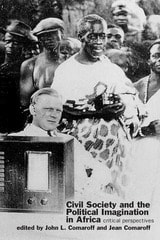
Civil Society and the Political Imagination in Africa
Critical PerspectivesEdited by John L. Comaroff and Jean Comaroff
University of Chicago Press, 1999
In a substantial introduction, anthropologists Jean and John Comaroff offer a critical theoretical analysis of the nature and deployment of the concept—and the current debates surrounding it. Building on this framework, the contributors investigate the "problem" of civil society across their regions of expertise, which cover the continent. Drawing creatively on one another's work, they examine the impact of colonial ideology, postcoloniality, and development practice on discourses of civility, the workings of everyday politics, the construction of new modes of selfhood, and the pursuit of moral community.
Incisive and original, the book shows how struggles over civil society in Africa reveal much about larger historical forces in the post-Cold War era. It also makes a strong case for the contribution of historical anthropology to contemporary discourses on the rise of a "new world order."
Critical Perspectives in International Studies
Frank P. Harvey and Michael Brecher, Editors
University of Michigan Press, 2002
Critical Perspectives on Academic Writing
The politics and Practices of Writing Development in UK Higher EducationEdited by Ayanna Prevatt-Goldstein and David Mallows
University College London, 2026
This volume addresses the most pressing issues in higher education today, such as inclusion, academic integrity, and generative AI.
This timely collection explores the politics and practices of academic writing development in UK higher education. The volume addresses issues of access, equity, and generative AI in the context of student writing, to consider what makes writing academic, why it matters, and how we can change the field for the better.
Critical Perspectives on Contemporary Plays by Women
The Early Twenty-First CenturyPenny Farfan and Lesley Ferris, Editors
University of Michigan Press, 2021
This book foregrounds some of the ways in which women playwrights from across a range of contexts and working in a variety of forms and styles are illuminating the contemporary world while also contributing to its reshaping as they reflect, rethink, and reimagine it through their work for the stage. The book is framed by a substantial introduction that sets forth the critical vision and structure of the book as a whole, and an afterword that points toward emerging currents in and expansions of the contemporary field of playwriting by women on the cusp of the third decade of the twenty-first century. Within this frame, the twenty-eight chapters that form the main body of the book, each focusing on a single play of critical significance, together constitute a multi-faceted, inevitably partial, yet nonetheless integral picture of the work of women playwrights since 2000 as they engage with some of the most pressing issues of our time. Some of these issues include the continuing oppression of and violence against women, people of color, LGBTQ+ people, and ethnic minorities; the ongoing processes of decolonization; the consequences of neoliberal capitalism; the devastation and enduring trauma of war; global migration and the refugee crisis; the turn to right-wing populism; and the impact of climate change, including environmental disaster and species extinction.
The book is structured into seven sections: Replaying the Canon; Representing Histories; Staging Lives; Re-imagining Family; Navigating Communities; Articulating Intersections; and New World Order(s). These sections group clusters of plays according to the broad critical actions they perform or, in the case of the final section, the new world orders that they capture through their stagings of the seeming impasse of the politically and environmentally catastrophic global present moment. There are many other points of resonance among and across the plays, but this seven-part structure foregrounds the broader actions that drive the plays, both in the Aristotelian dramaturgical sense and in the larger sense of the critical interventions that the plays creatively enact. In this way, the seven-part structure establishes correspondences across the great diversity of dramatic material represented in the book while at the same time identifying key methods of critical approach and areas of focus that align the book’s contributors across this diversity. The structure of the book thus parallels what the playwrights themselves are doing, but also how the contributors are approaching their work. Plays featured in the book are from Canada, Australia, South Africa, the US, the UK, France, Argentina, New Zealand, Syria, Brazil, Italy, and Austria; the playwrights include Margaret Atwood, Leah Purcell, Yaël Farber, Paula Vogel, Adrienne Kennedy, Suzan-Lori Parks, debbie tucker green, Lisa Loomer, Hélène Cixous. Anna Deavere Smith, Lola Arias, Lisa Kron and Jeanine Tesori, Marie Clements, Quiara Alegría Hudes, Alia Bano, Holly Hughes, Whiti Hereaka, Julia Cho, Liwaa Yazji, Grace Passô, Dominique Morisseau, Emma Dante, Frances Ya-Chu Cowhig, Lynn Nottage, Elfriede Jelinek, Caryl Churchill, Colleen Murphy, and Lucy Kirkwood.
Encompassing several generations of playwrights and scholars, ranging from the most senior to mid-career to emerging voices, the book will be essential reading for established researchers, a valuable learning resource for students at all levels, and a useful and accessible guide for theatre practitioners and interested theatre-goers.
Critical Perspectives on Cultural Memory and Heritage
Construction, Transformation and DestructionEdited by Veysel Apaydin
University College London, 2020
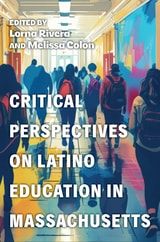
Critical Perspectives on Latino Education in Massachusetts
Lorna Rivera and Melissa Colón, editors
University of Massachusetts Press, 2025
In Massachusetts, the Latino population increased by 475 percent between 1980 and 2017, marking a dramatic growth. This diverse ethnic community of Puerto Ricans, Dominicans, Salvadoreans, Colombians, Brazilians, and more also contains a wide range of cultures, immigration and migration experiences, languages, and socio-political backgrounds. However, there are numerous commonalities involving education. Recent research at the Mauricio Gastón Institute for Latino Community Development and Policy reveals that Latino students in Massachusetts are more likely to attend public schools, in communities with significant academic achievement and opportunity gaps as well as other challenges, from food scarcity to higher rates of unemployment. At the same time, the state-wide shift to standards-based education has had a disproportionately negative impact on Latino students, who already feel the effects of politically motivated anti-immigrant policies and laws that limit bilingual education.
This collection of essays, from those working inside the classroom as well as researchers taking a broader look at policy, addresses the array of issues facing Latino students in Massachusetts. These perspectives paint a complex picture of the educational experience for Latinos, and offer expert suggestions for improving classrooms, school environments, and ultimate educational outcomes for an important growing demographic in the Commonwealth.
In addition to editors Lorna Rivera and Melissa Colón, this volume’s contributors include Almudena G. Abeyta, Nasteho Ali, Cristina Araujo Brinkerhoff, Michael Berardino, Alex Briesacher, Thomas Conroy, Judenie Dabel, Liya Escalera, Luis Enrique Esquivel, Deyja Enriquez, Isahiah Erilus, Nyal Fuentes, Jazmin Rubi Flete Gomez, Manuel Frau-Ramos, Kimberly A. S. Howard, Patricia Krueger-Henney, Steven Lue, Mary Jo Marion, Timothy E. Murphy, Cecilia Nardi, Laurie Occhipinti, Alexandra Oliver-Davila, Chong Myung Park, Angelica Rodriquez, Marta T. Rosa, Diana Santiago, Melissa Sargent, Ester Shapiro, V. Scott H. Solberg, Fabián Torres-Ardila, Ashley Torres Carrasquillo, Paul Trunfio, Carmen N. Veloria, and Heilam Xie.
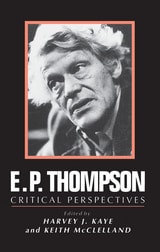
E. P. Thompson
Critical PerspectivesHarvey Kaye
Temple University Press, 1990
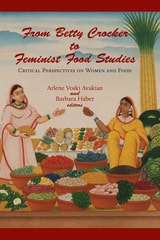
From Betty Crocker to Feminist Food Studies
Critical Perspectives on Women and FoodArlene Voski Avakian
University of Massachusetts Press, 2005
Applying the insights of feminist scholarship to the study of food, the thirteen essays in this volume are arranged under four headings—the marketplace, histories, representations, and resistances. The editors open the book with a substantial introduction that traces the history of scholarly writing on food and maps the terrain of feminist food studies. In the essays that follow, contributors pay particular attention to the ways in which gender, race, ethnicity, class, colonialism, and capitalism have both shaped and been shaped by the production and consumption of food.
In the first section, four essays analyze the influence of large corporations in determining what came to be accepted as proper meals in the United States, including what mothers were expected to feed their babies. The essays in the second section explore how women have held families together by keeping them nourished, from the routines of an early nineteenth-century New Englander to the plight of women who endured the siege of Leningrad.
The essays in the third section focus on the centrality of gender and race in the formation of identities as enacted through food discourse and practices. These case studies range from the Caribbean to the San Luis Valley of Colorado. The final section documents acts of female resistance within the contexts of national or ethnic oppression. From women in colonial India to Armenian American feminists, these essays show how food has served as a means to assert independence and personal identity.
In addition to the editors, contributors include Amy Bentley, Carole M. Counihan, Darra Goldstein, Nancy Jenkins, Alice P. Julier, Leslie Land, Laura Lindenfield, Beheroze F. Shroff, Sharmila Sen, Laura Shapiro, and Jan Whitaker.
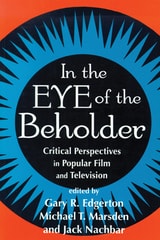
In the Eye of the Beholder
Critical Perspectives in Popular Film and TelevisionEdited by Gary R. Ederton, Michael T. Marsden, and Jack Nachbar
University of Wisconsin Press, 1997

Life-Writing in the History of Archaeology
Critical perspectivesEdited by Clare Lewis and Gabriel Moshenska
University College London, 2023
Travels and adventures of the “great archaeologists” have generated centuries worth of bestselling books that, in turn, have shaped the public perception of archaeology. The lives of archaeologists are entangled with histories of museums and collections, developments in science and scholarship, and narratives of nationalism and colonialism into the present. In recent years, life-writing has played an important role in the surge of new research in the history of archaeology, including ground-breaking studies of discipline formation, institutionalization, and social and intellectual networks. Sources such as diaries, wills, film, and the growing body of digital records are powerful tools for highlighting the contributions of hitherto marginalized archaeological lives including many pioneering women, hired laborers, and other “hidden hands.”
This book brings together critical perspectives on life-writing in the history of archaeology from leading figures in the field. These include studies of archive formation and use, the concept of “dig-writing” as a distinctive genre of archaeological creativity, and reviews of new sources for already well-known lives. Several chapters reflect on the experience of life-writing, review the historiography of the field, and assess the intellectual value and significance of life-writing as a genre. Together, they work to problematize underlying assumptions about this genre, foregrounding methodology, social theory, ethics, and other practice-focused frameworks in conscious tension with previous practices.
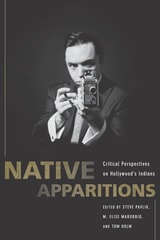
Native Apparitions
Critical Perspectives on Hollywood’s IndiansEdited by Steve Pavlik, M. Elise Marubbio, and Tom Holm
University of Arizona Press, 2017
Native Apparitions offers a critical intervention and response to Hollywood’s representations of Native peoples in film, from historical works by director John Ford to more contemporary works, such as Apocalypto and Avatar. But more than a critique of stereotypes, this book is a timely call for scholarly activism engaged in Indigenous media sovereignty. The collection clusters around three approaches: retrospective analysis, individual film analysis, and Native- and industry-centered testimonials and interviews, which highlight indigenous knowledge and cultural context, thus offering a complex and multilayered dialogic and polyphonic response to Hollywood’s representations.
Using an American Indian studies framework, Native Apparitions deftly illustrates the connection between Hollywood’s representations of Native peoples and broader sociopolitical and historical contexts connected to colonialism, racism, and the Western worldview. Most importantly, it shows the impact of racializing stereotypes on Native peoples, and the resilience of Native peoples in resisting, transcending, and reframing Hollywood’s Indian tropes.
CONTRIBUTORS
Chadwick Allen
Richard Allen
Joanna Hearne
Tom Holm
Jan-Christopher Horak
Jacqueline Land
Andrew Okpeaha MacLean
M. Elise Marubbio
Steve Pavlik
Rose Roberts
Myrton Running Wolf
Richard M. Wheelock
Security Disarmed
Critical Perspectives on Gender, Race, and MilitarizationMorgen, Sandra
Rutgers University Press, 2008
In Security Disarmed, scholars, policy planners, and activists come together to think critically about the human cost of violence and viable alternatives to armed conflict. Arranged in four parts--alternative paradigms of security, cross-national militarization, militarism in the United States, and pedagogical and cultural concerns--the book critically challenges militarization and voices an alternative encompassing vision of human security by analyzing the relationships among gender, race, and militarization. This collection of essays evaluates and resists the worldwide crisis of militarizationùincluding but going beyond American military engagements in the twenty-first century.
Siting Postcoloniality
Critical Perspectives from the East Asian SinospherePheng Cheah and Caroline Hau, editors
Duke University Press, 2023
Contributors. Pheng Cheah, Dai Jinhua, Caroline S. Hau, Elaine Yee Lin Ho, Wendy Larson, Liao Ping-hui, Lin Pei-yin, Lo Kwai-Cheung, Lui Tai-lok, Pang Laikwan, Lisa Rofel, David Der-wei Wang, Erebus Wong, Robert J. C. Young
Student Success Librarianship
Critical Perspectives on an Evolving ProfessionMelody Lee Rood
Assoc of College & Research Libraries, 2025
Student Success Librarianship: Critical Perspectives on an Evolving Profession examines this position through a critical lens and provides insight and advice to help the profession work toward a positive evolution of this important role. In three sections—Theory, Praxis, and Research—chapters written by student success librarians explore how to articulate, set boundaries for, and bring our humanity to the role; address student mental health and provide multilingual resources and support; and map both the current state of student success and a vision for its future.
Student success librarians can feel alone in both their love for and critiques of their profession and their roles within it. Student Success Librarianship can help you celebrate your work, find areas of improvement, and offers validation and inspiration.
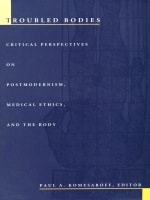
Troubled Bodies
Critical Perspectives on Postmodernism, Medical Ethics, and the BodyPaul A. Komesaroff
Duke University Press, 1995
These essays examine the ways in which the consideration of ethical questions is shaped by the structures of knowledge and communication at work in clinical practice, by current assumptions regarding the concept of the body, and by the social and political implications of both. Representing various perspectives including medicine, nursing, philosophy, and sociology, these essays look anew at issues of abortion, reproductive technologies, the doctor-patient relationship, the social construction of illness, the cultural assumptions and consequences of medicine, and the theoretical presuppositions underlying modern psychiatry. Diverging from the tenets of mainstream bioethics, Troubled Bodies suggests that, rather than searching for the correct "coherent perspective" from which to draw ethical principles, we must apprehend the complexity and diversity of the discursive systems within which we dwell.