Results by title
9 books match the query 'Cruelty'
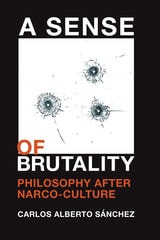
A Sense of Brutality
Philosophy after Narco-CultureCarlos Alberto Sánchez
Amherst College Press, 2020
"The study is original, bringing a wide range of voices into dialogue to present a problem that is pressing and deserving of careful analysis. The study will contribute to the field of Latin American philosophy in important ways... This is the only book by a philosopher on the topic of narco-culture, and I think it’s an important contribution to a topic that should be addressed by philosophers." —Elizabeth Millán, DePaul University
Agitated States
Performance in the American Theater of CrueltyAnthony Kubiak
University of Michigan Press, 2002
Beginning with the writings of John Winthrop and others, through the Federalist and "romantic" stages of American cultural life, and into the modern and contemporary periods, Anthony Kubiak finds an America not usually discovered by traditional or materialist approaches to history. He deploys the psychoanalytic theory of Jacques Lacan, the cultural theory of SlavojZizek, and the performance theory of Herbert Blau in an unparalleled reappraisal of dominant American identity, culture, and history.
Anthony Kubiak is Associate Professor of English, University of South Florida. He is also author of Stages of Terror: Terrorism, Ideology, and Coercion as Theatre History.
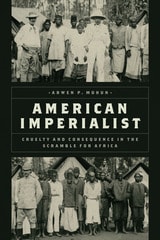
American Imperialist
Cruelty and Consequence in the Scramble for AfricaArwen P. Mohun
University of Chicago Press, 2023
Richard Dorsey Mohun spent his career circulating among the eastern United States, the cities and courts of Europe, and the African continent, as he served the US State Department at some points and King Leopold of Belgium at others. A freelance imperialist, he implemented the schemes of American investors and the Congo Free State alike. Without men like him, Africa’s history might have unfolded very differently. How did an ordinary son of a Washington bookseller become the agent of American corporate greed and European imperial ambition? Why did he choose to act in ways that ranged from thoughtless and amoral to criminal and unforgivable?
With unblinking clarity and precision, historian Arwen P. Mohun interrogates the life and actions of her great-grandfather in American Imperialist. She seeks not to excuse the man known as Dorsey but to understand how individual ambition and imperial lust fueled each other, to catastrophic ends. Ultimately, she offers a nuanced portrait of how her great-grandfather’s pursuit of career success and financial security for his family came at a tragic cost to countless Africans.
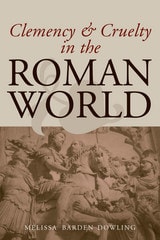
Clemency and Cruelty in the Roman World
Melissa Barden Dowling
University of Michigan Press, 2006
In this first thorough study of the origins of clemency, Dowling provides a vivid look at the ideology of clemency and new philosophies of mercy and cruelty in Western society, through an examination of ancient art, literature, historical documents, and archaeological artifacts. By illuminating the emergence of mercy and forgiveness as social concepts, and the mechanisms by which peoples are transformed in response to changes in power structures, Dowling makes an important contribution to the study of the ancient Roman world, as well as to modern Western culture.
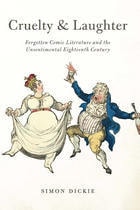
Cruelty and Laughter
Forgotten Comic Literature and the Unsentimental Eighteenth CenturySimon Dickie
University of Chicago Press, 2011
Eighteenth-century British culture is often seen as polite and sentimental—the creation of an emerging middle class. Simon Dickie disputes these assumptions in Cruelty and Laughter, a wildly enjoyable but shocking plunge into the forgotten comic literature of the age. Beneath the surface of Enlightenment civility, Dickie uncovers a rich vein of cruel humor that forces us to recognize just how slowly ordinary human sufferings became worthy of sympathy.
Delving into an enormous archive of comic novels, jestbooks, farces, variety shows, and cartoons, Dickie finds a vast repository of jokes about cripples, blind men, rape, and wife-beating. Epigrams about syphilis and scurvy sit alongside one-act comedies about hunchbacks in love. He shows us that everyone—rich and poor, women as well as men—laughed along. In the process, Dickie also expands our understanding of many of the century’s major authors, including Samuel Richardson, Lady Mary Wortley Montagu, Tobias Smollett, Frances Burney, and Jane Austen. He devotes particular attention to Henry Fielding’s Joseph Andrews, a novel that reflects repeatedly on the limits of compassion and the ethical problems of laughter. Cruelty and Laughter is an engaging, far-reaching study of the other side of culture in eighteenth-century Britain.
Cruelty as Citizenship
How Migrant Suffering Sustains White DemocracyCristina Beltrán
University of Minnesota Press, 2020
Why are immigrants from Mexico and Latin America such an affectively charged population for political conservatives?
More than a decade before the election of Donald Trump, vitriolic and dehumanizing rhetoric against migrants was already part of the national conversation. Situating the contemporary debate on immigration within America’s history of indigenous dispossession, chattel slavery, the Mexican-American War, and Jim Crow, Cristina Beltrán reveals white supremacy to be white democracy—a participatory practice of racial violence, domination, and exclusion that gave white citizens the right to both wield and exceed the law. Still, Beltrán sees cause for hope in growing movements for migrant and racial justice.
Forerunners is a thought-in-process series of breakthrough digital works. Written between fresh ideas and finished books, Forerunners draws on scholarly work initiated in notable blogs, social media, conference plenaries, journal articles, and the synergy of academic exchange. This is gray literature publishing: where intense thinking, change, and speculation take place in scholarship.
Deformative Fictions
Cruelty and Narrative Ethics in Twentieth-Century Latin American LiteratureAshley Hope Pérez
The Ohio State University Press, 2024
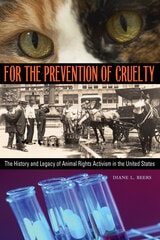
For the Prevention of Cruelty
The History and Legacy of Animal Rights Activism in the United StatesDiane L. Beers
Ohio University Press, 2006
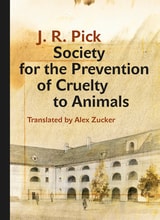
Society for the Prevention of Cruelty to Animals
A Humorous – Insofar as That Is Possible – Novella from the GhettoJ. R. Pick
Karolinum Press, 2018
Tony suffers from tuberculosis, and, lying in his hospital bed one day, he decides to set up an animal welfare organization. Even though no animals are permitted in the camp, he is determined to find just one creature he can care for and protect—and his determination is contagious. A group of older boys, including Tony’s best friend, Ernie, aid him in his quest. Soon they’re joined by Tony’s mother—and her coterie of boyfriends. Eventually, they find Tony his pet: a mouse, which he names and carefully guards in a box hidden beneath his bed. But in the fall of 1944, the transports to Auschwitz begin.
As moving as it is irreverent, Pick’s novella draws on the two years he spent imprisoned in Terezín in his late teens. With cutting black humor, he shines a light on both the absurdities and injustices of the Nazi-run Jewish ghetto, using his literary artistry to portray in stunning shorthand an experience of the Holocaust that pure histories could never convey.