Results by title
3 books match the query 'Cuban literature'
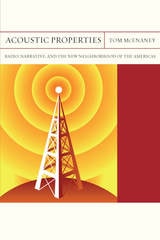
Acoustic Properties
Radio, Narrative, and the New Neighborhood of the AmericasTom McEnaney
Northwestern University Press, 2017
Based on original archival research in Buenos Aires, Havana, Paris, and the United States, the book develops a literary media theory that understands sound as a transmedial phenomenon and radio as a transnational medium. Analyzing the construction of new social and political relations in the wake of the United States’ 1930s Good Neighbor Policy, Acoustic Properties challenges standard narratives of hemispheric influence through new readings of Richard Wright’s cinematic work in Argentina, Severo Sarduy’s radio plays in France, and novels by John Dos Passos, Manuel Puig, Raymond Chandler, and Carson McCullers. Alongside these writers, the book also explores Che Guevara and Fidel Castro’s Radio Rebelde, FDR’s fireside chats, Félix Caignet’s invention of the radionovela in Cuba, Evita Perón’s populist melodramas in Argentina, Orson Welles’s experimental New Deal radio, Cuban and U.S. “radio wars,” and the 1960s African American activist Robert F. Williams’s proto–black power Radio Free Dixie.
From the doldrums of the Great Depression to the tumult of the Cuban Revolution, Acoustic Properties illuminates how novelists in the radio age converted writing into a practice of listening, transforming realism as they struggled to channel and shape popular power.
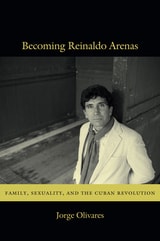
Becoming Reinaldo Arenas
Family, Sexuality, and The Cuban RevolutionJorge Olivares
Duke University Press, 2013
Through insightful close readings of a selection of Arenas's works, including unpublished manuscripts and correspondence, Olivares examines the writer's personal, political, and artistic trajectory, focusing on his portrayals of family, sexuality, exile, and nostalgia. He documents Arenas's critical engagement with cultural and political developments in revolutionary Cuba and investigates the ways in which Arenas challenged literary and national norms. Olivares's analysis shows how Arenas drew on his life experiences to offer revealing perspectives on the Cuban Revolution, the struggles of Cuban exiles, and the politics of sexuality.

Literature and Liminality
Festive Readings in the Hispanic TraditionGustavo Pérez Firmat
Duke University Press, 1986
Gustavo Perez Firmat examines three of these marginal or liminal phenomena—paying particular attention to the distinction between "center" and "periphery"—as they appear in Hispanic literature. Carnival (the traditional festival in which normal behavior is overturned), choteo (an insulting form of humor), and disease are three liminal entities discussed. Less an attempt to frame a general theory of such "liminalities" than an effort to demonstrate the interpretive power of the liminality concept, this work challenges conventional boundaries of critical sense and offers new insights into a variety of questions, among them the notion of convertability in psychoanalysis and the relation of New World culture to its European forebears.