Results by title
4 books match the query 'Cultural Activism'
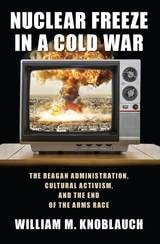
Nuclear Freeze in a Cold War
The Reagan Administration, Cultural Activism, and the End of the Arms RaceWilliam M. Knoblauch
University of Massachusetts Press, 2017
The early 1980s were a tense time. The nuclear arms race was escalating, Reagan administration officials bragged about winning a nuclear war, and superpower diplomatic relations were at a new low. Nuclear war was a real possibility and antinuclear activism surged. By 1982 the Nuclear Freeze campaign had become the largest peace movement in American history. In support, celebrities, authors, publishers, and filmmakers saturated popular culture with critiques of Reagan's arms buildup, which threatened to turn public opinion against the president.
Alarmed, the Reagan administration worked to co-opt the rhetoric of the nuclear freeze and contain antinuclear activism. Recently declassified White House memoranda reveal a concerted campaign to defeat activists' efforts. In this book, William M. Knoblauch examines these new sources, as well as the influence of notable personalities like Carl Sagan and popular culture such as the film The Day After, to demonstrate how cultural activism ultimately influenced the administration's shift in rhetoric and, in time, its stance on the arms race.
Alarmed, the Reagan administration worked to co-opt the rhetoric of the nuclear freeze and contain antinuclear activism. Recently declassified White House memoranda reveal a concerted campaign to defeat activists' efforts. In this book, William M. Knoblauch examines these new sources, as well as the influence of notable personalities like Carl Sagan and popular culture such as the film The Day After, to demonstrate how cultural activism ultimately influenced the administration's shift in rhetoric and, in time, its stance on the arms race.
[more]
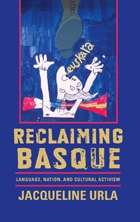
Reclaiming Basque
Language, Nation, and Cultural ActivismJacqueline Urla
University of Nevada Press, 2015
The Basque language, Euskara, is one of Europe’s most ancient tongues and a vital part of today’s lively Basque culture. Reclaiming Basque examines the ideology, methods, and discourse of the Basque-language revitalization movement over the course of the past century and the way this effort has unfolded alongside the simultaneous Basque nationalist struggle for autonomy. Jacqueline Urla employs extensive long-term fieldwork, interviews, and close examination of a vast range of documents in several media to uncover the strategies that have been used to preserve and revive Euskara and the various controversies that have arisen among Basque-language advocates.
[more]
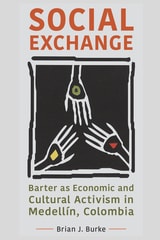
Social Exchange
Barter as Economic and Cultural Activism in Medellín, ColombiaBrian J. Burke
Rutgers University Press, 2022
Money occupies a powerful place in our lives – it is a problem, a goal, and motivator, a measure of self-worth and national progress, and even an influence on how we relate to each other and to nature – but what happens when communities start to reinvent money and markets? Over the last twenty-five years, grassroots activists in Medellín, Colombia, have used barter markets and community currencies as one strategy to re-weave a social fabric shredded by violence and to establish an economy founded on respect and reciprocity rather than exploitation. In Social Exchange, Brian J. Burke provides a deep ethnographic investigation of this activism and its effects. This story draws us into the cultural and material effects of capitalism and narco-violence, while also helping us understand what new radical imaginations look like and how people bring them to life. The result is an intimate glimpse of urban life in Latin America, as well as a broader analysis of non-capitalist or post-capitalist possibility.
[more]
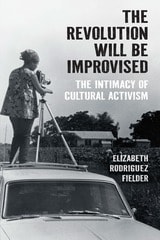
The Revolution Will Be Improvised
The Intimacy of Cultural ActivismElizabeth Rodriguez Fielder
University of Michigan Press, 2024
The Revolution Will Be Improvised: The Intimacy of Cultural Activism traces intimate encounters between activists and local people of the civil rights movement through an archive of Black and Brown avant-gardism. In the 1960s, Student Nonviolent Coordinating Committee (SNCC) activists engaged with people of color working in poor communities to experiment with creative approaches to liberation through theater, media, storytelling, and craft making. With a dearth of resources and an abundance of urgency, SNCC activists improvised new methods of engaging with communities that created possibilities for unexpected encounters through programs such as The Free Southern Theater, El Teatro Campesino, and the Poor People’s Corporation.
Reading the output of these programs, Elizabeth Rodriguez Fielder argues that intimacy-making became an extension of participatory democracy. In doing so, Rodriguez Fielder supplants the success-failure binary for understanding social movements, focusing instead on how care work aligns with creative production. The Revolution Will Be Improvised returns to improvisation’s roots in economic and social necessity and locates it as a core tenet of the aesthetics of obligation, where a commitment to others drives the production and result of creative work. Thus, this book puts forward a methodology to explore the improvised, often ephemeral, works of art activism.
Reading the output of these programs, Elizabeth Rodriguez Fielder argues that intimacy-making became an extension of participatory democracy. In doing so, Rodriguez Fielder supplants the success-failure binary for understanding social movements, focusing instead on how care work aligns with creative production. The Revolution Will Be Improvised returns to improvisation’s roots in economic and social necessity and locates it as a core tenet of the aesthetics of obligation, where a commitment to others drives the production and result of creative work. Thus, this book puts forward a methodology to explore the improvised, often ephemeral, works of art activism.
[more]