Results by title
6 books match the query 'Cultural Critique'
American Idyll
Academic Antielitism as Cultural CritiqueCatherine Liu
University of Iowa Press, 2011
A trenchant critique of failure and opportunism across the political spectrum, American Idyll argues that social mobility, once a revered hallmark of American society, has ebbed, as higher education has become a mechanistic process for efficient sorting that has more to do with class formation than anything else. Academic freedom and aesthetic education are reserved for high-scoring, privileged students and vocational education is the only option for economically marginal ones.
Throughout most of American history, antielitist sentiment was reserved for attacks against an entrenched aristocracy or rapacious plutocracy, but it has now become a revolt against meritocracy itself, directed against what insurgents see as a ruling class of credentialed elites with degrees from exclusive academic institutions. Catherine Liu reveals that, within the academy and stemming from the relatively new discipline of cultural studies, animosity against expertise has animated much of the Left’s cultural criticism.
By unpacking the disciplinary formation and academic ambitions of American cultural studies, Liu uncovers the genealogy of the current antielitism, placing the populism that dominates headlines within a broad historical context. In the process, she emphasizes the relevance of the historical origins of populist revolt against finance capital and its political influence. American Idyll reveals the unlikely alliance between American pragmatism and proponents of the Frankfurt School and argues for the importance of broad frames of historical thinking in encouraging robust academic debate within democratic institutions. In a bold thought experiment that revives and defends Richard Hofstadter’s theories of anti-intellectualism in American life, Liu asks, What if cultural populism had been the consensus politics of the past three decades?
American Idyll shows that recent antielitism does nothing to redress the source of its discontent—namely, growing economic inequality and diminishing social mobility. Instead, pseudopopulist rage, in conservative and countercultural forms alike, has been transformed into resentment, content merely to take down allegedly elitist cultural forms without questioning the real political and economic consolidation of powers that has taken place in America during the past thirty years.
American Studies in Dialogue
Radical Reconstructions between Curriculum and Cultural CritiqueMatthias Oppermann
Campus Verlag, 2010
American studies has changed drastically over the past few decades, as a new wave of scholars—armed with groundbreaking ideas and more extensive methods of research—flocked to the relatively young field. This focus on scholarship, though necessary to the advancement of the discipline, has left pedagogy largely ignored. In American Studies in Dialogue, Matthias Oppermann consciously resists the traditional academic split between scholarship and classroom practice. His study calls for a radical reconstruction of American studies grounded in an understanding of cultural analysis and critique as genuinely dialogic processes of research and pedagogy. Drawing on case studies ranging from courses in early American civilization to recent multimedia projects, American Studies in Dialogue will be required reading for American studies scholars and teachers.
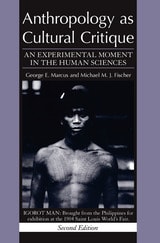
Anthropology as Cultural Critique
An Experimental Moment in the Human SciencesGeorge E. Marcus and Michael M. J. Fischer
University of Chicago Press, 1999
Starting Over
Feminism and the Politics of Cultural CritiqueJudith Newton
University of Michigan Press, 1994
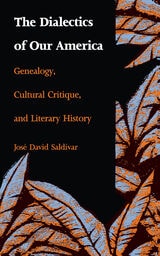
The Dialectics of Our America
Genealogy, Cultural Critique, and Literary HistoryJosé David Saldívar
Duke University Press, 1991
Saldívar pursues this goal through an array of oppositional critical and creative practices. He analyzes a range of North American writers of color (Rolando Hinojosa, Gloria Anzaldúa, Arturo Islas, Ntozake Shange, and others) and Latin American authors (José Martí, Roberto Fernández Retamar, Gabriel García Márquez, and others), whose work forms a radical critique of the dominant culture, its politics, and its restrictive modes of expression. By doing so, Saldívar opens the traditional American canon to a dialog with other voices, not just the voices of national minorities, but those of regional cultures different from the prevalent anglocentric model.
The Dialectics of Our America, in its project to expand the “canon” and define a pan-American literary tradition, will make a critical difference in ongoing attempts to reconceptualize American literary history.
The Task of Cultural Critique
Teresa L. Ebert
University of Illinois Press, 2008
Through groundbreaking analyses of cultural texts, Ebert questions the contemporary Derridian dogma that asserts "the future belongs to ghosts." Events-to-come are not spectral, she contends, but the material outcome of global class struggles. Not "hauntology" but history produces cultural practices and their conflictive representations--from sexuality, war, and consumption to democracy, torture, globalization, and absolute otherness. With close readings of texts from Proust and Balzac to "Chick Lit," from Lukács, de Man, Deleuze, and Marx to Derrida, Žižek, Butler, Kollontai, and Agamben, the book opens up new directions for cultural critique today.