Results by title
12 books match the query 'Cultural diplomacy'
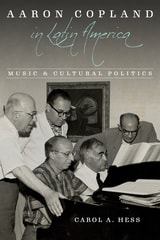
Aaron Copland in Latin America
Music and Cultural PoliticsCarol A. Hess
University of Illinois Press, 2023
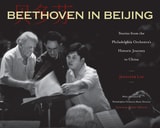
Beethoven in Beijing
Stories from the Philadelphia Orchestra's Historic Journey to ChinaJennifer Lin
Temple University Press, 2022
In 1973, Western music was banned in the People’s Republic of China. But in a remarkable breakthrough cultural exchange, the Philadelphia Orchestra conducted a tour of closed-off China, becoming the first American orchestra to visit the communist nation. Jennifer Lin’s Beethoven in Beijing provides a fabulous photo-rich oral history of this boundary-breaking series of concerts the orchestra performed under famed conductor Eugene Ormandy.
Lin draws from interviews, personal diaries, and news accounts to give voice to the American and Chinese musicians, diplomats, journalists, and others who participated in and witnessed this historic event. Beethoven in Beijing is filled with glorious images as well as anecdotes ranging from amusing sidewalk Frisbee sessions and acupuncture treatments for sore musicians to a tense encounter involving Madame Mao dictating which symphony was to be played at a concert.
A companion volume to the film of the same name, Beethoven in Beijing shows how this 1973 tour came at the dawn of a resurgence of interest in classical music in China—now a vital source of revenue for touring orchestras.
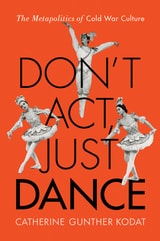
Don't Act, Just Dance
The Metapolitics of Cold War CultureCatherine Gunther Kodat
Rutgers University Press, 2014
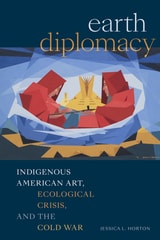
Earth Diplomacy
Indigenous American Art, Ecological Crisis, and the Cold WarJessica L. Horton
Duke University Press, 2024
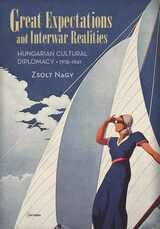
Great Expectations and Interwar Realities
Cultural Diplomacy in Horthy's HungaryZsolt Nagy
Central European University Press, 2017
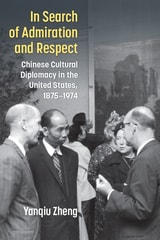
In Search of Admiration and Respect
Chinese Cultural Diplomacy in the United States, 1875–1974Yanqui Zheng
University of Michigan Press, 2024
In Search of Admiration and Respect uses the Chinese case to underscore what Zheng calls “infrastructure of persuasion,” in which American philanthropy, museums, exhibitions, and show business had disproportionate power in setting the agenda of unequal intercultural encounters. This volume also provides historical insights into China’s ongoing quest for international recognition. Drawing upon diverse archival sources, Zheng expands the contours of cultural diplomacy beyond established powers and sheds light on the limited agency of peripheral nations in their self-representation.
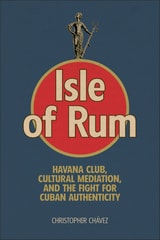
Isle of Rum
Havana Club, Cultural Mediation, and the Fight for Cuban AuthenticityChristopher Chávez
Rutgers University Press, 2024
Rather than laying claim to authentic Cuban culture, Chávez explores which aspects of Cuban culture are deemed most compelling and, therefore, most profitable by corporate marketers. As a joint venture between the Cuban state and Pernod Ricard, a global spirits marketer based in Paris, Havana Club embodies the larger process of economic reform, which was meant to reintegrate Cuba into global markets during Cuba’s Special Period in a Time of Peace.
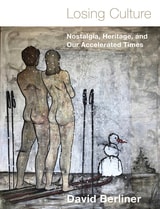
Losing Culture
Nostalgia, Heritage, and Our Accelerated TimesDavid Berliner
Rutgers University Press, 2020
Such sentiments get echoed around the world, from aging Trump supporters in West Virginia to young villagers in West Africa. But what is triggering this sense of cultural loss, and to what ends does this rhetoric get deployed?
To answer these questions, anthropologist David Berliner travels around the world, from Guinea-Conakry, where globalization affects the traditional patriarchal structure of cultural transmission, to Laos, where foreign UNESCO experts have become self-appointed saviors of the nation’s cultural heritage. He also embarks on a voyage of critical self-exploration, reflecting on how anthropologists handle their own sense of cultural alienation while becoming deeply embedded in other cultures. This leads into a larger examination of how and why we experience exonostalgia, a longing for vanished cultural heydays we never directly experienced.
Losing Culture provides a nuanced analysis of these phenomena, addressing why intergenerational cultural transmission is vital to humans, yet also considering how efforts to preserve disappearing cultures are sometimes misguided or even reactionary. Blending anthropological theory with vivid case studies, this book teaches us how to appreciate the multitudes of different ways we might understand loss, memory, transmission, and heritage.
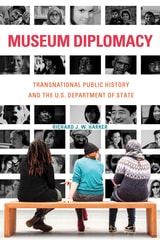
Museum Diplomacy
Transnational Public History and the U.S. Department of StateRichard J. W. Harker
University of Massachusetts Press, 2020
As more historic sites and museums seek to surmount social, cultural, and economic barriers between themselves and their communities in their exhibitions and programming, the Museums Connect program provides important lessons on how to overcome entrenched hierarchies of power in public history.
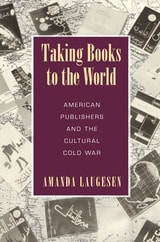
Taking Books to the World
American Publishers and the Cultural Cold WarAmanda Laugesen
University of Massachusetts Press, 2017
In Taking Books to the World, Amanda Laugesen tells the story of this purposeful enterprise, demonstrating the mix of goodwill and political drive behind its efforts to create modern book industries in developing countries. Examining the project through a clarifying lens, she reveals the ways Franklin's work aligned with cultural currents, exposing the imperial beliefs, charitable hopes, and intellectual reasoning behind this global experiment.
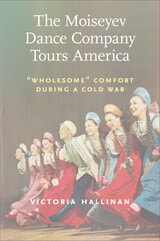
The Moiseyev Dance Company Tours America
"Wholesome" Comfort during a Cold WarVictoria Hallinan
University of Massachusetts Press, 2023
During the Cold War, dancers and musicians from the United States and the USSR were drawn into the battle for hearts and minds, crossing the Iron Curtain to prove their artistic and ideological prowess. After the passage of the Lacy-Zarubin Agreement, direct cultural exchange between the two superpowers opened up, and the Moiseyev Dance Company arrived in the United States in 1958. The first Soviet cultural representatives to tour America, this folk-dance troupe’s repertoire included dances from territories controlled or influenced by the USSR, including Uzbekistan, Crimea, and Poland.
Drawing on contemporary personal and published accounts, Victoria Hallinan explores why the dancers garnered overwhelming acclaim during their multicity tour and Ed Sullivan Show appearance. The “boy-meets-girl” love stories of the dances, and their idealized view of multiple Soviet cultures living together in harmony, presented a comforting image of post–World War II gender norms and race relations for audiences. Americans saw the dancers—their supposed enemies—as humans rather than agents of communist contagion.
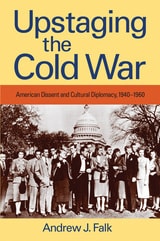
Upstaging the Cold War
American Dissent and Cultural Diplomacy, 1940-1960Andrew J. Falk
University of Massachusetts Press, 2010
Traditional interpretations of the 1950s have emphasized how American anti-communists deployed censorship and the blacklist to silence dissent, particularly in the realm of foreign policy. Yet those efforts at repression did not always succeed. Throughout the early years of the Cold War, a significant number of writers and performers continued to express controversial views about international relations in Hollywood films, through the new medium of television, on the Broadway stage, and from behind the scenes.
By promoting superpower cooperation, decolonization, nuclear disarmament, and other taboo causes, dissident artists such as Lillian Hellman, Arthur Miller, Rod Serling, Dalton Trumbo, Reginald Rose, and Paddy Chayefsky managed both to stretch the boundaries of Cold War ideology and to undermine some of its basic assumptions. Working at times under assumed names and in some cases outside the United States, they took on the role of informal diplomats who competed with Washington in representing America to the world.
Ironically, the dissidents' international appeal eventually persuaded the U.S. foreign policy establishment that their unconventional views could be an asset in the Cold War contest for “hearts and minds,” and their artistic work an effective means to sell American values and culture abroad. By the end of the 1950s, the Eisenhower administration not only appropriated the work of these talented artists but enlisted some of them to serve as official voices of Cold War cultural diplomacy.