Results by title

3 books match the query 'Cumberland River Valley (Ky. and Tenn.)'
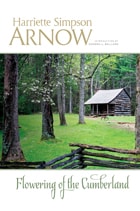
cover of Flowering of the Cumberland

Flowering of the Cumberland

Harriette Simpson Arnow

Michigan State University Press, 2013
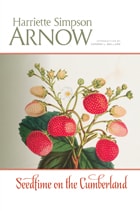
Harriette Arnow’s search for truth as early American settlers knew it began as a child—the old songs, handed-down stories, and proverbs that colored her world compelled her on a journey that informs her depiction of the Cumberland River Valley in Kentucky and Tennessee. Arnow drew from court records, wills, inventories, early newspapers, and unpublished manuscripts to write Seedtime on the Cumberland, which chronicles the movement of settlers away from the coast, as well as their continual refinement of the “art of pioneering.” A companion piece, this evocative history covers the same era, 1780–1803, from the first settlement in what was known as “Middle Tennessee” to the Louisiana Purchase. When Middle Tennessee was the American frontier, the men and women who settled there struggled for survival, land, and human dignity. The society they built in their new home reflected these accomplishments, vulnerabilities, and ambitions, at a time when America was experiencing great political, industrial, and social upheaval.
[more]
cover of Seedtime on the Cumberland

Seedtime on the Cumberland

Harriette Simpson Arnow

Michigan State University Press, 2013
Harriette Arnow’s roots ran deep into the Cumberland River country of Kentucky and Tennessee, and out of her closeness to that land and its people comes this remarkable history. The first of two companion volumes, Seedtime on the Cumberland captures the triumphs and tragedies of everyday life on the frontier, a place where the land both promised and demanded much. In the years between 1780 and 1803, this part of the country presented tremendous opportunity to those who endeavored to make a new life there. Drawing on an extensive body of primary sources—including family journals, court records, and personal inventories—Arnow paints a stirring portrait of these intrepid people. Like the midden at some ancient archaeological site, these accumulated items become a treasure awaiting the insight and organization of an interpreter. Arnow also draws on a medium she believed in unerringly—oral history, the rich tradition that shaped so much of her own family and regional experience. A classic study of the Old Southwest, Seedtime on the Cumberland documents with stirring perceptiveness the opening of the Appalachian frontier, the intersection of settlers and Native Americans, and the harsh conditions of life in the borderlands.
[more]
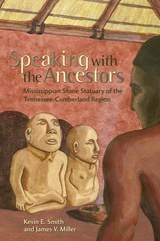
cover of Speaking with the Ancestors: Mississippian Stone Statuary of the Tennessee-Cumberland Region

Speaking with the Ancestors

Mississippian Stone Statuary of the Tennessee-Cumberland Region

Kevin E. Smith and James V. Miller

University of Alabama Press, 2008

When European explorers began their initial forays into southeastern North America in the 16th and 17th centuries they encountered what they called temples and shrines of native peoples, often decorated with idols in human form made of wood, pottery, or stone.  The idols were fascinating to write about, but having no value to explorers searching for gold or land, there are no records of these idols being transported to the Old World, and mention of them seems to cease about the 1700s.  However, with the settling of the fledgling United States in the 1800s, farming colonists began to unearth stone images in human form from land formerly inhabited by the native peoples. With little access to the records of the 16th and 17th centuries, debate and speculation abounded by the public and scholars alike concerning their origin and meaning.

During the last twenty years the authors have researched over 88 possible examples of southeastern Mississippian stone statuary, dating as far back as 1,000 years ago, and discovered along the river valleys of the interior Southeast. Independently and in conjunction, they have measured, analyzed, photographed, and traced the known history of the 42 that appear in this volume. Compiling the data from both early documents and public and private collections, the authors remind us that the statuary should not be viewed in isolation, but rather as regional expressions of a much broader body of art, ritual, and belief.

[more]