Results by title

5 books match the query 'Dance in literature'
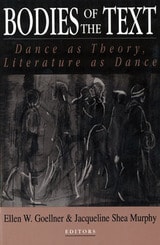
cover of Bodies of the Text: Dance as Theory, Literature as Dance

Bodies of the Text

Dance as Theory, Literature as Dance

Edited by Ellen W Goellner

Rutgers University Press, 1995
Dance and literary studies have traditionally been at odds: dancers and dance critics have understood academic analysis to be overly invested in the mind at the expense of body signification; literary critics and theorists have seen dance studies as anti-theoretical, even anti-intellectual. Bodies of the Text is the first book-length study of the interconnections between the two arts and the body of writing about them. The essays, by scholar-critics of dance and literature, explore dances actual and fictional to offer powerful new insights into issues of gender, race, ethnicity, popular culture, feminist aesthetics, historical "embodiment," identity politics, and narrativity. The general introduction traces the genealogy of dance studies in the academy to suggest why critical and theoretical attention to dance--and dance's challenges to writing--is both compelling and overdue. A milestone in interdisciplinary studies, Bodies of the Text opens both its fields to new inquiry, new theoretical precision, and to new readers and writers. 
[more]
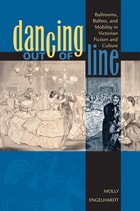
cover of Dancing out of Line: Ballrooms, Ballets, and Mobility in Victorian Fiction and Culture

Dancing out of Line

Ballrooms, Ballets, and Mobility in Victorian Fiction and Culture

Molly Engelhardt

Ohio University Press, 2009

Dancing out of Line transports readers back to the 1840s, when the craze for social and stage dancing forced Victorians into a complex relationship with the moving body in its most voluble, volatile form.

By partnering cultural discourses with representations of the dance and the dancer in novels such as Jane Eyre, Bleak House, and Daniel Deronda, Molly Engelhardt makes explicit many of the ironies underlying Victorian practices that up to this time have gone unnoticed in critical circles. She analyzes the role of the illustrious dance master, who created and disseminated the manners and moves expected of fashionable society, despite his position as a social outsider of nebulous origins. She describes how the daughters of the social elite were expected to “come out” to society in the ballroom, the most potent space in the cultural imagination for licentious behavior and temptation. These incongruities generated new, progressive ideas about the body, subjectivity, sexuality, and health.

Engelhardt challenges our assumptions about Victorian sensibilities and attitudes toward the sexual/social roles of men and women by bringing together historical voices from various fields to demonstrate the versatility of the dance, not only as a social practice but also as a forum for Victorians to engage in debate about the body and its pleasures and pathologies.

[more]
cover of Gendering Bodies/Performing Art: Dance and Literature in Early Twentieth-Century British Culture

Gendering Bodies/Performing Art

Dance and Literature in Early Twentieth-Century British Culture

Amy Koritz

University of Michigan Press, 1995
Gendering Bodies / Performing Art is the first book that attempts a conceptual integration of dance and literary history in British culture. It attempts to make visible the role of dance in creating, reinforcing, and challenging developments in aesthetic practice and ideology in which both dance and literature participated. Koritz integrates chapters on dance and dancers- from music hall ballet girls of the 1890s to the prestigious season of Diaghilev's Russian Ballet- with discussions on how major literary figures such as Oscar Wilde, W.B. Yeats, George Bernard Shaw, and T.S. Eliot used dance to further their own aesthetic agendas. In doing so, she provides an illuminating analysis of the connections between literature and dance, and explores the ways in which these two arts actively engaged in cultural processes encompassing both. ". . . provocative and stimulating . . . an invaluable addition to the work that is already available on turn-of-century theater/culture. . . ."--Vivien Gardner, Manchester University "Reaching between the poles of popular music hall and the Ballet Russe, Koritz addresses a series of interrelated, mutually informing discourses in which we overhear the language of the literary community in its accolades and in its outcries. Koritz's book will prove useful to a wide variety of readers; many scholars of English literature will undoubtedly use this book to the fullest, turning to it again and again as a contextual primer for performance issues in their field."--Cheryl Herr, University of Iowa Amy Koritz is Co-Director of the Cultural Studies Program and Assistant Professor of English, Tulane University.
[more]
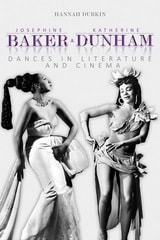
cover of Josephine Baker and Katherine Dunham: Dances in Literature and Cinema

Josephine Baker and Katherine Dunham

Dances in Literature and Cinema

Hannah Durkin

University of Illinois Press, 2019
Josephine Baker and Katherine Dunham were the two most acclaimed and commercially successful African American dancers of their era and among the first black women to enjoy international screen careers. Both also produced fascinating memoirs that provided vital insights into their artistic philosophies and choices. However, difficulties in accessing and categorizing their works on the screen and on the page have obscured their contributions to film and literature. Hannah Durkin investigates Baker and Dunham’s films and writings to shed new light on their legacies as transatlantic artists and civil rights figures. Their trailblazing dancing and choreography reflected a belief that they could use film to confront racist assumptions while also imagining—within significant confines—new aesthetic possibilities for black women. Their writings, meanwhile, revealed their creative process, engagement with criticism, and the ways each mediated cultural constructions of black women's identities. Durkin pays particular attention to the ways dancing bodies function as ever-changing signifiers and de-stabilizing transmitters of cultural identity. In addition, she offers an overdue appraisal of Baker and Dunham's places in cinematic and literary history.
[more]
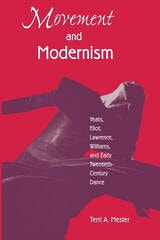
cover of Movement and Modernism: Yeats, Eliot, Williams, and Early Twentieth-Century Dance

Movement and Modernism

Yeats, Eliot, Williams, and Early Twentieth-Century Dance

Terri A. Mester

University of Arkansas Press, 1997

In this critical study, Terri Mester makes solid biographic, thematic, technical, and figurative cases that W. B. Yeats, T. S. Eliot, D. H. Lawrence, and William Carlos Williams turned to dance and dancers—actual and mythic—to reinvigorate their literary practices.
[more]