Results by title
8 books match the query 'Dance music'
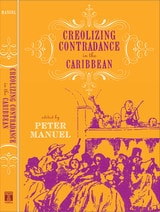
Creolizing Contradance in the Caribbean
Peter Manuel
Temple University Press, 2011
The contradance and quadrille, in their diverse forms, were the most popular, widespread, and important genres of creole caribbean music and dance in the nineteenth century. Throughout the region they constituted sites for interaction of musicians and musical elements of different racial, social, and ethnic origins, and they became crucibles for the evolution of genres like the Cuban danzón and son, the Dominican merengue, and the Haitian mereng.
Creolizing Contradance in the Caribbean is the first book to explore this phenomenon in detail and with a pan-regional perspective. Individual chapters by respected area experts discuss the Spanish, French, and English-speaking Caribbean. For each area they cover the musical and choreographic features, social dynamics, historical development and significance, and discuss them in relation to the broader Caribbean historical context. This groundbreaking text fills a significant gap in studies of Caribbean cultural history and of social dance.
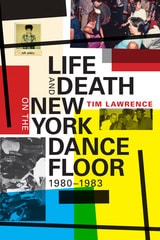
Life and Death on the New York Dance Floor, 1980–1983
Tim Lawrence
Duke University Press, 2016
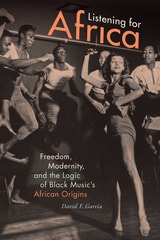
Listening for Africa
Freedom, Modernity, and the Logic of Black Music's African OriginsDavid F. Garcia
Duke University Press, 2017
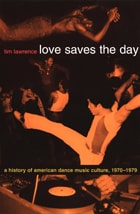
Love Saves the Day
A History of American Dance Music Culture, 1970-1979Tim Lawrence
Duke University Press, 2003
Tales of nocturnal journeys, radical music making, and polymorphous sexuality flow through the arteries of Love Saves the Day like hot liquid vinyl. They are interspersed with a detailed examination of the era’s most powerful djs, the venues in which they played, and the records they loved to spin—as well as the labels, musicians, vocalists, producers, remixers, party promoters, journalists, and dance crowds that fueled dance music’s tireless engine.
Love Saves the Day includes material from over three hundred original interviews with the scene's most influential players, including David Mancuso, Nicky Siano, Tom Moulton, Loleatta Holloway, Giorgio Moroder, Francis Grasso, Frankie Knuckles, and Earl Young. It incorporates more than twenty special dj discographies—listing the favorite records of the most important spinners of the disco decade—and a more general discography cataloging some six hundred releases. Love Saves the Day also contains a unique collection of more than seventy rare photos.
Merengue
Dominican Music and Dominican IdentityPaul Austerlitz
Temple University Press, 1997
Merengue—the quintessential Dominican dance music—has a long and complex history, both on the island and in the large immigrant community in New York City. In this ambitious work, Paul Austerlitz unravels the African and Iberian roots of merengue and traces its growth under dictator Rafael Trujillo and its renewed popularity as an international music.
Using extensive interviews as well as written commentaries, Austerlitz examines the historical and contemporary contexts in which merengue is performed and danced, its symbolic significance, its social functions, and its musical and choreographic structures. He tells the tale of merengue's political functions, and of its class and racial significance. He not only explores the various ethnic origins of this Ibero-African art form, but points out how some Dominicans have tried to deny its African roots.
In today's global society, mass culture often marks ethnic identity. Found throughout Dominican society, both at home and abroad, merengue is the prime marker of Dominican identity. By telling the story of this dance music, the author captures the meaning of mass and folk expression in contemporary ethnicity as well as the relationship between regional, national, and migrant culture and between rural/regional and urban/mass culture. Austerlitz also traces the impact of migration and global culture on the native music, itself already a vibrant intermixture of home-grown merengue forms.
From rural folk idiom to transnational mass music, merengue has had a long and colorful career. Its well-deserved popularity will make this book a must read for anyone interested in contemporary music; its complex history will make the book equally indispensable to anyone interested in cultural studies.
Rebel Dance, Renegade Stance
Timba Music and Black Identity in CubaUmi Vaughan
University of Michigan Press, 2013
Rebel Dance, Renegade Stanceshows how community music-makers and dancers take in all that is around them socially and globally, and publicly and bodily unfold their memories, sentiments, and raw responses within open spaces designated or commandeered for local popular dance. Umi Vaughan, an African American anthropologist, musician, dancer, and photographer "plantao" in Cuba—planted, living like a Cuban—reveals a rarely discussed perspective on contemporary Cuban society during the 1990s, the peak decade of timba, and beyond, as the Cuban leadership transferred from Fidel Castro to his brother. Simultaneously, the book reveals popular dance music in the context of a young and astutely educated Cuban generation of fierce and creative performers.
By looking at the experiences of black Cubans and exploring the notion of "Afro Cuba," Rebel Dance, Renegade Stanceexplains timba's evolution and achieved significance in the larger context of Cuban culture. Vaughan discusses a maroon aesthetic extended beyond the colonial era to the context of contemporary society; describes the dance spaces of Cuba; and examines the performance of identity and desire through the character of the "especulador." This book will find an audience with musicians, anthropologists, ethnomusicologists, interdisciplinary specialists in performance studies, cultural studies, and Latin American and Caribbean studies, as well as laypeople who are interested in Atlantic/African and African American/Africana studies and/or Cuban culture.

Rhythmic Gesture in Mozart
Le Nozze di Figaro and Don GiovanniWye Jamison Allanbrook
University of Chicago Press, 1984
Rumba Rules
The Politics of Dance Music in Mobutu’s ZaireBob W. White
Duke University Press, 2008
Drawing partly on his experiences as a member of a local dance band in the country’s capital city Kinshasa, White offers extraordinarily vivid accounts of the live music scene, including the relatively recent phenomenon of libanga, which involves shouting the names of wealthy or powerful people during performances in exchange for financial support or protection. With dynamic descriptions of how bands practiced, performed, and splintered, White highlights how the ways that power was sought and understood in Kinshasa’s popular music scene mirrored the charismatic authoritarianism of Mobutu’s rule. In Rumba Rules, Congolese speak candidly about political leadership, social mobility, and what it meant to be a bon chef (good leader) in Mobutu’s Zaire.