Results by title

2 books match the query 'Dar es Salaam (Tanzania)'
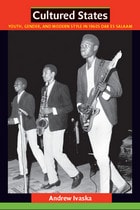
cover of Cultured States: Youth, Gender, and Modern Style in 1960s Dar es Salaam

Cultured States

Youth, Gender, and Modern Style in 1960s Dar es Salaam

Andrew Ivaska

Duke University Press, 2011
Cultured States is a vivid account of the intersections of postcolonial state power, the cultural politics of youth and gender, and global visions of modern style in Dar es Salaam, Tanzania, during the 1960s and early 1970s. Andrew Ivaska describes a cosmopolitan East African capital rocked by debates over youth culture, national cultural policy, the rumored sexual escapades of the postcolonial elite, the content of university education, leftist activism, and the reform of colonial-era marriage laws. If young Tanzanians saw themselves as full-fledged participants in modern global culture, their understandings of the modern conflicted with that of a state launching “decency campaigns” banning cultural forms such as soul music, miniskirts, wigs, and bell-bottoms. Promoted by the political elite as a radical break from the colonial order, these campaigns nonetheless contained strong echoes of colonial assumptions about culture, tradition, and African engagements with the modern city. Exploring the ambivalence over the modern at the heart of these contests, Ivaska uses them as lenses through which to analyze struggles around gender relations and sexual politics, youth and masculinity, and the competition for material resources in a Dar es Salaam in rapid flux. Cultured States is a major contribution to understandings of urban cultural politics; national political culture; social struggles around gender, generation, and wealth; and the transnational dimensions of postcolonial histories too often conceived within national frames.
[more]
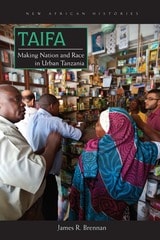
cover of Taifa: Making Nation and Race in Urban Tanzania

Taifa

Making Nation and Race in Urban Tanzania

James R. Brennan

Ohio University Press, 2012

Taifa is a story of African intellectual agency, but it is also an account of how nation and race emerged out of the legal, social, and economic histories in one major city, Dar es Salaam. Nation and race—both translatable as taifa in Swahili—were not simply universal ideas brought to Africa by European colonizers, as previous studies assume. They were instead categories crafted by local African thinkers to make sense of deep inequalities, particularly those between local Africans and Indian immigrants. Taifa shows how nation and race became the key political categories to guide colonial and postcolonial life in this African city.

Using deeply researched archival and oral evidence, Taifa transforms our understanding of urban history and shows how concerns about access to credit and housing became intertwined with changing conceptions of nation and nationhood. Taifa gives equal attention to both Indians and Africans; in doing so, it demonstrates the significance of political and economic connections between coastal East Africa and India during the era of British colonialism, and illustrates how the project of racial nationalism largely severed these connections by the 1970s.

[more]