Results by title
30 books match the query 'Dark'
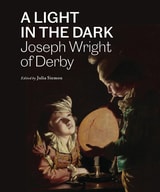
A Light in the Dark
Joseph Wright of DerbyJulia Siemon
J. Paul Getty Trust, The, 0
A timely reexamination of Joseph Wright’s captivating “candlelight” paintings, featuring the recently rediscovered Two Boys with a Bladder.
The dramatic “candlelight” paintings of Joseph Wright of Derby (1734–1797) cast a spell, enthralling viewers with striking scenes that portray human curiosity, the quiet intensity of domestic life, and the excitement of scientific discovery. With a variety of brushstrokes—dabbed here, whiskered there, and dragged elsewhere—Wright pushed boundaries with the transformative power of light. In 2020, the Getty Museum acquired the newly rediscovered Two Boys with a Bladder (1767), a luminous study of innovation, intimacy, and artistic brilliance that challenged established assumptions about Wright and sparked renewed interest in his experiments with light.
A Light in the Dark presents new research to uncover the origins of Two Boys and expand our understanding of Wright's early candlelights, tracing the invention and initial development of his distinctive style. Whereas recent scholarship has maintained an outward approach that ties the artist’s oeuvre to places that he visited, this volume returns the focus to Wright himself—his biography, technique, and hometown of Derby—in a much-needed reexamination. Complete with fresh historical and technical evidence, this is a fascinating look into the inspirations, aspirations, and experiments behind some of the most remarkable paintings in the history of British art.
This volume is published to accompany an exhibition on view at the J. Paul Getty Museum at the Getty Center from November 24, 2026, to March 14, 2027.
Awake in the Dark
The Best of Roger EbertRoger Ebert
University of Chicago Press, 2006
Roger Ebert has been writing film reviews for the Chicago Sun-Times for nearly forty years. And during those four decades, his wide knowledge, keen judgment, prodigious energy, and sharp sense of humor have made him America’s most celebrated film critic. He was the first such critic to win a Pulitzer Prize—one of just three film critics ever to receive that honor—and the only one to have a star dedicated to him on the Hollywood Walk of Fame. His groundbreaking hit TV show, At the Movies, meanwhile, has made “two thumbs up” one of the most coveted hallmarks in the entire industry.
No critic alive has reviewed more movies than Roger Ebert, and yet his essential writings have never been collected in a single volume—until now. With Awake in the Dark, both fans and film buffs can finally bask in the best of Ebert’s work. The reviews, interviews, and essays collected here present a picture of this indispensable critic’s numerous contributions to the cinema and cinephilia. From The Godfather to GoodFellas, from Cries and Whispers to Crash, the reviews in Awake in the Dark span some of the most exceptional periods in film history, from the dramatic rise of rebel Hollywood and the heyday of the auteur, to the triumph of blockbuster films such as Star Wars and Raiders of the Lost Ark, to the indie revolution that is still with us today.
The extraordinary interviews gathered in Awake in the Dark capture Ebert engaging not only some of the most influential directors of our time—Martin Scorsese, Steven Spielberg, Woody Allen, Robert Altman, Werner Herzog, and Ingmar Bergman—but also some of the silver screen’s most respected and dynamic personalities, including actors as diverse as Robert Mitchum, James Stewart, Warren Beatty, and Meryl Streep. Ebert’s remarkable essays play a significant part in Awake in the Dark as well. The book contains some of Ebert’s most admired pieces, among them a moving appreciation of John Cassavetes and a loving tribute to the virtues of black-and-white films.
If Pauline Kael and Andrew Sarris were godmother and godfather to the movie generation, then Ebert is its voice from within—a writer whose exceptional intelligence and daily bursts of insight and enthusiasm have shaped the way we think about the movies. Awake in the Dark, therefore, will be a treasure trove not just for fans of this seminal critic, but for anyone desiring a fascinating and compulsively readable chronicle of film since the late 1960s.
Awake in the Dark
The Best of Roger Ebert: Second EditionRoger Ebert
University of Chicago Press, 2017
Arriving fifty years after Ebert published his first film review in 1967, this second edition of Awake in the Dark collects Ebert’s essential writings into a single, irresistible volume. Featuring new Top Ten Lists and reviews of the years’ finest films through 2012, this edition allows both fans and film buffs to bask in the best of an extraordinary lifetime’s work. Including reviews from The Godfather to GoodFellas and interviews with everyone from Martin Scorsese to Meryl Streep, as well as showcasing some of Ebert’s most admired essays—among them a moving appreciation of John Cassavetes and a loving tribute to the virtues of black-and-white films—Ebert’s Awake in the Dark is a treasure trove not just for fans of this era-defining critic, but for anyone desiring a compulsively readable chronicle of the silver screen.
Stretching from the dramatic rise of rebel Hollywood and the heyday of the auteur to the triumph of blockbuster films such as Star Wars and Raiders of the Lost Ark, to the indie revolution that is still with us today, Awake in the Dark reveals a writer whose exceptional intelligence and daily bursts of insight and enthusiasm helped shape the way we think about the movies. But more than this, Awake in the Dark is a celebration of Ebert’s inimitable voice—a voice still cherished and missed.
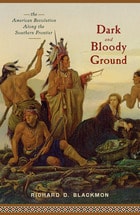
Dark and Bloody Ground
The American Revolution Along the Southern FrontierRichard D. Blackmon
Westholme Publishing, 2012
The American Revolution marked a dramatic change in the struggle for land along the southern frontier. In the colonial era, American Indian leaders and British offi cials attempted to accommodate the westward expansion of Anglo-Americans through land cessions designed to have the least impact on Indian societies. The region remained generally peaceful, but with the onset of the Revolution, the British no longer exercised sole authority to curb the settlements appearing within territory claimed by the Creeks, Shawnee, and most importantly, the Cherokee. Whether it was to escape the economic uncertainty of the east, the rigors of the confl ict, or the depredations of troops and militias on both sides, settlers fl ooded west. Under these conditions, the war in the south took on a savage character as Indians, Loyalists, and Whigs all desperately fought to defend their communities and maintain control of their own destinies. Taking advantage of the political turmoil in the east, the Cherokee Nation launched a coordinated offensive in 1776 against illegal frontier settlements. The Whigs responded with a series of expeditions from each of the Southern colonies that razed Cherokee towns and their food supplies. All the while, both British and Whig leaders walked a fi ne line: If the Indians attacked settlers without distinguishing between Loyalists and Whigs, those groups could unite and thwart both British and Indian interests; if the Indians attacked the western frontier with Loyalist and British support, the Whigs would face a two-front war—an event that ended up happening.
In Dark and Bloody Ground: The American Revolution Along the Southern Frontier, Richard Blackmon uses a wealth of primary source material to recount the confl ict between American Indians and Anglo-Americans in the colonial South during one of the most turbulent periods of North American history. He explains the complex points of contact in Georgia, Kentucky, North Carolina, South Carolina, Tennessee, and Virginia between native groups and settlers, while revealing the political gamesmanship between rival British and Whig traders and offi cials to secure Indian loyalty. The author also explains the critical role of the southern frontier to the American victory, a victory achieved long after the decision at Yorktown. Before the war, clashes between Cherokee and Shawnee hunters in Kentucky had become so commonplace that it was known as a “dark and bloody ground.” With the rise in Anglo-American settlements there, led by Daniel Boone and others, the dark and bloody ground became a metaphor for the entire struggle for the Southern frontier.
Encounters in the Dark
Identity Formation in the Jacob StoryNoel Forlini Burt
SBL Press, 2020
An interdisciplinary study of a familiar patriarchal narrative
Encounters in the Dark: Identity Formation in the Jacob Story traces the many moments of darkness in the life of Jacob. From the darkness of his mother's womb, to the darkness Jacob uses to deceive his father and his brother, to the night he sleeps on the ground with just a stone for a pillow at Bethel, and to the triumphant scene of wrestling God by the Jabbok River, the biblical story frequently situates Jacob in the darkness. Through an exploration of key moments in Jacob's story, Noel Forlini Burt follows Jacob's journey from home to exile and back home again. His story symbolizes the larger story of Israel's own wrestling with God in the darkness of exile and return.
Features
- An exploration of the poetics and rhetoric of the Jacob story
- An examination of characterization in its ancient and modern contexts
- An analysis of individual and collective identity
Even the Dark
Leslie Williams
Southern Illinois University Press, 2019
Through restless questioning, the speaker finds a balm for suffering in the divine beauty and mystery of the natural world. Seven prose poems woven into the collection deal with different aspects of a young girl’s life-threatening illness. Five additional poems wrestle with the grief of suicide and the emptiness afflicting those left behind. Other poems in the collection reflect on how to approach daily life while coping with heartbreak and express wonder about our responsibilities in a variety of roles: as parents, as neighbors, as an imagined anchoress, as children of God.
The language remains beautiful and precise throughout, whether the speaker lies “in a gully cracked / with stars” or tells herself, “It’s a handmade raft I live on.” The speaker entreats, as in Psalm 27, “teach me how to live.” Dwelling attentively in the abundance and mystery of creation, the book aims to offer a comfort and peace that might “even the dark.”

Experiments in the Dark
Visualizing Capital Art Studio, ZanzibarPamila Gupta
University of Michigan Press, 2027
What kind of history are photographs? Experiments in the Dark explores this question through the lens of a twentieth-century East African Indian Ocean photo studio collection, Capital Arts Studio (CAS), and its proprietors Ranchhod and Rohit Oza in Stone Town, Zanzibar. Pamila Gupta gathers and reads a range of photographs and genres from the studio, exploring how they relate to Zanzibar’s vibrant visual cultures during the Omani sultanate, British colonial, and postrevolution periods. Gupta’s reading of this little-known photographic archive brings the work into a broader historical context of the Indian Ocean in a visual archive that has endured despite the forces of history.
Through a blend of archival reconstruction and curation, personal reflection, and interviews with Rohit Oza, the son of the studio’s founder Ranchhod Oza, Gupta focuses on the construction and curation of the CAS collection and what this archive can tell us about the South Asian and Goan diasporas, the wider Indian Ocean world, African fashion, urban lives, and image making in Zanzibar from 1930 to 2024.
Footsteps in the Dark
The Hidden Histories of Popular MusicGeorge Lipsitz
University of Minnesota Press, 2007
Most pop songs are short-lived. They appear suddenly and, if they catch on, seem to be everywhere at once before disappearing again into obscurity. Yet some songs resonate more deeply—often in ways that reflect broader historical and cultural changes.
In Footsteps in the Dark, George Lipsitz illuminates these secret meanings, offering imaginative interpretations of a wide range of popular music genres from jazz to salsa to rock. Sweeping changes that only remotely register in official narratives, Lipsitz argues, can appear in vivid relief within popular music, especially when these changes occur outside mainstream white culture. Using a wealth of revealing examples, he discusses such topics as the emergence of an African American techno music subculture in Detroit as a contradictory case of digital capitalism and the prominence of banda, merengue, and salsa music in the 1990s as an expression of changing Mexican, Dominican, and Puerto Rican nationalisms. Approaching race and popular music from another direction, he analyzes the Ken Burns PBS series Jazz as a largely uncritical celebration of American nationalism that obscures the civil rights era’s challenge to racial inequality, and he takes on the infamous campaigns to censor hip-hop and the radical black voice in the early 1990s.
Teeming with astute observations and brilliant insights about race and racism, deindustrialization, and urban renewal and their connections to music, Footsteps in the Dark puts forth an alternate history of post–cold war America and shows why in an era given to easy answers and clichéd versions of history, pop songs matter more than ever.
George Lipsitz is professor of black studies and sociology at the University of California, Santa Barbara. Among his many books are Life in the Struggle, Dangerous Crossroads, and American Studies in a Moment of Danger (Minnesota, 2001).
Glitter Up the Dark
How Pop Music Broke the BinaryBy Sasha Geffen
University of Texas Press, 2020
Why has music so often served as an accomplice to transcendent expressions of gender? Why did the query "is he musical?" become code, in the twentieth century, for "is he gay?" Why is music so inherently queer? For Sasha Geffen, the answers lie, in part, in music’s intrinsic quality of subliminal expression, which, through paradox and contradiction, allows rigid gender roles to fall away in a sensual and ambiguous exchange between performer and listener. Glitter Up the Dark traces the history of this gender fluidity in pop music from the early twentieth century to the present day.
Starting with early blues and the Beatles and continuing with performers such as David Bowie, Prince, Missy Elliot, and Frank Ocean, Geffen explores how artists have used music, fashion, language, and technology to break out of the confines mandated by gender essentialism and establish the voice as the primary expression of gender transgression. From glam rock and punk to disco, techno, and hip-hop, music helped set the stage for today’s conversations about trans rights and recognition of nonbinary and third-gender identities. Glitter Up the Dark takes a long look back at the path that led here.
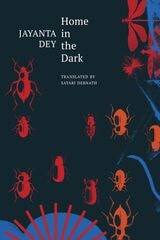
Home in the Dark
Selected StoriesJayanta Dey
Seagull Books, 2025
Home in the Dark peels back the polished surface of middle-class life to expose the shadows lurking underneath: violence, betrayal, and the unsettling truths we refuse to see. In these fifteen gripping stories, Jayanta Dey weaves a world where desperation takes strange forms: a woman on the brink of suicide finds an unlikely savior in a rat, a stolen clock carries the weight of communal hatred, and a writer–publisher duo rides the highs of literary success—until their lucrative business in pornography turns against them.
Set in Calcutta and its suburbs, these tales decipher the moral and psychological conflicts simmering beneath genteel facades, where people will do anything to survive. With elements of the macabre and the psychological, Home in the Dark delivers sharp twists that unsettle as much as they illuminate. Translated from Bengali by Sayari Debnath, this collection brings a new and daring voice to readers, offering a rare glimpse into the dark undercurrents of contemporary urban life in India.
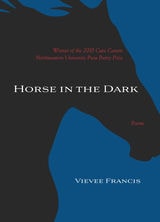
Horse in the Dark
PoemsVievee Francis
Northwestern University Press, 2012
In the next chapter of the Cave Canem/Northwestern University Poetry Prize, we enter the poetic world of Vievee Francis. Bold and skilled, Francis takes us into the still landscapes of Texas and the fluid details of the African American South. Her poems become panhandle folktales revealing the weight of memories so clear and on the cusp. Her creative tangle of metaphors, people and geography will keep the reader rooted in a good earth of extraordinary verse.
Joyce's Book of the Dark
Finnegans WakeJohn Bishop
University of Wisconsin Press, 1993
“Joyce’s Book of the Dark gives us such a blend of exciting intelligence and impressive erudition that it will surely become established as one of the most fascinating and readable Finnegans Wake studies now available.”—Margot Norris, James Joyce Literary Supplement
Legislating in the Dark
Information and Power in the House of RepresentativesJames M. Curry
University of Chicago Press, 2015
The answer? They aren’t. With Legislating in the Dark, James M. Curry reveals that the availability of information about legislation is a key tool through which Congressional leadership exercises power. Through a deft mix of legislative analysis, interviews, and participant observation, Curry shows how congresspersons—lacking the time and resources to study bills deeply themselves—are forced to rely on information and cues from their leadership. By controlling their rank-and-file’s access to information, Congressional leaders are able to emphasize or bury particular items, exploiting their information advantage to push the legislative agenda in directions that they and their party prefer.
Offering an unexpected new way of thinking about party power and influence, Legislating in the Dark will spark substantial debate in political science.
Let There Be Night
Testimony on Behalf of the DarkPaul Bogard
University of Nevada Press, 2008
Lighting Candles in the Dark
Marnie Clark, et al.
QuakerPress, 2012
On Dark and Bloody Ground
An Oral History of the West Virginia Mine WarsAnne T. Lawrence
West Virginia University Press, 2021
In 1972 Anne Lawrence came to West Virginia at the invitation of the Miners for Democracy movement to conduct interviews with participants in, and observers of, the Battle of Blair Mountain and other Appalachian mine wars of the 1920s and ’30s. The set of oral histories she collected—the only document of its kind—circulated for many years as an informal typescript volume, acquiring an almost legendary status among those intrigued by the subject. Key selections from it appear here for the first time as a published book, supplemented with introductory material, maps, and photographs. The volume’s vivid, conversational mode invites readers into miners’ lived experiences and helps us understand why they took up arms to fight anti-union forces in some of the nation’s largest labor uprisings.
Published to coincide with the celebration of the Blair Mountain centennial in 2021, On Dark and Bloody Ground includes a preface by public historian Catherine Venable Moore and an afterword by Cecil E. Roberts of the United Mine Workers of America.
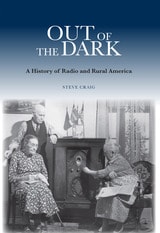
Out of the Dark
A History of Radio and Rural AmericaSteve Craig
University of Alabama Press, 2009
From the Grand Ole Opry to the National Barn Dance, how radio changed life in rural America
Out of the Dark: A History of Radio and Rural America shows how radio—especially clear channel network stations—brought news, markets, weather, religion, and entertainment into isolated farm homes between the 1920s and 1950s, narrowing rural–urban divides while also sustaining distinctly rural tastes (e.g., barn dance music). Craig argues that battery “farm radios,” high power stations, and national networking transformed daily life, work rhythms, consumer habits, and political participation, making radio the central domestic technology of the Depression era and beyond.
Craig blends regulatory and industry milestones, such as the Radio Act of 1927, with sociological studies, USDA extension records, FCC surveys, census tables, and rich case studies including WLS Chicago’s “National Barn Dance,” WSM Nashville’s “Grand Ole Opry,” and others. He mines audience research, diaries, program schedules, and tables that track the spread of radio. The book’s distinctive contributions include detailed charts (ownership by region; clear channel assignments) and vivid narratives of stations, formats, and personalities that connected farm families to national culture while preserving local identity.
The book is ideal for scholars and students of US social, rural, and media history; communication policy and political communication; country and bluegrass music history; agricultural extension; and American studies. It will also engage librarians, curators, and public historians seeking context for rural collections; journalists and podcasters tracing the roots of today’s information ecosystems; and general readers interested in how radio re made community life long before the internet.
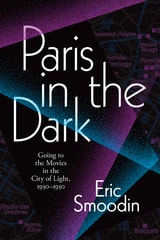
Paris in the Dark
Going to the Movies in the City of Light, 1930–1950Eric Smoodin
Duke University Press, 2020
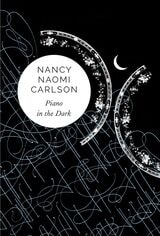
Piano in the Dark
Nancy Naomi Carlson
Seagull Books, 2023
This latest book of wonders from Nancy Naomi Carlson fixes upon one of the few defenses we have to confront the body’s betrayals—our words. Though in the end, even the world’s last word “forgets its name . . . has no word for this forgetting.” At once vulnerable and open, tempered and tempted equally by the erotic and the empathic, such dualities limn these affectingly beautiful and lyrical poems. Carlson’s lines, entreating as Scheherazade, “weave chords / into tales within tales, whirlpools within seas” to save her life. Indeed, music has no need for voice or harp, as “in anechoic chambers, you become / the only instrument of your worldly sounds,” echoing Mozart’s credo “that music lies / in the silence between notes.” In a world scarred by pandemics, wars, and violent tribalism, the givens are gone—“talismans we clung to, believing / we might be spared in some way / by marking our doors / with our own sacrificial blood.” In these unflinching free and formal verse poems, Carlson seduces us with the promise of the joy yet to be had, were we to look in the right places.
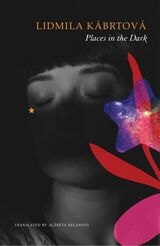
Places in the Dark
Short StoriesLidmila Kábrtová
Seagull Books, 2025
Following her divorce, Tereza shuts off emotionally and flits from one faceless lover to the next, until an unexpected visitor shakes her existence to the core. Klara is a bird trapped in a golden cage slowly suffocating her. Eva has sacrificed herself for her children and family. Life is one big party for Karla—or is it? Alice is doing everything she can not to be a crybaby like her mother. Petra has finally had enough and takes drastic measures. Magdalena’s true yearnings bubble up to the surface.
The stories of these six characters may be different, but these women’s paths converge throughout Places in the Dark, weaving a vivid tapestry of interconnected lives. Czech author Lidmila Kábrtová is a master of writing stories of astonishing clarity. Echoing the brilliance of Alice Munro, Kábrtová’s words act as translucent veils, allowing the essential truths to shimmer through. Moments move about on tectonic plates somewhere beneath the surface of the everyday, and nothing will be as it used to be. Yet, in this kaleidoscope of narratives, the question lingers: Was it ever truly as it seemed?
SPOT IN THE DARK
BETH GYLYS
The Ohio State University Press, 2004

Secret Manoeuvres in the Dark
Corporate and Police Spying on ActivistsEveline Lubbers
Pluto Press, 2012
The exposure of undercover policeman Mark Kennedy in the eco-activist movement revealed how the state monitors and undermines political activism. This book shows the other grave threat to our political freedoms - undercover activities by corporations.
Secret Manoeuvres in the Dark documents how corporations are halting legitimate action and investigation by activists. Using exclusive access to previously confidential sources, Eveline Lubbers shows how companies such as Nestlé, Shell and McDonalds use covert methods to evade accountability. She argues that corporate intelligence gathering has shifted from being reactive to pro-active, with important implications for democracy itself.
Secret Manoeuvres in the Dark will be vital reading for activists, investigative and citizen journalists, and all who care about freedom and democracy in the 21st century.
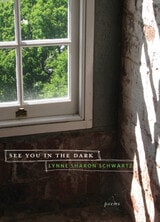
See You in the Dark
PoemsLynne Sharon Schwartz
Northwestern University Press, 2012
Despite her indifference to genre, Schwartz takes a profound delight in poetic forms, appropriating the sonnet, the prose poem, and the envoi. She brings an easygoing musicality to her work, which ranges from parodic translations of Verlaine to instructions for making the perfect soup to a meditation on an Ecstasy trip. No artificial line between high and low culture divides Schwartz's world: she is equally intrigued by the metaphor of gardening, the work of artist Jenny Holzer, the bandits Frank and Jesse James (maybe distant relatives of Henry and William?), and the unintentional poetry of Craigslist's "missed connection" section.
Filled with wisdom, humor, and deep insight, See You in the Dark is poetry for readers not bounded by genre.
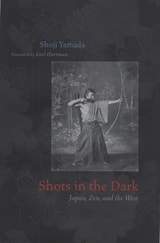
Shots in the Dark
Japan, Zen, and the WestShoji Yamada
University of Chicago Press, 2009
In the years after World War II, Westerners and Japanese alike elevated Zen to the quintessence of spirituality in Japan. Pursuing the sources of Zen as a Japanese ideal, Shoji Yamada uncovers the surprising role of two cultural touchstones: Eugen Herrigel’s Zen in the Art of Archery and the Ryoanji dry-landscape rock garden. Yamada shows how both became facile conduits for exporting and importing Japanese culture.
First published in German in 1948 and translated into Japanese in 1956, Herrigel’s book popularized ideas of Zen both in the West and in Japan. Yamada traces the prewar history of Japanese archery, reveals how Herrigel mistakenly came to understand it as a traditional practice, and explains why the Japanese themselves embraced his interpretation as spiritual discipline. Turning to Ryoanji, Yamada argues that this epitome of Zen in fact bears little relation to Buddhism and is best understood in relation to Chinese myth. For much of its modern history, Ryoanji was a weedy, neglected plot; only after its allegorical role in a 1949 Ozu film was it popularly linked to Zen. Westerners have had a part in redefining Ryoanji, but as in the case of archery, Yamada’s interest is primarily in how the Japanese themselves have invested this cultural site with new value through a spurious association with Zen.
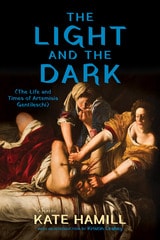
The Light and the Dark
(The Life and Times of Artemisia Gentileschi)Kate Hamill, Kristin Leahey
Northwestern University Press, 2026
A play from the inimitable Kate Hamill, based on the true story of the groundbreaking Italian painter Artemisia Gentileschi
During the seventeenth century, Italian artists strove to reshape the very image of humanity. Artemisia Gentileschi—the daughter of a painter—dreams of making her mark at a time when a woman is not thought capable of being an artist, let alone one of the greats. Just as her career begins to gain unexpected momentum, a series of devastating betrayals crack the foundation of her work—and her life. In electrifying verse and gorgeous artwork, The Light and The Dark depicts the deeply moving true story of a young woman who changed the very image of women in society . . . weaving a magnetic and empowering tapestry of ambition, rage, and resilience across the ages.
The Metaphysician in the Dark
Charles Simic
University of Michigan Press, 2003
Often, he addresses poetry itself. Among the pieces here are appreciations of Mark Strand, James Merrill, John Ashbery, and James Tate, each evaluated with a keen eye tempered by a generous spirit. Other essays discuss Joseph Brodsky, Czeslaw Milosz, and Vasko Popa; to these writers he brings the understanding available only to those who can read them in the original. In considering Brodsky's translations, for instance, he offers insights regarding not only the poet himself but the very nature of language. Elsewhere, he peers into poetry's past and its future: as a vessel of memory, a witness to history, and a mirror of human experience.
But perhaps the greatest pleasures afforded by The Metaphysician in the Dark, as he styles himself with a beguiling mix of modesty and irony, appear when Simic goes further afield. His look at the deadpan comedy of Buster Keaton is as revealing of the author as of the actor and his craft; his perusal of a Heironymous Bosch altarpiece captures both the painter's sense of apocalypse and a riotous joy in the piling of detail upon detail; his review of a book on Joseph Cornell examines how obsession becomes art. He is fluently familiar with subjects as diverse as Saul Bellow's novels and Aberlardo Morell's extraordinary camera obscura photographs. Yet when he takes the gloves off, as in two essays on the Serbia of Slobodan Milosevic, his outrage is as forceful as his pride is strong in his own Serbian heritage.
Each of the two dozen essays here reflects a sophistication irresistible in its simplicity; taken together, they display a questing intelligence and a panorama of life and art.
Charles Simic is an acclaimed poet, novelist, essayist and teacher. Winner of a MacArthur Fellowship and a Pulitzer Prize, he is the author of more than twenty volumes of poetry and six books of prose, as well as numerous translations. He is Distinguished University Professor of English at the University of New Hampshire, where he has taught since 1973.
Thinking in the Dark
Cinema, Theory, PracticePomerance, Murray
Rutgers University Press, 2015
Thinking in the Dark introduces readers to twenty-one key theorists whose work has made a great impact on film scholarship today, including Rudolf Arnheim, Sergei Eisenstein, Michel Foucault, Siegfried Kracauer, and Judith Butler. Rather than just discussing each theorist’s ideas in the abstract, the book shows how those concepts might be applied when interpreting specific films by including an analysis of both a classic film and a contemporary one. It thus demonstrates how theory can help us better appreciate films from all eras and genres: from Hugo to Vertigo, from City Lights to Sunset Blvd., and from Young Mr. Lincoln to A.I. and Wall-E.
The volume’s contributors are all experts on their chosen theorist’s work and, furthermore, are skilled at explaining that thinker’s key ideas and terms to readers who are not yet familiar with them. Thinking in the Dark is not only a valuable resource for teachers and students of film, it’s also a fun read, one that teaches us all how to view familiar films through new eyes.
Theorists examined in this volume are: Rudolf Arnheim, Béla Balázs, Roland Barthes, André Bazin, Walter Benjamin, Judith Butler, Stanley Cavell, Michel Chion, Gilles Deleuze, Jean Douchet, Sergei Eisenstein, Jean Epstein, Michel Foucault, Siegfried Kracauer, Jacques Lacan, Vachel Lindsay, Christian Metz, Hugo Münsterberg, V. F. Perkins, Jacques Rancière, and Jean Rouch.
Voices in the Dark
THE NARRATIVE PATTERNS OF *FILM NOIR*J. P. Telotte
University of Illinois Press, 1989
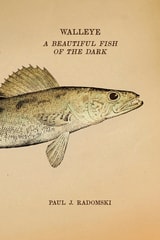
Walleye
A Beautiful Fish of the DarkPaul J. Radomski
University of Minnesota Press, 2022
Walleye, the holy grail of game fish: on catching them, understanding their biology and history, and ensuring their survival
Among the more than 34,000 species of fish, few have the walleye’s following—among anglers and diners, states conferring official status on the fish, and towns battling for recognition as the Walleye Capital of the World. And among those passionate fans, few know the walleye as well as Paul J. Radomski does—a fisheries biologist, lake ecology scientist, and old fisherman. In Walleye: A Beautiful Fish of the Dark he unspools the mysteries of this fascinating fish.
Radomski looks at walleye from every angle, with something to say to the curious naturalist, committed ecologist, and avid fishing enthusiast. People who view walleye as the “lion of the lakes” might be surprised to learn that rivers are their ancestral habitat. Some might wonder about the name “wall-eye,” a nod to an evolutionary adaptation to dark water environments. Others might simply ask: why walleye? What are they, where do they exist, how do they survive, and how have people come to depend on them? Radomski discusses the principles and pitfalls of managing this predator of the twilight (and the history and methods of doing so) and shares his informed perspective on when and where stocking is prudent. Finally, he explores three of the best walleye lakes: Winnebago, the largest inland walleye fishery in Wisconsin, and Mille Lacs and Red Lake in Minnesota.
From the simple pleasures of fishing for walleye to the most pressing questions about how this species survives, this book is the best word on this beautiful fish of the dark.
What You See in the Dark
A NovelManuel Muñoz and Charles Taylor
Northwestern University Press, 2025
A doomed love story unfolds alongside the production of Psycho in 1950s Bakersfield, California
Muñoz’s debut novel tells the story of Teresa, an aspiring singer too far away from Los Angeles to share the city’s glamour. In Dan Watson, the most desirable man in town, she believes she has found someone to help her realize those dreams. But when a famous actress arrives from Hollywood with a legendary director in tow, local gossip about Teresa and Dan turns to speculation about the celebrity visitors there to work on what will become an iconic, groundbreaking film of madness and murder at a roadside motel: Alfred Hitchcock’s Psycho. Framed by a foreword from film critic Charles Taylor, Muñoz’s haunting tale reflects “the slow winding down of everything that once seemed certain.”