Results by title
27 books match the query 'Days'
A Calligraphy of Days
Selected PoemsKrzysztof Siwczyk
Seagull Books, 2024
The sixty-four poems in A Calligraphy of Days reflect Krzysztof Siwczyk’s wide-ranging and variegated style. Born in 1977, Siwczyk has lived most of his life in the Silesian city of Gliwice. In 1995, he became a wunderkind of the Polish poetry scene with his debut volume Wild Kids, an edgy and unsentimental narrative of youthful tribulations and urban malaise during Poland’s transition from communism to capitalism. Siwczyk’s poems careen down the page at great speed, relying on clever turns of phrase or an idea that illuminates a larger meaning. As in calligraphy, a meandering subterranean process connects meaning and memory, thought and verse. Teased to the surface, words and images emerge in rapid, terse, and precise bursts.
Throughout his career, Siwczyk has never ceased to challenge our sense of who we are—changing course multiple times in the process. Following several volumes full of expansive lines, his most recent works offer spare meditations on illness and grief. Clipped and understated, these post-Holocaust poems address our inability to speak of death and tragedy.
Daily Observations
Thoreau on the Days of the YearSteve Grant
University of Massachusetts Press, 2005
“How many a man has dated a new era in his life from the reading of a book,” wrote Henry David Thoreau in Walden. Today that book continues to provoke, inspire, and change lives all over the world, and each rereading is fresh and challenging. Yet as Thoreau's countless admirers know, there is more to the man than Walden. An engineer, poet, teacher, naturalist, lecturer, and political activist, he truly had multiple lives to lead, and each one speaks forcefully to us today.
Sponsored by the Thoreau Society, the brief, handsomely presented books in this series offer the thoughts of a great writer on a variety of topics, some that we readily associate with him, some that may be surprising. Each volume includes selections from his familiar published works as well as from less well known lectures, letters, and journal entries. The books include original engravings by renowned illustrator and book artist Barry Moser.
Day of Days
John Smolens
Michigan State University Press, 2020
Days and Memory
Charlotte Delbo
Northwestern University Press, 2001
This definitive translation is by Delbo's close friend, the author and theater critic Rosette Lamont, an expert on the works of Ionesco and Beckett. Lamont wrote that Delbo was, like Beckett, "a minimalist of infinite pain, a voice of conscience."
Days of Awe
Reimagining Jewishness in Solidarity with PalestiniansAtalia Omer
University of Chicago Press, 2019
In Days of Awe, Atalia Omer examines this shift through interviews with a new generation of Jewish activists, rigorous data analysis, and fieldwork within a progressive synagogue community. She highlights people politically inspired by social justice campaigns including the Black Lives Matter movement and protests against anti-immigration policies. These activists, she shows, discover that their ethical outrage at US policies extends to Israel’s treatment of Palestinians. For these American Jews, the Jewish history of dispossession and diaspora compels a search for solidarity with liberation movements. This shift produces innovations within Jewish tradition, including multi-racial and intersectional conceptions of Jewishness and movements to reclaim prophetic Judaism. Charting the rise of such religious innovation, Omer points toward the possible futures of post-Zionist Judaism.
Days of Our Lives
Joan Aleshire
Four Way Books, 2019
Days of Plenty, Days of Want
Patricia Preciado Martin
University of Arizona Press, 1999
In the pages of this book are people so real you'll swear you've met them, situations so familiar you'll nod in recognition. Two of these stories have won prizes in Chicano literary contests; all will win the hearts of readers. Through them, Patricia Preciado Martin reminds us that freedom and self-expression are important in fulfilling our potential—and, more important, that a large part of this process requires acknowledging our heritage as a priceless gift whose relevance in our lives cannot be ignored.
Days of Twilight, Nights of Frenzy
A MemoirWerner Schroeter and Claudia Lenssen
University of Chicago Press, 2017
Written in the last years of his life, Days of Twilight, Nights of Frenzy sees Schroeter looking back at his life with the help of film critic and friend Claudia Lenssen. Born in 1945, Schroeter grew up near Heidelberg and spent just a few weeks in film school before leaving to create his earliest works. Over the years, he would work with acclaimed artists, including Marianne Hopps, Isabelle Huppert, Candy Darling, and Christine Kaufmann. In the 1970s, Schroeter also embarked on prolific parallel careers in theater and opera, where he worked in close collaboration with the legendary diva Maria Callas. His childhood; his travels in Italy, France, and Latin America; his coming out and subsequent life as an gay man in Europe; and his run-ins with Hollywood are but a few of the subjects Schroeter recalls with insights and characteristic understated humor.
A sharp, lively, even funny memoir, Days of Twilight, Nights of Frenzy captures Schroeter’s extravagant life vividly over a vast prolific career, including many stories that might have been lost were it not for this book. It is sure to fascinate cinephiles and anyone interested in the culture around film and the arts.
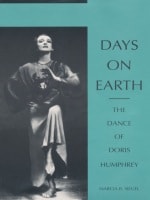
Days on Earth
The Dance of Doris HumphreyMarcia B. Siegel
Duke University Press, 1993
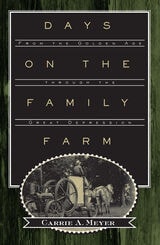
Days on the Family Farm
From the Golden Age through the Great DepressionCarrie A. Meyer
University of Minnesota Press, 2007
From the beginning of the twentieth century to World War II, farm wife May Lyford Davis kept a daily chronicle that today offers a window into a way of life that has all but disappeared. May and her husband Elmo lived through two decades of prosperity, the Great Depression, and two World Wars in their Midwestern farming community. Like many women of her time, Davis kept diaries that captured the everyday events of the family farm; she also kept meticulous farming accounts. In doing so, she left an extraordinary record that reflects not only her own experiences but also the history of early twentieth-century American agriculture.
May and Elmo’s story, engagingly told by Carrie A. Meyer, showcases the large-scale evolution of agriculture from horses to automobile and tractors, a surprisingly vibrant family and community life, and the business of commercial farming. Details such as what items were bought and sold, what was planted and harvested, the temperature and rainfall, births and deaths, and the direction of the wind are gathered to reveal a rich picture of a world shared by many small farmers.
With sustainable and small-scale farming again on the rise in the United States, Days on the Family Farm resonates with both the profound and mundane aspects of rural life—past and present—in the Midwest.
Carrie A. Meyer is associate professor of economics at George Mason University.
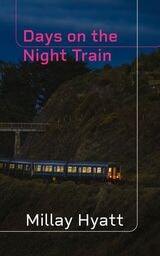
Days on the Night Train
Millay Hyatt
Haus Publishing, 2026
A paean to traveling by train, to the variety of Europe’s landscape, and to an immersive way of approaching and seeing the world.
For Millay Hyatt, it is the charm of “uncushioned encounters with the world” that makes her, whenever possible, choose to travel by train.
Days on the Night Train is a story of serendipities and missed connections, of sluggish border crossings, of embracing unpredictability and shunning the stifling regimentation of contemporary travel. In her accounts of her journeys across Europe and beyond, ranging from Edinburgh to Tunis, from Valencia to Tbilisi, Hyatt shows us that it is in movement that our perspective changes, and that this is never truer than when traveling by train, at half speed, with wide carriage windows framing a slowly shifting world. Inside, surrounded by strangers, she becomes intrigued by the intimate habits of her fellow passengers, listens in on arguing couples and bantering teenagers, and gives her imagination free rein to speculate about their lives. Later, in a couchette, even sleep takes on an unfamiliar quality, echoing Proust’s comment that people on trains sleep like fish in the sea, gently rocked by the waves and currents.
Traveling by rail brings Hyatt into contact with the world in a way that disturbs and upends her certainties. Perception slows and widens. Experiencing the excitement of departure and arrival—and in between the bittersweet joy of being in limbo, of looking inward—she notices how long train journeys, like books, can still alter us in a way jet travel has all but extinguished. Days on the Night Train is itself a journey, abundant with reflection, poetic observation, revealing encounter, and literary excursions.
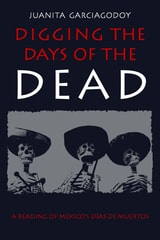
Digging The Days Of The Dead
Juanita Garciagodo
University Press of Colorado, 1998
Enter These Gates
Meditations for the Days of AweAlden Solovy
Central Conference of American Rabbis, 2024
FINALIST: NEXT GENERATION INDIE BOOK AWARDS (Spirituality category)
Germans and Texans
Commerce, Migration, and Culture in the Days of the Lone Star RepublicBy Walter Struve
University of Texas Press, 1996
During the brief history of the Republic of Texas (1836-1845), over 10,000 Germans emigrated to Texas. Perhaps best remembered today are the farmers who settled the Texas Hill Country, yet many of the German immigrants were merchants and businesspeople who helped make Galveston a thriving international port and Houston an early Texas business center. This book tells their story.
Drawing on extensive research on both sides of the Atlantic, Walter Struve explores the conditions that led nineteenth-century Europeans to establish themselves on the North American frontier. In particular, he traces the similarity in social, economic, and cultural conditions in Germany and the Republic of Texas and shows how these similarities encouraged German emigration and allowed some immigrants to prosper in their new home. Particularly interesting is the translation of a collection of letters from Charles Giesecke to his brother in Germany which provide insight into the business and familial concerns of a German merchant and farmer.
This wealth of information illuminates previously neglected aspects of intercontinental migration in the nineteenth century. The book will be important reading for a wide public and scholarly audience.
Glossary for the End of Days
StoriesIan Stansel
Acre Books, 2020
In Boulder, a man calls into a radio program with an altered tale of his brother’s murder—and faces the consequences when the story goes viral. In Tampa, a woman attends a convention of people believing themselves to be targets of clandestine government agencies. In Houston, a family with many secrets attempts to escape an oncoming tropical storm. In an East Coast college town, a professor has a charged run-in with a young woman from the radical right. And in Iowa, a cult suicide spurs the lone survivor to create a “glossary” in an effort to come to terms with his experience.
Simultaneously gritty and lyrical, grounded and visionary, Glossary for the End of Days gives us characters grappling with how to push on through dark days and dark times. This arresting, relevant collection tunes into and seeks to illuminate shared anxieties about the present—and future—of our world.
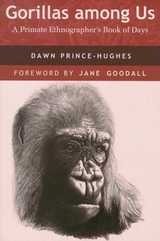
Gorillas among Us
A Primate Ethnographer’s Book of DaysDawn Prince-Hughes; Foreword by Jane Goodall
University of Arizona Press, 2001
Dawn Prince-Hughes is an extraordinary researcher. She does not experiment or measure but instead sits on a wooden bench for hours each day, watching captive gorillas through the enclosure where other visitors average five-second stops. Her patience is rewarded with astounding observations—she watches gorillas make and use tools, bury a dead crow, give birth, and comfort and care for each other.
In Gorillas among Us, Prince-Hughes has compressed years of gorilla observation into a composite diary chronicling the days of one gorilla family. She creates a blended portrait of both peoples—gorilla and human. The entries capture significant observations, which often prompt brief discussions of gorillas’ captivity, diet, communication, aesthetic preferences, social behavior, and play. Several chapters end with thought-provoking meditations on human values. The final section, “More about Gorillas,” provides a concise, accessible introduction to gorilla natural history.
This book will delight and move anyone with an interest in animals, and it also makes a significant contribution to the scarce literature on captive gorillas. Prince-Hughes's observations of tool use by gorillas will interest scientists, and even a casual reader will come away with a new sense of the power of observation. The author hopes to change the way we look at animals in the wild and in captivity, and laments that zoo visitors pause so briefly in front of the gorilla enclosure, rushing on with their assumptions unchanged, without really seeing the gorillas.
By turns opinionated and descriptive, quirky and authoritative, Prince-Hughes draws us into the family life of captive gorillas and into a consideration of our own culture. Readers will learn something new about gorillas and themselves on every page of this poignant story. The book testifies to the potential for interspecies compassion and the love that one person can find in a family of gorillas.

In the Days of Billy the Kid
The Lives and Times of José Chávez y Chávez, Juan Patrón, Martín Chávez, and Yginio SalazarJames B. Mills
University of North Texas Press, 2025
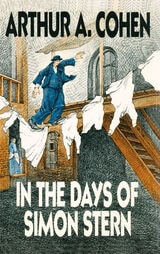
In the Days of Simon Stern
Arthur A. Cohen
University of Chicago Press, 1987
"A majestic work of fiction that should stand world literature's test of time, to be read and reread. A masterpiece."—Commonweal
"This book ensnares one of the most extraordinarily daring ideas to inhabit an American novel in a number of years. For one thing, it is that risky devising, dreamed of only by the Thomas Manns of the world, a serious and vastly conceived fiction bled out of the theological imagination. For another, it is clearly an 'American' novel—altogether American, despite its Jewish particularity: it is not so much about the history of the Jews as it is about the idea of the New World as haven. . . . In its teeming particularity every vein of this book runs with a brilliance of Jewish insight and erudition to be found in no other novelist. Arthur Cohen is the first writer of any American generation to compose a profoundly Jewish fiction on a profoundly Western theme."—Cynthia Ozick, New York Times Book Review
"This stately, ambitious amalgam of Jewish myth, history, theology, and speculations on the Jewish soul is like an enormous Judaic archeological ruin—often hard for the uninitiated to interpret, but impressive. . . . Intelligent, inventive, fascinating."—New Yorker
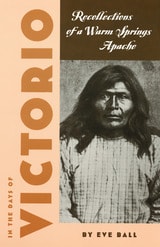
In the Days of Victorio
Recollections of a Warm Springs ApacheEve Ball; Narrated by James Kaywaykla
University of Arizona Press, 1970
"This volume contains a great deal of interesting information."—Journal of the West
"The Apache point of view [is] presented with great clarity."—Books of the Southwest
"A valuable addition to the southwestern frontier shelf and long will be drawn upon and used."—Journal of Arizona History
"A genuine contribution to the story of the Apache wars, and a very readable book as well."—Westerners Brand Book
"Shining through every page is the unquenchable spirit that was the Apache. Inured, indeed trained, to suffering, Apaches stood strong beside Victorio, Nana, and finally Geronimo in a vain attempt to maintain those things they held more dear than life itself—freedom, homeland, dignity as human beings. A warm and vital people, the Apaches had, and have, a great deal to offer."—Arizona and the West
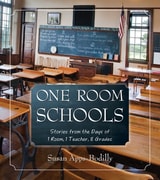
One Room Schools
Stories from the Days of 1 Room, 1 Teacher, 8 GradesSusan Apps-Bodilly
Wisconsin Historical Society Press, 2013
Have you ever wondered what it was like to attend a one-room school, to be in the same classroom as your older brother or younger sister, or to have your teacher live with your family for part of the school year?
In One Room Schools, Susan Apps-Bodilly chronicles life in Wisconsin’s early country schools, detailing the experiences of the students, the role of the teacher, and examples of the curriculum, including the importance of Wisconsin School of the Air radio programs. She describes the duties children had at school besides their schoolwork, from cleaning the erasers and sweeping cobwebs out of the outhouse to carrying in wood for the stove. She also tells what led to the closing of the one room schools, which were more than just centers of learning: they also served as the gathering place for the community.
Susan Apps-Bodilly drew from the research compiled by her father Jerry Apps for his book, One-Room Country Schools: History and Recollections. Apps-Bodilly has geared her book toward young readers who will learn what students and their teacher did on cold mornings before the wood stove warmed them up. They also will find out how to play recess games like Fox and Geese and Anti-I-Over and will learn the locations of 10 former one room schools that can be toured. Apps-Bodilly also encourages readers to ask themselves what lessons can be learned from these early schools that have application for today’s schools?
One Room Schools will transport young readers back in time and make their grandparents and others of that generation nostalgic—perhaps even prompting them to share memories of their school days.
Palestinian Cinema in the Days of Revolution
By Nadia Yaqub
University of Texas Press, 2018
Palestinian cinema arose during the political cinema movements of the late 1960s and early 1970s, yet it was unique as an institutionalized, though modest, film effort within the national liberation campaign of a stateless people. Filmmakers working within the Palestinian Liberation Organization (PLO) and through other channels filmed the revolution as it unfolded, including the Israeli bombings of Palestinian refugee camps, the Jordanian and Lebanese civil wars, and Palestinian life under Israeli occupation, attempting to create a cinematic language consonant with the revolution and its needs. They experimented with form both to make effective use of limited material and to process violent events and loss as a means of sustaining active engagement in the Palestinian political project.
Palestinian Cinema in the Days of Revolution presents an in-depth study of films made between 1968 and 1982, the filmmakers and their practices, the political and cultural contexts in which the films were created and seen, and their afterlives among Palestinian refugees and young filmmakers in the twenty-first century. Nadia Yaqub discusses how early Palestinian cinema operated within emerging public-sector cinema industries in the Arab world, as well as through coproductions and solidarity networks. Her findings aid in understanding the development of alternative cinema in the Arab world. Yaqub also demonstrates that Palestinian filmmaking, as a cinema movement created and sustained under conditions of extraordinary precarity, offers important lessons on the nature and possibilities of political filmmaking more generally.
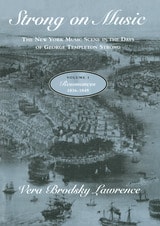
Strong on Music
The New York Music Scene in the Days of George Templeton Strong, Volume 1: Resonances, 1836-1849Vera Brodsky Lawrence
University of Chicago Press, 1995
Formerly a concert pianist, Vera Brodsky Lawrence spent the last third of her life as a historian of American music (she died in 1996). She was editor of The Piano Works of Louis Moreau Gottschalk and The Complete Works of Scott Joplin.
On Volume 1: "A marvelous book. There is nothing like it in the literature of American music."—Harold C. Schonberg, New York Times Book Review
On Volume 2: "A monumental achievement."—Victor Fell Yellin, Opera Quarterly

Strong on Music
The New York Music Scene in the Days of George Templeton Strong, Volume 2: Reverberations, 1850-1856Vera Brodsky Lawrence
University of Chicago Press, 1995
Each chapter presents one year in the musical life of New York City, with Lawrence's extensive commentary enriched both by excerpts from Strong's diaries and a lavish selection of little-known music criticism and comment from the period. The reviews, written by an often truculent, sometimes venal tribe of music journalists, cover the entire world of music—from opera to barrel organ, salon to saloon.
In this New York, operas performed by renowned artists are parodied by blackface minstrels; performances of the Philharmonic Society are drowned by the raucous chatter of flirtatious adolescents, who turn concerts into a noisy singles' hangout; and irate critics trash the first performances of Verdi operas, calling the plots indecent and the scores noisy and unmelodic. In this volatile atmosphere, a native musical culture is born; its whose first faltering efforts are dubiously received, and the first American composers begin to emerge.
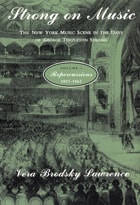
Strong on Music
The New York Music Scene in the Days of George Templeton Strong, Volume 3: Repercussions, 1857-1862Vera Brodsky Lawrence
University of Chicago Press, 1999
Among the many striking scenes vividly portrayed in Repercussions are the rapturous reception of Verdi's Ballo in maschera in 1861; the impact of the Civil War on New York's music scene, from theaters closing as their musicians enlisted to the performance of "The Star-Spangled Banner" at every possible occasion; and open-air concerts in the developing Central Park. Throughout, Lawrence mines a treasure trove of primary source materials including daily newspapers, memoirs, city directories, and architectural drawings.
Indispensable for scholars, Repercussions will also fascinate music fans with its witty writing and detailed descriptions of the cultural life of America's first metropolis.
Formerly a concert pianist, Vera Brodsky Lawrence spent the last third of her life as a historian of American music (she died in 1996). She was editor of The Piano Works of Louis Moreau Gottschalk and The Complete Works of Scott Joplin.
On Volume 1: "A marvelous book. There is nothing like it in the literature of American music."—Harold C. Schonberg, New York Times Book Review
On Volume 2: "A monumental achievement."—Victor Fell Yellin, Opera Quarterly
The Algerian Memoirs
Days of Hope and CombatHenri Alleg
Seagull Books, 2011
The personal history of journalist Henri Alleg is tied inextricably to the history of the French-Algerian Conflict. Best known for his book The Question, a first-hand account of his torture by French troops during the Algerian war for independence, Alleg is famous both for having brought the issue of French torture to the public eye and for his passionate work as a writer, a newspaperman, and a communist activist.
The Works and Days; Theogony; The Shield of Herakles
Hesiod
University of Michigan Press, 1991
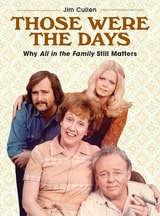
Those Were the Days
Why All in the Family Still MattersJim Cullen
Rutgers University Press, 2020
Between 1971 and 1979, All in the Family was more than just a wildly popular television sitcom that routinely drew 50 million viewers weekly. It was also a touchstone of American life, so much so that the living room chairs of the two main characters have spent the last 40 years on display at the Smithsonian. How did a show this controversial and boundary-breaking manage to become so widely beloved?
Those Were the Days is the first full-length study of this remarkable television program. Created by Norman Lear and produced by Bud Yorkin, All in the Family dared to address such taboo topics as rape, abortion, menopause, homosexuality, and racial prejudice in a way that no other sitcom had before. Through a close analysis of the sitcom’s four main characters—boorish bigot Archie Bunker, his devoted wife Edith, their feminist daughter Gloria, and her outspoken liberal husband Mike—Jim Cullen demonstrates how All in the Family was able to bridge the generation gap and appeal to a broad spectrum of American viewers in an age when a network broadcast model of television created a shared national culture.
Locating All in the Family within the larger history of American television, this book shows how it transformed the medium, not only spawning spinoffs like Maude and The Jeffersons, but also helping to inspire programs like Roseanne, Married... with Children, and The Simpsons. And it raises the question: could a show this edgy ever air on broadcast television today?