Results by title
28 books match the query 'Debt'
A Feminist Reading of Debt
Luci Cavallero
Pluto Press, 2021
***Winner of an English PEN Award 2021***
In this sharp intervention, authors Lucí Cavallero and Verónica Gago defiantly develop a feminist understanding of debt, showing its impact on women and members of the LGBTQ+ community and examining the relationship between debt and social reproduction.
Exploring the link between financial activity and the rise of conservative forces in Latin America, the book demonstrates that debt is intimately linked to gendered violence and patriarchal notions of the family. Yet, rather than seeing these forces as insurmountable, the authors also show ways in which debt can be resisted, drawing on concrete experiences and practices from Latin America and around the world.
Featuring interviews with women in Argentina and Brazil, the book reveals the real-life impact of debt and how it falls mainly on the shoulders of women, from the household to the wider effects of national debt and austerity. However, through discussions around experiences of work, prisons, domestic labour, agriculture, family, abortion and housing, a narrative of resistance emerges.
Translated by Liz Mason-Deese.

A Feminist Reading of Debt
Luci Cavallero
Pluto Press, 2021
***Winner of an English PEN Award 2021***
"Of great value to those interested in the financialisation of everyday life and social reproduction."—LSE Review of Books
In this sharp evaluation and call to action, authors Lucí Cavallero and Verónica Gago defiantly develop a feminist understanding of debt, showing its impact on women and members of the LGBTQ+ community and examining the relationship between debt and social reproduction.
Exploring the link between financial activity and the rise of conservative forces in Latin America, the book demonstrates that debt is intimately linked to gendered violence and patriarchal notions of the family. Yet, rather than seeing these forces as insurmountable, the authors also show ways in which debt can be resisted, drawing on concrete experiences and practices from Latin America and around the world. Chapters include:
*Debt and Social Reproduction
*Debt as a “Counter-revolution” of Everyday Life
*The writing on the Body of Women
*Neither Victims not Entrepreneurs
*Feminist Insubordination and Fascist Neoliberalism
*The Patriarchy Has My Missing Contributions
*Hunger and Gender Mandates
*Us Against Debt
The authors state in their Introduction, “Our investigations and activism show that there is an urgent need to develop a specifically feminist analysis of finance. Here we do so by bringing together methodological elements, political hypotheses, and narratives of practices elaborated by the feminist movement that are challenging finance.”
Featuring interviews with women in Argentina and Brazil, the book reveals the real-life impact of debt and how it falls mainly on the shoulders of women, from the household to the wider effects of national debt and austerity. However, through discussions around experiences of work, prisons, domestic labor, agriculture, family, abortion and housing, a narrative of resistance emerges.

Bankruptcy and Debt Collection in Liberal Capitalism
Switzerland, 1800–1900Mischa Suter
University of Michigan Press, 2021
Drawing on perspectives from anthropology and social theory, this book explores the quotidian routines of debt collection in nineteenth-century capitalism. It focuses on Switzerland, an exemplary case of liberal rule. Debt collection and bankruptcy relied on received practices until they were standardized in a Swiss federal law in 1889. The vast array of these practices was summarized by the idiomatic Swiss legal term “Rechtstrieb” (literally, “law drive”). Analyzing these forms of summary justice opens a window to the makeshift economies and the contested political imaginaries of nineteenth-century everyday life. Ultimately, the book advances an empirically grounded and theoretically informed history of quotidian legal practices in the everyday economy; it is an argument for studying capitalism from the bottom up.

Buying Time
Debt and Mobility in the Western Indian OceanThomas F. McDow
Ohio University Press, 2018
In Buying Time, Thomas F. McDow synthesizes Indian Ocean, Middle Eastern, and East African studies as well as economic and social history to explain how, in the nineteenth century, credit, mobility, and kinship knit together a vast interconnected Indian Ocean region. That vibrant and enormously influential swath extended from the desert fringes of Arabia to Zanzibar and the Swahili coast and on to the Congo River watershed.
In the half century before European colonization, Africans and Arabs from coasts and hinterlands used newfound sources of credit to seek out opportunities, establish new outposts in distant places, and maintain families in a rapidly changing economy. They used temporizing strategies to escape drought in Oman, join ivory caravans in the African interior, and build new settlements.
The key to McDow’s analysis is a previously unstudied trove of Arabic business deeds that show complex variations on the financial transactions that underwrote the trade economy across the region. The documents list names, genealogies, statuses, and clan names of a wide variety of people—Africans, Indians, and Arabs; men and women; free and slave—who bought, sold, and mortgaged property. Through unprecedented use of these sources, McDow moves the historical analysis of the Indian Ocean beyond connected port cities to reveal the roles of previously invisible people.

Debt and Dispossession
Farm Loss in America's HeartlandKathryn Marie Dudley
University of Chicago Press, 2000
The farm crisis of the 1980s was the worst economic disaster to strike rural America since the Depression—thousands of farmers lost their land and homes, irrevocably altering their communities and, as Kathryn Marie Dudley shows, giving rise to devastating social trauma that continues to affect farmers today. Through interviews with residents of an agricultural county in western Minnesota, Dudley provides an incisive account of the moral dynamics of loss, dislocation, capitalism, and solidarity in farming communities.

Debt or Democracy
Public Money for Sustainability and Social JusticeMary Mellor
Pluto Press, 2015
A direct challenge to conventional economic thinking, Debt or Democracy offers a bracing new analysis of our economic crisis and offers cogent, radical alternatives to create a more just and sustainable economic future.
Debt to Society
Accounting for Life under CapitalismMiranda Joseph
University of Minnesota Press, 2014
It is commonplace to say that criminals pay their debt to society by spending time in prison, but what is a “debt to society”? How is crime understood as a debt? How has time become the equivalent for crime? And how does criminal debt relate to the kind of debt held by consumers and university students?
In Debt to Society, Miranda Joseph explores modes of accounting as they are used to create, sustain, or transform social relations. Envisioning accounting broadly to include financial accounting, managerial accounting of costs and performance, and the calculation of “debts to society” owed by criminals, Joseph argues that accounting technologies have a powerful effect on social dynamics by attributing credits and debts. From sovereign bonds and securitized credit card debt to student debt and mortgages, there is no doubt that debt and accounting structure our lives.
Exploring central components of neoliberalism (and neoliberalism in crisis) from incarceration to personal finance and university management, Debt to Society exposes the uneven distribution of accountability within our society. Joseph demonstrates how ubiquitous the forces of accounting have become in shaping all aspects of our lives, proposing that we appropriate accounting and offer alternative accounts to turn the present toward a more widely shared well-being.
Debt, Investment, Slaves
Credit Relations in East Feliciana Parish, Louisiana, 1825-1885Richard Holcombe Kilbourne
University of Alabama Press, 2013
For his landmark Debt, Investment, Slaves, Louisiana attorney Richard Holcombe Kilbourne Jr. performed a thorough survey of parish mortgage records and other manuscripts to create a rich map of antebellum credit relationships in the region. He demonstrates that most credit relationships, collateralized and uncollateralized, were grounded in slave property and not, as a contemporary reader would assume, land or other forms of wealth. Antebellum slavery was thus not only an arrangement of labor, but also an arrangement of finance and economics that shaped all of Southern life and politics. For this reason, defeat in the Civil War and emancipation not only freed enslaved people to work and earn wages, it occasioned a monumental credit implosion from which the Southern economy did not recover for the remainder of the nineteenth century.
To understand the antebellum South, it is necessary to set aside assumptions shared by modern Americans about the nature of borrowing, lending, banking, and investing. Kilbourne's seminal work reminds readers of the absence of banks outside of major cities like Charleston, New Orleans, and Mobile. He explains the defined and ad hoc roles that regional banks, intermediary lenders, and flexible agents ("factors") played in the absence of a robust banking system. He persuasively shows that this network of borrowers and lenders was based to an extent not well understood today on bondage. He then demonstrates how this fragile and improvised financial system had no ability to respond to the shocks and disruptions of war.
Setting out to write a book of local history, Kilbourne achieved an enduring work that illuminated aspects of Southern life that are indispensable to understanding American history.

Deficit and Debt in Transition
The Political Economy of Public Finances in Central and Eastern EuropeIstvan Benczes
Central European University Press, 2014

Financing Prosperity by Dealing with Debt
Edited by Christopher Harker and Amy Horton
University College London, 2022
In an era when many of us depend on debt to survive but struggle with its consequences, Financing Prosperity by Dealing with Debt draws together current thinking on how to solve debt crises and promote prosperity. By profiling existing action by credit unions and community organizations, alongside bold proposals for the future, with contributions from artists, activists, and academics, the book shows how we can rethink the validity and inevitability of many contemporary forms of debt through organizing debt audits, promoting debt cancellation, and expanding member-owned co-operatives. The authors set out legal and political methods for changing the rules of the system to provide debt relief and reshape economies for more inclusive and sustainable flourishing. The book also profiles community-based actions that are changing the role of debt in economic, social, and political life—among them, participatory art projects, radical advice networks, and ways of financing feminist green transition. This volume moves beyond critique to present a wealth of concrete ways to tackle debt and forge the prosperous communities we want for the future, making it relevant to a broad audience of academics, practitioners, activists, and policymakers.
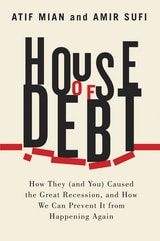
House of Debt
How They (and You) Caused the Great Recession, and How We Can Prevent It from Happening AgainAtif Mian and Amir Sufi
University of Chicago Press, 2014
Though the banking crisis captured the public’s attention, Mian and Sufi argue strongly with actual data that current policy is too heavily biased toward protecting banks and creditors. Increasing the flow of credit, they show, is disastrously counterproductive when the fundamental problem is too much debt. As their research shows, excessive household debt leads to foreclosures, causing individuals to spend less and save more. Less spending means less demand for goods, followed by declines in production and huge job losses. How do we end such a cycle? With a direct attack on debt, say Mian and Sufi. More aggressive debt forgiveness after the crash helps, but as they illustrate, we can be rid of painful bubble-and-bust episodes only if the financial system moves away from its reliance on inflexible debt contracts. As an example, they propose new mortgage contracts that are built on the principle of risk-sharing, a concept that would have prevented the housing bubble from emerging in the first place.
Thoroughly grounded in compelling economic evidence, House of Debt offers convincing answers to some of the most important questions facing the modern economy today: Why do severe recessions happen? Could we have prevented the Great Recession and its consequences? And what actions are needed to prevent such crises going forward?
House of Debt
How They (and You) Caused the Great Recession, and How We Can Prevent It from Happening AgainAtif Mian and Amir Sufi
University of Chicago Press, 2014
Though the banking crisis captured the public’s attention, Mian and Sufi argue strongly with actual data that current policy is too heavily biased toward protecting banks and creditors. Increasing the flow of credit, they show, is disastrously counterproductive when the fundamental problem is too much debt. As their research shows, excessive household debt leads to foreclosures, causing individuals to spend less and save more. Less spending means less demand for goods, followed by declines in production and huge job losses. How do we end such a cycle? With a direct attack on debt, say Mian and Sufi. More aggressive debt forgiveness after the crash helps, but as they illustrate, we can be rid of painful bubble-and-bust episodes only if the financial system moves away from its reliance on inflexible debt contracts. As an example, they propose new mortgage contracts that are built on the principle of risk-sharing, a concept that would have prevented the housing bubble from emerging in the first place.
Thoroughly grounded in compelling economic evidence, House of Debt offers convincing answers to some of the most important questions facing the modern economy today: Why do severe recessions happen? Could we have prevented the Great Recession and its consequences? And what actions are needed to prevent such crises going forward?

InDEBTed to Intervene
Critical Lessons in Debt, Communication, Art, and Theoretical PracticeOliver Vodeb and Nikola Janovic Kolenc
Intellect Books, 2013
Justice Is an Option
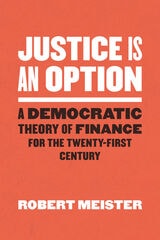
A Democratic Theory of Finance for the Twenty-First CenturyRobert Meister
University of Chicago Press, 2021
Justice Is an Option uses those problems—and the framework of finance that created them—to reimagine historical justice. Robert Meister returns to the spirit of Marx to diagnose our current age of finance. Instead of closing our eyes to the political and economic realities of our era, we need to grapple with them head-on. Meister does just that, asking whether the very tools of finance that have created our vastly unequal world could instead be made to serve justice and equality. Meister here formulates nothing less than a democratic financial theory for the twenty-first century—one that is equally conversant in political philosophy, Marxism, and contemporary politics. Justice Is an Option is a radical, invigorating first page of a new—and sorely needed—leftist playbook.
Leveraged
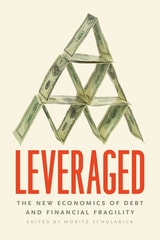
The New Economics of Debt and Financial FragilityEdited by Moritz Schularick
University of Chicago Press, 2022
The 2008 financial crisis was a seismic event that laid bare how financial institutions’ instabilities can have devastating effects on societies and economies. COVID-19 brought similar financial devastation at the beginning of 2020 and once more massive interventions by central banks were needed to heed off the collapse of the financial system. All of which begs the question: why is our financial system so fragile and vulnerable that it needs government support so often?
For a generation of economists who have risen to prominence since 2008, these events have defined not only how they view financial instability, but financial markets more broadly. Leveraged brings together these voices to take stock of what we have learned about the costs and causes of financial fragility and to offer a new canonical framework for understanding it. Their message: the origins of financial instability in modern economies run deeper than the technical debates around banking regulation, countercyclical capital buffers, or living wills for financial institutions. Leveraged offers a fundamentally new picture of how financial institutions and societies coexist, for better or worse.
The essays here mark a new starting point for research in financial economics. As we muddle through the effects of a second financial crisis in this young century, Leveraged provides a road map and a research agenda for the future.

Narratives of Debt
Peter Szendy, special issue editor
Duke University Press, 2020
Contributors. Arjun Appadurai, Anthony Bogues, Emmanuel Bouju, Silvia Federici, Mikkel Krause Frantzen, Raphaelle Guidée, Odette Lienau, Catherine Malabou, Vincent Message, Laura Odello, Peter Szendy, Frederik Tygstrup

Predatory Welfare
Debt, Race, and Cash TransfersErin Torkelson
Duke University Press, 2026
Promissory Notes
On the Literary Conditions of DebtRobin Truth Goodman
Lever Press, 2018
Rethinking Money, Debt, and Finance after the Crisis
Melinda Cooper and Martijn Konings, special issue editors
Duke University Press, 0
Melinda Cooper is an Australian Research Council Future Fellow in the Department of Sociology and Social Policy at the University of Sydney. She is the author of Clinical Labor: Tissue Donors and Research Subjects in the Global Bioeconomy, also published by Duke University Press. Martijn Konings is Senior Lecturer and Australian Research Council DECRA Fellow in the Department of Political Economy at the University of Sydney. He is the author of The Development of American Finance.
Contributors: Lisa Adkins, Fiona Allon, Dick Bryan, Melinda Cooper, Marieke de Goede, Chris Jefferis, Martijn Konings, Randy Martin, Michael Rafferty
Spacing Debt
Obligations, Violence, and Endurance in Ramallah, PalestineChristopher Harker
Duke University Press, 2020
Subprime Health
Debt and Race in U.S. MedicineNadine Ehlers
University of Minnesota Press, 2017
From race-based pharmaceutical prescriptions and marketing, to race-targeted medical “hot spotting” and the Affordable Care Act, to stem-cell trial recruitment discourse, Subprime Health is a timely examination of race-based medicine as it intersects with the concept of debt.
The contributors to this volume propose that race-based medicine is inextricable from debt in two key senses. They first demonstrate how the financial costs related to race-based medicine disproportionately burden minorities, as well as how monetary debt and race are conditioned by broader relations of power. Second, the contributors investigate how race-based medicine is related to the concept of indebtedness and is often positioned as a way to pay back the debt that the medical establishment—and society at large—owes for the past and present neglect and abuses of many communities of color. By approaching the subject of race-based medicine from an interdisciplinary perspective—critical race studies, science and technology studies, public health, sociology, geography, and law—this volume moves the discussion beyond narrow and familiar debates over racial genomics and suggests fruitful new directions for future research.
Contributors: Ruha Benjamin, Princeton U; Catherine Bliss, U of California, San Francisco; Khiara M. Bridges, Boston U; Shiloh Krupar, Georgetown U; Jenna M. Loyd, U of Wisconsin–Milwaukee; Anne Pollock, Georgia Tech.
The Bonds of Inequality
Debt and the Making of the American CityDestin Jenkins
University of Chicago Press, 2021
In this passionate and deeply researched book, Destin Jenkins shows in vivid detail how, beyond the borrowing decisions of American cities and beneath their quotidian infrastructure, there lurks a world of politics and finance that is rarely seen, let alone understood. Focusing on San Francisco, The Bonds of Inequality offers a singular view of the postwar city, one where the dynamics that drove its creation encompassed not only local politicians but also banks, credit rating firms, insurance companies, and the national municipal bond market. Moving between the local and the national, The Bonds of Inequality uncovers how racial inequalities in San Francisco were intrinsically tied to municipal finance arrangements and how these arrangements were central in determining the distribution of resources in the city. By homing in on financing and its imperatives, Jenkins boldly rewrites the history of modern American cities, revealing the hidden strings that bind debt and power, race and inequity, democracy and capitalism.
The Changing Roles of Debt and Equity in Financing U.S. Capital Formation
Edited by Benjamin M. Friedman
University of Chicago Press, 1982
This volume, consisting of papers presented at a conference held at Williamsburg, Va., 2-3 April 1981, is a progress report on the National Bureau of Economic Research project, The Changing Roles of Debt and Equity in Financing U.S. Capital Formation. The National Bureau has undertaken this project—including the conference, the research described in this volume, and the publication of the volume itself—with the support of the American Council of Life Insurance.
The Death of Homo Economicus
Work, Debt and the Myth of Endless AccumulationPeter Fleming
Pluto Press, 2017
In The Death of Homo Economicus, Fleming presents this controversial claim with the same fierce logic and perception that launched his Guardian column into popularity. Fleming argues that as an invented model of a human being, Homo economicus is, in reality, a tool used by economists and capitalists to manage our social world through the state, business, and even family. As workers, we are barraged with constant reminders that we should always strive toward this ideal persona. It’s implied—and sometimes directly stated—that if we don’t then we are failures. Ironically, the people most often encouraged to emulate this model are those most predisposed to fail due to their socioeconomic circumstances: the poor, the unemployed, students, and prisoners.
Fleming illuminates why a peculiar proactive negativity now marks everyday life in capitalist societies, and he explores how this warped, unattainable model for workers would cause chaos if enacted to the letter. Timely and revelatory, The Death of Homo Economicus offers a sharp, scathing critique of who we are supposed to be in the workplace and beyond.

The Gift of Freedom
War, Debt, and Other Refugee PassagesMimi Thi Nguyen
Duke University Press, 2012
The People's Money
Pensions, Debt, and Government ServicesEdited by Michael A. Pagano
University of Illinois Press, 2019
The Price of Misfortune
Rights and Wrongs in Indebted AmericaDaniel Platt
University of Chicago Press, 2023
What can be taken from someone who has borrowed money and cannot repay? What do the victims of misfortune owe to their lenders, and what can they keep for themselves? The answers to those questions, immensely important for debtors, creditors, and society at large, have changed over time. The Price of Misfortune examines the cause of debtors’ rights in the modern United States and the struggles of reformers who fought to establish financial freedoms in law.
Daniel Platt shows how, in the wake of the Civil War, a range of advocates drew potent analogies between slavery, imprisonment for debt, and the experiences of wage garnishment and property foreclosure. He traces the ways those analogies were used to campaign for bold new protections for debtors, keeping them secure in their labor, property, and personhood. Yet, as Platt demonstrates, those reforms tended to assume as their ideal borrower someone who was white, propertied, and male. In subsequent decades, the emancipatory promise of debtors’ rights would be tested as women, wage earners, and African Americans seized on their language to challenge other structural inequalities: the dependency of marriage, the exploitation of industrial capitalism, and the oppression of Jim Crow. By reconstructing these forgotten developments—and recovering the experiences of indebted farmwives, sharecroppers, and wage workers—The Price of Misfortune narrates a new history of inequality, coercion, and law amid the early financialization of American capitalism.
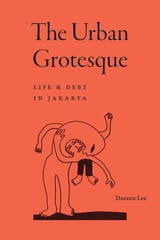
The Urban Grotesque
Life and Debt in JakartaDoreen Lee
Duke University Press, 2025