Results by title

10 books match the query 'Denial'
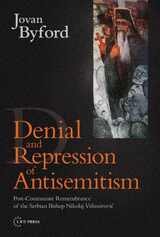
cover of Denial and Repression of Anti-Semitism: Post-Communist Rehabilitation of the Serbian Bishop Nikolaj Velimirovic

Denial and Repression of Anti-Semitism

Post-Communist Rehabilitation of the Serbian Bishop Nikolaj Velimirovic

Jovan Byford

Central European University Press, 2008
Bishop Nikolaj Velimirovic (1881–1956) is arguably one the most controversial figures in contemporary Serbian national culture. Having been vilified by the former Yugoslav Communist authorities as a fascist and an antisemite, this Orthodox Christian thinker has over the past two decades come to be regarded in Serbian society as the most important religious person since medieval times and an embodiment of the authentic Serbian national spirit. Velimirovic was formally canonised by the Serbian Orthodox Church in 2003. In this book, Jovan Byford charts the posthumous transformation of Velimirovic from 'traitor' to 'saint' and examines the dynamics of repression and denial that were used to divert public attention from the controversies surrounding the bishop's life, the most important of which is his antisemitism. Byford offers the first detailed examination of the way in which an Eastern Orthodox Church manages controversy surrounding the presence of antisemitism within its ranks and he considers the implications of the continuing reverence of Nikolaj Velimirovic for the persistence of antisemitism in Serbian Orthodox culture and in Serbian society as a whole. This book is based on a detailed examination of the changing representation of Bishop Nikolaj Velimirovic in the Serbian media and in commemorative discourse devoted to him. The book also makes extensive use of exclusive interviews with a number of Serbian public figures who have been actively involved in the bishop’s rehabilitation over the past two decades.
[more]
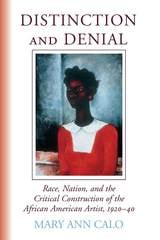
cover of Distinction and Denial: Race, Nation, and the Critical Construction of the African American Artist, 1920-40

Distinction and Denial

Race, Nation, and the Critical Construction of the African American Artist, 1920-40

Mary Ann Calo

University of Michigan Press, 2007

Distinctionand Denial challenges conventional theories of race and art by examining the role early twentieth-century art critics played in marginalizing African American artists. Mary Ann Calo dispels the myth of a unified African American artistic tradition through an engaging study of the germinal writing of Alain Locke and other significant critics of the era, who argued that African American artists were both a diverse group and a constituent element of America’s cultural center. By documenting the effects of the “Negro aesthetic” on African American artists working in the interwar years, Distinctionand Denial shows that black artistic production existed between the claims of a distinctly African American tradition and full inclusion into American modernist culture—never fully inside or outside the mainstream.

“A major contribution to the scholarship of African American artists in the inter-war period. With scrupulous research and probing analyses, Calo’s study enables scholars, students, and those interested in the Harlem Renaissance to grasp the intellectual debates, institutional support, and art world promotion that advanced an emerging cohort of African American artists.”

—Patricia Hills, Boston University

“A careful, thorough, historically grounded study that builds a new and significant argument challenging conventional histories of African American art. Sure to become indispensable to any scholarly discussion of American art or African American cultural studies.”

—Helen Langa, American University

Mary Ann Calo is Professor of Art History and Director of the Institute for the Creative and Performing Arts at Colgate University. She is author of Bernard Berenson and the Twentieth Century and editor of Critical Issues in American Art: A Book of Readings.
[more]
cover of Duty to Respond: Mass Crime, Denial, and Collective Responsibility

Duty to Respond

Mass Crime, Denial, and Collective Responsibility

Nenad Dimitrijevic

Central European University Press, 2011

The subject of the book is responsibility for collective crime. Collective crime is an act committed by a significant number of the members of a group, in the name of all members of that group, with the support of the majority of group members, and against individuals targeted on the basis of their belonging to a different group.The central claim is that all members of the group in whose name collective crime is committed share responsibility for it. This book's special interest is with analytical and normative defense of arguments that purport to explain reasons for, and the character of, responsibility of decent people. Those who did not intend, support, or committed wrong, are still accountable in a non-vicarious manner. The basis of their responsibility is the crime-specific relationship between group identity and personal identity.
[more]
cover of Empire in Denial: The Politics of State-Building

Empire in Denial

The Politics of State-Building

David Chandler

Pluto Press, 2006

In the 1990s, interventionist policies challenged the rights of individual states to self-governance. Today, non-Western states are more likely to be feted by international institutions offering programs of poverty-reduction, democratization and good governance. States without the right to self-government will always lack legitimate authority. The international policy agenda focuses on bureaucratic mechanisms, which can only institutionalize divisions between the West and the non-West and are unable to overcome the social and political divisions of post-conflict states. Highlighting the dangers of current policy—including the redefinition of sovereignty, and the subsequent erosion of ties linking power and accountability—David Chandler offers a critical look at state-building that will be of interest to all students of international affairs.
[more]
cover of Feeling Like a State: Desire, Denial, and the Recasting of Authority

Feeling Like a State

Desire, Denial, and the Recasting of Authority

Davina Cooper

Duke University Press, 2019
A transformative progressive politics requires the state's reimagining. But how should the state be reimagined, and what can invigorate this process? In Feeling Like a State, Davina Cooper explores the unexpected contribution a legal drama of withdrawal might make to conceptualizing a more socially just, participative state. In recent years, as gay rights have expanded, some conservative Christians—from charities to guesthouse owners and county clerks—have denied people inclusion, goods, and services because of their sexuality. In turn, liberal public bodies have withdrawn contracts, subsidies, and career progression from withholding conservative Christians. Cooper takes up the discourses and practices expressed in this legal conflict to animate and support an account of the state as heterogeneous, plural, and erotic. Arguing for the urgent need to put new imaginative forms into practice, Cooper examines how dissident and experimental institutional thinking materialize as people assert a democratic readiness to recraft the state.
[more]
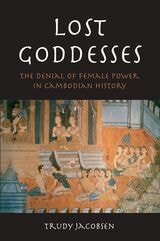
cover of Lost Goddesses: The Denial of Female Power in Cambodian History

Lost Goddesses

The Denial of Female Power in Cambodian History

Trudy Jacobsen

National University of Singapore Press, 2008

In a narrative and visual tour de force, Trudy Jacobsen examines the relationship between women and power in Cambodian history. Here, she seeks to describe when and why the status of women changed and what factors contributed to these changes.
[more]
cover of Night of Denial: Stories and Novellas

Night of Denial

Stories and Novellas

Ivan Bunin

Northwestern University Press, 2006

The first Russian to be awarded the Nobel Prize for literature, Ivan Bunin is often considered the last of the great Russian masters. Already renowned in Russia before the revolution, he fled the country in 1920 and lived the remainder of his life in France, where he continued to write for thirty years. Bunin made his name as a short-story writer with such masterpieces as "The Gentleman from San Francisco," the title piece in one of his collections and one of the stories in this volume. His last book of stories, Dark Avenues, was published in the 1940s. Among his longer works were a fictional autobiography, The Life of Arseniev (1930), and its sequel, Youth (1939), which were later collected into one volume, and two memoirs, The Accursed Days (1926), and Memories and Portraits (1950). He also wrote books on Tolstoy and Chekhov, both of whom he knew personally. Bunin, in fact, serves as a link-both personal and literary-between Tolstoy, whom he met as a young man, Chekhov, a close friend, and Vladimir Nabokov, who was influenced by Bunin early in his career and who moved in the same émigré literary circles in the twenties and thirties.

Bunin achieved his greatest mastery in the short story, and much of his finest work appears in this volume-the largest collection of his prose works ever published in English. In Robert Bowie's fine translation, with extensive annotations and a lengthy critical afterword, this work affords readers of English their first opportunity for a sustained encounter with a Russian classic, and one of the great writers of the twentieth century.
[more]
cover of Shakespeare and the Denial of Death

Shakespeare and the Denial of Death

James Calderwood

University of Massachusetts Press, 1987

James L. Calderwood offers a lively exploration of the ways in which Shakespeare dramatizes the strategies people employ to deal with and transcend the inevitability of death. In keeping with the views of Ernest Becker, Norman O. Brown, and others, Calderwood argues that the denial of death is fundamental to both individuals and their cultures. By drawing on a fascinating range of examples, he suggests how often and how variously Shakespeare dramatizes this desire for symbolic immortality.
[more]
cover of The Denial of Antiblackness: Multiracial Redemption and Black Suffering

The Denial of Antiblackness

Multiracial Redemption and Black Suffering

João H. Costa Vargas

University of Minnesota Press, 2018

An incisive new look at the black diaspora, examining the true roots of antiblackness and its destructive effects on all of society

Thanks to movements like Black Lives Matter, Western society’s chronic discrimination against black individuals has become front-page news. Yet, there is little awareness of the systemic factors that make such a distinct form of dehumanization possible. In both the United States and Brazil—two leading nations of the black diaspora—a very necessary acknowledgment of black suffering is nonetheless undercut by denial of the pervasive antiblackness that still exists throughout these societies.

In The Denial of Antiblackness, João H. Costa Vargas examines how antiblackness affects society as a whole through analyses of recent protests against police killings of black individuals in both the United States and Brazil, as well as the everyday dynamics of incarceration, residential segregation, and poverty. With multisite ethnography ranging from a juvenile prison in Austin, Texas, to grassroots organizing in Los Angeles and Black social movements in Brazil, Vargas finds the common factors that have perpetuated antiblackness, regardless of context. Ultimately, he asks why the denial of antiblackness persists, whom this narrative serves, and what political realities it makes possible.

[more]
cover of The Politics of Denial: Israel and the Palestinian Refugee Problem

The Politics of Denial

Israel and the Palestinian Refugee Problem

Nur Masalha

Pluto Press, 2003

The 1948 war ended in the expulsion of hundreds of thousands of Palestinians from their villages and homes. Israeli settlers moved in to occupy their land and the Palestinian refugees found themselves in refugee camps, or in neighbouring Arab countries. Today there are nearly four million Palestinian refugees -- and they want the right to go home. Their problem is the greatest and most enduring refugee problem in the world.

Since 1948 Israeli refugee policy has become a classic case of denial: the denial that Zionist "transfer committees" had operated between 1937 and 1948; denial of any wrong-doing or any historical injustice; denial of the "right of return"; denial of restitution of property and compensation; and indeed denial of any moral responsibility or culpability for the creation of the refugee problem.

The aim of this book is to analyze Israeli policies towards the Palestinian refugees as they evolved from the 1948 catastrophe (or nakba) to the present. It is the first volume to look in detail at Israeli law and policy surrounding the refugee question. Drawing on extensive primary sources and previously classified archive material, Masalha discusses the 1948 exodus; Israeli resettlement schemes since 1948; Israeli approaches to compensation and restitution of property; Israeli refugee policies towards the internally displaced (‘present absentees’); and Israeli refugee policies during the Madrid and Oslo negotiations.

Masalha asks what rights Palestinians possess under international law? How can a refugee population be compensated, and will they ever be able to return to their homes? Masalha questions the official Israeli position that the only solution to the problem is resettlement of the refugees in Arab states or elsewhere. This book is a valuable resource for anyone interested in the subject that lies at the heart of the ongoing conflict in the Middle East.

[more]