Results by title
12 books match the query 'Design, Drafting, Drawing & Presentation'
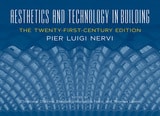
Aesthetics and Technology in Building
The Twenty-First-Century EditionPier Luigi Nervi; Edited by Cristiana Chiorino, Elisabetta Margiotta Nervi, and Thomas Leslie
University of Illinois Press, 2018
Aesthetics and Technology in Building: The Twenty-First-Century Edition introduces Nervi's ideas about architecture and engineering to a new generation of students and admirers. More than 200 photographs, details, drawings, and plans show how Nervi put his ideas into practice. Expanding on the seminal 1961 Norton Lectures at Harvard, Nervi analyzes various functional and construction problems. He also explains how precast and cast-in-place concrete can answer demands for economy, technical and functional soundness, and aesthetic perfection. Throughout, he uses his major projects to show how these now-iconic buildings emerged from structural truths and far-sighted construction processes.
This new edition features dozens of added images, a new introduction, and essays by Joseph Abram, Roberto Einaudi, Alberto Bologna, Gabriele Neri, and Hans-Christian Schink on Nervi's life, work, and legacy.
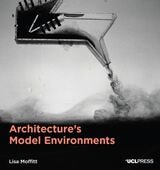
Architecture's Model Environments
Lisa Moffitt
University College London, 2023
Making innovative use of the distilling lens of the architectural model, Architecture’s Model Environments is a novel and far-reaching exploration of the many dialogues buildings have with their environmental surroundings. Expanding on histories of building technology, the book sheds new light on how physical models, conventionally understood as engineering experimentation devices, enable architectural design speculation. The book begins with a catalog of ten original model prototypes—of wind tunnels, water tables, and filling boxes—and is the first of its kind to establish an architectural approach to fabricating such environmental models. Subsequent chapters feature three precedent models that have been largely overlooked within the wider oeuvres of their authors: French polymath Étienne-Jules Marey’s wind tunnels, Hungarian-American architects Victor and Aladár Olgyay’s thermoheliodon, and Scottish chemist and building ventilation expert David Boswell “The Ventilator” Reid’s test tube convection experiments. Moving between historic moments and the present day, between case studies and original prototypes, the book reveals the potent ability of models, as both physical artifacts and mental ideals, to reflect prevailing cultural views about the world and to even reshape those views.
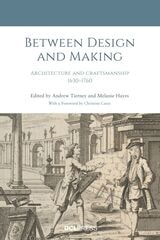
Between Design and Making
Architecture and Craftsmanship, 1630–1760Edited by Andrew Tierney and Melanie Hayes
University College London, 2024
The seventeenth and eighteenth centuries represent a high point in design and workmanship intersectionality. Skilled artisans worked across a spectrum of practices in design, supervision, and execution, and architects relied on this experience when building sites. However, this relationship has been under-studied in the architectural achievement of the early modern era.
Combining analysis of buildings, archival material, and eighteenth-century writings, editors Andrew Tierney and Melanie Hayes re-evaluate the social and professional fabric binding design to the act of making and reflect on the asymmetry between architecture and craft. They argue for a process-oriented understanding of architectural production that explores the scribbled and annotated beginnings of design; the debates and revisions in forging details; and the grappling with building materials that pushed projects from conception to completion.

Cultural Quarters
Principles and PracticeEdited and Written by Simon Roodhouse
Intellect Books, 2010
The much-praised Cultural Quarters returns in a revised edition, offering new case studies and new chapters on the economics of cultural quarters and the importance of historical buildings. This definitive text provides a conceptual context for cultural quarters through a detailed discussion of urban design and planning. Drawing on several case studies (from Bolton, Birmingham, Ireland and Vienna), Cultural Quarters positions the emergence of specific cultural areas within a historical and social context and explores the economics of maintaining the respective districts. The book offers a concise illustration of how cultural practice is maintained and expanded within an urban environment.
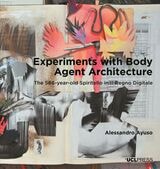
Experiments with Body Agent Architecture
The 586-year-old Spiritello in Il Regno DigitaleAlessandro Ayuso
University College London, 2022
Experiments with Body Agent Architecture proposes the notion of body agents: non-ideal, animate, and highly specific figures integrated with design to enact particular notions of embodied subjectivity in architecture. Body agents present opportunities for architects to increase imaginative and empathic qualities in their designs.
Beginning with narrative writing from the viewpoint of a body agent who finds himself uncomfortably inhabiting a digital milieu, the book combines speculative historical fiction and original design experiments. It focuses on the process of creating multimedia design experiments, moving from the design of the body itself as an original prosthetic to architectural proposals emanating from the body.
A fragmented history of the figure in architecture is charted and woven into the designs, with chapters examining Michelangelo’s enigmatic figures in his drawings for the New Sacristy in the early sixteenth century, Gian Lorenzo Bernini’s physically ephemeral putti adorning chapels and churches in the seventeenth century, and Austrian artist-architect Walter Pichler’s personal and prescient figures of the twentieth century.
Modelwork
The Material Culture of Making and KnowingMartin Brückner
University of Minnesota Press, 2021
How making models allows us to recall what was and to discover what still might be
Whether looking inward to the intricacies of human anatomy or outward to the furthest recesses of the universe, expanding the boundaries of human inquiry depends to a surprisingly large degree on the making of models. In this wide-ranging volume, scholars from diverse fields examine the interrelationships between a model’s material foundations and the otherwise invisible things it gestures toward, underscoring the pivotal role of models in understanding and shaping the world around us. Whether in the form of reproductions, interpretive processes, or constitutive tools, models may bridge the gap between the tangible and the abstract.
By focusing on the material aspects of models, including the digital ones that would seem to displace their analogue forebears, these insightful essays ground modeling as a tactile and emphatically humanistic endeavor. With contributions from scholars in the history of science and technology, visual studies, musicology, literary studies, and material culture, this book demonstrates that models serve as invaluable tools across every field of cultural development, both historically and in the present day.
Modelwork is unique in calling attention to modeling’s duality, a dynamic exchange between imagination and matter. This singular publication shows us how models shape our ability to ascertain the surrounding world and to find new ways to transform it.
Contributors: Hilary Bryon, Virginia Tech; Johanna Drucker, UCLA; Seher Erdoğan Ford, Temple U; Peter Galison, Harvard U; Lisa Gitelman, New York U; Reed Gochberg, Harvard U; Catherine Newman Howe, Williams College; Christopher J. Lukasik, Purdue U; Martin Scherzinger, New York U; Juliet S. Sperling, U of Washington; Annabel Jane Wharton, Duke U.
Rethinking the Pavilion
Shared Experience at the Vajrasana Buddhist Retreat CentreCindy Walters
University College London, 2026
A London-based architect offers a self-reflexive account of a communal building they designed in rural Britain.
Rethinking the Pavilion comprehensively investigates one unique project by Walters & Cohen Architects, the Vajrasana Buddhist Retreat Centre in rural Suffolk, completed in 2018. The book describes how shared experience defines a new way of working towards an architecture that rediscovers and enriches its communal purpose. In addition to setting out a theoretical framework that examines the architectural history and theory of pavilions, the book provides a complex discussion of the details and meanings of the design research process itself.
Self-Build Homes
Social Discourse, Experiences and DirectionsEdited by Michaela Benson and Iqbal Hamiduddin
University College London, 2017
T-Squared
Theories and Tactics in Architecture and DesignEdited by Samantha Krukowski
Intellect Books, 2021
T-Squared has three primary aims. First, it illuminates the extensive and explicit relationship between the research that shapes art, architecture, and design practices and the studio prompts and assignments that are developed by faculty for students engaging the creative disciplines. Second, it demonstrates that pedagogical inquiry and invention can be a (radical) research endeavor that can also become an evolutionary agent for faculty, students, institutions, and communities. Third, it makes available to a larger audience a set of innovative ideas and exercises that have until now been known to limited numbers of students and faculty, hidden behind the walls of studio courses and institutions.
An interdisciplinary collection with its origins in the 2018 National Conference on the Beginning Design Student, this book will appeal to anyone interested in design thinking and process.
The Rent of Form
Architecture and Labor in the Digital AgePedro Fiori Arantes
University of Minnesota Press, 2019
A critique of prominent architects’ approach to digitally driven design and labor practices over the past two decades
With the advent of revolutionary digital design and production technologies, contemporary architects and their clients developed a taste for dramatic, unconventional forms. Seeking to amaze their audiences and promote their global brands, “starchitects” like Herzog & de Meuron and Frank Gehry have reaped substantial rewards through the pursuit of spectacle enabled by these new technologies. This process reached a climax in projects like Gehry’s Guggenheim Bilbao and the “Bilbao effect,” in which spectacular architectural designs became increasingly sought by municipal and institutional clients for their perceived capacity to enhance property values, which author Pedro Fiori Arantes calls the “rent of form.”
Analyzing many major international architectural projects of the past twenty years, Arantes provides an in-depth account of how this “architecture of exception” has come to dominate today’s industry. Articulating an original, compelling critique of the capital and labor practices that enable many contemporary projects, Arantes explains how circulation (via image culture), consumption (particularly through tourism), the division of labor, and the distribution of wealth came to fix a certain notion of starchitecture at the center of the industry.
Significantly, Arantes’s viewpoint is not that of Euro-American capitalism. Writing from the Global South, this Brazilian theorist offers a fresh perspective that advances ideas less commonly circulated in dominant, English-language academic and popular discourse. Asking key questions about the prevailing logics of finance capital, and revealing inconvenient truths about the changing labor of design and the treatment of construction workers around the world, The Rent of Form delivers a much-needed reevaluation of the astonishing buildings that have increasingly come to define world cities.
Urban Design Governance
Soft Powers and the European ExperienceMatthew Carmona, João Bento, and Tommaso Gabrieli
University College London, 2023
Urban Design Governance takes a deep dive into the governance of urban design around Europe. It examines interventions in the means and processes of designing the built environment as devised by public authorities and other stakeholders across the continent, paying particular attention to the use of soft powers and allied financial mechanisms to influence design quality in the public interest. In doing so, the book traces the scope, use, and effectiveness of the range of informal, non-regulatory urban design governance tools that governments, municipalities, and others have at their disposal.
Watch this Space
Exploring Cinematic Intersections Between the Body, Architecture and the CityEdited by Howard Griffin and Maciej Stasiowski
Intellect Books, 2024
Watch this Space examines key emerging and evolving practices, theories, and methodologies that operate in the blurred boundary between spatial design disciplines and moving image studies more broadly. The collection is premised on the argument that the understanding of “space” in these areas continues to expand, reaching the point in which it blurs with multiple other disciplines including media art, cultural studies, art practice, and more. The result of this evolving interdisciplinary understating of space in design disciplines and moving image studies is an expanded field of haptic-visual practice and theory that can be investigated as both a material and an image-based construct.
The work engages with an evolving set of ideas, underlining how each of its primary discipline areas now increasingly incorporates tools and methodologies from each other’s fields. For example, architects routinely engage with cinematic practice as a means of exploring space; cultural theorists inspect filmic space as a two-dimensional surrogate of the real; media artists incorporate knowledge of spatial design in video installations; and filmmakers create spaces on screen that are informed by architectural theory. This all follows what can be defined as a discursive turn in our view of spatial relationships across disciplines which, by definition, is complex, eclectic, occasionally contradictory, and at times characterized by surprising confluences.
The varied essays collected here explore the diversity of how we today define, understand, and engage with notions of the body in architectural–urban space. It does so through a triadic structure that progresses from haptic relationships of the body in architectural space, through film readings of represented space in mainstream cinema, to experimental spatial projects inspired by film and the moving image. This tripartite structure specifically encourages a look across disciplines, broadening architectural, urbanist, media, and cinematic concerns through insightful case studies.