Results by title
11 books match the query 'Designing'

Carrier-Scale IP Networks
Designing and operating Internet networksPeter Willis
The Institution of Engineering and Technology, 2001
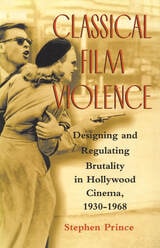
Classical Film Violence
Designing and Regulating Brutality in Hollywood Cinema, 1930-1968Prince, Stephen
Rutgers University Press, 2003
Prince shows that many choices about camera position, editing, and blocking of the action and sound were functional responses by filmmakers to regulatory constraints, necessary for approval from the PCA and then in surviving scrutiny by state and municipal censor boards.
This book is the first stylistic history of American screen violence that is grounded in industry documentation. Using PCA files, Prince traces the negotiations over violence carried out by filmmakers and officials and shows how the outcome left its traces on picture and sound in the films.
Almost everything revealed by this research is contrary to what most have believed about Hollywood and film violence. With chapters such as "Throwing the Extra Punch" and "Cruelty, Sadism, and the Horror Film," this book will become the defining work on classical film violence and its connection to the graphic mayhem of today's movies.

Designing a School Library Media Center for the Future
Rolf Erikson
American Library Association, 2007

Designing and Conducting Practice-Based Research Projects
A Practical Guide for Arts Student ResearchersR. Lyle Skains
Intellect Books, 2024
This book offers definitions and a brief background to practice-based research in the arts, contextualization of practice-based methods, a step-by-step approach to designing research projects, chapter summaries, examples of practice-related research, exercises for progressing methods design and evaluating research approach, and lists for further reading. This textbook can serve as the foundation for a wider, online “living” textbook for practice-related research in the arts.
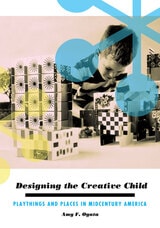
Designing the Creative Child
Playthings and Places in Midcentury AmericaAmy F. Ogata
University of Minnesota Press, 2013
The postwar American stereotypes of suburban sameness, traditional gender roles, and educational conservatism have masked an alternate self-image tailor-made for the Cold War. The creative child, an idealized future citizen, was the darling of baby boom parents, psychologists, marketers, and designers who saw in the next generation promise that appeared to answer the most pressing worries of the age.
Designing the Creative Child reveals how a postwar cult of childhood creativity developed and continues to this day. Exploring how the idea of children as imaginative and naturally creative was constructed, disseminated, and consumed in the United States after World War II, Amy F. Ogata argues that educational toys, playgrounds, small middle-class houses, new schools, and children’s museums were designed to cultivate imagination in a growing cohort of baby boom children. Enthusiasm for encouraging creativity in children countered Cold War fears of failing competitiveness and the postwar critique of social conformity, making creativity an emblem of national revitalization.
Ogata describes how a historically rooted belief in children’s capacity for independent thinking was transformed from an elite concern of the interwar years to a fully consumable and aspirational ideal that persists today. From building blocks to Gumby, playhouses to Playskool trains, Creative Playthings to the Eames House of Cards, Crayola fingerpaint to children’s museums, material goods and spaces shaped a popular understanding of creativity, and Designing the Creative Child demonstrates how this notion has been woven into the fabric of American culture.
Designing the Teenage Girl
The Debut of a Popular CharacterMary Celeste Kearney
University of Texas Press, 2026
Explores the forgotten first wave of American teen-girl entertainment from the late 1920s through the early 1950s.
During the mid-twentieth century, American entertainment featuring teenage girls blossomed. From short stories to plays, films, comics, radio programs, and television shows, writers and other creative professionals developed a new character type that helped to define midcentury girlhood and teen culture. Designing the Teenage Girl uncovers the largely forgotten first wave of US teen-girl entertainment, tracing its emergence in the 1920s through a thirty-year production cycle that spanned all sectors of American popular culture.
Beginning with short stories such as Sally Benson’s Junior Miss and following their adaptations, Kearney reveals how teen-girl narratives circulated across industries. Drawing on archival research and analysis of visual, narrative, and sound design, Kearney situates these texts within the identity politics of the period. While midcentury teen-girl entertainment privileged white, middle-class femininity, it also contained alternative visions of girlhood that complicated heteronormative and patriarchal expectations. This study reframes the origins of teen-girl entertainment and demonstrates how its aesthetic strategies and industrial practices continue to shape representations of girlhood today.
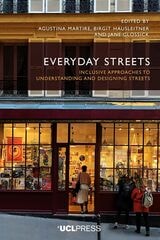
Everyday Streets
Inclusive Approaches to Understanding and Designing StreetsEdited by Agustina Martire, Birgit Hausleitner, and Jane Clossick
University College London, 2023
Everyday streets are both the most used and most undervalued of cities’ public spaces. They are places of social aggregation, bringing together people of different classes, genders, ages, ethnicities, and nationalities. They comprise not just the familiar outdoor spaces that we move through and interact in but also urban blocks, interiors, depths, and hinterlands, which are integral to streets’ nature and contribute to their vitality. Everyday Streets offers an inclusive approach to understanding and designing these streets through an analysis of them as found in cities around the globe. From the regular rectilinear urban blocks of Montreal to the carefully regulated narrow alleyways of Naples, and from the resilient market streets of London to the crammed commercial streets of Chennai, the streets in this book were all conceived with a certain level of control. Everyday Streets is a palimpsest of methods, perspectives, and recommendations that together provide a solid understanding of everyday streets, their degree of inclusiveness, and to what extent they could be more inclusive.
Investing Wisely
Informed Approaches to Designing and Implementing Allocation Systems for Graduate AssistantshipsRoger B. Sidje, Joan M. Barth, Ellary A. Draper, Matthew J. Jenny, Daniel L. Riches, and Dean M. Townsley
University of Alabama Press, 2026
Investing in Graduate Education Through Data, Equity, and Purpose.
Investing Wisely: Informed Approaches to Designing and Implementing Allocation Systems for Graduate Assistantships tackles one of the most consequential and least understood challenges in higher education: how universities can distribute graduate assistantships fairly, strategically, and transparently. Drawing on a multiyear effort at the University of Alabama, the authors introduce DIASGA™ (Designing and Implementing Allocation Systems for Graduate Assistantships), a practical framework for aligning graduate funding with institutional priorities, departmental needs, and student success. Through real-world experience, the book demonstrates how institutions can move beyond inherited funding patterns and build adaptive systems capable of responding to changing academic realities.
The book proposes a distinctive blend of rigorous analysis and practical guidance. The authors reveal the hidden complexities behind graduate funding decisions, challenging simplistic allocation formulas based on enrollment or credit-hour production. Instead, they advocate a data-informed, collaborative process grounded in departmental expertise, institutional values, and continuous assessment. Featuring case studies, implementation strategies, funding models, committee structures, and lessons learned from both successes and setbacks, Investing Wisely offers an unusually candid account of organizational change and resource allocation in higher education.
This book will be invaluable to provosts, deans, graduate school leaders, department chairs, faculty administrators, and higher education policymakers. It will also appeal to scholars of university governance, institutional effectiveness, and academic planning who seek practical approaches to balancing equity, accountability, and strategic investment. Whether your institution is reconsidering graduate funding practices or simply striving to make better-informed decisions, Investing Wisely provides a thoughtful roadmap for investing in graduate education with clarity, fairness, and purpose.
This book is freely available in open access format thanks to TOME (Toward an Open Monograph Ecosystem) - a collaboration of the Association of American Universities, the Association of University Presses, and the Association of Research Libraries - and the generous support of Virginia Tech. This Open Access publication can be accessed by visiting the University of Alabama Libraries Repository at https://ir.ua.edu/handle/123456789/18409.
Moralizing Technology
Understanding and Designing the Morality of ThingsPeter-Paul Verbeek
University of Chicago Press, 2011
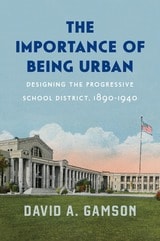
The Importance of Being Urban
Designing the Progressive School District, 1890-1940David A. Gamson
University of Chicago Press, 2019
The Importance of Being Urban
Designing the Progressive School District, 1890-1940David A. Gamson
University of Chicago Press, 2019
From the 1890s through World War II, the greatest hopes of American progressive reformers lay not in the government, the markets, or other seats of power but in urban school districts and classrooms. The Importance of Being Urban focuses on four western school systems—in Denver, Oakland, Portland, and Seattle—and their efforts to reconfigure public education in the face of rapid industrialization and the perceived perils of the modern city. In an era of accelerated immigration, shifting economic foundations, and widespread municipal shake-ups, reformers argued that the urban school district could provide the broad blend of social, cultural, and educational services needed to prepare students for twentieth-century life. These school districts were a crucial force not only in orchestrating educational change, but in delivering on the promise of democracy. David A. Gamson’s book provides eye-opening views of the histories of American education, urban politics, and the Progressive Era.