Results by title
3 books match the query 'Díaz, Porfirio'
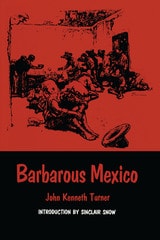
Barbarous Mexico
By John Kenneth Turner
University of Texas Press, 1969
American historians preoccupied with the stirring events of the Mexican Revolution and the years following tend to neglect the basic causes of the conflict. John Kenneth Turner—a crusading California newspaperman—presents these causes with brilliance and passion in Barbarous Mexico, his exposé of the Díaz regime. Published serially beginning in the fall of 1909, his articles received scores of favorable reviews. The Rochester Times wrote: "The abolitionists in our own ante bellum days did not formulate an indictment as repulsive as that brought against Mexico by this impassioned writer." A British periodical called Turner "an American humanitarian who deserves the thanks of civilisation." Mexican President Francisco I. Madero himself said that Barbarous Mexico contributed greatly to the success of the Revolution.
Despite its fame early in the twentieth century, Barbarous Mexico was out of print for close to sixty years. The present edition, with an introductory biographical essay on Turner by Sinclair Snow and photographs of the principal characters involved, not only reemphasizes the causes of the Mexican Revolution, but provides both lay reader and scholar with a vivid and exciting account of life in Mexico under Porfirio Díaz.
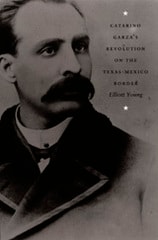
Catarino Garza's Revolution on the Texas-Mexico Border
Elliott Young
Duke University Press, 2004
Elliott Young provides the first full-length analysis of the revolt and its significance, arguing that Garza’s rebellion is an important and telling chapter in the formation of the border between Mexico and the United States and in the histories of both countries. Throughout the nineteenth century, the borderlands were a relatively coherent region. Young analyzes archival materials, newspapers, travel accounts, and autobiographies from both countries to show that Garza’s revolution was more than just an effort to overthrow Díaz. It was part of the long struggle of borderlands people to maintain their autonomy in the face of two powerful and encroaching nation-states and of Mexicans in particular to protect themselves from being economically and socially displaced by Anglo Americans. By critically examining the different perspectives of military officers, journalists, diplomats, and the Garzistas themselves, Young exposes how nationalism and its preeminent symbol, the border, were manufactured and resisted along the Rio Grande.
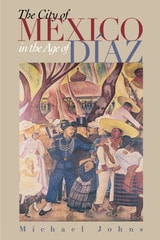
The City of Mexico in the Age of Díaz
By Michael Johns
University of Texas Press, 1997
Mexico City assumed its current character around the turn of the twentieth century, during the dictatorship of Porfirio Díaz (1876-1911). In those years, wealthy Mexicans moved away from the Zócalo, the city's traditional center, to western suburbs where they sought to imitate European and American ways of life. At the same time, poorer Mexicans, many of whom were peasants, crowded into eastern suburbs that lacked such basic amenities as schools, potable water, and adequate sewerage. These slums looked and felt more like rural villages than city neighborhoods. A century—and some twenty million more inhabitants—later, Mexico City retains its divided, robust, and almost labyrinthine character.
In this provocative and beautifully written book, Michael Johns proposes to fathom the character of Mexico City and, through it, the Mexican national character that shaped and was shaped by the capital city. Drawing on sources from government documents to newspapers to literary works, he looks at such things as work, taste, violence, architecture, and political power during the formative Díaz era. From this portrait of daily life in Mexico City, he shows us the qualities that "make a Mexican a Mexican" and have created a culture in which, as the Mexican saying goes, "everything changes so that everything remains the same."