Results by title
21 books match the query 'Digital & Online Resources'
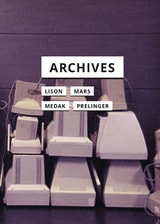
Archives
Andrew Lison
University of Minnesota Press, 2019
How digital networks and services bring the issues of archives out of the realm of institutions and into the lives of everyday users
Archives have become a nexus in the wake of the digital turn. Electronic files, search engines, video sites, and media player libraries make the concepts of “archival” and “retrieval” practically synonymous with the experience of interconnected computing. Archives today are the center of much attention but few agendas. Can archives inform the redistribution of power and resources when the concept of the public library as an institution makes knowledge and culture accessible to all members of society regardless of social or economic status? This book sets out to show that archives need our active support and continuing engagement.
This volume offers three distinct perspectives on the present status of archives that are at once in disagreement and solidarity with each other, from contributors whose backgrounds cut across the theory–practice divide. Is the increasing digital storage of knowledge pushing us toward a turning point in its democratization? Can archives fulfill their paradoxical potential as utopian sites in which the analog and the digital, the past and future, and remembrance and forgetting commingle? Is there a downside to the present-day impulse toward total preservation?
Creating Generative AI Policies
A Guide for Public and Academic LibrariesRobin Hastings
American Library Association, 2026
Though it’s challenging to set policies for a technology that is so young and still in flux, the need is urgent. Because usage of AI presents both opportunities and risks, libraries must be proactive. The WEF (World Economic Forum) predicts that while there may be a loss of 92 million jobs to various AI tools, they see 170 million new jobs and roles emerging from the use of this new technology. Whether or not this proves correct, there are already digital literacy skills, including a basic understanding of the technology around AI, that libraries can help their patrons master; and because of data privacy, security, and ethics issues, library workers require clear AI policies too. Technology expert Hastings highlights the first attempts of libraries across the country to set up policies for the use of AI in their organizations, as well as policies created by cities and other similar institutions, to guide stakeholders in creating their own smart, forward-thinking course of action. Succinct and pragmatic, this timely resource
- provides a short overview of Generative AI history, basic technical knowledge, and the key arguments put forth by those in favor and those opposed to this technology;
- offers advice on discovering how library staff encounter AI in their day-to-day work, both in their own usage and by patrons, to inform what policies the library needs and which policies to consider adjusting for particular use cases;
- includes separate chapters focusing on staff-side policy and patron/public-facing policy, delving into essential considerations like staff training, privacy and data protection, security, AI usage for reference, patron education and AI literacy, and setting limits and boundaries on patron AI use;
- suggests useful approaches to ensure that AI policies are easy to follow and understand by library workers, patrons, and the wider community;
- discusses how to craft flexible procedures that can be updated as AI continues to change, drawing on technology management best practices; and
- offers links to additional resources like sample policy documents and a curated reading list for understanding the environment around AI.
Critical Digital Humanities
The Search for a MethodologyJames E. Dobson
University of Illinois Press, 2019
Critical Making in the Age of AI
Emily Johnson and Anastasia Salter
Amherst College Press, 2025
The book’s eight patterns are especially appropriate for those just beginning to explore digital scholarly methods, and one goal of Critical Making in the Age of AI is to provide structure for work that is both meaningful and achievable with limited resources and time. By centering critical making through a design-justice and feminist lens, the coauthors model how inclusive and expansive approaches to making in research and teaching are vital to shaping the humanities of the future.
Digital Community Engagement
Partnering Communities with the AcademyEdited by Rebecca Wingo, Jason Heppler, and Paul Schadewald
University of Minnesota Press, 2020
Digital projects can empower communities through collaboration and create new primary sources, collapse barriers, and spark new dialogue. Digital Community Engagement “lifts the hood” and presents nine examples of digital collaborations from constructing a public response to police violence, to creating digital stories of homelessness, to young activists united around local people in the Deep South to build a grassroots movement for social change.
Wingo, Heppler and Schadewald bring together cutting-edge campus-community partnerships with a focus on digital projects. The case studies, authored by academics and their community partners, explore models for digital community engagement that leverage new media through reciprocal partnerships. The contributions to this volume stand at the crossroads of digital humanities, public history, and community

Exploring Digital Cultural Heritage
Access, Use, Value and SustainabilityEdited by Eirini Goudarouli, Anna-Maria Sichani, and Jane Winters
University of London Press, 2026
An accessible starting point for those interested in the past, present, and future of digital cultural heritage.
The digitization of cultural heritage has reshaped humanities research and professional practice, though its full impact is still emerging. As more cultural heritage becomes born-digital, new archives and collections introduce complexity, challenges, and shared methods across sectors. Exploring Digital Cultural Heritage examines interpretations, contexts, and uses across four themes—access, use and reuse, value(s), and sustainability—spanning digitized and born-digital materials. Drawing on case studies and practical examples, it provides an overview of the concepts, processes, and technologies shaping digital cultural heritage, as well as its future challenges and directions.
Futures of Digital Scholarly Editing
Matt Cohen
University of Minnesota Press, 2025
Exploring technology, ethics, and culture to unlock digital scholarship’s future
Futures of Digital Scholarly Editing navigates the ever-shifting terrain of digital academia, examining practical and ethical considerations as technology continues to evolve. In this indispensable collection, digital humanities practitioners and scholars work with a wide range of archival materials to confront key challenges surrounding the adaptation and sustainability of digital editorial projects as well as their societal impact.
Broaching essential questions at the nexus of technology and culture, Futures of Digital Scholarly Editing is organized around three principal frameworks: access, sustainability, and interoperability; ethics and community involvement; and the evolution of textual scholarship. From addressing outdated technical infrastructures to fostering new collaborations, this volume serves as a beacon guiding scholars and institutions through the complexities of digital editing in an era of profound technological and societal transformation.
Contributors: Stephanie P. Browner, The New School; Julia Flanders, Northeastern U; Ed Folsom, U of Iowa; Nicole Gray, U of Nebraska–Lincoln; Cassidy Holahan, U of Nevada, Las Vegas; Fotis Jannidis, U of Würzburg; Aylin Malcolm, U of Guelph; Sarah Lynn Patterson, U of Massachusetts Amherst; Elena Pierazzo, U of Tours; K.J. Rawson, Northeastern U; Whitney Trettien, U of Pennsylvania; John Unsworth, U of Virginia; Dirk Van Hulle, U of Oxford; Robert Warrior, U of Kansas; Marta L. Werner, Loyola U Chicago.
Retail e-book files for this title are screen-reader friendly with images accompanied by short alt text and/or extended descriptions.
Intellectual Freedom Manual, Eleventh Edition
Erin Office for Intellectual Freedom
American Library Association, 2026
When someone faces a difficult intellectual freedom (IF) issue, they usually don’t have time to wade through dense text to find the answers they need. Designed as a real-world reference, OIF’s Intellectual Freedom Manual provides trusted, comprehensive guidance for every library worker, from the volunteer to the director, in plain language. Whether you’re developing or reviewing policies, on-boarding new staff or trustees, responding to challenges and controversies, or studying librarianship, you’ll find this a vital tool, with features such as
- contributions that center the voices of Black, Indigenous, and other People of Color (BIPOC) and LGBTQIA+ people, who are often targeted by censorship efforts;
- chapters that begin with an overview explaining the big ideas and offering reflection questions;
- an introduction to IF and why it matters, drawing on ALA's core IF documents and supported with adaptable policy worksheets;
- information and best practice guidance on key topics such as access, children and youth, censorship and internet filtering, collection development and management, copyright, meeting rooms and exhibit spaces, library programming, politics and religion, privacy, and visits and requests from law enforcement;
- stories from real people whose lives have been impacted by IF, showing how library policies shape culture, protect staff and users, and affect real people;
- concise breakdowns of IF issues from legal experts, helping you understand the laws and how they apply in real situations;
- practical advice on advocating for IF, getting help when challenges arise, lobbying, and working with your elected officials;
- a thorough index to help you quickly find the information you need; and
- a helpful glossary and selected bibliography of additional resources.
Intermediate Horizons
Book History and Digital HumanitiesEdited by Mark Vareschi and Heather Wacha
University of Wisconsin Press, 2024
Integrating intermedial practices and assessments, the editors and contributors explore issues surrounding the access to and materiality of digitized materials, and the challenge of balancing preservation of traditional archival materials with access. They offer an assessment in our present moment of the early visions of book history and DH projects. In revisiting these projects, they ask us to shift our thinking on the promises and perils of archival and creative work in different media. Taken together, this volume reconsiders the historical intersections of book history and DH and charts a path for future scholarship across disciplinary boundaries.
Introduction to Metadata
Third EditionMurtha Baca
J. Paul Getty Trust, The, 2016
The third edition of Introduction to Metadata, first published in 1998, provides an overview of metadata, including its types, roles, and characteristics; a discussion of metadata as it relates to Web resources; and a description of methods, tools, standards, and protocols for publishing and disseminating digital collections. This revised edition is an indispensable resource in the field, addressing advances in standards such as Linked Open Data, changes in intellectual property law, and new computing technologies, and offering an expanded glossary of essential terms.
Managing Data for Patron Privacy
Comprehensive Strategies for LibrariesKristin Briney and Becky Yoose
American Library Association, 2022
- succinct summaries of major U.S. laws and other regulations and standards governing patron data management;
- information security practices to protect patrons and libraries from common threats;
- how to navigate barriers in organizational culture when implementing data privacy measures;
- sources for publicly available, customizable privacy training material for library workers;
- the data life cycle from planning and collecting to disposal;
- how to conduct a data inventory;
- understanding the associated privacy risks of different types of library data;
- why the current popular model of library assessment can become a huge privacy invasion;
- addressing key topics while keeping your privacy policy clear and understandable to patrons; and
- data privacy and security provisions to look for in vendor contracts.
Open Access Literature in Libraries
Principles and PracticesKaren Brunsting, Caitlin Harrington, and Rachel E. Scott
American Library Association, 2022
- the origins and growth of OA, how to define it, and some of the ways in which librarians have made connections to OA;
- where OA diverges from the historic role of library collection development policies and ways to bring OA into alignment with an institution's collection development principles and practices;
- real-world examples of how libraries have supported or integrated OA into their collections, including strategies for selecting and activating OA titles and collections for inclusion, offering open educational resources (OER) to students, samples of collection management workflows, and ideas for aligning collections with institutional repositories or other Green OA initiatives;
- guidance on financially supporting OA content, initiatives, and platforms;
- how OA publishing does and does not harmonize with diversity, equity, and inclusion initiatives; and
- tips for using ongoing assessment and evaluation to continuously support the library’s path to an open future.
Preprints
Their Evolving Role in Science CommunicationIratxe Puebla
Against the Grain, LLC, 2022
Sport History in the Digital Era
Edited by Gary Osmond and Murray G. Phillips
University of Illinois Press, 2015
Chapters consider how the philosophical and theoretical understanding of the meaning of history influence a willingness to engage with digital history, and conceptualize the relationship between history making and the digital era. As the writers show, digital media's mostly untapped potential for studying the recent past via blogs, chat rooms, gambling sites, and the like forge a symbiosis between sports and the internet, and offer historians new vistas to explore and utilize.
Sport History in the Digital Era also shows how the best digital history goes beyond a static cache of curated documents. Instead, it becomes a truly public history that serves as a dynamic site of enquiry and discussion. In such places, scholars enter into a give-and-take with individuals while inviting the audience to grapple with, rather than passively absorb, the evidence being offered.
Timely and provocative, Sport History in the Digital Era affirms how the information revolution has transformed sport and sport history--and shows the road ahead.
Contributors include Douglas Booth, Mike Cronin, Martin Johnes, Matthew Klugman, Geoffery Z. Kohe, Tara Magdalinski, Fiona McLachlan, Bob Nicholson, Rebecca Olive, Gary Osmond, Murray G. Phillips, Stephen Robertson, Synthia Sydnor, Holly Thorpe, and Wayne Wilson.

Teens, Digital Media, and the Chicago Public Library
Penny Bender Sebring, Eric R. Brown, Kate M. Julian, Stacy B. Ehrlich, Susan E. Sporte, Erin Bradley, and Lisa Meyer
University of Chicago Press, 2013
Consortium on Chicago School Research finds.
-Illuminates how the design of YOUmedia shapes youth participation
-Describes the teens that YOUmedia serves, their patterns of participation, and the activities in which they engage
-Provides examples of the benefits youth perceive from their participation
-Characterizes the roles adults play in engaging teens and the ways programmatic choices have shifted
-Offers suggestions for organizations intending to launch similar initiatives
-Illustrates how YOUmedia instantiates elements of the emerging Connected Learning Model
The Future of Memory
A History of Lossless Format Standards in the Moving Image ArchiveJimi Jones and Marek Jancovic
University of Illinois Press, 2025
Drawing on interviews with archivists and developers, Jones and Jancovic reveal the archive as a dynamic space where deeply entrenched social practices produce disagreements but also resourceful collaborations. They contrast the unprecedented rise of archivist-driven standardization and controversies around non-standard technology with the historical dominance of the film and broadcast industries. Throughout, the authors clarify the role of tech companies, software developers, film pirates, hackers, and other players with poorly understood roles in the process.
A timely look at the state of audiovisual preservation, The Future of Memory provides a history of recent innovations alongside a snapshot of a field in the midst of profound technological change.
The Little Database
A Poetics of Media FormatsDaniel Scott Snelson
University of Minnesota Press, 2025
A poetics for reading the everyday objects that populate a hard drive
Bespoke online archives like PennSound and Eclipse host an astounding array of “old media” artifacts, posing a handcrafted counterpoint to the immense databases aggregated by digital titans like Google and Facebook. In The Little Database, Daniel Scott Snelson argues for the significance of these comparatively “small” collections, exploring how digital archives dramatically transform the artifacts they host and how they might help us better understand our own private collections in turn.
Examining curated collections such as Textz, UbuWeb, and the Electronic Poetry Center, Snelson explores media-specific works by poets and artists, including William Carlos Williams, Tracie Morris, bill bissett, Nam June Paik, and Vicki Bennett. He develops creative tools and contingent methods for reading cultural data, whether found on the internet or in our own collections of TXT, JPG, MP3, and MOV artifacts, presenting case studies to show how these objects have come to find revised meaning in their digital contexts. Along the way, experimental poetic interludes give readers practical entry points into the creative practice of producing new meanings in any given little database.
Inventive and interdisciplinary, The Little Database grapples with the digitized afterlives of cultural objects, showing how the past is continually reconfigured to shape the present. It invites readers to find playful and personal means for unpacking their own data collections, in the process discovering idiosyncratic ways to explore and connect with digital archives.
Retail e-book files for this title are screen-reader friendly with images accompanied by short alt text and/or extended descriptions.
The Public Librarian's Guide to Answering Health Questions
Bobbi L. Newman and Carolyn Martin
American Library Association, 2026
It often starts with a patron’s simple question. Librarians play a central role in helping people navigate information, evaluate sources, and find answers they can trust. That includes health information, something many people come to the library looking for every day. Maybe they need more information about a diagnosis, a medication, or something they came across online. Perhaps they’re helping a family member with a medical issue or trying to better understand their own health. These are everyday interactions in libraries. And this book is about helping you approach them with confidence, clarity, and a strong sense of your role. You do not need a medical background to provide excellent health information service — just the right frameworks, tools, and reassurance to apply your core skills in a health context. No matter your comfort level or prior experience, you will
- understand why health information work is both practical and people-centered, requiring an approach that combines information skills with communication and care;
- gain an overview of health information and the role libraries play in supporting health literacy;
- learn about evaluating health information and identifying trustworthy, evidence-based sources;
- receive guidance on building and maintaining a relevant, reliable collection;
- walk through health reference interview scenarios, bolstered with strategies for effective and respectful interactions;
- discover reflection prompts to help you consider your own approach, your library’s practices, and the ways you can continue to build confidence over time;
- grasp the ethical and legal considerations related to health information work, such as privacy, boundaries, and professional responsibilities;
- find practical wisdom for sustaining yourself in this work and building practices that support your own long-term well-being; and
- get access to a companion website that provides checklists, tools, and additional resources you can use in your day-to-day work.
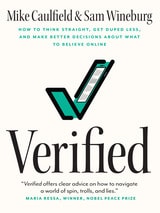
Verified
How to Think Straight, Get Duped Less, and Make Better Decisions about What to Believe OnlineMike Caulfield and Sam Wineburg
University of Chicago Press, 2023
An indispensable guide for telling fact from fiction on the internet—often in less than 30 seconds.
The internet brings information to our fingertips almost instantly. The result is that we often jump to thinking too fast, without taking a few moments to verify the source before engaging with a claim or viral piece of media. Information literacy expert Mike Caulfield and educational researcher Sam Wineburg are here to enable us to take a moment for due diligence with this informative, approachable guide to the internet. With this illustrated tool kit, you will learn to identify red flags, get quick context, and make better use of common websites like Google and Wikipedia that can help and hinder in equal measure.
This how-to guide will teach you how to use the web to verify the web, quickly and efficiently, including how to
• Verify news stories and other events in as little as thirty seconds (seriously)
• Determine if the article you’re citing is by a reputable scholar or a quack
• Detect the slippery tactics scammers use to make their sites look credible
• Decide in a minute if that shocking video is truly shocking
• Deduce who’s behind a site—even when its ownership is cleverly disguised
• Uncover if that feature story is actually a piece planted by a foreign government
• Use Wikipedia wisely to gain a foothold on new topics and leads for digging deeper
And so much more. Building on techniques like SIFT and lateral reading, Verified will help students and anyone else looking to get a handle on the internet’s endless flood of information through quick, practical, and accessible steps.

Virtual Reference Training
The Complete Guide to Providing Anytime, Anywhere AnswersAmerican Library Association, 2004
Wikipedia and Academic Libraries
A Global ProjectEdited by Laurie M. Bridges, Raymond Pun, and Roberto A. Arteaga
Michigan Publishing Services, 2021
Wikipedia and Academic Libraries: A Global Project contains 19 chapters by 52 authors from Brazil, Canada, Hong Kong, Ireland, Kyrgyzstan, Mexico, Netherlands, Nigeria, Scotland, Spain, and the United States. The chapters in this book are authored by both new and longtime members of the Wikimedia community, representing a range of experiences.