Results by title

4 books match the query 'Digital Platforms'
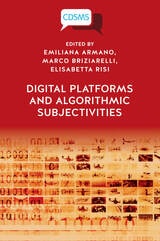
cover of Digital Platforms and Algorithmic Subjectivities

Digital Platforms and Algorithmic Subjectivities

Emiliana Armano, Marco Briziarelli and Elisabetta Risi

University of Westminster Press, 2022

Algorithms are a form of productive power – so how may we conceptualise the newly merged terrains of social life, economy and self in a world of digital platforms? How do multiple self-quantifying practices interact with questions of class, race and gender? This edited collection considers algorithms at work – for what purposes encoded data about behaviour, attitudes, dispositions, relationships and preferences are deployed – and black box control, platform society theory and the formation of subjectivities. It details technological structures and lived experience of algorithms and the operation of platforms in areas such as crypto-finance, production, surveillance, welfare, activism in pandemic times. Finally, it asks if platform cooperativism, collaborative design and neomutualism offer new visions. Even as problems with labour and in society mount, subjectivities and counter subjectivities here produced appear as conscious participants of change and not so much the servants of algorithmic control and dominant platforms.
[more]
cover of Digital Platforms and the Press

Digital Platforms and the Press

James Meese

Intellect Books, 2023

New study provides an overview of the consequences of a platform-dependent press.

Platform dependence is a concept that is used to describe what happens when businesses or an entire sector become reliant on one or more digital platforms for their survival. Digital Platforms and the Press argues that we face a major risk of a platform-dependent press—a development that threatens liberal democracies across the world. As James Meese shows, the situation is occurring across the news industry, to the extent that it is difficult to imagine the production, distribution, and long-term survival of news in liberal democracies without the involvement of platforms. As governments, regulators, and citizens become increasingly concerned about platform power, Digital Platforms and the Press is the first book to highlight the long-term economic and social consequences of platform dependence for the news sector. 
 
[more]
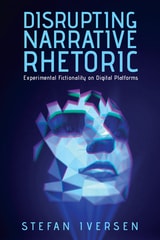
cover of Disrupting Narrative Rhetoric: Experimental Fictionality on Digital Platforms

Disrupting Narrative Rhetoric

Experimental Fictionality on Digital Platforms

Stefan Iversen

The Ohio State University Press, 2026

Disrupting Narrative Rhetoric investigates how experimental uses of fictionality on digital platforms transform public storytelling, with political and ethical consequences. Focusing on communication that initially misleads only to provoke reflection, Stefan Iversen explores how narrative rhetoric—stories used to persuade within public discourse—can be strategically disrupted to produce what he terms “metanoic reflexivity”: a distinctive mode of afterthought triggered when audiences realize they have read wrong. Drawing from narrative theory, fictionality studies, rhetorical criticism, and digital platform studies, Iversen develops a model for analyzing narratives that play with the boundaries between fiction and nonfiction to motivate action or reconsideration on urgent public issues. These narrative practices—found in humanitarian campaigns, presidential rhetoric, political trolling, and synthetic media—use the digital affordances of platforms like Instagram, X, Reddit, and YouTube to reorient audience expectations and provoke social engagement. Combining theory and close reading, Disrupting Narrative Rhetoric offers a compelling interdisciplinary framework for understanding how narrative experiments can either deepen democratic discourse or contribute to its fragmentation in today’s platformed public spheres.
[more]
cover of Reinventing the Welfare State: Digital Platforms and Public Policies

Reinventing the Welfare State

Digital Platforms and Public Policies

Ursula Huws

Pluto Press, 2020

The Covid-19 pandemic has tragically exposed how today’s welfare state cannot properly protect its citizens. Despite the valiant efforts of public sector workers, from under-resourced hospitals to a shortage of housing and affordable social care, the pandemic has tragically shown how decades of neglect has caused hundreds to die. In this bold new book, leading policy analyst Ursula Huws shows how we can create a welfare state that is fair, affordable, and offers security for all.

Huws focuses on some of the key issues of our time – the gig economy, universal, free healthcare, and social care, to criticize the current state of welfare provision. Drawing on a lifetime of research on these topics, she clearly explains why we need to radically rethink how it could change. With positivity and rigor, she proposes new and original policy ideas, including critical discussions of Universal Basic Income and new legislation for universal workers' rights.

She also outlines a 'digital welfare state' for the 21st century. This would involve a repurposing of online platform technologies under public control to modernize and expand public services, and improve accessibility.

[more]