Results by title
19 books match the query 'Digital preservation'
Advancing Preservation for Archives and Manuscripts
Elizabeth Joffrion
Society of American Archivists, 2020
After Disruption
A Future for Cultural MemoryTrevor Owens
University of Michigan Press, 2024
After Disruption posits that we are no longer planning for a digital future, but instead living in a digital present. In this context, Owens asks how we plan for and develop a more just, sustainable, and healthy future for cultural memory. The first half of the book draws on critical scholarship on the history of technology and business to document and expose the sources of tech startup ideologies and their pernicious results, revealing that we need powerful and compelling counter frameworks and values to replace these ideologies. The second half of the book makes the case for the centrality of maintenance, care, and repair as interrelated frameworks to build a better future in which libraries, archives, and museums can thrive as sites of belonging and connection through collections.
Conserving Active Matter
Edited by Peter N. Miller and Soon Kai Poh
Bard Graduate Center, 2022
This volume brings together the findings from a five-year research project that seeks to reimagine the relationship between conservation knowledge and the humanistic study of the material world. The project, “Cultures of Conservation,” was supported by the Andrew W. Mellon Foundation and included events, seminars, and an artist-in-residence.
The effort to conserve things amid change is part of the human struggle with the nature of matter. For as long as people have made things and kept things, they have also cared for and repaired them. Today, conservators use a variety of tools and categories developed over the last one hundred and fifty years to do this work, but in the coming decades, new kinds of materials and a new scale of change will pose unprecedented challenges. Looking ahead to this moment from the perspectives of history, philosophy, materials science, and anthropology, this volume explores new possibilities for both conservation and the humanities in the rethinking of active matter.

Data Management for Libraries
Carly A. Strasser
American Library Association, 2013
Digital Curation
Gillian Oliver
American Library Association, 2016
As an in-depth explanation of the entire digital curation lifecycle, from creation to appraisal to preservation to organization/access to transformation, the first edition of this text set a benchmark for both thoroughness and clarity. Boasting the expert guidance of international authorities Oliver and Harvey, this revamped and expanded edition widens the scope to address continuing developments in the strategies, technological approaches, and activities that are part of this rapidly changing field. In addition to current practitioners, those pursuing a career as librarian, archivist, or records manager will find this definitive survey invaluable. Filled with up-to-date best practices, it covers such important topics as
- the scope and incentives of digital curation, detailing Digital Curation Centre's (DCC) lifecycle model as well as the Data Curation Continuum;
- key requirements for digital curation, from description and representation to planning and collaboration;
- the value and utility of metadata;
- considering the needs of producers and consumers when creating an appraisal and selection policy for digital objects;
- the paradigm shift by institutions towards cloud computing and its impact on costs, storage, and other key aspects of digital curation;
- the quality and security of data;
- new and emerging data curation resources, including innovative digital repository software and digital forensics tools;
- mechanisms for sharing and reusing data, with expanded sections on open access, open data, and open standards initiatives; and
- processes to ensure that data are preserved and remain usable over time.
Useful as both a teaching text and day-to-day working guide, this book outlines the essential concepts and techniques that are crucial to preserving the longevity of digital resources.
Digital Curation
A How-To-Do-It Manual for LibrariansPam Hackbart-Dean
American Library Association, 2010
Digital Preservation Essentials
Christopher Prom
Society of American Archivists, 2016
Digital Preservation in Libraries
Preparing for a Sustainable FutureJeremy Myntti
American Library Association, 2018
Digitizing Your Collection
Public Library Success StoriesSusanne Caro
American Library Association, 2015
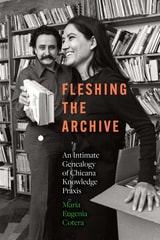
Fleshing the Archive
An Intimate Genealogy of Chicana Knowledge PraxisMaría Eugenia Cotera
University of Texas Press, 2025
The history of the Chicana por mi Raza Digital Memory Collective, an archive dedicated to preserving Chicana feminist knowledge of the 1970s and memory work.
The late 1960s and early 1970s witnessed an explosion of publishing by Chicana activists as they took part in the Movimiento against oppression of ethnic Mexicans in the United States. Today, thousands of these documents, including written works and oral histories, have been assembled by the Chicana por mi Raza Digital Memory Collective. Drawing on these unique resources, Fleshing the Archive traces the innovative Chicana knowledge projects of the Movimiento years.
Seeking to think with the past rather than about it, María Cotera explores transgressive sites and discourses of Chicana knowledge, from poems and essays to newspapers, bibliographies, and testimonies. Often published independently and distributed by readers themselves, these works embodied a praxis of feminist and queer consciousness-raising. Observing the startling convergences between Chicana praxis of the 1970s and digital knowledge production in the present, Cotera argues that the Chicana archive enables transformative moments of recognition across time that unsettle supposedly objective accounts of history. The materials preserved by Chicana por mi Raza offer Chicana scholars a model of teaching and learning liberated from a corporate academy that is increasingly hostile to intellectual inquiry.
Getting Started with Digital Collections
Scaling to Fit Your OrganizationJane D. Monson
American Library Association, 2017
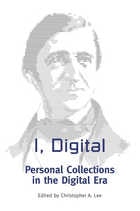
I, Digital
Personal Collections in the Digital EraChristopher A. Lee
Society of American Archivists, 2011
When it comes to personal collections, we live in exciting times. Individuals are living their lives in ways that are increasingly mediated by digital technologies — digital photos and video footage, music, the social web, e-mail,and other day-to-day interactions. Although this mediation presents many technical challenges for long-term preservation, it also provides unprecedented opportunities for documenting the lives of individuals.
Ten authors — Robert Capra, Adrian Cunningham, Tom Hyry, Leslie Johnston, Christopher (Cal) Lee, Sue McKemmish, Cathy Marshall, Rachel Onuf, Kristina Spurgin, and Susan Thomas — share their expertise on the various aspects of the management of digital information in I, Digital: Personal Collections in the Digital Era.
The volume is divided in three parts:
Chapters explore issues,challenges, and opportunities in the management of personal digital collections, focusing primarily on born-digital materials generated and kept by individuals.
Contributions to I, Digital represent the depth in thinking about how cultural institutions can grapple with new forms of documentation, and how individuals manage--and could better manage--digital information that is part of contemporary life.
Making Your Tools Work for You
Max Eckard
Society of American Archivists, 2020
Module 8
Becoming a Trusted Digital RepositorySteve Marks
Society of American Archivists, 2015
Moving Image and Sound Collections for Archivists
Anthony Cocciolo
Society of American Archivists, 2017
Preserving Our Heritage
Perspectives from Antiquity to the Digital AgeMichele Valerie Cloonan
American Library Association, 2015
The Afterlife of Data
What Happens to Your Information When You Die and Why You Should CareCarl Öhman
University of Chicago Press, 2024
A short, thought-provoking book about what happens to our online identities after we die.
These days, so much of our lives takes place online—but what about our afterlives? Thanks to the digital trails that we leave behind, our identities can now be reconstructed after our death. In fact, AI technology is already enabling us to “interact” with the departed. Sooner than we think, the dead will outnumber the living on Facebook. In this thought-provoking book, Carl Öhman explores the increasingly urgent question of what we should do with all this data and whether our digital afterlives are really our own—and if not, who should have the right to decide what happens to our data.
The stakes could hardly be higher. In the next thirty years alone, about two billion people will die. Those of us who remain will inherit the digital remains of an entire generation of humanity—the first digital citizens. Whoever ends up controlling these archives will also effectively control future access to our collective digital past, and this power will have vast political consequences. The fate of our digital remains should be of concern to everyone—past, present, and future. Rising to these challenges, Öhman explains, will require a collective reshaping of our economic and technical systems to reflect more than just the monetary value of digital remains.
As we stand before a period of deep civilizational change, The Afterlife of Data will be an essential guide to understanding why and how we as a human race must gain control of our collective digital past—before it is too late.

The Archival Afterlives of Philippine Cinema
Bliss Cua Lim
Duke University Press, 2024
The Complete Guide to Personal Digital Archiving
Brianna H. Marshall
American Library Association, 2017