Results by title
18 books match the query 'Director'
Birth of a Nation
D.W. Griffith, DirectorRobert Lang
Rutgers University Press, 1993
Robert Lang's introduction to this volume explores in fascinating detail the warped view of history that this great film presents. Griffith, a Southerner, was intent on resurrecting, idealizing, and justifying the South. In The Birth of a Nation, it is racism that unites the white North and South; the protection or abolition of slavery is not the divisive issue. In a powerful synthesis of spectacle and narrative, Griffith seeks to give the Southern cause a sense of glamour and high purpose. Lang considers the film as a historical melodrama, and by examining Griffith's "historiography as ideological practice," he traces the way in which the bloody, traumatic reality of the Civil War and Reconstruction becomes melodramatic myth. This unparalleled guide to The Birth of a Nation offers a shot-by-shot continuity script; a biographical sketch of the director; a sampling of contemporary reviews; a series of essays by distinguished critics including James Chandler, Michael Rogin, Janet Staiger, and Mimi White; and a filmography and bibliography.
Breathless
Jean-Luc Godard, DirectorDudley Andrew
Rutgers University Press, 1988
In his introduction, Dudley Andrew brilliantly explains what Godard set out to accomplish in Breathless. He illuminates the intertextual and cultural references of the film and the tensions within it between tradition and innovation. This volume also features, for the first time in English, the complete and accurate continuity script of Breathless, together with Francois Truffaut's surprisingly detailed original treatment. Also included are an in-depth selection of reviews and criticism in French and English; a brief biographical sketch of the director's life that covers the development of his career, as well as a filmography and selected bibliography.
Bringing Up Baby
Howard Hawks, DirectorMast, Gerald
Rutgers University Press, 1988
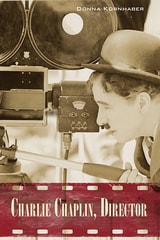
Charlie Chaplin, Director
Donna Kornhaber
Northwestern University Press, 2014
Charlie Chaplin was one of the cinema’s consummate comic performers, yet he has long been criticized as a lackluster film director. In this groundbreaking work—the first to analyze Chaplin’s directorial style—Donna Kornhaber radically recasts his status as a filmmaker. Spanning Chaplin’s career, Kornhaber discovers a sophisticated "Chaplinesque" visual style that draws from early cinema and slapstick and stands markedly apart from later, "classical" stylistic conventions. His is a manner of filmmaking that values space over time and simultaneity over sequence, crafting narrative and meaning through careful arrangement within the frame rather than cuts between frames. Opening up aesthetic possibilities beyond the typical boundaries of the classical Hollywood film, Chaplin’s filmmaking would profoundly influence directors from Fellini to Truffaut. To view Chaplin seriously as a director is to re-understand him as an artist and to reconsider the nature and breadth of his legacy.
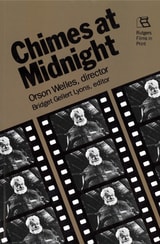
Chimes at Midnight
Orson Welles, DirectorLyons, Bridget G
Rutgers University Press, 1988
This volume offers a complete continuity script of Chimes at Midnight, including its famous battle sequence. Each shot is described in detail and is keyed to the original Shakesperian sources, thus making the volume an invaluable guide to Welles as an adaptor and creator of texts. The first complete transcription of the continuity script of Chimes is accompanied by the editor's critical introduction on Welles's transformation of Shakespeare; a special interview with Keith Baxter, one of the film's principal actors, which discusses its production history; reviews and articles; and a biographical sketch of Welles, a filmography, and a bibliography.
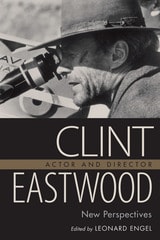
Clint Eastwood, Actor and Director
New PerspectivesLeonard Engel
University of Utah Press, 2007
The contributors to this volume revisit and examine his career as an actor and director, and are part of a growing critical evaluation of Eastwood's films. A common thread, however, is their respect for his cinematic storytelling. They examine how he put his individual stamp on particular genres, while extending and enriching our understanding of his achievements.
For the Director
Research Essays in Honor of James B. GriffinEdited by Charles E. Cleland
University of Michigan Press, 1977
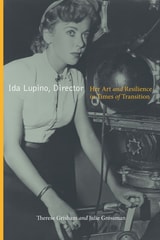
Ida Lupino, Director
Her Art and Resilience in Times of TransitionGrisham, Therese
Rutgers University Press, 2017
The first in-depth study devoted to Lupino’s directorial work, this book makes a strong case for her as a trailblazing feminist auteur, a filmmaker with a clear signature style and an abiding interest in depicting the plights of postwar American women. Ida Lupino, Director not only examines her work as a cinematic auteur, but also offers a serious consideration of her diverse and long-ranging career, getting her start in Hollywood as an actress in her teens and twenties, directing her first films in her early thirties, and later working as an acclaimed director of television westerns, sitcoms, and suspense dramas. It also demonstrates how Lupino fused generic elements of film noir and the social problem film to create a distinctive directorial style that was both highly expressionistic and grittily realistic. Ida Lupino, Director thus shines a long-awaited spotlight on one of our greatest filmmakers.
Imitation of Life
Douglas Sirk, DirectorFischer, Lucy
Rutgers University Press, 1991
Because of the special stamp he put on his melodramas, Sirk's best works transcend the constraints of their genre. In them, he both exemplified and critiqued postwar, conservative, materialistic life and its false value systems. There is much in Sirk, particularly in Imitation of Life, that is of interest to us today. The time seems to be right for a new look at the film, its reception amidst scandal over the affairs of its star—Lana Turner—the relationships between its mothers and daughters, the tensions between its men and its women, the friendships between its black and white women, and the ambiguous, controversial approach of Sirk to his material.
This volume includes the complete continuity script of the film, critical commentary and published reviews, interviews with the director, and a filmography and bibliography. It also includes an excellent introduction by Lucy Fischer.
Invasion of the Body Snatchers
Don Siegel, directorLaValley, Al
Rutgers University Press, 1989
Letter from an Unknown Woman
Max Ophuls, DirectorWexman, Virginia
Rutgers University Press, 1986
This volume provides a detailed transcription of the 1948 film. Notes appended to the film's continuity script detail all the significant differences between the finished film and the shooting script.
Wexman's introductions to each of the book's sections discuss the history of the film's reception and provide an overview of the central issues the film has raised. A cross section of commentary by well-known critics attests to the film's enduring position as a central text for cinema study. These essays acknowledge the film's significance as a preeminent example of Ophuls's art, as an important woman's film, and as a representative of the classic Hollywood style. A biographical sketch of Ophuls, the entire Zweig novella, a bibliography and other background materials are also included.
Rashomon
Akira Kurosawa, DirectorRichie, Donald
Rutgers University Press, 1987
The central section of the film, a series of flashbacks and tales within tales, consists of the same events retold by the husband (speaking through a medium, from the grave), the wife, the bandit, and the woodcutter. Each tells what happened--or possibly, what should have happened. The film deals with multiple truths; Richie summarizes the director's point of view in the introduction: "the world is illusion, you yourself make reality, but this reality undoes you if you submit to being limited by what you have made."
The sixth title in the Rutgers Film in Print Series and the first Japanese film, this volume brings together for the first time the full continuity script of Rashomon; an introductory essay by Donald Richie; the Akutagawa stories upon which the film is based; critical reviews and commentaries on the film; a filmography; and a bibliography.
Shoot the Piano Player
Francois Truffaut, DirectorBrunette, Peter
Rutgers University Press, 1993
When it appeared in 1960, the inspired fun of François Truffaut's Shoot the Piano Player shocked and delighted critics and audiences around the world. Its sudden shifts of tone and mood, its willful play with genre stereotypes, and its hilarious in-jokes clearly signaled that Jean-Luc Godard's equally innovative Breathless was not a fluke. The two films heralded the arrival of the so-called New Wave, sharing with other New Wave films an insistence on low-budget, location shooting and, above all, on cinema as the personal statement of an author. These films had a tremendous impact on all filmmaking.
Peter Brunette's introduction to this book gives us new insight into the film, based in part on revisualizing it in terms of recent postmodern and poststructuralist thinking. He argues, in effect, that Truffaut was one of the directors who paved the way for a postmodern aesthetic. The volume also contains a complete and accurate continuity script of the film (based on the authoritative, wide-screen version), a series of interviews with Truffaut (including one by Hélène Laroche Davis, previously unpublished), a large number of reviews and essays, a filmography, and selected bibliography.

The Director and Other Stories from Morocco
By Leila Abouzeid
University of Texas Press, 2006
New stories by Leila Abouzeid, the noted Moroccan writer, constitute an event for both East and West, for, as in her critically acclaimed novel, Year of the Elephant, the author cuts across cultural and national boundaries to offer fiction that has meaning for both Western and Middle Eastern readers. The stories in this volume deal with issues both traditional and modern-relations between parents and children, between husbands and wives, and between citizens of newly independent Morocco and its new nationalist representative government.
Independence from French colonial rule has brought many changes to Morocco—some more beneficial than others. Women have entered the work force in great numbers, a development which has brought them new freedoms, but which has also caused problems within the traditional family. Abouzeid shows us how these changes have affected ordinary men and women, how small everyday events loom large in individual lives. To her crisp style, reminiscent of some Western realist novelists, she adds elements of Arabic fiction—the oral story-telling technique, for example.
Abouzeid writes first in Arabic, which she has stated is a political choice. This makes her a literary pioneer in North Africa, where, until recently, most authors wrote in French. Elizabeth Warnock Fernea has written an introduction for this book, setting the stories in historical context.

The Last Metro
Frantois Truffaut, DirectorEdited by Mirella Jona Affron
Rutgers University Press, 1985
The Maltese Falcon
John Huston, directorLuhr, William
Rutgers University Press, 1995
The Marriage of Maria Braun
Rainer Werner Fassbinder, DirectorRheuban, Joyce
Rutgers University Press, 1986
Touch of Evil
Orson Welles, DirectorEdited by Terry Comito
Rutgers University Press, 1985
Comito's introduction considers the film's relation to the tradition of film noir and demonstrates how Welles's mastery of cinematic language transforms the materials of a routine thriller into a work that is at once a sardonic examination of the dark side of sexuality, an elegiac rumination on the loss of innocence, and a disquieting assault on the viewer's own moral and ascetic certainties.
Other contextual materials in the book include a biographical sketch of Welles; an important interview with Welles by Andre Bazin, Charles Bitsch, and Jean Domarchi, available here for the first time in English; an interview with Charlton Heston on the making of the film; representative reviews; critical essays by William Johnson, Jean Collett (translated especially for this book), Stephen Heath; an analysis of the relation of the complete film to Welles's recently discovered shooting script; and filmography and bibliography. The continuity script collates the two available versions of Touch of Evil and provides an invaluable, shot-by-shot guide through the visual and audio complexities of Welles's masterpiece.