Results by title
4 books match the query 'Disabilities in literature'
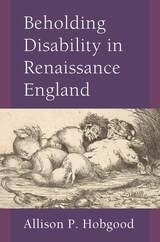
Beholding Disability in Renaissance England
Allison P. Hobgood
University of Michigan Press, 2021
Beholding Disability also uncovers crucial counterdiscourses circulating in the English Renaissance that opposed cultural fantasies of ability and had a keen sensibility toward non-normative embodiments. Hobgood reads impairments as varied as epilepsy, stuttering, disfigurement, deafness, chronic pain, blindness, and castration in order to understand not just powerful fictions of ability present during the Renaissance but also the somewhat paradoxical, surprising ways these ableist ideals provided creative fodder for many Renaissance writers and thinkers. Ultimately, Beholding Disability asks us to reconsider what we think we know about being human both in early modernity, and today.
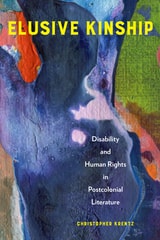
Elusive Kinship
Disability and Human Rights in Postcolonial LiteratureChristopher Krentz
Temple University Press, 2022
Characters with disabilities are often overlooked in fiction, but many occupy central places in literature by celebrated authors like Chinua Achebe, Salman Rushdie, J. M. Coetzee, Anita Desai, Jhumpa Lahiri, Edwidge Danticat, and others. These authors deploy disability to do important cultural work, writes Christopher Krentz in his innovative study, Elusive Kinship. Such representations not only relate to the millions of disabled people in the global South, but also make more vivid such issues as the effects of colonialism, global capitalism, racism and sexism, war, and environmental disaster.
Krentz is the first to put the fields of postcolonial studies, studies of human rights and literature, and literary disability in conversation with each other in a book-length study. He enhances our appreciation of key texts of Anglophone postcolonial literature of the global South, including Things Fall Apart and Midnight’s Children. In addition, he uncovers the myriad ways fiction gains energy, vitality, and metaphoric force from characters with extraordinary bodies or minds.
Depicting injustices faced by characters with disabilities is vital to raising awareness and achieving human rights. Elusive Kinship nudges us toward a fuller understanding of disability worldwide.
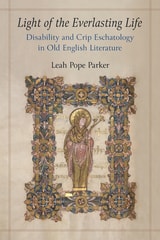
Light of the Everlasting Life
Disability and Crip Eschatology in Old English LiteratureLeah Pope Parker
University of Michigan Press, 2025
From disability metaphors to narratives structured around bodies presented as aberrant, early medieval English thoughtworlds conveyed the promise of resurrection and the hope of salvation through crip and disabled bodies. Light of the Everlasting Life argues that early medieval Christian eschatology, as manifested in Old English literary texts, was a crip eschatology: a theology of the afterlife that relied upon disabled bodies and concepts related to disability in order to convey promises of resurrection and salvation. In addition to demonstrating how literature manifested theological approaches to the afterlife, Leah Pope Parker articulates the ways of thinking about bodies and disability that were available to ordinary early medieval people, many of whom experienced their bodies in ways that resonate with what we call disability today, but who rarely appear in the historical record.
By analyzing Old English texts, including Alfredian translations, Ælfric’s saints’ lives, and poetry from the Exeter and Vercelli Books, Parker introduces novel ways of characterizing disability’s effects in literature. “Spiritual prosthesis” reveals rhetorical, narrative, and theological reliance upon disability to convey the promise of a Christian afterlife. “Systems of aberrance” emerge as a result, in which bodies marked as deviant—including disabled, monstrous, heroic, saintly, and dead bodies—form a network of embodiments that reinforce the narratives they inhabit and that of Christian salvation history. Locating crip eschatology in early medieval literature, Light of the Everlasting Life rewrites standard histories of disability, of the body, and of medieval Christian eschatology.
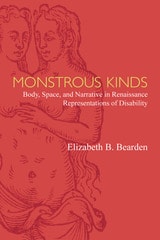
Monstrous Kinds
Body, Space, and Narrative in Renaissance Representations of DisabilityElizabeth B. Bearden
University of Michigan Press, 2019