Results by title
20 books match the query 'Intellect'
A Privilege of Intellect
Conscience and Wisdom in Newman’s NarrativeD. A. Drennen
University of Scranton Press, 2010
Based on decades of research, A Privilege of Intellect is D. A. Drennen’s portrait of the English cardinal John Henry Newman (1801–90), whose conversion to the Roman Catholic Church in 1845 significantly boosted the presence of the Catholic Church in England and caused many Anglicans to follow his example. Newman—who will be beatified this fall—devoted his life both to the Church and to the university, demonstrating that religious faith and intellectual pursuits could exist in harmony. Drennen’s biography combines theology with psychology and philosophy and will appeal to anyone interested in the history of the Church of England and the Roman Catholic Church.
An Artificial History of Natural Intelligence
Thinking with Machines from Descartes to the Digital AgeDavid W. Bates
University of Chicago Press, 2024
We imagine that we are both in control of and controlled by our bodies—autonomous and yet automatic. This entanglement, according to David W. Bates, emerged in the seventeenth century when humans first built and compared themselves with machines. Reading varied thinkers from Descartes to Kant to Turing, Bates reveals how time and time again technological developments offered new ways to imagine how the body’s automaticity worked alongside the mind’s autonomy. Tracing these evolving lines of thought, An Artificial History of Natural Intelligence offers a new theorization of the human as a being that is dependent on technology and produces itself as an artificial automaton without a natural, outside origin.
Art and Intellect in the Philosophy of Étienne Gilson
Francesca Aran Murphy
University of Missouri Press, 2004

Art, Intellect and the State
Cultural Histories of Late Pahlavi IranEdited by Bianca Devos and Robert Steele
Gingko, 2026
A cross-disciplinary volume on the intersections of—and tensions between—culture and government in Iran's late Pahlavi period.
In recent years, scholarly interest in Iran's late Pahlavi period (1941–1979) has grown significantly and historians are increasingly approaching the era not merely as a prelude to the Iranian Revolution, but as a period worthy of study in its own right. New generations of scholars have uncovered fresh sources and offered original perspectives on the cultural and social life of this era. Yet opportunities for cross-disciplinary engagement among scholars from different fields who are exploring similar questions remain limited. This volume, the product of two international workshops at the Austrian Academy of Sciences in Vienna and the University of Marburg, respectively, is a collection of the work of scholars at various stages of their careers from various disciplines investigating the cultural history of late Pahlavi Iran from a multiplicity of perspectives, including: archaeology, architecture, scholarship, media, art, film, literature, politics, religion, museums, music, philosophy, education, and theater.
Chapters explore the interactions between state ideology and the sociocultural sphere, exploring ideas such as: the influence of the press and literature on social discourses; the culturally strategic and identity-forming role of the performing arts; the relationship between state education policy and culture; the employment of foreign artists, architects, scholars, and musicians in the context of Iran’s cultural diplomacy; and the dynamics of (state) religion, spirituality, nationalism, and psychology in modern media or through their dissemination in the media. The volume explores not only the Pahlavi state’s direct participation in facilitating cultural activity or scholarly endeavors, but also how artists, writers, historians, and other cultural actors flourished independent of (sometimes in spite of) the state apparatus.
The volume does not seek to provide an encyclopaedic collection detailing every aspect of culture in the Pahlavi period, but the case studies explored demonstrate the breadth and complexities of this field in the historiography. Moreover, by shedding light on the various features of culture in the late Pahlavi era and encouraging multidisciplinary discussions, the volume aims to contribute to a greater understanding of the vibrant cultural life in Iran during this period.
Commentary on the Book of Causes (Thomas Aquinas in Translation)
Saint Thomas Aquinas
Catholic University of America Press, 1996
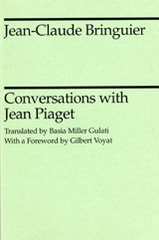
Conversations with Jean Piaget
Jean-Claude Bringuier
University of Chicago Press, 1989
"The tone is one of constant movement from the most ordinary to the most abstruse. There are 14 conversations with 'le Patron,' some in 1969, some in 1975, and several more with co-workers in various fields. . . . In Mr. Bringuier's book, in a pleasant informal way, we see a sophisticated non-scientist exploring Piaget's domain with the master. Some of Piaget's best-known findings about children as explained along the way, but Mr. Bringuier has ways of bringing out the relation of this psychological work to the whole of Piaget's enterprise, and we get a good sense of the man and his work."—Howard E. Gruber, New York Times Book Review
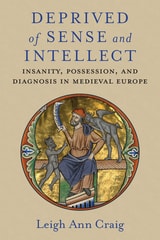
Deprived of Sense and Intellect
Insanity, Possession, and Diagnosis in Medieval EuropeLeigh Ann Craig
University of Michigan Press, 2026
While medieval communities assigned these tensions to a malfunction of consciousness in a single person, medieval miracle texts also reveal how the function and malfunction of consciousness was named and classified. In studying these texts, Leigh Ann Craig explores the terminology and rhetoric used to diagnose a loss of mind as either from natural causes or as an effect of demonic predation, tracing the use of Latin vocabulary in medical compendia, law, and theology. Deprived of Sense and Intellect finds that since diagnoses were difficult and frequently subject to doubt, they varied based on regional cultures of disability in northern and southern Europe, the influences on the development of community consensus in Latin Europe in the Middle Ages, and assumptions based on gender, material evidence, and self-diagnosis.
Faith and Intellect
The Lives and Contributions of Latter-day Saint ThinkersLeonard J Arrington
Signature Books, 2019
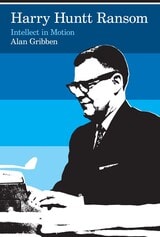
Harry Huntt Ransom
Intellect in MotionBy Alan Gribben
University of Texas Press, 2008
Both a life story and a portrait of public higher education during the twentieth century, Harry Huntt Ransom captures the spirit of a dynamic individual who dedicated his talents to nurturing intellectual life in Texas and beyond. Tracing the details of Ransom's youth in Galveston and Tennessee and his education at Yale, where he earned a doctorate, Alan Gribben provides new insight into the factors that shaped Ransom's future as a renowned administrator and defender of the humanities.
Ransom's career at the University of Texas began in 1935, when he was hired as an instructor of English. He rose through the ranks to become chancellor, stepping down in 1971 during a volatile period when debates about the University's central mission raged—particularly over the question of commercializing higher education. The development of Ransom's lasting legacy, the Humanities Research Center bearing his name, is explored in depth as well. Bringing to life a legendary figure, Harry Huntt Ransom is a colorful testament to a singular man of letters who had the audacity to propose "that there be established somewhere in Texas—let's say in the capital city—a center of our cultural compass, a research center to be the Bibliothèque Nationale of the only state that started out as an independent nation."
Law, Intellect, and Education
Francis A. Allen
University of Michigan Press, 1979

Mentality and Machines
Keith Gunderson
University of Minnesota Press, 1985
Mentality and Machines was first published in 1985. Minnesota Archive Editions uses digital technology to make long-unavailable books once again accessible, and are published unaltered from the original University of Minnesota Press editions.
Mentality and Machines — with a new preface and an extended postscript—is a general essay on the philosophy of mind, oriented to philosophical and psychological questions about real as well as imagined, robots and machines. The second edition retains all of the essays from the original book, including Gunderson's influential critique ("The Imitation Game") of A.M. Turing's treatment of the question "Can machines think?" and his controversial distinction between program-receptive and program-resistant aspects of the mind. This edition's postscript includes further reflections on these themes and others, and relates them to recent writings of other philosophers and computer scientists.
Metaphysical Community
The Interplay of the Senses and the IntellectBy Greg Urban
University of Texas Press, 1996
Winner, Senior Book Prize, American Ethnological Society
Starting with the post-structuralist idea that truth systems are lodged in discourse, and that discourse varies from society to society, Greg Urban seeks to discover the nature and extent of that variation. His journey to an Amerindian society in which dreams are more prominent than everyday aspects of the sensible world leads him to radically reformulate one of the main problematics of Western thought: the relationship between our sensations of the world and the understandings we form of them.
Metaphysical Community proposes that this dichotomy comes from the interplay between two sides of discourse-its intelligible side as a carrier of meanings, and its sensible side as thing-in-the-world that must be replicated. This insight leads to the heart of the book-the exploration of the uneasy tension that binds experience and understanding, phenomena and noumena.
Urban challenges basic assumptions that underlie social and cultural anthropology and much of the social sciences and humanities. His provocative insights will be of interest to all those concerned with anthropology, cultural studies, literary criticism, the sociology and politics of culture, and philosophy.
Postures of the Mind
Essays on Mind and MoralsAnnette Baier
University of Minnesota Press, 1975
Postures of the Mind was first published in 1985. Minnesota Archive Editions uses digital technology to make long-unavailable books once again accessible, and are published unaltered from the original University of Minnesota Press editions.
Annette Baier develops, in these essays, a posture in philosophy of mind and in ethics that grows out of her reading of Hume and the later Wittgenstein, and that challenges several Kantian or analytic articles of faith. She questions the assumption that intellect has authority over all human feelings and traditions; that to recognize order we must recognize universal laws—descriptive or prescriptive; that the essential mental activity is representing; and that mental acts can be analyzed into discrete basic elements, combined according to statable rules of synthesis.
In the first group of essays—"Varieties of Mental Postures"—Baier evaluates the positions taken by philosophers ranging from Descartes to Dennett and Davidson. Among her topics are remembering, intending, realizing, caring, representing, changing one's mind, justifying one's actions and feelings, and having conflicting reasons for them. The second group of essays—"Varieties of Moral Postures" - explores the sort of morality we get when all of these capacities become reflective and self-corrective. Some deal with particular moral issues—our treatment of animals, our policies regarding risk to human life, our contractual obligations; others, with more general questions on the role of moral philosophers and the place of moral theory. These essays respond to the theories of Hobbes, Kant, Rawls, and MacIntyre, but Baier's most positive reaction is to David Hume; Postures of the Mind affirms and cultivates his version of a moral reflection that employs feeling and tradition as well as reason.
Prophecy in Islam
Philosophy and OrthodoxyFazlur Rahman
University of Chicago Press, 2011
This longstanding and highly regarded volume is the first to explore the doctrine of prophetic revelation, a critical and definitive area of Islamic religious and political thought. In it, the esteemed Islamic scholar Fazlur Rahman traces the inception of this doctrine from ancient Greek texts, its interpretation and elaboration by Muslim philosophers in order to suit their vision of the Prophet, and, finally, the varying degrees of acceptance of these convergent ideas by the Muslim orthodoxy.
The latest edition of this classic text includes a new foreword by Islamic studies expert Michael Sells, confirming Prophecy in Islam as the best source on its subject after more than half a century. This longstanding and highly regarded volume is the first to explore the doctrine of prophetic revelation, a critical and definitive area of Islamic religious and political thought. In it, the esteemed Islamic scholar Fazlur Rahman traces the inception of this doctrine from ancient Greek texts, its interpretation and elaboration by Muslim philosophers in order to suit their vision of the Prophet, and, finally, the varying degrees of acceptance of these convergent ideas by the Muslim orthodoxy.
The latest edition of this classic text includes a new foreword by Islamic studies expert Michael Sells, confirming Prophecy in Islam as the best source on its subject after more than half a century.
Tell Me a Story
Narrative and IntelligenceRoger C. Schank
Northwestern University Press, 1995
The Dance of the Intellect
Studies in the Poetry of the Pound TraditionMarjorie Perloff
Northwestern University Press, 1996

Thinking Across the American Grain
Ideology, Intellect, and the New PragmatismGiles Gunn
University of Chicago Press, 1992
major contribution to the current revival of pragmatism in
America by showing how it provides the most critically
resilient and constructive response to the intellectual
challenges of postmodernism.
Gunn reclaims and refurbishes elements of the pragmatic
tradition that either have been lost or have undergone
important changes and shows how newer critical approaches
have strong roots in the pragmatic tradition. For Gunn,
pragmatism is no longer concerned solely with the nature of
knowledge and the meaning of truth. Because of its
insistence on critical self-awareness, its opposition to
closed systems of thought, and its concern with the ethical,
political, and practical contexts of ideas, pragmatism offers
a blueprint for performing intellectual work in a world
without absolutes. The world Gunn's pragmatism recognizes is
one of multiple truths, unstable interpretations, and
competing interests.
After critically reexamining the nature and scope of the
pragmatic legacy, Gunn explores the way pragmatism
successfully responds to conceptual and methodological
controversies, from the rebirth of ideology, the spread of
interdisciplinarity, and the development of the new
historicism, to the revolt against theory, the erosion of
public discourse, and the problematics of American civil
religion. Drawing throughout on the work of William James,
Henry James, Sr., John Dewey, Kenneth Burke, W. E. B. Du
Bois, Richard Poirier, Stanley Cavell, Clifford Geertz, Frank
Lentricchia, Richard Rorty, Richard J. Bernstein, and
others, Gunn shows that pragmatism, because it offers a way
of thinking across the categories of modern intellectual
specializations, is located at the intersection of these
critical, and often competitive, discourses. The postmodern
challenge for the pragmatist thinker is not only how to
render these different discourses conversible with one
another, but how to turn the salient insights of each into
elements of a new democratic and critical public culture, one
able to counter the twin threats of ideology and solipsism.
Giles Gunn is one of our most acclaimed contemporary critics,
and this broad and ambitious book is certain to become one of
the central works in the current revival of critical
pragmatism and cultural studies.
Thomas Aquinas on the Immateriality of the Human Intellect
Adam Wood
Catholic University of America Press, 2020
Useful Knowledge
The Victorians, Morality, and the March of IntellectAlan Rauch
Duke University Press, 2001
Rauch discusses both the influence and the ideology of knowledge in terms of how it affected nineteenth-century anxieties about moral responsibility and religious beliefs. Drawing on a wide array of literary, scientific, and popular works of the period, the book focusses on the growing importance of scientific knowledge and its impact on Victorian culture. From discussions of Jane Webb Loudon’s The Mummy! and Mary Shelley’s Frankenstein, to Charlotte Brontë’s The Professor, Charles Kingsley’s Alton Locke, and George Eliot’s Mill on the Floss, Rauch paints a fascinating picture of nineteenth-century culture and addresses issues related to the proliferation of knowledge and the moral issues of this time period. Useful Knowledge touches on social and cultural anxieties that offer both historical and contemporary insights on our ongoing preoccupation with knowledge.
Useful Knowledge will appeal to readers interested in nineteenth century history, literature, culture, the mediation of knowledge, and the history of science.
William Lawrence and the Organ of Mind
The Theology, Medicine and Politics of the BrainElfed Huw Price
University College London, 2025
Elfed Huw Price studies the radical history behind the idea that thought and consciousness are rooted in the brain, tracing its emergence in early nineteenth-century Britain. Centered on the controversy surrounding Lawrence’s Lectures on Physiology, Zoology, and the Natural History of Man, this book reveals how his arguments on the sentient brain challenged both medical tradition and religious orthodoxy, provoking backlash from the establishment.
Drawing on archival sources including unpublished material from Bethlem Hospital, Price situates Lawrence’s work within the rise of Christian mortalist thought and the broader shift toward Victorian naturalism. Despite Lawrence’s silencing, his ideas endured, shaping a transformation that redefined human exceptionality through biology rather than theology.
Bridging science, medicine, philosophy, and religion, William Lawrence and the Organ of Mind illuminates a pivotal yet overlooked moment in the history of mind and brain studies, offering fresh insights into the intellectual struggles that helped reshape modern thought.