Results by title
436 books match the query 'Disability' and 44 start with a
A Deaf Adult Speaks Out
Leo Jacobs
Gallaudet University Press, 1989
This new edition includes an update of services by and for deaf people, and an expanded chapter on legislation and social issues that have had an impact on the Deaf community in the last ten years.

A Grotesque Animal
Amy Lee Lillard
University of Iowa Press, 2024
A Grotesque Animal explores the making, unmaking, and making again of a woman with an undiagnosed disorder. How did a working- class background and a deep-rooted Midwest culture of silence lead to hiding in plain sight for decades? How did sexuality and anger hide the roots of trauma among the women in her family? And what does it mean to be a queer, disabled, aging woman, a descendent of wild but tamed mothers and a survivor of the things patriarchy inflicts?
Through wide-ranging styles and a combination of personal storytelling and cultural analysis, Lillard dissects anger, sexuality, autistic masking, bodies, punk, and female annihilation to create a new picture of modern women.
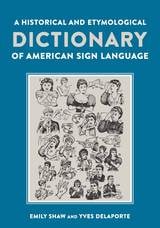
A Historical and Etymological Dictionary of American Sign Language
The Origin and Evolution of More Than 500 SignsEmily Shaw
Gallaudet University Press, 2014
Through rigorous study of historical texts, field research in communities throughout France and the U.S., and an in-depth analysis of the cultural groups responsible for the lexicon, authors Emily Shaw and Yves Delaporte present a compelling and detailed account of the origins of over 500 ASL signs, including regional variations. Organized alphabetically by equivalent English glosses, each sign is accompanied by a succinct description of its origin and an LSF sign where appropriate. Featuring an introductory chapter on the history of the development of ASL and the etymological methodology used by the authors, this reference resource breaks new ground in the study of America’s sign language.
A History of Disability
Henri-Jacques Stiker
University of Michigan Press, 2000
A History of Disability
Henri-Jacques Stiker
University of Michigan Press, 2019
This new edition of the classic volume features a new foreword by David T. Mitchell and Sharon L. Snyder that assesses the impact of Stiker’s history on Disability Studies and beyond, twenty years after the book’s translation into English. The book will be of interest to scholars of disability, historians, social scientists, cultural anthropologists, and those who are intrigued by the role that culture plays in the development of language and thought surrounding people with disabilities.
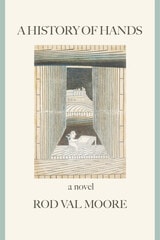
A History of Hands
A NovelRod Val Moore
University of Massachusetts Press, 2014
Soon, however, an elderly and possibly criminal doctor, offering free therapy, moves in, much to the dismay of bedridden Virge. While the physician endeavors to restore the patient's hands with a series of highly suspect injections, Virge recovers his sense of autonomy and an urge to escape the suffocating domestic circumstances that have perhaps caused his illnesses in the first place.
A History of Hands is a novel that invites the reader into a richly and eccentrically detailed world where fevered imaginations and dark comedy prevail, but where the determination to escape the ambiguities of illness leads to the equal ambiguities of health and freedom.
A Key to the World
Victor Abbou
Gallaudet University Press, 2021
Published by Eyes Editions.
Includes links to two hours of video in International Sign.

A Key to the World
Victor Abbou
Gallaudet University Press, 2021
Published by Eyes Editions.
Includes links to two hours of video in International Sign.
A Mighty Change
An Anthology of Deaf American Writing, 1816 - 1864Christopher Krentz
Gallaudet University Press, 2000
“I need not tell you that a mighty change has taken place within the last half century, a change for the better,” Alphonso Johnson, the president of the Empire State Association of Deaf-Mutes, signed to hundreds of assembled deaf people in 1869. Johnson pointed to an important truth: the first half of the 19th century was a period of transformation for deaf Americans, a time that saw the rise of deaf education and the coalescence of the nation’s deaf community.
This volume contains original writing by deaf people that both directed and reflected this remarkable period of change. It begins with works by Laurent Clerc, the deaf Frenchman who came to the United Sates in 1816 to help found the first permanent school for deaf students in the nation. Partially through is writing, Clerc impressed hearing Americans–most of whom had never met an educated deaf person before–with his intelligence and humanity.
Other deaf writers shared their views with society through the democratic power of print. Included here are selections by James Nack, a deaf poet who surprised readers with his mellifluous verse; John Burnet, who published a book of original essays, fiction, and poetry; Edmund Booth, a frontiersman and journalist; John Carlin, who galvanized the drive for a national college for deaf people; Laura Redden, a high-achieving student who would go on to become an accomplished reporter; and Adele Jewel, a homeless deaf woman living in Michigan.
The final sections contain documents related to deaf events and issues at mid-century: the grand reunion of alumni of the American Asylum for the Deaf in 1850; the dedication of the Thomas Hopkins Gallaudet monument in Hartford; the debate over the viability of a deaf state; and the triumphant inauguration of the National Deaf-Mute College (now Gallaudet University) in 1864, which in many ways culminated this period of change. Taken together, the individual texts in this remarkable collection provide a valuable historical record and a direct glimpse of the experiences, attitudes, and rhetoric of deaf Americans during this time of change.
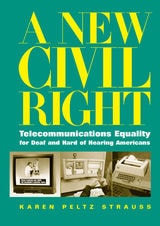
A New Civil Right
Telecommunications Equality for Deaf and Hard of Hearing AmericansKaren Peltz Strauss
Gallaudet University Press, 2006
When three deaf men in the 1960s invented and sold TTYs, the first teletypewriting devices that allowed deaf people to communicate by telephone, they started a telecommunications revolution for deaf people throughout America. A New Civil Right: Telecommunications Equality for Deaf and Hard of Hearing Americans chronicles the history of this movement, which lagged behind new technical developments decades after the advent of TTYs.
In this highly original work, Author Karen Peltz Strauss reveals how the paternalism of the hearing-oriented telecommunications industries slowed support for technology for deaf users. Throughout this comprehensive account, she emphasizes the grassroots efforts behind all of the eventual successes. A New Civil Right recounts each advance in turn, such as the pursuit of special customer premises equipment (SCPE) from telephone companies; the Telecommunications Act of 1982 and the Telecommunications Accessibility Enhancement Act of 1988 and the 1990 Americans with Disabilities Act, which required nationwide relay telephone services for deaf and hard of hearing users.
Strauss painstakingly details how all of these advances occurred incrementally, first on local and state levels, and later through federal law. It took exhaustive campaigning to establish 711 for nationwide relay dialing, while universal access to television captioning required diligent legal and legislative work to pass the Decoder Circuitry Act in 1990. The same persistence resulted in the enactment of the Telecommunications Act of 1996, which required all off-the-shelf communications equipment, including new wireless technology, to be readily accessible to deaf users.
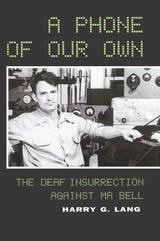
A Phone of Our Own
The Deaf Insurrection Against Ma BellHarry G. Lang
Gallaudet University Press, 2000
In 1964, of the more than 85 million telephones in the United States and Canada, less than one percent were used regularly by deaf people. If they didn’t ask their hearing neighbors for help, they depended upon their hearing children, some as young as three years old, to act as intermediaries for business calls or medical consultations. In that same year, three enterprising deaf men, Robert H. Weitbrecht, James C. Marsters, and Andrew Saks, started the process that led to deaf people around the world having an affordable phone system that they could use.
Weitbrecht, a successful physicist with the Stanford Research Institute, had been experimenting with a teletypewriter (TTY) used with shortwave radios. When Marsters, a prominent deaf orthodontist, met Weitbrecht and saw his TTY, he immediately suggested the possibility of resolving deaf people’s decades-long struggle to have access to telecommunications without relying totally upon hearing people as go-betweens. Andrew Saks brought his business acumen to the group, which soon set to work overcoming the daunting problems they faced.
Harry G. Lang’s A Phone of Our Own: The Deaf Insurrection Against Ma Bell tells how these three men collaborated to solve the technical difficulties of developing a coupling device for TTYs that would translate sounds into discernible letters. More remarkably, and with the help of an expanding corps of Deaf advocates, they successfully assaulted the American Telephone and Telegraph Company (AT&T), which in its efforts to protect its monopoly, smashed old TTYs to keep them from being used for potentially competitive purposes. The Federal Communications Commission (FCC) also resisted efforts to build a telephone system for deaf people that was available, affordable, portable, and fully accessible. Lang recounts in vivid terms how many other Deaf individuals and groups from all walks of life joined Weitbrecht, Marsters, and Saks against these forces. A Phone of Our Own is an entertaining and engrossing story of how they fought and won, and changed the world for the better for deaf people everywhere.
A Quiet Foghorn
More Notes from a Deaf Gay LifeRaymond Luczak
Gallaudet University Press, 2022
A Quieter Illness
Narratives, Selves, and SilencesArthur W. Frank
University of Chicago Press, 0
In this sequel to The Wounded Storyteller, Arthur W. Frank reminds us of the power of narrative in the lives of ill people and those who care for them.
The Wounded Storyteller became a classic by witnessing the voices of ill people, recognizing how they express themselves in three prevalent narratives: restitution stories, evocations of chaos, and quest stories. Thirty years later, Frank expands this framework. He proposes a fourth narrative: one that seeks no restitution, claims no quest, yet feels no chaos—the stillness narrative. This story allows us to see more clearly our interdependence as well as the wisdom of uncertainty; it also teaches the value of letting go and waiting.
In the stillness narrative, Frank finds new opportunities for dialogue with clinical professionals. They too need healing, and healing moments occur when everyone recognizes their mutual, if asymmetrical, dependence. As Frank tells the stories that won’t leave him, he guides readers toward understanding how the stories they tell and hear affect their capacity to heal both themselves and others.
A World without Words
The Social Construction of Children Born Deaf and BlindDavid Goode, foreword by Irving Kenneth Zola
Temple University Press, 1994
During the Rubella Syndrome epidemic of the 1960s, many children were born deaf, blind, and mentally disabled. David Goode has devoted his life and career to understanding such people's world, a world without words, but not, the author confirms, one without communication. This book is the result of his studies of two children with congenital deaf-blindness and mental retardation.
Goode spent countless hours observing, teaching, and playing with Christina, who had been institutionalized since age six, and Bianca, who remained in the care of her parents. He also observed the girls' parents, school, and medical environments, exploring the unique communication practices—sometimes so subtle they are imperceptible to outsiders—that family and health care workers create to facilitate innumerable every day situations. A World Without Words presents moving and convincing evidence that human beings both with and without formal language can understand and communicate with each other in many ways.
Through various experiments in such unconventional forms of communication as playing guitar, mimicking, and body movements like jumping, swinging, and rocking, Goode established an understanding of these children on their own terms. He discovered a spectrum of non-formal language through which these children create their own set of symbols within their own reality, and accommodate and maximize the sensory resources they do have. Ultimately, he suggests, it is impractical to attempt to interpret these children's behaviors using ideas about normal behavior of the hearing and seeing world.
Ableism in Academia
Theorising Experiences of Disabilities and Chronic Illnesses in Higher EducationEdited by Nicole Brown and Jennifer Leigh
University College London, 2020
The volume brings together a range of perspectives, including feminism, post-structuralism, Derridean and Foucauldian theory, crip theory, and disability theory, and draws on a number of related disciplines. Contributors use various schools of theory to raise awareness and increase understanding of the marginalized. These theories are placed in the context of neoliberal academia, and used to interrogate aspects of identity and how disability is performed, and to argue that ableism is not just a disability issue. This timely collection will be of interest to researchers in disability studies, higher education studies, and sociology, as well as to those working across the social sciences.
Academic Ableism
Disability and Higher EducationJay Timothy Dolmage
University of Michigan Press, 2017
Academic Ableism
Disability and Higher EducationJay Timothy Dolmage
University of Michigan Press, 2017
Accessibility & Publishing
Stephanie S. Rosen
Against the Grain, LLC, 2018
Accessibility is about equitable access to resources for all people, regardless of physical ability. Scholarly publishing is about quality and impact — quality of content and impact of research.
Accessibility & Publishing addresses the intersections between scholarly publishing and equitable access for users. This briefing explores how the practices that promote accessibility in publishing can also advance — and potentially transform — publishing itself.
This briefing traces the diversity of activities that currently go into making publications accessible to readers with print disabilities — from retroactive conversion of print into braille and recorded sound, to the more radical incorporation of accessibility standards directly into digital publishing platforms. As scholarly communication is transformed by the shift to digital publishing, building accessible practices directly into the flow of publishing has the potential to become the industry norm.
Accessibility & Publishing offers an essential orientation to a complex landscape for anyone interested in the scholarly publishing ecosystem.

Accessible Citizenships
Disability, Nation, and the Cultural Politics of Greater MexicoJulie Avril Minich
Temple University Press, 2013
A volume in the American Literatures Initiative
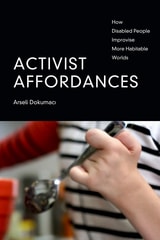
Activist Affordances
How Disabled People Improvise More Habitable WorldsArseli Dokumaci
Duke University Press, 2023
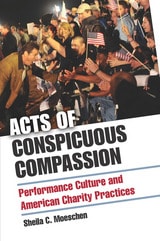
Acts of Conspicuous Compassion
Performance Culture and American Charity PracticesSheila C. Moeschen
University of Michigan Press, 2016
Sheila C. Moeschen sheds new light on the legacy and involvement of disabled people within charity—specifically, the articulation of performance culture as a vital theoretical framework for discussing issues of embodiment and identity, a framework that dislodges previously held notions of the disabled existing as passive “objects” of pity. This work gives rise to a more complicated and nuanced discussion of the participation of the disabled community in the charity industry, of the opportunities afforded by performance culture for disabled people to act as critical agents of charity, and of the new ethical and political issues that arise from employing performance methodology in a culture with increased appetites for voyeurism, display, and complex spectacle.
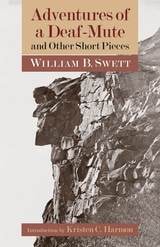
Adventures of a Deaf-Mute and Other Short Pieces
William B. Swett
Gallaudet University Press, 2017
Confident in his identity as a Deaf “mute,” he notes with wry humor the varied perceptions of deafness that he encounters. As a signing Deaf person from a prominent multigenerational Deaf family, he counters negative stereotypes with generosity and a smart wit. He takes pride in his physical abilities, which he showcases through various stunts and arduous treks in the wilderness. However, Swett’s writing also reveals a deep awareness of the fragility and precariousness of life. This is a portrait of a man testing his physical and emotional limits, written from the vantage point of someone who is no longer a young man but is still very much in the prime of his life.
This collection also includes “Mr. Swett and His Diorama,” an article from 1859 in which Swett describes his miniature recreation of the Battle of Lexington, as well as Manual Alphabets, a pamphlet published in 1875 on the history of manual alphabets that includes short biographies of Thomas Hopkins Gallaudet and Laurent Clerc, two pioneers of Deaf education in the United States. The work is accompanied by a new introduction that offers a reflection on Swett’s life and the time in which he lived.
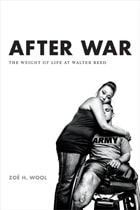
After War
The Weight of Life at Walter ReedZoë H. Wool
Duke University Press, 2015

Agatha Tiegel Hanson
Our Places in the SunKathy Jankowski
Gallaudet University Press, 2023
Throughout her life, Agatha Tiegel Hanson worked to advance the rights of Deaf people and women, and she was a passionate advocate of sign language rights. Her contributions include creative written works as well as influential treatises. She served in leadership positions at several Deaf organizations and, along with her husband, noted Deaf architect Olof Hanson, she played a vital role in the Deaf cultural life of the time. In Agatha Tiegel Hanson: Our Places in the Sun, author Kathy Jankowski presents a portrait of this trailblazer, and celebrates her impact on the Deaf community and beyond. This biography will be of interest to those already familiar with Tiegel Hanson’s legacy as well as to readers who are discovering her extraordinary life for the first time.
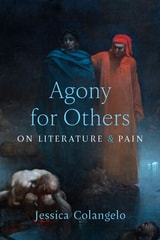
Agony for Others
On Literature and PainJessica Colangelo
University of Michigan Press, 2026
Agony for Others investigates the phenomenological, rhetorical, and political challenges of representing pain in literature. Pain cries vary between cultural and linguistic groups, and pain expression (such as grimacing or crying) can likewise vary in quality and intensity from person to person, affected by disability, temperament, and past experiences with pain, as well as the experiencer’s own understanding of what that pain is and what it means. Jessica Colangelo explores pain's role as a subjective indication of objective damage; that, contrary to claims of its subjective privacy, the feeling of pain is always felt in terms of an objectively existing entity (one’s physical body) which is perceivable by others. Thus, pain enters into intersubjectivity through the physical body—one's expressions, words, actions, presence—which then mediates between the self and the other.
Drawing on disability studies, phenomenology, philosophy, and literary studies, Colangelo examines works by Virginia Woolf, James Baldwin, Sarah Kane, Elie Wiesel, and Margaret Edson to argue that the belief that pain is incommunicable and thought-destroying obscures its central role in relationships and community formation. Agony for Others demonstrates that pain is not excluded from, but rather constitutive of, intersubjectivity, and argues that the aesthetic dimension of interpretation is essential to understanding the ethical and political role of pain.
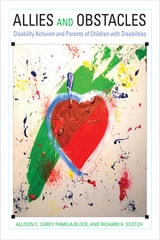
Allies and Obstacles
Disability Activism and Parents of Children with DisabilitiesAllison C. Carey, Pamela Block, and Richard K. Scotch
Temple University Press, 2020
Parents of children with disabilities often situate their activism as a means of improving the world for their child. However, some disabled activists perceive parental activism as working against the independence and dignity of people with disabilities. This thorny relationship is at the heart of the groundbreaking Allies and Obstacles.
The authors chronicle parents’ path-breaking advocacy in arenas such as the right to education and to liberty via deinstitutionalization as well as how they engaged in legal and political advocacy. Allies and Obstacles provides a macro analysis of parent activism using a social movement perspective to reveal and analyze the complex—and often tense—relationship of parents to disability rights organizations and activism.
The authors look at organizational and individual narratives using four case studies that focus on intellectual disability, psychiatric diagnoses, autism, and a broad range of physical disabilities including cerebral palsy and muscular dystrophy. These cases explore the specific ways in which activism developed among parents and people with disabilities, as well as the points of alliance and the key points of contestation. Ultimately, Allies and Obstacles develops new insights into disability activism, policy, and the family.
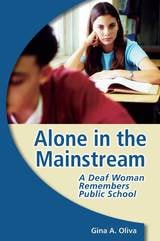
Alone in the Mainstream
A Deaf Woman Remembers Public SchoolGina A. Oliva
Gallaudet University Press, 2004
When Gina Oliva first went to school in 1955, she didn’t know that she was “different.” If the kindergarten teacher played a tune on the piano to signal the next exercise, Oliva didn’t react because she couldn’t hear the music. So began her journey as a “solitary,” her term for being the only deaf child in the entire school. Gina felt alone because she couldn’t communicate easily with her classmates, but also because none of them had a hearing loss like hers. It wasn’t until years later at Gallaudet University that she discovered that she wasn’t alone and that her experience was common among mainstreamed deaf students. Alone in the Mainstream recounts Oliva’s story, as well as those of many other solitaries.
In writing this important book, Oliva combined her personal experiences with responses from the Solitary Mainstream Project, a survey that she conducted of deaf and hard of hearing adults who attended public school. Oliva matched her findings with current research on deaf students in public schools and confirmed that hearing teachers are ill-prepared to teach deaf pupils, they don’t know much about hearing loss, and they frequently underestimate deaf children. The collected memories in Alone in the Mainstream add emotional weight to the conviction that students need to be able to communicate freely, and they also need peers to know they are not alone.
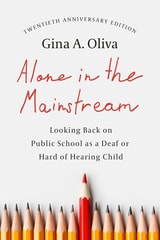
Alone in the Mainstream
Looking Back on Public School as a Deaf or Hard of Hearing ChildGina A. Oliva
Gallaudet University Press, 2024
In Alone in the Mainstream, author Gina A. Oliva documents her experience as a “solitaire,” the only deaf or hard of hearing student in her school. Oliva felt alone because she couldn’t communicate easily with her classmates and because she had no peers who shared a similar experience. As an adult, when she began her career at Gallaudet University, she realized that she wasn’t alone and that her experience was widely shared with other mainstreamed students. She decided to write about this commonality and invited other solitaires to reflect on their own experiences in emails and essays. Collective themes of isolation, low expectations, and low self-esteem emerged. Alone in the Mainstream blends Oliva’s personal narrative with the reflections of sixty other solitaires and makes the case that deaf and hard of hearing children need each other.
This twentieth anniversary edition is a reminder that little has changed for deaf and hard of hearing students in public school settings. Oliva brings this new edition up to date with observations, resources, and discussion questions that accompany her appeal for all deaf and hard of hearing children and their families to have access to sign language, to develop a deaf identity, and to be part of a deaf community.
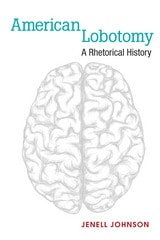
American Lobotomy
A Rhetorical HistoryJenell Johnson
University of Michigan Press, 2014
American Sign Language and Early Literacy
A Model Parent-Child ProgramKristin Snoddon
Gallaudet University Press, 2012
The usual definition of the term “literacy” generally corresponds with mastering the reading and writing of a spoken language. This narrow scope often engenders unsubstantiated claims that print literacy alone leads to, among other so-called higher-order thinking skills, logical and rational thinking and the abstract use of language. Thus, the importance of literacy for deaf children in American Sign Language (ASL) is marginalized, asserts author Kristin Snoddon in her new book American Sign Language and Early Literacy: A Model Parent-Child Program. As a contrast, Snoddon describes conducting an ethnographic, action study of the ASL Parent-Child Mother Goose program, provided by a Deaf service agency in Ontario, Canada to teach ASL literacy to deaf children.
According to current scholarship, literacy is achieved through primary discourse shared with parents and other intimates, which establishes a child’s initial sense of identity, culture, and vernacular language. Secondary discourse derives from outside agents and interaction, such as expanding an individual’s literacy to other languages. Snoddon writes that the focus of the ASL Parent-Child Mother Goose program is on teaching ASL through rhymes and stories and some facets of the culture of Deaf ASL users. This focus enabled hearing parents to impart first-language acquisition and socialization to their deaf children in a more natural primary discourse as if the parents were Deaf themselves. At the same time, hearing parents experience secondary discourses through their exposure to ASL and Deaf culture.
Snoddon also comments on current infant hearing screening and early intervention and the gaps in these services. She discusses gatekeeper individuals and institutions that restrict access to ASL for young Deaf children and their families. Finally, she reports on public resources for supporting ASL literacy and the implications of her findings regarding the benefits of early ASL literacy programming for Deaf children and their families.
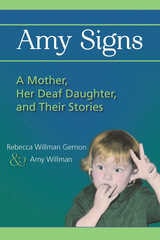
Amy Signs
A Mother, Her Deaf Daughter, and Their StoriesRebecca Willman Gernon
Gallaudet University Press, 2012
“Thirty-seven years ago, I vowed to write a truthful book about raising a deaf child.” Rebecca Willman Gernon followed through on her promise with her deaf daughter Amy Willman in this extraordinary new narrative. Many stories have been told about a parent’s struggle to help her deaf child succeed in a mostly hearing world. Amy Signs marks a signature departure in that both Rebecca and Amy relate their perspectives on their journey together.
When she learns of 11-month-old Amy’s deafness in 1969, Rebecca fully expresses her anguish, and traces all of the difficulties she endured in trying to find the right educational environment for Amy. The sacrifices of the rest of her family weighed heavily on her, also. Though she resolved to place four-year-old Amy in Nebraska’s residential school for deaf students, the emotional toll seemed too much to bear.
Amy’s view acts as the perfect counterpoint. Interwoven with her mother’s story, Amy’s account confirms that signing served her best. She summarizes life in boarding school as “laughter and homesickness.” She laughed with all of her deaf friends, though felt homesick at times. Amy thanks her mother for the gift of sign, asserting that a mainstream education would never have led her to earn a master’s degree and later teach American Sign Language at the University of Nebraska. Amy Signs is a positive albeit cautionary tale for parents of deaf children today whose only choice is a mainstreamed education.

An Eye for an I
Growing up with Blindness, Bigotry, and Family Mental IllnessJames Francisco Bonilla
University of Minnesota Press, 2025
The personal story of a blind Puerto Rican boy in New York who transcends a harrowing childhood to become a lifelong advocate for social justice
“Jovencito, it’s going to be lonely being different and yet strong in this world,” James Francisco Bonilla’s grandmother told him when he was ten. He had come home after defending himself against a bully who had threatened him with violence, making it clear that he didn’t care that James was blind. But despite the isolation James felt in childhood, he would come to commit his life to leveraging his differences and strengths toward a collective fight for justice. James’s memoir, An Eye for an I, is an inspiring account of how he found a path through his own suffering to make a difference for others.
Born with congenital cataracts, James had limited vision in his right eye and none in his left. At age nine, after a classmate hurled a horseshoe at his face in a racially motivated assault, James’s right eye was injured and he became legally blind. At home, too, he feared physical violence, experiencing the unpredictable outbursts of a single mother suffering from severe mental illness. Throughout his youth as a Puerto Rican New Yorker, James was continually failed by educational systems that exposed him to one abuse after another. Searching for relief and inspiration, he discovered an unexpected solace in the natural world, spiritual encounters with Mother Earth that led him toward both personal healing and advocacy.
At nineteen, a breakthrough in medical technology restored the sight in his right eye, and James recognized his unique perspective on the struggles of the disabled and marginalized in American life—and his intense will to make a difference. He seeks to understand generational trauma, and in documenting his growth—physically, mentally, and spiritually—his memoir exemplifies the introspection necessary to participate in truly equitable and effective movement building. An Eye for an I presents both James and his aggressors with refreshing nuance and humility, inviting readers to empathize, be inspired, and consider their own potential to be of service in a broken, yet beautiful, world.
Retail e-book files for this title are screen-reader friendly with images accompanied by short alt text and/or extended descriptions.
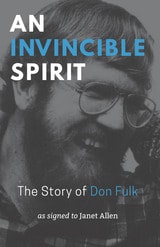
An Invincible Spirit
The Story of Don FulkDon Fulk, as signed to Janet Allen
Gallaudet University Press, 2019
—Kathleen Kleinman, Executive Director, TRPIL (Transitional Paths to Independent Living)
Profoundly deafened as an infant, Don Fulk didn’t learn his name or go to school until the age of ten. When he was eighteen years old and a budding superstar on his football and basketball teams, he broke his neck in a swimming accident, and became paralyzed. After his injury, he was confined to a bed in his parents’ home for eight years, unable to move and barely able to communicate. After his family could no longer care for him, he spent nine years in a nursing home where he suffered from abuse and neglect.
Yet through a life marred by isolation and frustration, Fulk endured with strength, humor, and grace. He never gave up pursuing his dreams for independence and self-worth, and improving the lives of others. He fought a system that was unfair and discriminatory, and helped pave the way for people with disabilities to live independently. Don Fulk signed his story to author Janet Allen, describing his difficult home life, the incredible friends who changed his life, and his dramatic escape from an abusive nursing home. An Invincible Spirit is a story of hope, empowerment, and the battles people with disabilities have fought—and continue to fight—to improve the quality of their lives.
An Invincible Spirit
The Story of Don FulkDon Fulk, as signed to Janet Allen
Gallaudet University Press, 2025
—Kathleen Kleinman, Executive Director, TRPIL (Transitional Paths to Independent Living)
Profoundly deafened as an infant, Don Fulk didn’t learn his name or go to school until the age of ten. When he was eighteen years old and a budding superstar on his football and basketball teams, he broke his neck in a swimming accident, and became paralyzed. After his injury, he was confined to a bed in his parents’ home for eight years, unable to move and barely able to communicate. After his family could no longer care for him, he spent nine years in a nursing home where he suffered from abuse and neglect.
Yet through a life marred by isolation and frustration, Fulk endured with strength, humor, and grace. He never gave up pursuing his dreams for independence and self-worth, and improving the lives of others. He fought a system that was unfair and discriminatory, and helped pave the way for people with disabilities to live independently. Don Fulk signed his story to author Janet Allen, describing his difficult home life, the incredible friends who changed his life, and his dramatic escape from an abusive nursing home. An Invincible Spirit is a story of hope, empowerment, and the battles people with disabilities have fought—and continue to fight—to improve the quality of their lives.
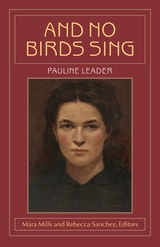
And No Birds Sing
Pauline Leader
Gallaudet University Press, 2016
This edition is accompanied by a new introduction and afterword that provide a scholarly framework for understanding Leader and her times. She persevered and became a published poet and novelist, often drawing on the experiences offered up here. Compelling and evocative, And No Birds Sing deftly reveals a complex, intelligent spirit toiling in a brutal world.
From the book:
I insisted to myself that I could still hear. I heard in my mind the sounds of streams as I passed them. I knew the sound the river made, that river that I had known always, the river by the marble house. In my mind the river washed with a low intimate sound. I had no need to hear as the people heard. True intimacy needs no ears. I knew the sound of birds; I heard them as they hopped about. I knew the sound of words also. It was words that I most intensely heard. I had not always the river and the birds—they appeared far away at times. I did not always want river and birds, but I always wanted words, and I always had them. I would have been terribly lonely without them. With them always in my mind, I could not be truly lonely. I played with them; I set them to music; I achieved endless variations with them. They were never weary, as other things could sometimes be weary.
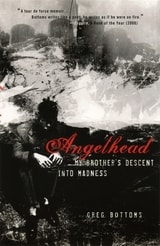
Angelhead
My Brother's Descent into MadnessGreg Bottoms
University of Chicago Press, 2005
A taut, powerful memoir of madness, Angelhead documents the violent, drug-addled descent of the author's brother, Michael, into schizophrenia. Beginning with Michael's first psychotic break—seeing God in his suburban bedroom window while high on LSD—Greg Bottoms recounts, in gripping, dramatic prose, the bizarre disappearances, suicide attempts, and the shocking crime that land Michael in the psychiatric wing of a maximum security prison. A work of nonfiction with the form and imagery of a novel, Angelhead enables the reader to witness not only the fragmenting of a mind, but of a family as well.
Aquamarine Blue 5
Personal Stories of College Students with AutismDawn Prince-Hughes
Ohio University Press, 2002
Rated Outstanding by the American Association of School Libraries
This is the first book to be written by autistic college students about the challenges they face. Aquamarine Blue 5 details the struggle of these highly sensitive students and shows that there are gifts specific to autistic students that enrich the university system, scholarship, and the world as a whole.
Dawn Prince-Hughes presents an array of writings by students who have been diagnosed with Asperger’s Syndrome or High-Functioning Autism, showing their unique ways of looking at and solving problems. In their own words, they portray how their divergent thinking skills could be put to great use if they were given an opportunity. Many such students never get the chance because the same sensitivity that gives them these insights makes the flicker of fluorescent lights and the sound of chalk on the board unbearable For simple—and easily remedied—reasons, we lose these students, who are as gifted as they are challenged.
Aquamarine Blue 5 is a showcase of the strength and resilient character of individuals with Asperger’s Syndrome. It will be an invaluable resource for those touched by this syndrome, their friends and families, and school administrators.
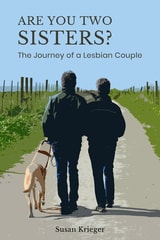
Are You Two Sisters?
The Journey of a Lesbian CoupleSusan Krieger
Temple University Press, 2022
Authored by one of the most respected figures in the field of personal ethnographic narrative, this book serves as both a memoir and a sociological study, telling the story of one lesbian couple’s lifelong journey together.
Are You Two Sisters? is Susan Krieger’s candid, revealing, and engrossing memoir about the intimacies of a lesbian couple. Krieger explores how she and her partner confront both the inner challenges of their relationship and the invisibility of lesbian identity in the larger world.
Using a lively novelistic and autoethnographic approach that toggles back and forth in time, Krieger reflects on the evolution of her forty-year relationship. She describes building a life together, from sharing pets and travels to getting married. Are You Two Sisters? addresses not only questions of gender and sexuality, but also of disability, as Krieger explores how the couple adapts to her increasing blindness.
Krieger’s title comes from a question asked by a stranger outside a remote desert bar as she and her partner traveled in the Southwest. Her apprehension about answering that question suggests how, even after the legalization of gay marriage, lesbianism often remains hidden—an observation that makes Krieger’s poignant narrative all the more moving.
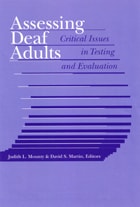
Assessing Deaf Adults
Critical Issues in Testing and EvaluationJudith L. Mounty
Gallaudet University Press, 2005
Section I frames the contexts facing deaf and hard of hearing individuals and those who test them, including a telling historical perspective. In Section II, chapters explore how deaf and hard of hearing candidates can meet the rigors of test-taking, how to level the playing field with a new approach to assessment, and what to consider to develop fully accessible licensing tests. The final chapter in this part examines the psychometric properties of intellectual assessments when used with deaf and hard of hearing people. Administrative Issues constitute Section III, beginning with legal considerations related to equity testing for deaf adults. An exploration of the potential of sign language interpretation in the testing environment follows.
Section IV provides case studies of deaf and hard of hearing adults from a variety of professions, including certification testing for therapeutic recreation, preparation strategies for university students, and ways to maximize access to licensure for social workers. A separate chapter addresses the impact of recent federal mandates on assessment of deaf and hard of hearing teachers and teaching candidates. The final section summarizes the current situation and presents recommendations to manage it, concluding with an epilogue on directions for the future.
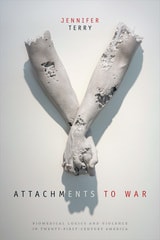
Attachments to War
Biomedical Logics and Violence in Twenty-First-Century AmericaJennifer Terry
Duke University Press, 2017
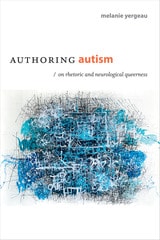
Authoring Autism
On Rhetoric and Neurological QueernessM. Remi Yergeau
Duke University Press, 2018
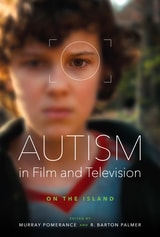
Autism in Film and Television
On the IslandEdited by Murray Pomerance and R. Barton Palmer
University of Texas Press, 2022
Global awareness of autism has skyrocketed since the 1980s, and popular culture has caught on, with film and television producers developing ever more material featuring autistic characters. Autism in Film and Television brings together more than a dozen essays on depictions of autism, exploring how autistic characters are signified in media and how the reception of these characters informs societal understandings of autism.
Editors Murray Pomerance and R. Barton Palmer have assembled a pioneering examination of autism’s portrayal in film and television. Contributors consider the various means by which autism has been expressed in films such as Phantom Thread, Mercury Rising, and Life Animated and in television and streaming programs including Atypical, The Bridge, Stranger Things, Star Trek: The Next Generation, and Community. Across media, the figure of the brilliant, accomplished, and “quirky” autist has proven especially appealing. Film and television have thus staked out a progressive position on neurodiversity by insisting on screen time for autism but have done so while frequently ignoring the true diversity of autistic experience. As a result, this volume is a welcome celebration of nonjudgmental approaches to disability, albeit one that is still freighted with stereotypes and elisions.
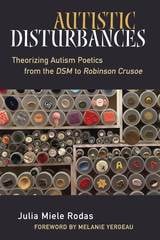
Autistic Disturbances
Theorizing Autism Poetics from the DSM to Robinson CrusoeJulia Miele Rodas
University of Michigan Press, 2018
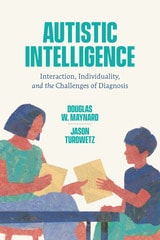
Autistic Intelligence
Interaction, Individuality, and the Challenges of DiagnosisDouglas W. Maynard and Jason Turowetz
University of Chicago Press, 2022
Winner 2024 Outstanding Recent Contribution in Social Psychology Award, Social Psychology Section, American Sociological Association
Winner 2024 Melvin Pollner Prize, Ethnomethodology and Conversation Analysis Section, American Sociological Association
As autism has grown in prevalence, so too have our attempts to make sense of it. From placing unfounded blame on vaccines to seeking a genetic cause, Americans have struggled to understand what autism is and where it comes from. Amidst these efforts, however, a key aspect of autism has been largely overlooked: the diagnostic process itself. That process is the central focus of Autistic Intelligence. The authors ask us to question the norms by which we measure autistic behavior, to probe how that behavior can be considered sensible rather than disordered, and to explore how we can better appreciate the individuality of those who receive the diagnosis.Drawing on hundreds of hours of video recordings and ethnographic observations at a clinic where professionals evaluated children for autism, the authors’ analysis of interactions among clinicians, parents, and children demystifies the categories, tools, and practices involved in the diagnostic process. Autistic Intelligence shows that autism is not a stable category; it is the outcome of complex interactional processes involving professionals, children, families, and facets of the social and clinical environments they inhabit. The authors suggest that diagnosis, in addition to carefully classifying children, also can highlight or include unique and particular contributions those with autism potentially can make to the world around us.