Results by title
16 books match the query 'Disciplines'
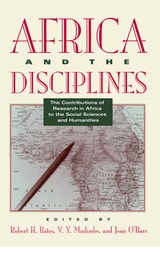
Africa and the Disciplines
The Contributions of Research in Africa to the Social Sciences and HumanitiesEdited by Robert H. Bates, V. Y. Mudimbe, and Jean F. O'Barr
University of Chicago Press, 1993
African Studies, contrary to some accounts, is not a separate continent in the world of American higher education. Its intellectual borders touch those of economics, literature, history, philosophy, and art; its history is the story of the world, both ancient and modern. This is the clear conclusion of Africa and the Disciplines, a book that addresses the question: Why should Africa be studied in the American university?
This question was put to distinguished scholars in the social sciences and humanities, prominent Africanists who are also leaders in their various disciplines. Their responses make a strong and enlightening case for the importance of research on Africa to the academy.
Paul Collier's essay, for example, shows how studies of African economies have clarified our understanding of the small open economies, and contributed to the theory of repressed inflation and to a number of areas in microeconomics as well. Art historian Suzanne Blier uses the terms and concepts that her discipline has applied to Africa to analyze the habits of mind and social practice of her own field. Christopher L. Miller describes the confounding and enriching impact of Africa on European and American literary theory. Political scientist Richard Sklar outlines Africa's contributions to the study of political modernization, pluralism, and rational choice. These essays, together with others from scholars in history, anthropology, philosophy, and comparative literature, attest to the influence of African research throughout the curriculum.
For many, knowledge from Africa seems distant and exotic. These powerful essays suggest the contrary: that such knowledge has shaped the way in which scholars in various disciplines understand their worlds. Eloquent testimony to Africa's necessary place in the mainstream of American education, this book should alter the academy's understanding of the significance of African research, its definition of core and periphery in human knowledge.
"These essays are at once exceptionally thoughtful and remarkably comprehensive. Not only do they offer an unusually interesting overview of African studies; they are also striking for the depth and freshness of their insights. This is the sort of volume from which both seasoned regional experts and students stand to learn an enormous amount."—John Comaroff, University of Chicago
"These essays provide an important perspective on the evolution of African studies and offer insights into what Africa can mean for the different humanistic and social science disciplines. Many show in ingenious and subtle ways the enormous potential that the study of Africa has for confounding the main tenets of established fields. One could only hope that the strictures expressed here would be taken to heart in the scholarly world."—Robert L. Tignor, Princeton University
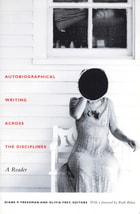
Autobiographical Writing Across the Disciplines
A ReaderDiane P. Freedman and Olivia Frey, eds.
Duke University Press, 2003
The editors’ introduction presents a condensed history of academic writing, chronicles the origins of autobiographical criticism, and emphasizes the role of feminism in championing the value of personal narrative to disciplinary discourse. The essays are all explicitly informed by the identities of their authors, among whom are a feminist scientist, a Jewish filmmaker living in Germany, a potential carrier of Huntington’s disease, and a doctor pregnant while in medical school. Whether describing how being a professor of ethnic literature necessarily entails being an activist, how music and cooking are related, or how a theology is shaped by cultural identity, the contributors illuminate the relationship between their scholarly pursuits and personal lives and, in the process, expand the boundaries of their disciplines.
Contributors:
Kwame Anthony Appiah
Ruth Behar
Merrill Black
David Bleich
James Cone
Brenda Daly
Laura B. DeLind
Carlos L. Dews
Michael Dorris
Diane P. Freedman
Olivia Frey
Peter Hamlin
Laura Duhan Kaplan
Perri Klass
Muriel Lederman
Deborah Lefkowitz
Eunice Lipton
Robert D. Marcus
Donald Murray
Seymour Papert
Carla T. Peterson
David Richman
Sara Ruddick
Julie Tharp
Bonnie TuSmith
Alex Wexler
Naomi Weisstein
Patricia Williams
Bakhtin in Contexts
Across the DisciplinesAmy Mandelker
Northwestern University Press, 1995
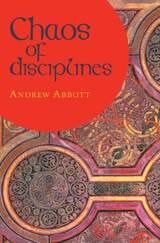
Chaos of Disciplines
Andrew Abbott
University of Chicago Press, 2000
Chaos of Disciplines uses fractals to explain the patterns of disciplines, and then applies them to key debates that surround the social sciences. Abbott argues that knowledge in different disciplines is organized by common oppositions that function at any level of theoretical or methodological scale. Opposing perspectives of thought and method, then, in fields ranging from history, sociology, and literature, are to the contrary, radically similar; much like fractals, they are each mutual reflections of their own distinctions.
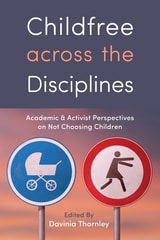
Childfree across the Disciplines
Academic and Activist Perspectives on Not Choosing ChildrenDavinia Thornley
Rutgers University Press, 2022
Recently, childfree people have been foregrounded in mainstream media. More than seven percent of Western women choose to remain childfree and this figure is increasing. Being childfree challenges the ‘procreation imperative’ residing at the center of our hetero-normative understandings, occupying an uneasy position in relation to—simultaneously—traditional academic ideologies and prevalent social norms. After all, as Adi Avivi recognizes, "if a woman is not a mother, the patriarchal social order is in danger." This collection engages with these (mis)perceptions about childfree people: in media representations, demographics, historical documents, and both psychological and philosophical models. Foundational pieces from established experts on the childfree choice--Rhonny Dam, Laurie Lisle, Christopher Clausen, and Berenice Fisher--appear alongside both activist manifestos and original scholarly work, comprehensively brought together. Academics and activists in various disciplines and movements also riff on the childfree life: its implications, its challenges, its conversations, and its agency—all in relation to its inevitability in the 21st century. Childfree across the Disciplines unequivocally takes a stance supporting the subversive potential of the childfree choice, allowing readers to understand childfreedom as a sense of continuing potential in who—or what—a person can become.

Demarcating the Disciplines
Philosophy, Literature, ArtSamuel Weber, Henry Sussman, and Wlad Godzich, Editors
University of Minnesota Press, 1986
Demarcating the Disciplines was first published in 1986. Minnesota Archive Editions uses digital technology to make long-unavailable books once again accessible, and are published unaltered from the original University of Minnesota Press editions.
With publication of this volume, Glyph begins a new stage in its existence: the move from Johns Hopkins University Press to the University of Minnesota Press is accompanied by a change in focus. In its first incarnation Glyph provided a forum in which established notions of reading, writing, and criticism could be questioned and explored. Since then, the greater currency of such concerns has brought with it new problems and priorities. Setting aside the battles of the past, the new Glyph looks ahead - to confront historical issues and to address the institutional and pedagogical questions emerging from the contemporary critical landscape.
Each volume in the new Glyph series is organized around a specific issue. The essays in this first volume explore the relations between the practice of reading and writing and the operations of the institution. Though their approaches differ from one another, the authors of these essays all recognize that the questions of the institution - most notably the university - points toward a series of constraints that define, albeit negatively, the possibilities for change.
The contributors: Samuel Weber, Jacques Derrida, Tom Conley, Malcolm Evans, Ruth Salvaggio, Robert Young, Henry Sussman, Peter Middleton, David Punter, and Donald Preziosi.
Everyday Genres
Writing Assignments across the DisciplinesMary Soliday
Southern Illinois University Press, 2011
Soliday provides an overview of the contemporary theory and research in Writing across the Curriculum programs, focusing specifically on the implementation of the Writing Fellows Program at the City College of New York. Drawing on her direct observations of colleagues and students at the school, she addresses the everyday challenges that novice writers face, such as developing an appropriate "stance" in one's writing, and the intricacies of choosing and developing content.
The volume then goes on to address some of the most pressing questions being asked by teachers of composition: To what extent can writing be separated from its situation? How can rhetorical expertise be shared across fields? And to what degree is writing ability local rather than general? Soliday argues that, while writing is closely connected to situation, general rhetorical principles can still be capably applied if those situations are known. The key to improving writing instruction, she maintains, is to construct contexts that expose writers to the social actions that genres perform for readers.
Supplementing the author's case study are six appendixes, complete with concrete examples and helpful teaching tools to establish effective classroom practices and exercises in Writing across the Curriculum programs. Packed with useful information and insight, Everyday Genres is an essential volume for both students and teachers seeking to expand their understanding of the nature of writing.
Graduate Writing Across the Disciplines
Identifying, Teaching, and SupportingMarilee Brooks-Gillies
University Press of Colorado, 2020
In Defense of Disciplines
Interdisciplinarity and Specialization in the Research UniversityJerry A. Jacobs
University of Chicago Press, 2014
Drawing on diverse sources of data, Jacobs offers a new theory of liberal arts disciplines such as biology, economics, and history that identifies the organizational sources of their dynamism and breadth. Illustrating his thesis with a wide range of case studies including the diffusion of ideas between fields, the creation of interdisciplinary scholarly journals, and the rise of new fields that spin off from existing ones, Jacobs turns many of the criticisms of disciplines on their heads to mount a powerful defense of the enduring value of liberal arts disciplines. This will become one of the anchors of the case against interdisciplinarity for years to come.
Perspectives from the Disciplines
Stanford Online High SchoolJeffrey Scarborough and Raymond Ravaglia
CSLI, 0

Prototyping Across the Disciplines
Designing Better FuturesEdited by Jennifer Roberts-Smith, Stan Ruecker, Milena Radzikowska
Intellect Books, 2020
Fields of study progress not by understanding more about what already exists, although that is a useful step, but by making guesses about possible better futures. The guesses consist of small forays into those futures, using strategies that are variously called learning through making, research through design, or more simply: prototyping. While traditionally associated primarily with industrial design, and more recently with software development, prototyping is now used as an important tool in areas ranging from materials engineering to landscape architecture to the digital humanities. This book collects current theories and methods of prototyping across a dozen disciplines and illustrates them through case studies of actual projects, whether in industry or the classroom.
Prototyping Across the Disciplines provides context, a theoretical framework, and a set of methodologies for interdisciplinary collaboration in design. Each chapter offers a different disciplinary perspective on prototyping and provides a case study as a point of comparison for identifying commonalities and divergences in current practices. In examining the central role of prototyping in design research, this edited collection demonstrates theoretical and methodological transferability across disciplines not typically thought to be related, including post-human design, theatre, tabletop game design, landscape architecture, and arts entrepreneurship.
Questions of Evidence
Proof, Practice, and Persuasion across the DisciplinesEdited by James Chandler, Arnold I. Davidson, and Harry D. Harootunian
University of Chicago Press, 1994
The essays and rejoinders are by Terry Castle, Lorraine Daston, Carlo Ginzburg, Ian Hacking, Mark Kelman, R. C. Lewontin, Pierre Vidal-Naquet, Mary Poovey, Donald Preziosi, Simon Schaffer, Joan W. Scott, Eve Kosofsky Sedgwick, and Barbara Herrnstein Smith.
The critical responses are by Lauren Berlant, James Chandler, Jean Comaroff, Arnold I. Davidson, Harry D. harootunian, Elizabeth Helsinger, Thomas C. Holt, Francoise Meltzer, Robert J. Richards, Lawrence Rothfield, Joel Snyder, Cass R. Sunstein, and William Wimsatt.
Rhetorical Strategies and Genre Conventions in Literary Studies
Teaching and Writing in the DisciplinesLaura Wilder
Southern Illinois University Press, 2012
Laura Wilder fills a gap in the scholarship on writing in the disciplines and writing across the curriculum with this thorough study of the intersections between scholarly literary criticism and undergraduate writing in introductory literature courses. Rhetorical Strategies and Genre Conventions in Literary Studies is the first examination of rhetorical practice in the research and teaching of literary study and a detailed assessment of the ethics and efficacy of explicit instruction in the rhetorical strategies and genre conventions of the discipline.
Using rhetorical analysis, ethnographic observation, and individual interviews, Wilder demonstrates how rhetorical conventions play a central, although largely tacit, role in the teaching of literature and the evaluation of student writing. Wilder follows a group of literature majors and details their experiences. Some students received experimental, explicit instruction in the special topoi, while others received more traditional, implicit instruction.
Arguing explicit instruction in disciplinary conventions has the potential to help underprepared students, Wilder explores how this kind of instruction may be incorporated into literature courses without being overly reductive. Taking into consideration student perspectives, Wilder makes a bold case for expanding the focus of research in writing in the disciplines and writing across the curriculum in order to grasp the full complexity of disciplinary discourse.
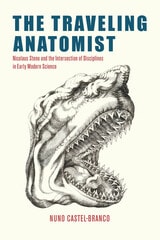
The Traveling Anatomist
Nicolaus Steno and the Intersection of Disciplines in Early Modern ScienceNuno Castel-Branco
University of Chicago Press, 2025
Nicolaus Steno (1638–1686) was a renowned anatomist in his lifetime. He reformed the anatomical understanding of glands, argued that the heart was a muscle, renamed the so-called female testicles as ovaries, and developed a mathematical model for understanding muscle contraction—discoveries that were fundamental to the fields of anatomy and physiology. However, other aspects of Steno’s life have come to define him: his claim that mountains’ strata reveal the history of the Earth and his conversion to Catholicism as a practicing scientist. This excessive attention to his geological discoveries and to asking whether science and religion are compatible, Nuno Castel-Branco argues, has obscured his significant accomplishments as an anatomist. The Traveling Anatomist thus restores Steno to his rightful place as a crucial figure in early modern science.
Using Steno’s extensive travels as a framework, this book depicts him as an active participant in the Republic of Letters. Castel-Branco traverses Leiden, Paris, Copenhagen, Florence, and Rome as he follows Steno in his sojourns through different scientific academies, courts, and artisanal workshops. There he developed new friends, some of whom were women, with whom he researched and exchanged ideas. Drawing on Steno’s books, correspondence, and novel archival material, Castel-Branco invites us to approach Steno and his accomplishments in anatomy, mathematics, and geology through the eyes of his contemporaries. Doing so, Castel-Branco reconstructs the rich and overlapping worlds of scientific disciplines that shaped Steno’s work, revealing the richness of interdisciplinary research in early modern intellectual life. And through Steno, he illustrates larger developments and new networks of significance in mid-seventeenth-century science. By focusing on ideas, scientific genres, institutions, and friendships, Castel-Branco offers a way others might also productively study science from the early modern period until today.
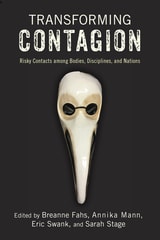
Transforming Contagion
Risky Contacts among Bodies, Disciplines, and NationsFahs, Breanne
Rutgers University Press, 2018
Moving from viruses, vaccines, and copycat murder to gay panics, xenophobia, and psychopaths, Transforming Contagion energetically fuses critical humanities and social science perspectives into a boundary-smashing interdisciplinary collection on contagion. The contributors provocatively suggest contagion to be as full of possibilities for revolution and resistance as it is for the descent into madness, malice, and extensive state control. The infectious practices rooted in politics, film, psychological exchanges, social movements, the classroom, and the circulation of a literary text or meme on social media compellingly reveal patterns that emerge in those attempts to re-route, quarantine, define, or even exacerbate various contagions.
What Should Schools Teach?
Disciplines, Subjects and the Pursuit of TruthEdited by Alka Sehgal Cuthbert and Alex Standish
University College London, 2021
The design of school curricula involves deep thought about the nature of knowledge and its value to learners and society. Such a serious responsibility raises a number of questions: What is knowledge for? What knowledge is important for children to learn? How do we decide what knowledge matters in each school subject? The blurring of distinctions between pedagogy and curriculum, as well as that between experience and knowledge, has resulted in a confusing message for teachers about the part that each plays in the education of children. This book aims to dispel confusion through a robust rationale for what schools should teach, offering key understanding to teachers of the relationship between knowledge and their own pedagogy. This second edition includes new chapters on chemistry, drama, music, and religious education, as well as an updated chapter on biology. A revised introduction reflects on the emerging discourse around decolonizing the curriculum and on the relationship between the knowledge that children encounter at school and in their homes.