Results by title
281 books match the query 'Disease & Health Issues' and 19 start with a
A COVID Charter, A Better World
Toby Miller
Rutgers University Press, 2021
A COVID Charter, A Better World outlines the steps needed to reform public policies and fix the structural vulnerabilities that the current pandemic has made so painfully clear. Leading scholar Toby Miller argues that we must resist neoliberalism’s tendency to view health in terms of individual choices and market-driven solutions, because that fails to preserve human rights. He addresses the imbalance of geopolitical power to explain how we arrived at this point and shows that the pandemic is more than just a virus—it’s a social disease. By examining how the U.S., Britain, Mexico, and Colombia have responded to the COVID-19 crisis, Miller investigates corporate, scientific, and governmental decision-making and the effects those decisions have had on disadvantaged local communities. Drawing from human rights charters ratified by various international organizations, he then proposes a COVID charter, calling for a new world that places human lives above corporate profits.
A Drunkard's Defense
Alcohol, Murder, and Medical Jurisprudence in Nineteenth-Century AmericaMichele Rotunda
University of Massachusetts Press, 2021
Is drunkenness a defense for murder? In the early nineteenth century, the answer was a resounding no. Intoxication was considered voluntary, and thus provided no defense. Yet as the century progressed, American courts began to extend exculpatory value to heavy drinking. The medicalization of alcohol use created new categories of mental illness which, alongside changes in the law, formed the basis for defense arguments that claimed unintended consequences and lack of criminal intent. Concurrently, advocates of prohibition cast “demon rum” and the “rum-seller” as the drunkard's accomplices in crime, mitigating offenders' actions. By the postbellum period, a backlash, led by medical professionals and an influential temperance movement, left the legacy of an unsettled legal standard.
In A Drunkard's Defense, Michele Rotunda examines a variety of court cases to explore the attitudes of nineteenth-century physicians, legal professionals, temperance advocates, and ordinary Americans toward the relationship between drunkenness, violence, and responsibility, providing broader insights into the country's complicated relationship with alcohol.
A Mad Mess
Community Mental Health in CrisisOwen Whooley
University of Chicago Press, 2026
A sobering assessment of the systematic failures of mental health work.
The United States is in the midst of a mental health crisis that cannot be ignored. Its effects are visible in overcrowded emergency rooms, homeless encampments, and frequent encounters between police and people with serious mental illness. And yet, our attempts to support people with mental illness—from medical care to housing support to basic hygiene—seem to never take meaningful hold despite the tireless work of professionals who attempt to help people bring together the pieces of a life. The problem is not in any individual effort though; it’s in the many ways these programs fail to work together. For those with serious mental illness, and those who work to ameliorate it, there is no system. There is only mess.
In A Mad Mess, sociologist Owen Whooley uncovers the exasperating barriers, bureaucratic mismatches, and threadbare resources that have made a mess of what should be a supportive system. Set in Albuquerque, New Mexico—a city whose struggles echo those of communities nationwide—the book reveals the challenges mental health workers face daily, from tedious paperwork to occasional violence. Whooley follows workers across local outpatient service organizations, specialized police mental health units, and a psychiatric emergency department. Despite mostly good intentions and sometimes heroic efforts, he shows why this important work so often ends in failure.
Written with deep sympathy and unflinching honesty, A Mad Mess reveals how the lack of a cohesive mental health system obstructs critical care and places roadblocks before front-line mental health workers at every turn. Most critically, for those who suffer from severe mental illness, these setbacks are a constant reminder that the institutions charged with helping them have left them on their own.

A Parent’s Guide to Spina Bifida
Beth-Ann Bloom
University of Minnesota Press, 1988
A Quieter Illness
Narratives, Selves, and SilencesArthur W. Frank
University of Chicago Press, 0
In this sequel to The Wounded Storyteller, Arthur W. Frank reminds us of the power of narrative in the lives of ill people and those who care for them.
The Wounded Storyteller became a classic by witnessing the voices of ill people, recognizing how they express themselves in three prevalent narratives: restitution stories, evocations of chaos, and quest stories. Thirty years later, Frank expands this framework. He proposes a fourth narrative: one that seeks no restitution, claims no quest, yet feels no chaos—the stillness narrative. This story allows us to see more clearly our interdependence as well as the wisdom of uncertainty; it also teaches the value of letting go and waiting.
In the stillness narrative, Frank finds new opportunities for dialogue with clinical professionals. They too need healing, and healing moments occur when everyone recognizes their mutual, if asymmetrical, dependence. As Frank tells the stories that won’t leave him, he guides readers toward understanding how the stories they tell and hear affect their capacity to heal both themselves and others.
A Walking Disaster
What Surviving Katrina and Cancer Taught Me about Faith and ResilienceJamie Aten
Templeton Press, 2020
Is there a meaning to our suffering? Is hope realistic when tragedy befalls us? Is a return to normalcy possible after our life is uprooted by catastrophe? These are the questions that disaster psychologist Dr. Jamie Aten wrestled with when he was diagnosed with Stage IV colon cancer. In this gripping memoir, Aten shares the life-affirming and faith-renewing insights that he discovered during his tumultuous struggle against the disease.
Aten’s journey began in 2005 when Hurricane Katrina struck his community. After witnessing the devastation wrought by the storm, he dedicated his career to investigating how people respond to and recover from all manner of disasters. He studied disaster zones around the globe and founded the Humanitarian Disaster Institute at Wheaton College. His expertise, however, was little comfort when a fateful visit with his oncologist revealed advanced and aggressive cancer. “You’re in for your own personal disaster” was his doctor’s prognosis.
Thrust into a battle for his life, with cancer cells and chemotherapy ravaging his body, Aten found his professional interest taking on new meaning. His ordeal taught him firsthand how we can sustain ourselves when burdened with seemingly unbearable suffering. Some of his counterintuitive insights include: to find hope, be cautious of optimism; when you want help the least is when you need it most; and spiritual surrender, rather than a passive act, is instead an act of profound courage.
This last point speaks to the element of grace in Dr. Aten’s story. As he struggled to understand the significance of his suffering, he found himself examining his Christian faith down to its bedrock and learned to experience the redeeming presence of God in his life. Dr. Aten has a natural exuberance that shines through his writing. Infused with his compassionate voice and humanitarian concern,
A Walking Disaster is ultimately an inspirational story about the power of the human spirit to endure trauma with courage.
Acts of Resistance
Antibiotic Use and Prescribing Culture in the United StatesKatharina Rynkiewich
Vanderbilt University Press, 2026
In Acts of Resistance, Katharina Rynkiewich explores the fight to save the utility of antibiotic medicines amid global antimicrobial resistance. This engaging ethnography follows bacteria, patients, and practitioners as they weave in and out of North American medical institutions. Through an examination of the social dynamics and ethical challenges of everyday antibiotic use, the author expands on the limitations of good intentions in current antibiotic stewardship policy. Her ethnographic account shows the lived experience of multiple central figures as she shifts setting and tone, ultimately deepening our understanding of the global antimicrobial resistance crisis as emergency.
Due to the global scale of impact related to antimicrobial resistance, holding industries and institutions accountable is difficult but essential. With new and reemerging multidrug-resistant organisms making their homes within institutions and in the community, tracing the origins of an infection can be an insurmountable challenge. Rynkiewich demonstrates how “microbial highways” coexist along human highways, providing an apt example of how multidrug-resistant organisms spread across hospitals, communities, and entire regions.
Addiction Becomes Normal
On the Late-Modern American SubjectJaeyoon Park
University of Chicago Press, 2024
Over the last forty years, a variety of developments in American science, politics, and culture have reimagined addiction in their own ways, but they share an important understanding: increasingly, addiction is described as normal, the natural result of a body that has been exposed to potent stimuli. This shift in thinking suggests that addiction is a condition latent in all of us, a common response to a society rich in thrills.
In Addiction Becomes Normal, Jaeyoon Park provides a history and critical analysis of the normalization of addiction in late-modern American society. By exploring addiction science, diagnostic manuals, judicial reform, and public health policy, he shows how seeing addiction as normal has flourished in recent decades and is supported throughout cultural life in the United States by the language of wellness, psychotherapy, and more. Building on Michel Foucault’s depiction of the human figure, Park argues that this shift reflects the emergence of a new American subject, one formed by the accretion of experiences. This view of the human subject challenges the idea that our compulsions reflect our characters, wills, or spirits. For if addiction is an extreme but ordinary attachment, and if compulsive consumption resembles healthy behavior, then desire is no longer an expression of the soul so much as the pursuit of a past reward. A perceptive work of recent history and political theory, Addiction Becomes Normal raises new questions about what it means to be human in America today.
Addiction Becomes Normal
On the Late-Modern American SubjectJaeyoon Park
University of Chicago Press, 2024
Addiction is now seen as an ordinary feature of human nature, an idea that introduces new doubts about the meaning of our desires.
Over the last forty years, a variety of developments in American science, politics, and culture have reimagined addiction in their own ways, but they share an important understanding: increasingly, addiction is described as normal, the natural result of a body that has been exposed to potent stimuli. This shift in thinking suggests that addiction is a condition latent in all of us, a common response to a society rich in thrills.
In Addiction Becomes Normal, Jaeyoon Park provides a history and critical analysis of the normalization of addiction in late-modern American society. By exploring addiction science, diagnostic manuals, judicial reform, and public health policy, he shows how seeing addiction as normal has flourished in recent decades and is supported throughout cultural life in the United States by the language of wellness, psychotherapy, and more. Building on Michel Foucault’s depiction of the human figure, Park argues that this shift reflects the emergence of a new American subject, one formed by the accretion of experiences. This view of the human subject challenges the idea that our compulsions reflect our characters, wills, or spirits. For if addiction is an extreme but ordinary attachment, and if compulsive consumption resembles healthy behavior, then desire is no longer an expression of the soul so much as the pursuit of a past reward. A perceptive work of recent history and political theory, Addiction Becomes Normal raises new questions about what it means to be human in America today.
Africanizing Oncology
Creativity, Crisis, and Cancer in UgandaMarissa Mika
Ohio University Press, 2021
Agent Orange
History, Science, and the Politics of UncertaintyEdwin A. Martini
University of Massachusetts Press, 2012
Taking on what one former U.S. ambassador called “the last ghost of the Vietnam War,” this book examines the far-reaching impact of Agent Orange, the most infamous of the dioxin-contaminated herbicides used by American forces in Southeast Asia. Edwin A. Martini's aim is not simply to reconstruct the history of the “chemical war” but to investigate the ongoing controversy over the short- and long-term effects of weaponized defoliants on the environment of Vietnam, on the civilian population, and on the troops who fought on both sides.
Beginning in the early 1960s, when Agent Orange was first deployed in Vietnam, Martini follows the story across geographical and disciplinary boundaries, looking for answers to a host of still unresolved questions. What did chemical manufacturers and American policymakers know about the effects of dioxin on human beings, and when did they know it? How much do scientists and doctors know even today? Should the use of Agent Orange be considered a form of chemical warfare? What can, and should, be done for U.S. veterans, Vietnamese victims, and others around the world who believe they have medical problems caused by Agent Orange?
Martini draws on military records, government reports, scientific research, visits to contaminated sites, and interviews to disentangle conflicting claims and evaluate often ambiguous evidence. He shows that the impact of Agent Orange has been global in its reach affecting individuals and communities in New Zealand, Australia, Korea, and Canada as well as Vietnam and the United States. Yet for all the answers it provides, this book also reveals how much uncertainty—scientific, medical, legal, and political—continues to surround the legacy of Agent Orange.
Ailing in Place
Environmental Inequities and Health Disparities in AppalachiaMichele Morrone
Ohio University Press, 2020
In Ailing in Place, Michele Morrone explores the relationship between environmental conditions in Appalachia and health outcomes that are too often ascribed to individual choices only. She applies quantitative data to observations from environmental health professionals to frame the ways in which the environment, as a social determinant of health, leads to health disparities in Appalachian communities. These examples—these stories of place—trace the impacts of water quality, waste disposal, and natural resource extraction on the health and quality of life of Appalachian people.
Public health is inextricably linked to place. Environmental conditions such as contaminated water, unsafe food, and polluted air are as important as culture, community, and landscape in characterizing a place and determining the health outcomes of the people who live there. In some places, the state of the environment is a consequence of historical activities related to natural resources and cultural practices. In others, political decisions to achieve short-term economic objectives are made with little consideration of long-term public health consequences.
All My Friends Live in My Computer
Trauma, Tactical Media, and MeaningSamira Rajabi
Rutgers University Press, 2021
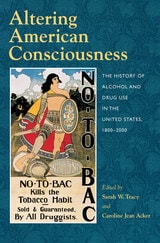
Altering American Consciousness
The History of Alcohol and Drug Use in the United States, 1800-2000Sarah W. Tracy
University of Massachusetts Press, 2004
Virtually every American alive has at some point consumed at least one, and very likely more, consciousness altering drug. Even those who actively eschew alcohol, tobacco, and coffee cannot easily avoid the full range of psychoactive substances pervading the culture. With many children now taking Ritalin for Attention Deficit Hyperactivity Disorder, professional athletes relying on androstenidione to bulk up, and the chronically depressed resorting to selective serotonin reuptake inhibitors such as Prozac, the early twenty-first century appears no less rife with drugs than previous periods.
Yet, if the use of drugs is a constant in American history, the way they have been perceived has varied extensively. Just as the corrupting cigarettes of the early twentieth century ("coffin nails" to contemporaries) became the glamorous accessory of Hollywood stars and American GIs in the 1940s, only to fall into public disfavor later as an unhealthy and irresponsible habit, the social significance of every drug changes over time.
The essays in this volume explore these changes, showing how the identity of any psychoactive substance—from alcohol and nicotine to cocaine and heroin—owes as much to its users, their patterns of use, and the cultural context in which the drug is taken, as it owes to the drug's documented physiological effects. Rather than seeing licit drugs and illicit drugs, recreational drugs and medicinal drugs, “hard” drugs and “soft” drugs as mutually exclusive categories, the book challenges readers to consider the ways in which drugs have shifted historically from one category to another.
In addition to the editors, contributors include Jim Baumohl, Allan M. Brandt, Katherine Chavigny, Timothy Hickman, Peter Mancall, Michelle McClellan, Steven J. Novak, Ron Roizen, Lori Rotskoff, Susan L. Speaker, Nicholas Weiss, and William White.
An Open Secret
The History of Unwanted Pregnancy and Abortion in Modern BoliviaNatalie L. Kimball
Rutgers University Press, 2020
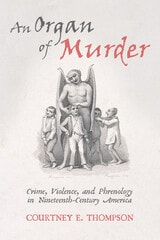
An Organ of Murder
Crime, Violence, and Phrenology in Nineteenth-Century AmericaCourtney E. Thompson
Rutgers University Press, 2021
An Organ of Murder explores the origins of both popular and elite theories of criminality in the nineteenth-century United States, focusing in particular on the influence of phrenology. In the United States, phrenology shaped the production of medico-legal knowledge around crime, the treatment of the criminal within prisons and in public discourse, and sociocultural expectations about the causes of crime. The criminal was phrenology’s ideal research and demonstration subject, and the courtroom and the prison were essential spaces for the staging of scientific expertise. In particular, phrenology constructed ways of looking as well as a language for identifying, understanding, and analyzing criminals and their actions. This work traces the long-lasting influence of phrenological visual culture and language in American culture, law, and medicine, as well as the practical uses of phrenology in courts, prisons, and daily life.

Another Magic Mountain
Kibong'oto Hospital and African Tuberculosis, 1920–2000Christoph Gradmann
Ohio University Press, 2025
Kibong’oto Hospital, opened in 1926, is an East African tuberculosis treatment center located on the slopes of Mount Kilimanjaro. Its history is crucial to understanding tuberculosis in Tanzania and, more broadly, in Africa. With the hospital as a point of departure, Christoph Gradmann presents a history of this disease that engages with local and regional contexts rather than with international elite science and health policies.
The book addresses key questions about the African experience with tuberculosis:
- What did it mean to do clinical science on tuberculosis in colonial and postcolonial contexts?
- Along which trajectories did medical practice and research evolve in a place where international advances in medical science were sometimes heard of only faintly and where resources could be scarce?
- How did a large hospital with several hundred beds dedicated to the treatment of just one condition figure in the development of national and regional health systems?
- How did Kibong’oto Hospital, a pride of colonial health governance, transition after Tanzania gained independence?
- How did treating and researching tuberculosis change throughout the twentieth century in an African hospital dedicated to that condition?
- How did research at the hospital contribute to tuberculosis-control strategies on national and international levels?
The book is based on the hospital’s unique archive: its surviving library of thousands of case summaries. Since 1926, this library has documented an enormous number of patient lives, staff careers, diagnoses, treatments, clinical trials, and much more. For today’s readers, the library provides insight into a history of clinical medicine in Africa, for which very few comparable archives exist. Gradmann supplements this site-specific research with material from national and international archives, as well as interviews with former staff involved in that history. The book’s four chapters offer perspectives on colonial epidemiological research in the interwar years; on late colonial healthcare development plans and the arrival of modern drug therapies; on the role of a national tuberculosis hospital in a newly independent country; and on the history of tuberculosis control in an age of economic crisis, HIV, and emergent global health-treatment programs. Finally, Gradmann discusses what the history of a large hospital can add to today’s tuberculosis research, control policy, and historiography.
Archiving Medical Violence
Consent and the Carceral StateChristopher Perreira
University of Minnesota Press, 2023
A major new reading of a U.S. public health system shaped by fraught perceptions of culture, race, and criminality
At the heart of Archiving Medical Violence is an interrogation of the notions of national and scientific progress, marking an advance in scholarship that shows how such violence is both an engine of medical progress and, more broadly, the production of empire. It reads the medical archive through a lens that centers how it is produced, remembered, and contested within cultural production and critical memory.
In this innovative and interdisciplinary book, Christopher Perreira argues that it is in the contradictions of settler colonialism and racial capitalism that we find how medical violence is narrated as a public good. He presents case studies from across a range of locations—Hawai‘i, California, Louisiana, Guatemala—and historical periods from the nineteenth century on. Examining national and scientific conceptions of progress through the lens of medicine and public health, he places official archives in dialogue with visual and literary works, patient writing, and more.
Archiving Medical Violence explores the contested public terrains for narrating value and vulnerabilities, bodies and geographical locations. Ultimately, Perreira reveals for us a medical imaginary built on racialized criminality driving contemporary politics of citizenship, memory, and identity.
Retail e-book files for this title are screen-reader friendly with images accompanied by short alt text and/or extended descriptions.
At Ansha's
Life in the Spirit Mosque of a Healer in MozambiqueDaria Trentini
Rutgers University Press, 2021