Results by title
29 books match the query 'Diversity & Multiculturalism'

AfroSwedish Places of Belonging
Nana Osei-Kofi
Northwestern University Press, 2024

Aristocratic Inclusion
Hiring the Academic Eliteprabhdeep singh kehal
Duke University Press, 2027
Beyond Dreamers
Transitions to Adulthood in an Uncertain AgeSofya Aptekar
Russell Sage Foundation, 2026
The typical image of a Dreamer is an undocumented Latinx youth—brought to the U.S. through no choice of their own—who excels academically and aspires to contribute to the U.S. economy. This image has engendered political good will and helped push through an executive order that created Deferred Action for Childhood Arrivals, but it is limited. It fails to account for the full spectrum of diversity among undocumented youth. It also leaves the Dreamer figure stuck in a stage of youth and innocence waiting for immigration reform to allow them to finally transition to adulthood. There is little room in the Dreamer narrative for navigating complex family obligations, employment, entering adult relationships, or other markers of adulthood. In Beyond Dreamers, sociologists Sofya Aptekar and Amy Hsin examine how undocumented young adults navigate the transition to adulthood.
Drawing on more than one hundred interviews with a racially and ethnically diverse group of undocumented college students in New York City, with and without DACA authorization, Aptekar and Hsin show that there is no single undocumented experience. They find that while legal status matters enormously, its impacts are influenced by race, national origin, gender, class, sexuality, family resources, educational institutions, neighborhood contexts, and access to local and transnational co-ethnic communities and labor markets. These forces not only shape the kinds of opportunities available to undocumented young adults, but how they choose to approach disclosing their undocumented status and interact with family, peers, employers, professors, and police.
Aptekar and Hsin pay particular attention to the effect of one’s mode of entry into the United States, highlighting the distinction between visa overstayers and those who entered the country without inspection. This highly consequential divide shapes early experiences of illegality, labor market options, exposure to surveillance and precarity, and the possibility of adjusting status. Individuals who overstay their visas have more avenues to adjust their undocumented status, including family sponsorship and marriage to U.S. citizens. Opportunities for legalization are much more restricted for those who made unauthorized border crossings. If these immigrant youth want to adjust their status, they are required to leave the country and remain abroad for at least ten years to do so. Other methods of adjusting their status, such as claiming extreme hardship on their American families or trying to obtain visas for victims of crime or parental abuse or neglect, are extremely difficult to obtain, costly, and can lead to division in families, making legalization all but impossible and, therefore, limiting youths’ opportunities. Thus, mode of entry strongly influences how some young adults imagine their future lives in the U.S. and beyond.
Beyond Dreamers deftly underscores how deeply legal uncertainty continues to structure the lives of undocumented young adults.

Beyond White Picket Fences
Evolution of an American TownCatherine Simpson Bueker
Russell Sage Foundation, 2025
Drawing on interviews, archival data, and participant observations, Bueker examines how Italian, Jewish, and Chinese newcomers influenced and were influenced by the established Wellesley community. She examines the ways in which immigrant and ethnic groups assimilate, retain their cultural backgrounds, and respond to discrimination, sometimes simultaneously, and, in doing so, alter the mainstream. Some new residents responded to Wellesley by assimilating to it. They developed relationships with long-term resident neighbors, volunteered in their children’s schools, and ran for elected positions. In adapting themselves to their new community, however, they also influenced it by virtue of their distinct cultural backgrounds.
Other new residents worked to preserve their cultures by establishing ethnic-specific organizations, lobbying to have new holidays incorporated into the calendar, and hewing to their own ethnic culinary traditions. Their efforts also influenced the established community. When newcomers attempted to retain their culture by requesting ethnic-specific food items be stocked at the local grocery store, opening ethic restaurants, or renting space for a new organization, for example, they impacted the established community. New individuals and groups also responded to experiences of hostility and discrimination. Italian residents fought against attempts at school redistricting targeting them in the 1930s, Jewish residents pushed back against housing discrimination in the 1950s and 1960s, and Chinese residents responded to anti-Asian incidents in the wake of the COVID-19 pandemic in 2020. These groups had to engage with the larger community to rectify these injustices. Some of the changes in Wellesley have come about with little recognition or response, others have been met with resistance and anger. Whether the changes are subtle or obvious and whether new groups are embraced or resisted, the whole town is altered in an ongoing process as new groups continue to move to and settle in Wellesley.
Beyond White Picket Fences is a timely and compelling examination of the ways newcomers become part of and shape American communities.

Black Studies in Europe
An Anthology of Soil and SeedsNicole Grégoire, Sarah Fila-Bakabadio, and Jacinthe Mazzocchetti (eds.)
Northwestern University Press, 2025
Long absent from research in the humanities and social sciences, Black people in continental Europe have become the focus of a growing body of literature in the past two decades that addresses their unique history and social positioning. Black Studies in Europe: An Anthology of Soil and Seeds brings together essays and case studies by a collective of scholars, writers, and activists to offer a critical overview of the emerging field of Black European studies and a vital reflection on contemporary epistemologies of European Blackness. This collection addresses key questions: What is Blackness from a European standpoint? Which epistemologies and theoretical tools have been used to offer a better understanding of Black experiences in Europe? How is this knowledge being produced and by whom? Can we define a common European conceptual framework for Black studies? Related to this work is an even more urgent enterprise: forging an epistemological distinction between the study of Black people and “Black studies” as an emancipatory project.
Called to Reckon
Replacing History and Reclaiming Mission at a Midwestern CollegeEdited by Jane E. Simonsen
Southern Illinois University Press, 2025
Caring for Immigrants in the Twenty-First Century
Local Hospitals, Global HealthSusan E. Bell
Rutgers University Press, 2027
In Permeable Hospitals, medical sociologist Susan E. Bell makes an original contribution to understanding a complex and urgent global health issue – caring for an increasingly diverse and mobile patient population. Bell identifies the twenty-first-century hospital as the center of a complex network of social and health care interactions among patients and medical communities that are distinguished by transnational movement. She examines how culture and language are negotiated during face-to-face interactions in outpatient visits at one Maine hospital and shows how caring is done for refugee and immigrant patients. To capture this process, Bell advances a new theoretical framework, that twenty-first-century hospitals are nodes in transnational social networks. During appointments, temporary combinations of people, objects, practices, and ideas assemble at the hospital and disperse at the appointment’s end. Because the interactions take place in a teaching hospital, the thinking that underlies diagnosis and treatment is made explicit and evaluated in backstage teaching areas where residents report about their patients to senior physicians. Bell's landmark book is based on a qualitative study that included nine months at the hospital observing interactions among adult New Mainer patients and clinicians, interpreters, and staff.
Changing Minds
Social Movements’ Cultural ImpactsFrancesca Polletta
Russell Sage Foundation, 2025
Polletta and Amenta examine the trajectories of U.S. social movements, including the old-age pension movements of the 1930s and 1940s, the Black rights movement of the 1950s and 1960s, the women’s movement of the 1970s, right-wing movements in the 1980s and 1990s, and the environmental movement up to the present, to determine when, why, and how social movements change culture. They find that influential movements are featured in the news, but not only in the news. Movement perspectives may appear also in opinion and commentary outlets, on television talk shows and dramas, in movies, stand-up comedy, and viral memes. Popular culture producers remake movement messages as they transmit them, sometimes in ways that make those messages compelling. For example, while the news largely ignored feminists’ challenge to inequality in the home, popular cultural outlets turned “liberation” into a resonant demand for women’s right to self-fulfillment outside the home and within it. Widespread attention to the movement may lead people to change their minds individually. But more substantial change is likely when companies, schools, and other organizations outside government strive to get out in front of a newly legitimate issue, whether environmental sustainability or racial equity, by adopting movement-supportive norms and practices. Eventually, ideas associated with a movement may become a new common sense—though not always the ideas that the movement intended.
Throughout Changing Minds, Polletta and Amenta provide activists with strategies for getting their message heard and acted on. They suggest how movement actors can get into the news as political players or experts rather than lawbreakers or zealots. They show when it makes sense for activists to work with popular cultural producers and when they should create their own cultural outlets. They explain why the routes to cultural influence have changed and why urging people to take one easy step to save the planet can do more harm than good.
Changing Minds is a fascinating exploration of why and how some social movements have caused profound shifts in society.

Colorblind Tools
Global Technologies of Racial PowerMarzia Milazzo
Northwestern University Press, 2023
Winner of the 2023 Association for Ethnic Studies Outstanding Book Award
A study of anti-Blackness and white supremacy across four continents demonstrates that colorblindness is neither new nor a subtype of racist ideology, but a constitutive technology of racism
In Colorblind Tools, Marzia Milazzo offers a transnational account of anti-Blackness and white supremacy that pushes against the dominant emphasis on historical change pervading current racial theory. This emphasis on change, she contends, misses critical lessons from the past.
Bringing together a capacious archive of texts on race produced in Brazil, Cuba, Mexico, Panama, the United States, and South Africa from multiple disciplines and genres, Milazzo uncovers transnational continuities in structural racism and white supremacist discourse from the inception of colonial modernity to the present. In the process, she traces the global workings of what she calls colorblind tools: technologies and strategies that at once camouflage and reproduce white domination. Whether examining Rijno van der Riet’s defense of slavery in the Cape Colony, discourses of racial mixture in Latin American eugenics and their reverberations in contemporary scholarship, the pitfalls of white “antiracism,” or Chicana indigenist aesthetics, Milazzo illustrates how white people collectively disavow racism to maintain power across national boundaries, and how anti-Black and colonial logics can be reproduced even in some decolonial literatures. Milazzo’s groundbreaking study proves that colorblindness is not new, nor is it a subtype of racist ideology or a hallmark of our era. It is a constitutive technology of racism—a tool the master cannot do without.
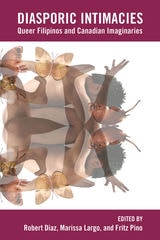
Diasporic Intimacies
Queer Filipinos and Canadian ImaginariesEdited by Robert Diaz, Marissa Largo, and Fritz Pino
Northwestern University Press, 2018
Addressing a wide range of issues beyond the academy, the authors present a rich and under-studied archive of personal reflections, in-depth interviews, creative works, and scholarly essays. Their trandsdisciplinary approach highlights the need for queer, transgressive, and utopian practices that render visible histories of migration, empire building, settler colonialism, and globalization.
Timely, urgent, and fascinating, Diasporic Intimacies offers an accessible entry point for readers who seek to pursue critically engaged community work, arts education, curatorial practice, and socially inflected research on sexuality, gender, and race in this ever-changing world.

Diversity
Gender, Color, and CulturePhilomena Essed
University of Massachusetts Press, 1996
Essed examines these problems in a series of interrelated essays, urging us throughout the book to create a society in which diversity is accepted, encouraged, and made central to everyday life.

Horizon, Sea, Sound
Caribbean and African Women's Cultural Critiques of NationAndrea A. Davis
Northwestern University Press, 2022
In Horizon, Sea, Sound: Caribbean and African Women’s Cultural Critiques of Nation, Andrea Davis imagines new reciprocal relationships beyond the competitive forms of belonging suggested by the nation-state. The book employs the tropes of horizon, sea, and sound as a critique of nation-state discourses and formations, including multicultural citizenship, racial capitalism, settler colonialism, and the hierarchical nuclear family.
Drawing on Tina Campt’s discussion of Black feminist futurity, Davis offers the concept future now, which is both central to Black freedom and a joint social justice project that rejects existing structures of white supremacy. Calling for new affiliations of community among Black, Indigenous, and other racialized women, and offering new reflections on the relationship between the Caribbean and Canada, she articulates a diaspora poetics that privileges our shared humanity. In advancing these claims, Davis turns to the expressive cultures (novels, poetry, theater, and music) of Caribbean and African women artists in Canada, including work by Dionne Brand, M. NourbeSe Philip, Esi Edugyan, Ramabai Espinet, Nalo Hopkinson, Amai Kuda, and Djanet Sears. Davis considers the ways in which the diasporic characters these artists create redraw the boundaries of their horizons, invoke the fluid histories of the Caribbean Sea to overcome the brutalization of plantation histories, use sound to enter and reenter archives, and shapeshift to survive in the face of conquest. The book will interest readers of literary and cultural studies, critical race theories, and Black diasporic studies.
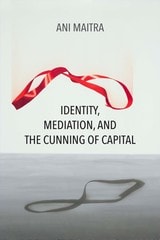
Identity, Mediation, and the Cunning of Capital
Ani Maitra
Northwestern University Press, 2020
Maitra’s archive is transnational and multimodal. Moving from anticolonial polemics to psychoanalysis to diasporic experimental literature to postcolonial feminist and queer media, he lays bare the cunning by which capitalism produces and fragments identity through an intermedial “aesthetic dissonance” with the commodity form. Maitra’s novel contribution to theories of identity and to the concept of mediation will interest a wide range of scholars in media studies, critical race and postcolonial studies, and critical aesthetics.

Interstices
Negotiations at Contemporary Art’s BoundariesAlexander Alberro
University of Chicago Press, 2025
With this book, Alexander Alberro engages decolonial theory to explore the dynamic exchanges that occur where the ideals and values of different artistic frameworks meet. Resisting notions of a singular art world and global contemporary art, Alberro explores what lies outside of Western art’s hegemonic presence, recognizing the rich multitude of art formations at its periphery, each with its own artistic narratives and conventions. Alberro brings into focus the complex negotiations that are cultivating innovation and transformation at the margins of Western art, showing how this seemingly monolithic framework is both crucial to and insufficient for a comprehensive understanding of contemporary art.
His examples include artists and collectives from around the world, including Iosu Aramburu, Subhankar Banerjee, Yto Barrada, Mabe Bethônico, El Colectivo, Maria Galindo and Mujeres Creando, Bouchra Khalili, Multiplicity, Lucy Orta, Raqs Media Collective, Tracey Rose, Doris Salcedo, Yinka Shonibare, World of Matter, and Yin Xiuzhen. As notions of transculturation and decoloniality continue to drive conversations about contemporary art, Interstices offers a critical explanation of what is at stake, showing how the tensions at the edges of the Western art framework are pushing it toward its discursive limits.
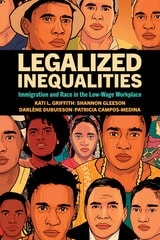
Legalized Inequalities
Immigration and Race in the Low-wage WorkplaceKati L. Griffith
Russell Sage Foundation, 2025
Drawing on interviews with over three hundred low-wage Haitian and Central American workers and worker advocates, Griffith, Gleeson, Dubuisson, and Campos-Medina reveal how U.S. policies produce and sustain job instability and insecurity. Together, contemporary U.S. labor and employment law, immigration policy, and enduring racial inequality work in tandem to keep workers’ wages low, lock them into substandard working conditions, and minimize opportunities to push for change. Workplace regulations meant to protect workers are weak and underenforced, privileging employers over workers. At-will employment policies, which allow employers to terminate employees without cause, discourage workers from bargaining for better jobs or holding employers accountable for even the most egregious mistreatment. Federal immigration policy further disempowers workers by deputizing employers to act as immigration enforcement agents through immigration status verification requirements. Undocumented workers often believe they must endure maltreatment or risk deportation. Anti-immigrant sentiment—encouraged by U.S. policy—impacts workers across all status groups. Additionally, despite a proliferation of civil rights legislation, racial disparities remain in the workplace. Workers of color are often paid less, forced to complete more dangerous and demeaning tasks, and subjected to racial harassment.
While these workers face formidable barriers to fighting for their rights, they are not entirely powerless. Some low-wage workers filed formal complaints with government agencies. Others, on their own or collectively, confronted their employers to demand fair and dignified treatment. Some even quit in protest of their poor working conditions. The authors argue that reforming labor and employment law, immigration law, and Civil Rights law is necessary to reshape the low-wage workplace. They suggest increasing funding for workers’ rights enforcement agencies, removing the mandate for employers to verify a worker’s immigration status, and making it easier to prove that employment discrimination has occurred, among other policy proposals, to help empower and protect low-wage immigrant workers of color.
Legalized Inequalities not only highlights the crushing consequences of U.S. policy on low-wage immigrant workers of color but showcases their resilience in the face of these obstacles.

Mixed Heritage in the Family
Racial Identity, Spousal Choice, and ChildrearingCarolyn Liebler
Russell Sage Foundation, 2025
Liebler and Song break new ground by being the first to combine and integrate the study of three aspects of life for people of mixed racial heritage – identity, spouse choice, and childrearing. This integrated approach reveals how complicated racial identification can be, and how it can be expressed in one’s choice of partner or in how one raises their children. The authors draw on census data and interviews with Asian-White, Black-White, and American Indian/Alaska Native-White mixed people to better understand how their identity choices are related to their choice of spouse and how they racially identify and raise their children.
Increasingly, mixed people in the United States are identifying with multiple races. However, the authors find that mixed-race people are not a monolith and that how and why they identify varies considerably between and within each group. They found several common factors that influenced whether mixed-race people choose to identify as biracial, solely White, or solely as a racial minority. These factors include the history of the specific minority race in the U.S., the racial demographics of where they were raised, their social and cultural exposure to their White and non-White backgrounds, their attachment to their racial backgrounds, and how they are seen racially by others.
The way mixed-heritage people identify was closely tied to the race of their spouse. However, having a White spouse did not necessarily mean the mixed-race person felt disconnected from their non-White heritage. White spouses varied in their racial consciousness and their interest in the culture of their mixed-race spouse’s minority ancestry. The spouse’s race, and the nature of racial overlap between the spouses, was also key in the racial upbringing of a mixed-heritage person’s child. In families where the parents share a minority racial heritage, couples lean into their shared ‘family race’, which guides their parenting choices and family life. Many mixed heritage parents found it important to foster racial pride in their children and combat negative racial stereotypes.
Liebler and Song caution against making superficial predictions about the state of race relations in the U.S. based on an increase in the multiracial population. They show that race has not become less salient in the lives of many mixed-race people—American society is not post-racial.
Mixed Heritage in the Family breaks new ground, provides compelling insights in its examination of the lives of mixed-race people, and shows how complicated racial identification can be.

Naming Racism, Confronting Anti-Blackness
Mexican American Transnational Racialization and Coalition BuildingBianca Sofia Rubalcava
Rutgers University Press, 2026
What happens when we move beyond a Black-and-white understanding of racism? This provocative book challenges conventional narratives by exploring how Mexican Americans navigate the US racial hierarchy—not simply as victims of white supremacy but as complex participants in systems of racial oppression. Tracing the construction of race from colonial regimes to the present, author Bianca Sofia Rubalcava argues that non-Black people of color, particularly Mexican Americans, often negotiate their racial position by distancing themselves from Blackness. Through legal history, social movement archives, and survey data, this work reveals how anti-Blackness has persisted across borders and generations, from the pursuit of legal whiteness to enduring family biases around interracial relationships. Ultimately, the book offers a powerful critique of how anti-Black ideologies hinder cross-racial solidarity and perpetuate marginalization. A bold and necessary intervention, this study pushes the Latinx community—and all readers—to confront complicity and reimagine racial justice in more inclusive and transformative ways.
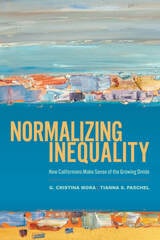
Normalizing Inequality
How Californians Make Sense of the Growing DivideG. Cristina Mora
Russell Sage Foundation, 2026
California has long been mythologized as the quintessential land of opportunity and reinvention—a place where anyone, regardless of origin, can forge a new life and realize their aspirations. Yet beneath this gilded narrative lies a starker reality: California ranks among the most unequal states in one of the world's most unequal countries, where the middle class finds itself increasingly squeezed. Economic inequality is not an anomaly but part of a broader global phenomenon, as disparities deepen across the world. While we know a lot about its contours, its evolution over time and its intersections with race and immigration, we understand far less about how ordinary people interpret and internalize it. In Normalizing Inequality, sociologists G. Cristina Mora and Tianna S. Paschel illuminate how middle-class Californians perceive and come to accept the inequalities that surround them.
Drawing on extensive interviews and surveys, Mora and Paschel uncover a profound paradox at the heart of middle-class consciousness. They find that Californians are keenly aware of the systemic causes of inequality—they recognize policies engineered to benefit the wealthy, they acknowledge how structural racism makes it hard for some groups to get ahead—yet they consistently minimize these forces. Instead, they gravitate toward explanations rooted in individualism, moral character, and the idea that things are worse in other places. Racism and racial inequality in California become palatable when framed as "not as bad as the South." Immigrant exploitation, however severe, transforms into evidence of the American Dream fulfilled simply upon arrival. Economic pressures that displace others become surmountable through personal industriousness and forbearance.
These beliefs about inequality grow more troubling still. Middle-class Californians sometimes blame disempowered people for their circumstances—acknowledging structural barriers facing homeless and undocumented populations while simultaneously faulting them for insufficient drive or criminal behavior that compounds their difficulties. When contemplating California's future, interviewees envision economic prosperity propelled by technological innovation, yet remain curiously unconcerned with how present inequalities might shape that tomorrow. Their imagined future is one where White and Asian American populations thrive, while Black, Latino, and economically marginalized Californians either vanish through displacement or fade into irrelevance. As respondents use these interpretive frameworks to make sense of inequality, they lean heavily on California's foundational narratives of opportunity, sanctuary and multiracial promise.
Normalizing Inequality offers an incisive examination of how ordinary citizens make sense of inequality and, through that very process of sense-making, how they tolerate and passively reproduce the conditions they often claim to deplore.

Not Yet a Placeless Land
Tracking an Evolving American GeographyWilbur Zelinsky
University of Massachusetts Press, 2011
In this book, cultural geographer Wilbur Zelinsky challenges that nearly universal view and reaches a paradoxical conclusion: that American land and society are becoming more uniform and more diverse at the same time. After recounting the many ways in which modern technologies, an advanced capitalist market system, and a potent central political establishment have standardized the built landscape of the country's vast territory and its burgeoning population over the past two hundred and fifty years, he also considers the vigor of countervailing forces. In a carefully balanced assessment, he documents steady increases in the role of the unpredictable, in the number and variety of arbitrarily located places and activities, and the persistence of basic cultural diversities. Contrary to popular perceptions, place-to-place differences in spoken language, religion, and political behavior have not diminished or disappeared. In fact, Zelinsky shows, novel cultural regions and specialized cities have been emerging even as a latter-day version of regionalism and examples of neo-localism are taking root in many parts of the United States.
RSF
The Russell Sage Foundation Journal of the Social SciencesJennifer Lee
Russell Sage Foundation, 2026
Stereotyped as “model minorities” who excel in the classroom, Asian Americans are more highly educated than all other U.S. groups. Once in the labor market, they outearn White Americans. Some believe this is evidence that White privilege, racial bias, and gender discrimination are fictitious narratives of a liberal “woke” agenda. Others use it as proof that confirms their stereotypes that Asian Americans are inherently smarter and harder working than other groups. While much attention has focused on Asian Americans’ academic achievement, far less research considers whether their later careers mirror their early success. In this issue of RSF, sociologists Jennifer Lee, Kimberly Goyette, Xi Song, and Yu Xie, management scholar Jackson G. Lu, and an interdisciplinary group of contributors examine how Asian Americans fare in the workplace.
The ten articles in this issue examine the ways in which Asian Americans, due to geographic clustering, are advantaged at a national level but disadvantaged at the regional level, how gender, family, and marriage impact Asian Americans in the workplace, and the different ways Asian Americans strategically adapt to the labor market. Robert Manduca and Jane Furey reveal that while, on average, Asian Americans outearn White Americans at a national level, when compared to Whites living in the same metropolitan area, Asians earn only 88 percent as much. Sharon Sassler and Gabrielle Sorresso find that among computer science professionals, Indian women have a larger gender wage gap than White and Chinese women and experience larger marriage and parenthood penalties in earnings. Sojung Lim and Wonjeong Jeong show that Asian women are more likely to live with extended family than White women, leading to higher rates of employment among Asian women with children. Angelina Grigoryeva finds that while Asian Americans are more likely to receive stock-based compensation than White Americans, this is because they are more likely to work in jobs where stock options are provided. Asians and Whites working in the same types of jobs are equally likely to receive stock-based compensation and in similar amounts. Shih-Chun Chien and colleagues find that despite being the fastest-growing racial minority group entering the legal profession, Asian Americans are underrepresented in leadership positions. They find this pattern is attributed, in part, to employers’ pervasive stereotypes that Asian Americans lack traits typically associated with leadership, such as creativity and assertiveness.
This issue of RSF reveals that the perception of the Asian American advantage in the workplace is illusory and sheds light on the lived experiences of the “model minority” when they go to work.
Race/Class Conflict and Urban Financial Threat
Jennifer L. Hochschild
Russell Sage Foundation, 2024
Hochschild investigates the root causes of disputes in the arenas of policing, development, schooling, and budgeting. She finds that race and class are central to the Stop-Question-Frisk policing policy in New York City and the development of Atlanta’s Beltline. New York’s Stop-Question-Frisk policy was intended to fight crime and keep all New Yorkers safe. In practice, however, young Black and Latino men in low-income neighborhoods were disproportionately stopped by a predominantly White police force. The goal of the Atlanta Beltline, a redevelopment project that includes public parks, new housing, commercial development, and a robust public transit system, is to expand access around the city and keep working-class residents in the city by constructing affordable housing. Instead, the construction completed thus far has encouraged gentrification and displacement of poor, disproportionately Black residents, and has increased the wealth and power of both Black and White city elites.
However, Hochschild finds that race and class inequality are not central to all urban policy disputes. When investigating the issues of charter schools in Los Angeles and Chicago’s pension system she identifies a third driver: financial threat that feels existential to the policy and political actors. In Los Angeles, there is a battle between traditional public schools and independent charter schools. Increasingly, families with sufficient resources are moving out of L.A. to areas with better school districts. Traditional public schools and charter schools must fight for the remaining students and the funding that comes with them. There are not enough students to teach and not enough money to teach them. The school district risks school closures, layoffs, and pension deficits; in this context, race/class conflict fades into the background.
Chicago’s public sector pension debt is at least three times as large as the city’s annual budget and continues to grow. Policy actors agree that the pension system needs to be stably funded. Yet city leaders, fearful of upsetting constituents and jeopardizing their political careers, fail to implement policies that would do so. Meaningful policy change to rectify the pension deficit continues to get kicked down the line for future policy actors to address. In this context also, race/class conflict fades into the background.
Race/Class Conflict and Urban Financial Threat is a compelling examination of the role that race, class, and political and fiscal threat play in shaping urban policy.
Teaching with Tension
Race, Resistance, and Reality in the ClassroomEdited by Philathia Bolton, Cassander L. Smith, and Lee Bebout
Northwestern University Press, 2019
Drawing together personal reflection, pedagogical strategies, and critical theory, Teaching with Tension offers concrete examinations that will foster student learning. The essays are organized into three thematic sections: "Teaching in Times and Places of Struggle" examines the dynamics of teaching race during the current moment, marked by neoconservative politics and twenty-first century freedom struggles. "Teaching in the Neoliberal University" focuses on how pressures and exigencies of neoliberalism (such as individualism, customer-service models of education, and online courses) impact the way in which race is taught and conceptualized in college classes. The final section, "Teaching How to Read Race and (Counter)Narratives," homes in on direct strategies used to historicize race in classrooms comprised of millennials who grapple with race neutral ideologies. Taken together, these sections and their constitutive essays offer rich and fruitful insight into the complex dynamics of contemporary race and ethnic studies education.

Texas-Style Exclusion
Mexican Americans and the Legacy of Limited OpportunityJennifer Van Hook
Russell Sage Foundation, 2024
Drawing on census and archival data on the quality of public schooling, Van Hook and Bachmeier find that Industrial Era European immigrants, who were primarily located in the northeastern U.S., benefited from programs and policies championed by the Americanization and Progressive movements. The Americanization movement sought to help acclimate new arrivals and transform “foreigners” into “Americans” by providing night school programs to promote civic integration and basic education, as well as other services. The Progressive movement, which aimed to improve education, work, and health conditions, sought to expand investment in public schools and make primary and secondary schooling mandatory, which kept working class children in school as opposed to entering the workforce. This access to education allowed for integration and astonishing intergenerational mobility.
Mexican immigrants in the 1920s and 1930s, the majority of whom resided in Texas, had radically different experiences from their European counterparts. Mexicans in Texas were subjected to racism, segregation, labor exploitation, and intentional school failures. This resulted in tremendous generational disadvantage that persists to the current day. Mexicans from this cohort who left Texas for states with strong Americanization and Progressive movements saw improved educational outcomes and integration. Additionally, Mexicans who immigrated after the Civil Rights Movement saw significantly greater inter-generational mobility and educational attainment than earlier cohorts due to the protections provided by civil rights laws. Van Hook and Bachmeier conclude that whether one is optimistic or pessimistic about the integration of Mexican Americans depends on when and where one looks.
Texas-Style Exclusion is an engaging examination of policies and practices that have been glossed over and forgotten that promoted mobility and integration for certain immigrant groups and impeded them for others.
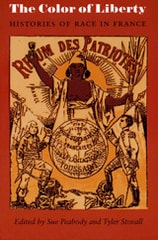
The Color of Liberty
Histories of Race in FranceSue Peabody and Tyler Stovall, eds.
Duke University Press, 2003
The Color of Liberty addresses four major themes: the evolution of race as an idea in France; representations of "the other" in French literature, art, government, and trade; the international dimensions of French racial thinking, particularly in relation to colonialism; and the impact of racial differences on the shaping of the modern French city. The many permutations of race in French history—as assigned identity, consumer product icon, scientific discourse, philosophical problem, by-product of migration, or tool in empire building—here receive nuanced treatments confronting the malleability of ideas about race and the uses to which they have been put.
Contributors. Leora Auslander, Claude Blanckaert, Alice Conklin, Fred Constant, Laurent Dubois, Yaël Simpson Fletcher, Richard Fogarty, John Garrigus, Dana Hale, Thomas C. Holt, Patricia M. E. Lorcin, Dennis McEnnerney, Michael A. Osborne, Lynn Palermo, Sue Peabody, Pierre H. Boulle, Alyssa Goldstein Sepinwall, Tyler Stovall, Michael G. Vann, Gary Wilder
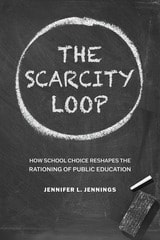
The Scarcity Loop
How School Choice Reshapes the Rationing of Public Educationjennings
Russell Sage Foundation, 2026
School choice promises to free families from the limits of where they live. The Scarcity Loop asks what happens when that promise is made in school systems where more children seek desirable schools than those schools can serve. Focused on New York City’s high school admissions system, sociologist Jennifer L. Jennings argues that choice becomes another way to ration scarce educational opportunity, shifting where rationing happens, who must manage it, and how families understand the outcomes that follow.
Jennings begins with the admissions process itself. New York City asks every eighth grader to choose from hundreds of options. On paper, the system offers extraordinary possibility. But that possibility still has to be converted into a seat. Someone has to learn the rules, compare schools, manage deadlines, make trips, and decide how much risk a thirteen-year-old can bear. Jennings calls this the work of getting in and shows that the capacity to do that work is not evenly distributed. Some families enter choice systems with the fluency and flexibility to turn options into opportunity. Others confront it with fewer supports and far less room for error. Some teenagers shoulder decisions with little adult help. Counselors translate complicated rules under impossible constraints. Principals are not passive actors. Jennings shows how they recruit and adapt as they try to build schools families will choose while managing demand and reputation.
Jennings contends that reforms meant to expand access can reorganize the very competition they aim to resolve. As one barrier recedes, another becomes more consequential. Residence matters less, but advantage does not disappear; it travels through information, timing, and familiarity with the rules. Inequality persists not because nothing changes, but because advantage finds new points of entry as reforms change rules. As the work of securing opportunity shifts, so do understandings of inequality. Unequal outcomes can come to look less like consequences of how educational opportunities are organized and more like reflections of how families navigate the system.
Drawing on more than 450 interviews, participant observation, administrative data, and archival research, The Scarcity Loop follows students, parents, counselors, and principals as they navigate school choice at scale. Jennings traces who must do the work of making choice real, clarifying what is at stake when public education becomes something families must know how to secure.
The Scarcity Loop skillfully shows the consequences of scarcity in public education on schools and families, and reveals how scarcity reproduces itself, even when reforms are sincere.
JENNIFER L. JENNINGS is the Class of 1988 Professor in Domestic Policy and Professor of Sociology and Public Affairs, Princeton University

Torn
Asian/white Life and the Intimacy of ViolenceAnna M. Moncada Storti
Duke University Press, 2026

Unsettled Visions
Contemporary Asian American Artists and the Social ImaginaryMargo Machida
Duke University Press, 2008
Analyses of the work of individual artists are grouped around three major themes that Asian American artists engaged with during the 1990s: representations of the Other; social memory and trauma; and migration, diaspora, and sense of place. Machida considers the work of the photographers Pipo Nguyen-duy and Hanh Thi Pham, the printmaker and sculptor Zarina Hashmi, and installations by the artists Tomie Arai, Ming Fay, and Yong Soon Min. She examines the work of Marlon Fuentes, whose films and photographs play with the stereotyping conventions of visual anthropology, and prints in which Allan deSouza addresses the persistence of Orientalism in American popular culture. Machida reflects on Kristine Aono’s museum installations embodying the multigenerational effects of the internment of Japanese Americans during World War II and on Y. David Chung’s representations of urban spaces transformed by migration in works ranging from large-scale charcoal drawings to multimedia installations and an “electronic rap opera.”

Vetting for Passion
Race, Gender, and Inequalities in the Veterinary ProfessionAdilia E. E. James
Temple University Press, 2027
Despite calls from industry associations for a diverse workforce to meet a changing client base, racial and gendered occupational segregation persists in the veterinary profession. As of 2018, nearly 90% of veterinarians identify as White and more than 70% are women. Adilia James explains the causes and effects of this growing and alarming trend in Vetting for Passion.
James interviews aspiring and employed veterinarians about why marginalized groups are, ironically, not making equitable progress in an elite labor market that encourages diversity and inclusion policies. She shows how cultural and structural barriers exclude people of color from the profession and how relationships with animals are used as racialization tools. People of color are also hindered by factors such as social and lived experiences, the debt-to-income ratio, and an uncomfortable working environment.
Additionally, James finds that hiring managers, veterinary schools, and mentors rely on “constrained choice narratives” to justify their assumption that only White women are likely to appreciate the unique benefits of a career in veterinary medicine, leading these gatekeepers to excuse their opportunity hoarding as benevolent.
Vetting for Passion offers a critical case study of a profession whose associations, colleges, and workplaces justify and perpetuate a culture of racial exclusion.
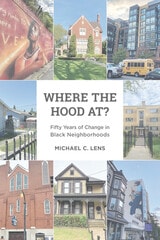
Where the Hood At?
Fifty Years of Change in Black NeighborhoodsMichael C. Lens
Russell Sage Foundation, 2024
Hip hop music was born out of Black neighborhoods in the 1970s and has evolved alongside them. In Where the Hood At? Lens uses rap’s growth and influence across the country to frame discussions about the development and conditions of Black neighborhoods. Lens finds that social and economic improvement in Black neighborhoods since the 1970s has been slow. However, how well Black neighborhoods are doing varies substantially by region. Overall, Black neighborhoods in the South are doing well and growing quickly. Washington D.C. and Atlanta, in particular, stand out as centers of Black affluence. Black neighborhoods in the Midwest and the Rust Belt, on the other hand, are particularly disadvantaged. The welfare of Black neighborhoods is related not only to factors within neighborhoods, such as the unemployment rate, but also to characteristics of the larger metropolitan area, such as overall income inequality. Lens finds that while gentrification is increasingly prevalent, it is growing slowly, and is not as pressing an issue as public discourse would make it seem. Instead, concentrated disadvantage is by far the most common and pressing problem in Black neighborhoods.
Lens argues that Black neighborhoods represent urban America’s greatest policy failures, and that recent housing policies have only had mild success. He provides several suggestions for policies with the goal of uplifting Black neighborhoods. One radical proposal is enacting policies and programs, such as tax breaks for entrepreneurs or other small business owners, that would encourage Black Americans to move back to the South. Black Americans migrating South would have a better chance at moving to an advantaged Black neighborhood as improving neighborhood location is higher when moving across regions. It would also help Black Americans expand their political and economic power. He also suggests a regional focus for economic development policies, particularly in the Midwest where Black neighborhoods are struggling the most. One way to boost economic development would be to move federal agencies to the area. He also calls for building more affordable housing in Black suburbs. Black poverty is lower in suburbs than in central cities, so increasing housing in Black suburbs would allow Black households to relocate to more advantaged neighborhoods, which research has shown leads to improved life outcomes.
Where the Hood At? is a remarkable and comprehensive account of Black neighborhoods that helps us to better understand the places and conditions that allow them flourish or impedes their advancement.