Results by title
38 books match the query 'Documentary photography'
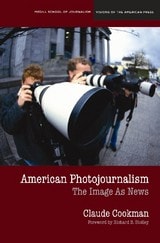
American Photojournalism
Motivations and MeaningsClaude Cookman
Northwestern University Press, 2009
Photojournalism has long been the medium of urgency and social change. It has profoundly affected American public opinion, going back at least to Mathew Brady's images from the Civil War. In American Photojournalism: Motivations and Meanings, Claude Cookman explores the history and future of the medium through the work of such exemplary photojournalists as Jacob Riis, Dorothea Lange, Weegee, Margaret Bourke-White, W. Eugene Smith, Gordon Parks, Rich Clarkson, and Carol Guzy, among others. The traditional approach to studying American photojournalism explains the what and who of photojournalism--what events and developments occurred, what notable images were taken, and who took them. Without neglecting these concerns, American Photojournalism emphasizes the why. Cookman argues convincingly that contemporary photojournalism is grounded in the desire to witness and record history, and the embrace of a universal humanism. Unafraid to engage questions of truth and intentionality, American Photojournalism will only become more relevant as the medium evolves.
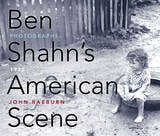
Ben Shahn's American Scene
Photographs, 1938John Raeburn
University of Illinois Press, 2010
The paintings, murals, and graphics of Ben Shahn (1898-1969) have made him one of the most heralded American artists of the twentieth century, but during the 1930s he was also among the nation's premier photographers. Much of his photographic work was sponsored by the New Deal's Farm Security Administration, where his colleagues included Dorothea Lange and Walker Evans.
Ben Shahn's American Scene: Photographs, 1938 presents one hundred superb photographs from his most ambitious FSA project, a survey of small-town life in the Depression. John Raeburn's accompanying text illuminates the thematic and formal significance of individual photographs and reveals how, taken together, they address key cultural and political issues of the years leading up to World War II. Shahn's photographs highlight conflicts between traditional values and the newer ones introduced by modernity as represented by the movies, chain stores, and the tantalizing allure of consumer goods, and they are particularly rich in observation about the changes brought about by Americans' universal reliance on the automobile. They also explore the small town's standing as the nation's symbol of democratic community and expose the discriminatory social and racial practices that subverted this ideal in 1930s America.
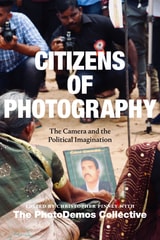
Citizens of Photography
The Camera and the Political ImaginationEdited by Christopher Pinney with the PhotoDemos Collective (Naluwembe Binaisa, Vindhya Buthpitiya, Konstantinos Kalantzis, Christopher Pinney, Ileana L. Selejan, and Sokphea Young)
Duke University Press, 2023
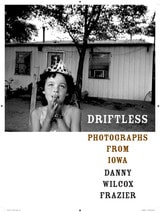
Driftless
Photographs from IowaDanny Wilcox Frazier
Duke University Press, 2007
Robert Frank, Prize Judge
In Driftless, Danny Wilcox Frazier’s dramatic black-and-white photographs portray a changing Midwest of vanishing towns and transformed landscapes. As rural economies fail, people, resources, and services are migrating to the coasts and cities, as though the heart of America were being emptied. Frazier’s arresting photographs take us into Iowa’s abandoned places and illuminate the lives of those people who stay behind and continue to live there: young people at leisure, fishermen on the Mississippi, veterans on Memorial Day, Amish women playing cards, as well as more recent arrivals: Lubavitcher Hasidic Jews at prayer, Latinos at work in the fields. Frazier’s camera finds these newcomers while it also captures activities that seemingly have gone on forever: harvesting and hunting, celebrating and socializing, praying and surviving.
This collection of photographs is a portrait of contemporary rural Iowa, but it is also more that that. It shows what is happening in many rural and out-of-the-way communities all over the United States, where people find ways to get by in the wake of closing factories and the demise of family farms. Taken by a true insider who has lived in Iowa his entire life, Frazier’s photographs are rich in emotion and give expression to the hopes and desires of the people who remain, whose needs and wants are complicated by the economic realities remaking rural America. Poetic and dark but illuminated with flashes of insight, Frazier’s stunning images evoke the brilliance of Robert Frank’s The Americans.
To view an image gallery, click here.
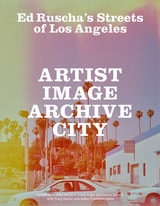
Ed Ruscha's Streets of Los Angeles
Artist, Image, Archive, CityAndrew Perchuk
J. Paul Getty Trust, The, 2025
In 1966, Ed Ruscha drove a car rigged with a motorized camera to capture Los Angeles’ most iconic street: Sunset Boulevard. He created a time capsule of its famed facades, beginning a sixty-year-long commitment to documenting the changing urban landscape of postwar Los Angeles. The Streets of Los Angeles project that comprises these photographs is likely the most comprehensive artistic record of any city, with over 900,000 images of major thoroughfares. Ruscha’s photographs constitute an unparalleled visual chronicle of both iconic and everyday sites in L.A., including popular music venues, neighborhood restaurants, and billboards promoting Hollywood’s latest blockbusters.
In this volume, scholars from disciplines such as urban planning, cultural geography, architecture, art history, and musicology explore the Streets of Los Angeles Archive as a rich repository for analyzing Ruscha’s practice and the city’s visual culture. Using his photographs and new data visualizations, the authors consider what it means to interpret an archive mostly accessible through digital technologies, and they demonstrate how histories of art have been indelibly reshaped since the advent of the information age in the 1960s.
This publication was created using Quire™, a multiformat publishing tool from Getty. The free online edition of this open-access publication is available at www.getty.edu/publications/ruscha/ and includes video, data visualizations, and zoomable illustrations. Free PDF and EPUB downloads of the book are also available.
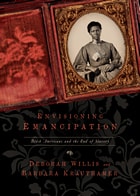
Envisioning Emancipation
Black Americans and the End of SlaveryDeborah Willis
Temple University Press, 2017
The Emancipation Proclamation is one of the most important documents in American history. As we commemorate its 150th anniversary, what do we really know about those who experienced slavery?
In their pioneering book, Envisioning Emancipation, renowned photographic historian Deborah Willis and historian of slavery Barbara Krauthamer have amassed 150 photographs—some never before published—from the antebellum days of the 1850s through the New Deal era of the 1930s. The authors vividly display the seismic impact of emancipation on African Americans born before and after the Proclamation, providing a perspective on freedom and slavery and a way to understand the photos as documents of engagement, action, struggle, and aspiration.
Envisioning Emancipation illustrates what freedom looked like for black Americans in the Civil War era. From photos of the enslaved on plantations and African American soldiers and camp workers in the Union Army to Juneteenth celebrations, slave reunions, and portraits of black families and workers in the American South, the images in this book challenge perceptions of slavery. They show not only what the subjects emphasized about themselves but also the ways Americans of all colors and genders opposed slavery and marked its end.
Filled with powerful images of lives too often ignored or erased from historical records, Envisioning Emancipation provides a new perspective on American culture.
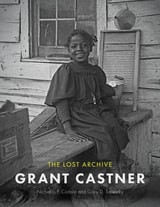
Grant Castner
The Lost ArchiveNicholas P. Ciotola
Rutgers University Press, 2026
Castner’s glass plate negatives are a visual record of New Jersey’s social and cultural history. His many human subjects are rich and poor, young and old, Black and white. They are at work, at play, at home, and in the community. Castner also documented social change brought about by electricity, engineering, education, industry, and transportation. He captured the excitement of public amusements such as parades and fairs. He recorded the aftermath of floods, fires and other disasters. Castner also had a fondness for the outdoors. He used his camera to reflect on the beauty and tranquility that he found in the natural landscapes of New Jersey.
This book presents the collective work of Grant Castner, an amateur artist whose place in New Jersey history was, until now, completely unknown. His photographic negatives forever preserve pinpoint moments in the past. They are time machines to another era. Let this long lost archive transport you on a visual journey into a New Jersey of days gone by.
Humane Insight
Looking at Images of African American Suffering and DeathCourtney Baker
University of Illinois Press, 2017

It Was Always About the Work
A Photojournalist's MemoirMelvin Grier
Ohio University Press, 2023
Over the last six decades, Melvin Grier’s work has vividly portrayed community, humanity, irony, fear, war, elegance, art, and, most notably, the unexpected. It Was Always About the Work includes nearly one hundred black-and-white and color photographs, including photographs from Grier’s most famous exhibitions and news stories. Whether covering local events, Cincinnati life, impoverished villages overseas, young future Marines on their way to their first post, or high fashion, Grier's photos are unmistakable and evocative.
Starting with his early years as a boy growing up in Cincinnati, this book tells the story of a young man who won his first photo contest while in the Air Force. He came home determined to make a career as a photographer, and, despite his lack of formal training and experience, he secured a job as a photographer for the Cincinnati Post. After the closure of the Cincinnati Post in 2007, Grier continued his career as an independent artist, featuring work in exhibitions such as “White People: A Retrospective” and “Clothes Encounters.” In collaboration with one of his journalist partners, reporter Molly Kavanaugh, Grier shares why it was always about the work.
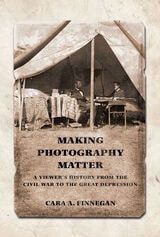
Making Photography Matter
A Viewer's History from the Civil War to the Great DepressionCara Finnegan
University of Illinois Press, 2017
Cara A. Finnegan analyzes a wealth of newspaper and magazine articles, letters to the editor, trial testimony, books, and speeches produced by viewers in response to specific photos they encountered in public. From the portrait of a young Lincoln to images of child laborers and Depression-era hardship, Finnegan treats the photograph as a locus for viewer engagement and constructs a history of photography's viewers that shows how Americans used words about images to participate in the politics of their day. As she shows, encounters with photography helped viewers negotiate the emergent anxieties and crises of U.S. public life through not only persuasion but action, as well.
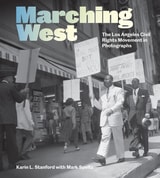
Marching West
The Los Angeles Civil Rights Movement in PhotographsKarin L. Stanford
J. Paul Getty Trust, The, 2026
This volume presents the first visual history of the people and organizations that led the fight for change during the civil rights era in Los Angeles.
During a 1963 speech to a crowd of nearly forty thousand at Wrigley Field in Los Angeles, Dr. Martin Luther King Jr. addressed the question of how Angelenos could contribute to the civil rights movement: “The most important thing that you can do is to set Los Angeles free, because you have segregation and discrimination here, and police brutality.”
Marching West illuminates the dynamic history of civil rights activism in Los Angeles and explores how the medium of photography both witnessed and advanced the fight for Black equality. Over one hundred images, some of which have never been previously published, reveal connections between the local and national movements and document the actions of Western coalitions, religious leaders, Hollywood stars, and concerned citizens. Drawn from the Tom & Ethel Bradley Center at California State University, Northridge (CSUN), the Getty Research Institute, and other Southern California collections—including prints by Harry Adams, Howard Bingham, Charles Brittin, Joe Flowers, Vera Jackson, and Charles Williams—this unprecedented volume presents less familiar but essential stories about American progress toward social justice.
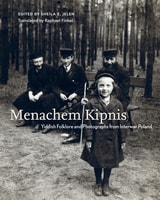
Menachem Kipnis
Yiddish Folklore and Photographs from Interwar PolandSheila E. Jelen
Rutgers University Press, 2026
Menachem Kipnis (1878–1942) was one of the early twentieth-century’s greatest Jewish eastern European ethnomusicologists, folklorists, and photographers. He had a weekly column in the Warsaw Yiddish newspaper Haynt, retelling humorous old folk stories about the fictional Polish town of Chelm, populated exclusively by fools. At the same time, his photographs of Jewish life in eastern Europe regularly appeared in the Forverts (Forward), the most popular Yiddish daily newspaper in the United States. Now, for the first time, Kipnis’s stories and photographs are published together in a single book.
Menachem Kipnis brings these photographs and stories into dialogue with one another, bridging the Jewish communities in Poland and in America during the interwar period. This dialogue, between image and text, between European metropolis and American metropolis, captures a key historical moment when American Jews sought to imagine the lives of their coreligionists in the “Old Country” and eastern European urban Jews sought to distinguish themselves from their Jewish compatriots who were still living in the shtetl. Including an introductory essay, annotations, and an epilogue by Sheila E. Jelen, Menachem Kipnis suggests new ways of understanding both visual and literary depictions of eastern European Jewish culture between the two world wars.
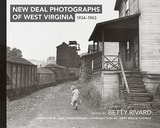
New Deal Photographs of West Virginia, 1934-1943
Betty Rivard
West Virginia University Press, 2012

No Easy Walk
Newark, 1980-1993Helen M. Stummer
Temple University Press, 1994
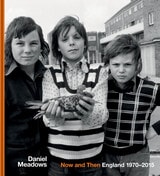
Now and Then
England 1970-2015Daniel Meadows
Bodleian Library Publishing, 2019
This book includes important work from Meadows’s groundbreaking projects, drawing on the archives now held at the Bodleian Library. It follows the maverick documentarian as he ran a free portrait studio in Manchester’s Moss Side in 1972 and then traveled 10,000 miles to make a national portrait from his converted double-decker, the Free Photographic Omnibus, a project he revisited a quarter-of-a-century later. The book goes on to show how, at the turn of the millennium, Meadows adopted new “kitchen table” technologies to make digital stories, which he dubbed “multimedia sonnets from the people.” Through the unique voices of his subjects, Meadows has made and continues to make moving and insightful commentaries on life in Britain.
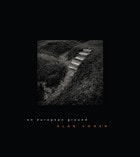
On European Ground
Alan Cohen
University of Chicago Press, 2001
Cohen's images achieve a solemn beauty even as they engage history at its most topical. Pictures of trenches and bunkers at the battlefields of Somme and Verdun explore the tension between the violence of the past and the inscrutability of its remnants. Photographs from the grounds of Dachau and Auschwitz solicit a provocative dialogue between the ordinariness of these sites today and their haunting memory. They teach us, as the New Art Examiner notes, "that the living perceptual connection to the Holocaust is vanishing." Images of the Berlin Wall show only the footprint of the barricade that once separated two hostile ideologies. They record the physical erosion and looming disappearance of the Wall while capturing its reappearance as a memorialized abstraction.
Accompanying the photographs in On European Ground are essays by Sander Gilman and Jonathan Bordo, as well as an interview with Cohen by critic Roberta Smith of the New York Times. The essays present both an introduction to and aesthetic analysis of Cohen's work, while the interview discusses the intractable problems of history and memory that his photographs so uniquely capture.
Photographic Returns
Racial Justice and the Time of PhotographyShawn Michelle Smith
Duke University Press, 2020
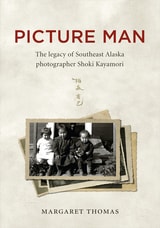
Picture Man
The Legacy of Southeast Alaska Photographer Shoki KayamoriMargaret Thomas
University of Alaska Press, 2015
In Picture Man, Margaret Thomas views Kayamori’s life through multiple lenses. Using Kayamori’s original photos, she explores the economic and political realities that sent Kayamori and thousands like him out of Japan toward opportunity and adventure in the United States, especially the Pacific Northwest. She reveals the tensions around Asian immigrants on the West Coast and the racism that sent many young men north to work in the canneries of Alaska. And she illuminates the intersecting—and at times conflicting—lives of villagers and migrants in a time of enormous change. Part history, part biography, part photographic showcase, Picture Man offers a fascinating new view of Alaska history.
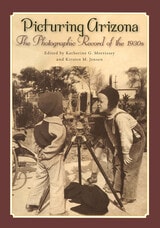
Picturing Arizona
The Photographic Record of the 1930sEdited by Katherine G. Morrissey and Kirsten Jensen
University of Arizona Press, 2005
This book places the work of local Arizonans alongside that of federal photographers both to illuminate the impact of the Depression on the state’s distinctive racial and natural landscapes and to show the influence of differing cultural agendas on the photographic record. The more than one hundred images—by well-known photographers such as Dorothea Lange and Laura Gilpin as well as by an array of less familiar photographers—represent a variety of purposes and perspectives, from public to personal, political to promotional. Six essays and three photo-essays bring together prominent authorities in history, the arts, and other fields who provide diverse perspectives on this period in Arizona and American history. Viewed together, the words and images capture a Depression-era Arizona bustling with activity as federally funded construction projects and seasonal agricultural jobs brought migrants and newcomers to the state. They convey the celebrations and the struggles of commercial photographers, archaeologists, city folks, farmers, tourists, native peoples and others in these hard times.
As the economic strains of the decade reverberated through the state, local photographers documented the lives of Arizona residents—including those frequently overlooked by historians. As this book persuasively shows, photographs can conceal as much as they reveal. A young Mexican American girl stands in front of a backdrop that hides the outhouse behind her, a deeply moving image for what it suggests about the efforts of her family to conceal their economic circumstances. Yet this image is a perfect metaphor for all the photographs in this book: stories remain hidden, but when viewers begin to question what they cannot see, pictures resonate more loudly than ever before.
This book is a history of Arizona written from the photographic record, offering a point of view that may differ from the written record. From the images and the insights of the authors, we can gain a new appreciation of how one state—and its indomitable people—weathered our nation’s toughest times.
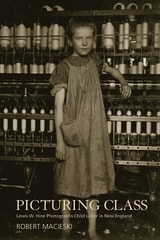
Picturing Class
Lewis W. Hine Photographs Child Labor in New EnglandRobert Macieski
University of Massachusetts Press, 2015
In this richly illustrated book, Robert Macieski examines Lewis W. Hine's art and advocacy on behalf of child laborers as part of the National Child Labor Committee (NCLC) between 1909 and 1917. A “social photographer”—as he called himself—Hine created images that documented children at work throughout New England, revealing their exploitation in the North as he had for rural working children in the South. Hine staged his images, highlighting particular types of labor in specific places: the “newsies” in Connecticut cities; sardine canners in Eastport, Maine; cranberry pickers in Cape Cod bogs; industrial homeworkers in Boston and Providence; and cotton textile workers throughout the region. His association with the NCLC connected him to a network of local and national reformers, social workers, and child welfare professionals, a broad coalition he supported in their fight to end this unethical labor practice. Macieski also chronicles Hine's efforts to mount major exhibitions that would help move public opinion against child labor.
In Picturing Class, Macieski explores the historical context of Hine's photographs and the social worlds of his subjects. He offers a detailed analysis of many of the images, unearthing the stories behind the creation of these photographs and the lives of their subjects. In telling the story of these photographs, their creation, and their reception, Macieski demonstrates how Hine worked to advance an unvarnished picture of a rapidly changing region and the young workers at the center of this important shift.

Picturing Utopia
Bertha Shambaugh and the Amana PhotographersAbigail Foerstner
University of Iowa Press, 2005
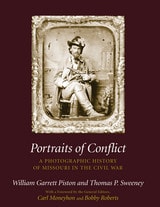
Portraits of Conflict
A Photographic History of Missouri in the Civil WarWilliam Garrett Piston
University of Arkansas Press, 2009
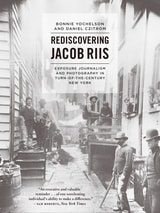
Rediscovering Jacob Riis
Exposure Journalism and Photography in Turn-of-the-Century New YorkBonnie Yochelson and Daniel Czitrom
University of Chicago Press, 2014
With Rediscovering Jacob Riis, art historian Bonnie Yochelson and historian Daniel Czitrom place Jacob Riis’s images in historical context even as they expose a clear sightline to the present. In the first half of their book, Czitrom explores Riis’s reporting and activism within the gritty specifics of Gilded Age New York: its new immigrants, its political machines, its fiercely competitive journalism, its evangelical reformers, and its labor movement. In delving into Riis’s intellectual education and the lasting impact of How the Other Half Lives, Czitrom shows that though Riis argued for charity, not sociopolitical justice, the empathy that drove his work continues to inspire urban reformers today.
In the second half of the book, Yochelson describes for the first time Riis’s photographic practice: his initial reliance on amateur photographers to take the photographs he needed, his own use of the camera, and then his collecting of photographs by professionals, who by 1900 were documenting social reform efforts for government agencies and charities. She argues that while Riis is rightly considered a revolutionary in the history of photography, he was not a photographic artist. Instead, Riis was a writer and lecturer who first harnessed the power of photography to affect social change.
As staggering inequality continues to be an urgent political topic, this book, illustrated with nearly seventy of Riis’s photographs, will serve as a stunning reminder of what has changed, and what has not.
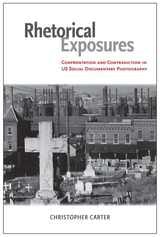
Rhetorical Exposures
Confrontation and Contradiction in US Social Documentary PhotographyChristopher Carter
University of Alabama Press, 2015
Exposing the politics of seeing: how documentary photographs confront inequality and reshape public understanding.
In Rhetorical Exposures, Christopher Carter explores social documentary photography from the nineteenth century to the present in order to illuminate the political dimensions and consequences of photographs taken and selected to highlight social injustice. Documentary photography aims to capture the material reality of life. Carter demonstrates how the creation and display of documentary photographs—often now called “imagetexts”—both invite analysis and raise persistent questions about the political and social causes for the bleak scenes of poverty and distress captured on film.
Carter’s carefully reasoned monograph examines both formal qualities of composition and the historical contexts of the production and display of documentary photographs. In Rhetorical Exposures, Carter explores Jacob Riis’s heartrending photos of Manhattan’s poor in late nineteenth-century New York, Walker Evans’s iconic images of tenant farmers in west Alabama, Ted Streshinsky’s images of 1960s social movements, Camilo José Vergara’s photographic landscapes of urban dereliction in the 1970s, and Chandra McCormick’s portraits of New Orleans’s Ninth Ward scarred by Hurricane Katrina.
While not ascribing specifically political or Marxist intentions to the photographers discussed, Carter frames his arguments in a class-based dialectic that addresses material want as an ineluctable result of social inequality. Carter argues that social documentary photography has the powerful capacity to disrupt complacent habits of viewing and to prompt viewers to confront injustice. Though photography may induce socially disruptive experiences, it remains vulnerable to the same power dynamics it subverts. Therefore, Carter offers a “rhetoric of exposure” that outlines how such social documentary images can be treated as highly tensioned rhetorical objects. His framework enables the analysis of photographs as heterogeneous records of the interaction of social classes and expressions of specific built environments. Rhetorical Exposures also discusses how photographs interact with oral and print media and relate to creations as diverse as public memorials, murals, and graphic novels.
As the creation and dissemination of new media continues to evolve in an environment of increasing anxiety about growing financial inequality, Rhetorical Exposures offers a very apt and timely discussion of the ways social documentary photography is created, employed, and understood.

Robert Frank's 'The Americans'
The Art of Documentary PhotographyJonathan Day
Intellect Books, 2011
In the mid-1950s, Swiss-born New Yorker Robert Frank embarked on a ten-thousand-mile road trip across America, capturing thousands of photographs of all levels of a rapidly changing society. The resultant photo book, The Americans, represents a seminal moment in both photography and in America's understanding of itself. To mark the book’s fiftieth anniversary, Jonathan Day revisits this pivotal work and contributes a thoughtful and revealing critical commentary. Though the importance of The Americans has been widely acknowledged, it still retains much of its mystery. This comprehensive analysis places it thoroughly in the context of contemporary photography, literature, music, and advertising from its own period through the present.
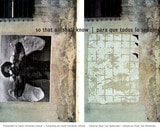
So That All Shall Know/Para que todos lo sepan
Photographs by Daniel Hernández-Salazar [Fotografías por Daniel Hernández-Salazar]Edited by/editado por Oscar Iván Maldonado
University of Texas Press, 2007
How does an artist respond to the horrors of war and the genocide of his or her people? Can art play a role in the fight for justice? These are key questions for understanding the work of Guatemalan photographer Daniel Hernández-Salazar. Since the 1980s, Hernández-Salazar has created both documentary and aesthetic works that confront the state-sponsored terrorism and mass killings of Guatemala's long civil war (1962-1996). His photographic polyptych (4-panel image) "Clarification" became the icon for the Recovery of Historical Memory project of the Archbishopric of Guatemala, as well as a rallying symbol for Guatemalans. Broadening his crusade for justice in the twenty-first century, Hernández-Salazar is now also using the shouting angel of his polyptych (entitled "So That All Shall Know") to challenge the forgetting and/or erasure of painful history in many parts of the world, including Mexico, Japan, the United States, Canada, and Argentina.
So That All Shall Know is a powerful, comprehensive overview of the work of Daniel Hernández-Salazar on recent Guatemalan history. Portfolios of images present his early photojournalistic work documenting the Guatemalan genocide; his Eros + Thanatos series that responds aesthetically to the destruction of war; and his Street Angel project, which uses his image "So That All Shall Know" to protest against injustice and historical forgetting around the world. Accompanying the images are bilingual English-Spanish essays by four scholars who discuss the development of Hernández-Salazar's art in the context of contemporary photography, the social and political conditions that inspire his work, and the broader questions that arise when artists engage in social struggle.
Introduced by Nobel Peace Laureate Rigoberta Menchú Tum, So That All Shall Know is a moving testament to the horrors of genocide and the power of art to give voice to the silenced and presence to the disappeared.
Soviet Factography
Reality without RealismDevin Fore
University of Chicago Press, 2024
This is the first major English-language study of factography, an avant-garde movement of 1920s modernism. Devin Fore charts this style through the work of its key figures, illuminating factography’s position in the material culture of the early Soviet period and situating it as a precursor to the genre of documentary that arose in the 1930s. Factographers employed photography and film practices in their campaign to inscribe facts and to chronicle modernization as it transformed human experience and society. Fore considers factography in light of the period’s explosion of new media technologies—including radio broadcasting, sound in film, and photo-media innovations—that allowed the press to transform culture on a massive scale.
This theoretically driven study uses material from Moscow archives and little-known sources to highlight factography as distinct from documentary and Socialist Realism and to establish it as one of the major twentieth-century avant-garde forms. Fore covers works of photography, film, literature, and journalism together in his considerations of Soviet culture, the interwar avant-gardes, aesthetics, and the theory of documentary.
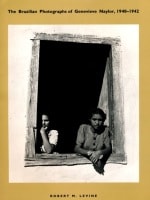
The Brazilian Photographs of Genevieve Naylor, 1940–1942
Robert M. Levine
Duke University Press, 1998
Working under the constraints of the Vargas dictatorship, the instructions of her employers, and a chronic shortage of film and photographic equipment, Naylor took advantage of the freedom granted her as an employee of the U.S. government. Traveling beyond the fashionable neighborhoods of Rio de Janeiro, she conveys in her work the excitement of an outside observer for whom all is fresh and new—along with a sensibility schooled in depression-era documentary photography of Dorothea Lange and Walker Evans, as well as the work of Cartier-Bresson and filmmaker Serge Eisenstein. Her subjects include the very rich and the very poor, black Carnival dancers, fishermen, rural peasants from the interior, workers crammed into trolleys—ordinary Brazilians in their own setting—rather than simply Brazilian symbols of progress as required by the dictatorship or a population viewed as exotic Latins for the consumption of North American travelers.
With Levine’s text providing details of Naylor’s life, perspectives on her photographs as social documents, and background on Brazil’s wartime relationship with the United States, this volume, illustrated with more than one hundred of Naylor’s Brazilian photographs will interest scholars of Brazilian culture and history, photojournalists and students of photography, and all readers seeking a broader perspective on Latin American culture during World War II.
Genevieve Naylor began her career as a photojournalist with Time, Fortune, and the Associated Press before being sent to Brazil. In 1943, upon her return, she became only the second woman to be the subject of a one-woman show at New York’s Museum of Modern Art. She served as Eleanor Roosevelt’s personal photographer and, in the 1950s and 1960s became well known for her work in Harper’s Bazaar, primarily as a fashion photographer and portraitist. She died in 1989.
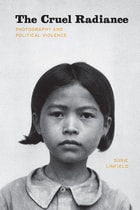
The Cruel Radiance
Photography and Political ViolenceSusie Linfield
University of Chicago Press, 2010
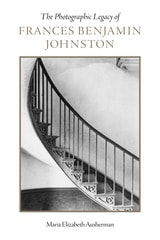
The Photographic Legacy of Frances Benjamin Johnston
Maria Elizabeth Ausherman
University of Alabama Press, 2022
An illustrated account of the life and work of the pioneering photographer
The Photographic Legacy of Frances Benjamin Johnston (1864–1952) draws on original papers and photographs from the Library of Congress to document the extraordinary life and nearly seventy-year career of this pioneering photographer. Maria Elizabeth Ausherman illuminates the early origins of Johnston’s style and vision, and her attempts to change society through her art. One of the first women to work in an emerging field dominated by men, Johnston achieved acclaim as an accomplished photographer and photojournalist.
As the official White House photographer for five administrations, she was instrumental in defining the medium and inspiring women to train in and appreciate photography. But it is her monumental nine-state survey of southern American architecture that stands as her most significant contribution to the history and development of photography both as art and as documentary. Through her photography, Johnston showed reverence for the beautiful historic buildings she appreciated and also helped shape architectural and photographic preservation in the United States.

The Weather and a Place to Live
Photographs of the Suburban WestSteven B. Smith
Duke University Press, 2005
The power of these photographs lies in part in Smith’s unusual knowledge of the places he portrays. Raised in Utah, Smith has worked on construction crews, and he was a contractor in California after living on the East Coast for a few years. When he moved to Los Angeles in 1991, he writes, “I was so astounded by what I saw happening to the landscape as it was being developed that I started photographing it immediately. The landscapes I saw were scraped bare, re-sculpted, sealed, and then covered so as not to erode away before the building process could be completed.”
Smith’s photographs offer a disturbing vision of the future of our planet, where the desire for home ownership is pitted against the costs of development in epic proportions. These altered landscapes force us to consider the consequences of human design battling natural forces across great expanses, a fragile balancing act and a contorted equation in which nature becomes both inspiration and invisible adversary. Smith’s elegant photographs of this constructed universe confront us with the beauty of images as images, yet push us to reflect on the devastation possible in the simple act of choosing a place to live.
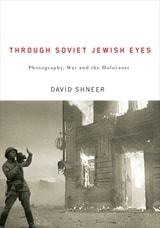
Through Soviet Jewish Eyes
Photography, War, and the HolocaustShneer, David
Rutgers University Press, 2012
These wartime photographers were the first liberators to bear witness with cameras to Nazi atrocities, three years before Americans arrived at Buchenwald and Dachau. In this passionate work, David Shneer tells their stories and highlights their work through their very own images-he has amassed never-before-published photographs from families, collectors, and private archives.
Through Soviet Jewish Eyes helps us understand why so many Jews flocked to Soviet photography; what their lives and work looked like during the rise of Stalinism, during and then after the war; and why Jews were the ones charged with documenting the Soviet experiment and then its near destruction at the hands of the Nazis.
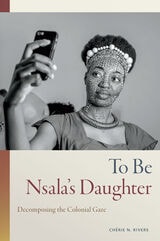
To Be Nsala's Daughter
Decomposing the Colonial GazeChérie N. Rivers
Duke University Press, 2023
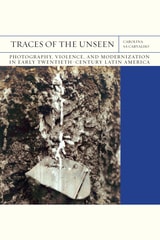
Traces of the Unseen
Photography, Violence, and Modernization in Early Twentieth-Century Latin AmericaCarolina Sá Carvalho
Northwestern University Press, 2023
Winner of the 2024 Roberto Reis Book Award
Winner of the LASA Environment Section Best Book of 2023
Winner of the LASA Amazonian Studies Section Best Book of 2024
Co-Winner of the LASA Book Award for the Visual Culture Studies 2024
A richly illustrated examination of photography as a technology for documenting, creating, and understanding the processes of modernization in turn-of-the-century Brazil and the Amazon
Photography at the turn of the twentieth century was not only a product of modernity but also an increasingly available medium to chronicle the processes of modernization. Traces of the Unseen: Photography, Violence, and Modernization in Early Twentieth-Century Latin America situates photography’s role in documenting the destruction wrought by infrastructure development and extractive capitalist expansion in the Amazon and outside the Brazilian metropole. Combining formal analysis of individual photographs with their inclusion in larger multimedia assemblages, Carolina Sá Carvalho explores how this visual evidence of violence was framed, captioned, cropped, and circulated. As she explains, this photographic creation and circulation generated a pedagogy of the gaze with which increasingly connected urban audiences were taught what and how to see: viewers learned to interpret the traces of violence captured in these images within the larger context of modernization.
Traces of the Unseen draws on works by Flavio de Barros, Euclides da Cunha, Roger Casement, Claude Lévi-Strauss, and Mario de Andrade to situate an unruly photographic body at the center of modernity, in all its disputed meanings. Moreover, Sá Carvalho locates historically specific practices of seeing within the geopolitical peripheries of capitalism. What emerges is a consideration of photography as a technology through which modern aspirations, moral inclinations, imagined futures, and lost pasts were represented, critiqued, and mourned.
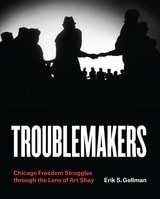
Troublemakers
Chicago Freedom Struggles through the Lens of Art ShayErik S. Gellman
University of Chicago Press, 2019
Troublemakers fuses photography and history to demonstrate how racial and economic inequality gave rise to a decades-long struggle for justice in one American city.
In dialogue with 275 of Art Shay’s photographs, Erik S. Gellman takes a new look at major developments in postwar US history: the Second Great Migration, “white flight,” and neighborhood and street conflicts, as well as shifting party politics and the growth of the carceral state. The result is a visual and written history that complicates—and even upends—the morality tales and popular memory of postwar freedom struggles.
Shay himself was a “troublemaker,” seeking to unsettle society by illuminating truths that many middle-class, white, media, political, and businesspeople pretended did not exist. Shay served as a navigator in the US Army Air Forces during World War II, then took a position as a writer for Life Magazine. But soon after his 1948 move to Chicago, he decided to become a freelance photographer. Shay wandered the city photographing whatever caught his eye—and much did. His lens captured everything from private moments of rebellion to era-defining public movements, as he sought to understand the creative and destructive energies that propelled freedom struggles in the Windy City.
Shay illuminated the pain and ecstasy that sprung up from the streets of Chicago, while Gellman reveals their collective impact on the urban fabric and on our national narrative. This collaboration offers a fresh and timely look at how social conflict can shape a city—and may even inspire us to make trouble today.

Vesna Pavlovic
StagecraftVesna Pavlovic
Vanderbilt University Press, 2021
The book includes critical essays that contextualize and expound on Pavlović's unique treatment of the photographic medium, in which a photographic moment is expanded to include the conditions of image making, production, documentation, and representation.

Walker Evans
No PoliticsBy Stephanie Schwartz
University of Texas Press, 2020
“NO POLITICS whatever.” Walker Evans made this emphatic declaration in 1935, the year he began work for FDR’s Resettlement Administration. Evans insisted that his photographs of tenant farmers and their homes, breadlines, and the unemployed should be treated as “pure record.” The American photographer’s statements have often been dismissed. In Walker Evans: No Politics, Stephanie Schwartz challenges us to engage with what it might mean, in the 1930s and at the height of the Great Depression, to refuse to work politically.
Offering close readings of Evans’s numerous commissions, including his contribution to Carleton Beals’s anti-imperialist tract, The Crime of Cuba (1933), this book is a major departure from the standard accounts of Evans’s work and American documentary. Documentary, Schwartz reveals, is not a means of being present—or being “political.” It is a practice of record making designed to distance its maker from the “scene of the crime.” That crime, Schwartz argues, is not just the Depression; it is the processes of Americanization reshaping both photography and politics in the 1930s. Historicizing documentary, this book reimagines Evans and his legacy—the complexities of claiming “no politics.”
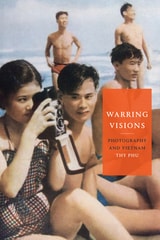
Warring Visions
Photography and VietnamThy Phu
Duke University Press, 2021