Results by title
40 books match the query 'Sport'
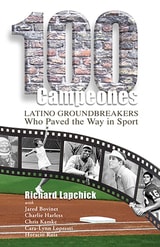
100 Campeones
Latino Groundbreakers Who Paved the Way in SportRichard Lapchick
FiT Publishing, 2011
This is much more than a group of stories that feature the talents, triumphs, and tempests of the careers of Latinos in sport. It is a book of living history, rich in culture and tradition. It is a collection of firsts, of legends, and of names that will soon become familiar to the world. The book is a treasure box of inspiring stories that were, at times, created out of dire hardship and oppression.

A Nation of Family and Friends?
Sport and the Leisure Cultures of British Asian Girls and WomenAarti Ratna
Rutgers University Press, 2024
Ratna also examines two key cultural objects - the popular films "Bend it Like Beckham" and “Dhan Dhana Dhan Goal” - to examine in detail the gendered representation of South Asian soccer players’ engagement in amateur and elite levels of the sport. She critiques studies of women’s football fandom and sport that fail to acknowledge social differences relating to race, class, age, disability, and sexuality. By linking the social forces (across time and space) that differentially affect their sporting choices and leisure lifestyles, Ratna portrays the women of the South Asian diaspora as active agents in the shaping of their life courses and as skilled navigators of the complexities affecting their own identities. Ultimately Ratna examines the intersections of class, caste, age, generation, gender, and sexuality, to provide a rich and critical exploration of British Asian women's sport and leisure choices, pleasures, and lived realities.
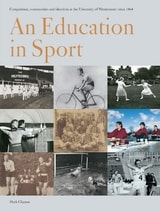
An Education in Sport
Competition, communities and identities at the University of Westminster since 1864Mark Clapson
University of Westminster Press, 2013
The story of sporting communities and individuals at the University of Westminster over 150 years is the second book to explore the institution's diverse history including its role as a pioneer of women's sports. Drawing upon the University's extensive archives this richly illustrated book celebrates its unique, ground-breaking sports heritage.

Being Mindful in Sport and Exercise Psychology
Pathways for Practitioners and StudentsSamuel J. Zizzi
FiT Publishing, 2017
Being Mindful in Sport and Exercise Psychology: Pathways for Practitioners and Students is a comprehensive resource of the many facets of mindfulness, which is interwoven with many techniques of applied sport and exercise psychology. The book expands upon the fundamentals of mindfulness theory and practice, reviews evidence of its effectiveness, and features numerous case studies that offer readers a fresh perspective of how mindfulness can be applied in diverse, real-world situations.
Child's Play
Sport in Kids' WorldsMessner, Michael A
Rutgers University Press, 2016
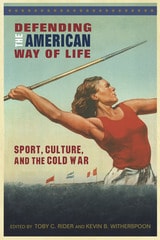
Defending the American Way of Life
Sport, Culture, and the Cold WarToby C. Rider
University of Arkansas Press, 2018
The Cold War was fought in every corner of society, including in the sport and entertainment industries. Recognizing the importance of culture in the battle for hearts and minds, the United States, like the Soviet Union, attempted to win the favor of citizens in nonaligned states through the soft power of sport. Athletes became de facto ambassadors of US interests, their wins and losses serving as emblems of broader efforts to shield American culture—both at home and abroad—against communism.
In Defending the American Way of Life, leading sport historians present new perspectives on high-profile issues in this era of sport history alongside research drawn from previously untapped archival sources to highlight the ways that sports influenced and were influenced by Cold War politics. Surveying the significance of sports in Cold War America through lenses of race, gender, diplomacy, cultural infiltration, anti-communist hysteria, doping, state intervention, and more, this collection illustrates how this conflict remains relevant to US sporting institutions, organizations, and ideologies today.
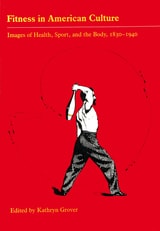
Fitness in American Culture
Images of Health, Sport, and the Body, 1830-1940Kathryn Grover
University of Massachusetts Press, 1989

Governance of Sport
Aspects and Insights, First EditionDarlene A. Kluka
FiT Publishing, 2022
Governance of Sport: Aspects and Insights provides analysis and applications relative to the governance, policies, and practices important to both profit and nonprofit sport organizations around the world. Governance of Sport explores the influence of diverse cultural contexts on sport governance practices, and provides national and international perspectives on issues relevant to transparent, ethical governance of sport. This textbook is essential reading for upper division undergraduate and graduate students around the world in sport policy, development, and management.

Interrogating Integration
Sport, Celebrity, and Scandal in the Making of New GermanyKate Zambon
University of Michigan Press, 2025
Using touchstones of public memory, including events surrounding men’s World Cup soccer and the record-breaking success of a book blaming Muslims for Germany’s decline, Zambon examines persistent problems in European conceptions of race, where racializing projects take place under an “ideology of racelessness” and the atrocities of historical and transnational racisms are used to deny current local forms of racism.

Law in Sport
Concepts and Cases: Fifth EditionJohn Grady
FiT Publishing, 2022
Designed to make introductory legal concepts and their application to sport and physical activity easy to understand, this new edition explores an array of legal issues facing the contemporary sport manager, applying concepts from the laws of negligence, intentional torts, product liability, contracts, constitution, labor, agency, intellectual property, and more. The new edition includes updated chapters and relies upon recent litigation to explore the most frequent legal issues impacting the business of sport. This new edition also presents expanded analyses of Title IX and recent NCAA litigation, and a thorough explanation of laws intended to ensure gender equity in sport. Law in Sport: Concepts and Cases, 5th edition is an invaluable resource for students interested in pursuing a career in sport management.
Leftist Theories of Sport
A Critique and ReconstructionWilliam J. Morgan
University of Illinois Press, 1994
Making the American Team
Sport, Culture, and the Olympic ExperienceMark Dyreson
University of Illinois Press, 1998
Sport dominates television and the mass media. Politics and business are a-bustle with sports metaphors. Endorsements by athletes sell us products. "Home run," "slam dunk," and the rest of the vocabulary of sport color daily conversation. Even in times of crisis and emergency, the media reports the scores and highlights.
Marky Dyreson delves into how our obsession with sport came into being with a close look at coverage of the Olympic Games between 1896 and 1912. How people reported and consumed information on the Olympics offers insight into how sport entered the heart of American culture as part of an impetus for social reform. Political leaders came to believe in the power of sport to revitalize the "republican experiment." Sport could instill a new sense of national identity that would forge a new sense of community and a healthy political order while at the same time linking America's intellectual and power elite with the experiences of the masses.
Media Relations in Sport
Fifth EditionCraig Esherick
FiT Publishing, 2020
As sport media communication has become intertwined with the frenetic pace of technology, the bywords have become global interconnectivity and versatility. Media Relations in Sport 5th edition examines the intersection and trajectory of emerging technology, platforms and trends with foundational principles of communication to prepare students and industry professionals alike with a nuanced understanding of the communication tools at their disposal that will allow them to keep pace with and succeed in a kinetic, competitive industry.
Any student interested in a career in sports media must possess a distinct set of essential skills—how to interview, how to effectively create and distribute content, and how to deal with communications problems that, given the frenetic pace and global reach of web-based media, now seem amplified. Discussions of event management, publicity campaigns, ethics, regulations, and the law are still not only relevant, but essential for today’s sports media professionals, where news travels the world at the speed of a tweet. For undergraduate and graduate level students, the 5th edition of Media Relations in Sport blends and balances how sport media communication has traditionally been crafted, and molds it to ever-evolving strategies for remaining ahead of the game.
Media Relations in Sport
Fourth EditionCraig Esherick
FiT Publishing, 2013
In recent years the model of sport media communication has changed drastically, and it continues to evolve seemingly daily. The bywords of media communication are interconnectivity, interactivity, and mobility. The fourth edition of Media Relations in Sport provides readers information on the current trends and emerging areas in the field of sport communication from technology to social media to how the global outreach of sport has affected the sports media profession. While the fourth edition rightly goes into emerging areas of the field, it also retains the focus of the first three editions, specifically on the basics and principles of sports media that remain its foundations. Any student interested in a career in sports media has to know certain essentials -- how to interview, how to effectively create and distribute content, and how to deal with communications problems that will invariably arise. All of these subjects and more are addressed, as are more specialized topics such as those dealing with event management, publicity campaigns, and ethics.
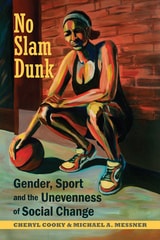
No Slam Dunk
Gender, Sport and the Unevenness of Social ChangeCooky, Cheryl
Rutgers University Press, 2018
The chapters in No Slam Dunk show that is this not simply a story of an “unfinished revolution.” Rather, they contend, it is simplistic optimism to assume that we are currently nearing the conclusion of a story of linear progress that ends with a certain future of equality and justice. This book provides important theoretical and empirical insights into the contemporary world of sports to help explain the unevenness of social change and how, despite significant progress, gender equality in sports has been “No Slam Dunk.”

People of Prowess
Sport, Leisure, and Labor in Early Anglo-AmericaNancy L. Struna
University of Illinois Press, 1996
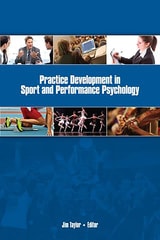
Practice Development in Sport and Performance Psychology
Jim Taylor
FiT Publishing, 2015
Practice Development in Sport and Performance Psychology is a practical guide with a step-by-step process for establishing and maintaining a consulting practice for today's sport and performance psychology professionals.
Editor Jim Taylor and a talented team of authors provide a foundation of knowledge and skills necessary to establish and maintain a consulting practice and explore the gamut of issues including understanding the progression of professional development, creating a performance model, writing a business plan, using social media, and much more.
Each chapter includes a summary and exercises to review and further explore relevant topics covered in the book.
“This book is both informative and practical. Two particular aspects are especially worth commending because they ground us in the lessons of the past, the current state of our field, and its certain future. First, though often relegated to the latter parts of a book as an afterthought, the chapter on ethics is placed front and center. Ethics should indeed be the starting point of any consulting business. Second, technology is the future of sport and performance psychology consulting. Appropriately located in the latter part of the book, but certainly critical to our work in the 21st century, is a chapter on consulting in the age of electronic and social media. “How do you get to Carnegie Hall?” the old joke goes. Practice, practice, practice.”
–Kate F. Hays, Ph.D., CC-AASP, The Performing Edge
"Deftly organized into three major sections (Designing; Building; Expanding), Practice Development in Sport and Performance Psychology is comprised of ten erudite and informative articles by experts. The result is a seminal work of impressive scholarship and scope, making Practice Development in Sport and Performance Psychology very highly recommended for personal, professional, community, and academic library Sports & Athletics reference collections and supplemental studies reading lists."
–The Sports Shelf, Midwest Book Review
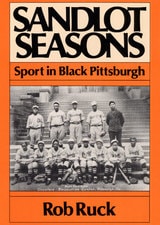
Sandlot Seasons
SPORT IN BLACK PITTSBURGHRob Ruck
University of Illinois Press, 1987
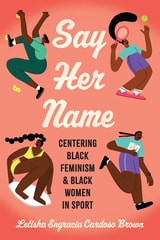
Say Her Name
Centering Black Feminism and Black Women in SportLetisha Engracia Cardoso Brown
Rutgers University Press, 2025
Say Her Name delves deeply into issues of gender, the politics of punishment, athlete activism, the politics of Black hair, fingernails and fashion, and the representation and commodification of Blackgirlwomen in sport and society. An entry point into the growing research in sport studies and beyond from a Black feminist lens, Say Her Name offers a clear window into the power and potential of nuanced examinations of sport. As a reflection of the larger social world, sport provides a framework for understanding larger social issues, including racism, sexism, and misogynoir. Blackgirlwomen have varied experiences in sport, and Say Her Name provides a window into those experiences. The book discusses Black women in sports including the South African runner Caster Semenya and the American runners Florence Griffith Joyner and Sha’Carri Richardson, as well as Venus and Serena Williams, Gabby Douglas, and Simone Biles. The women in this book have lived experiences that speak to the larger experiences of Black women and girls in sport and society, while also leaning into a larger discussion of the importance of the social movement #SayHerName.
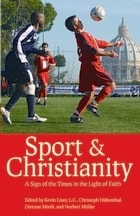
Sport and Christianity
A Sign of the Times in the Light of FaithKevin Lixey
Catholic University of America Press, 2012
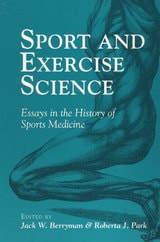
Sport and Exercise Science
ESSAYS IN THE HISTORY OF SPORTS MEDICINEEdited by Jack W. Berryman and Roberta J. Parks
University of Illinois Press, 1992
athlete's heart, exercise physiology, physical activity and sport for females, women's
health, physical culture and quackery, diet, and more.

Sport and Moral Conflict
A Conventionalist TheoryWilliam J.Morgan
Temple University Press, 2020
What is the purpose of sport, and how are ethical conceptions of sport shaped by the answers to this question? In Sport and Moral Conflict, William Morgan investigates, examining sport as a moral crucible that puts athletes in competitive, emotionally charged situations where fairness and equality are contested alongside accomplishment.
Morgan looks at the modern Olympics—from 1906 Athens to 1924 Paris, when the Games reached international prestige — in order to highlight the debate about athletic excellence and the amateur-professional divide. Whereas the Americans emphasized winning, the Europeans valued a love of the game. Morgan argues that the existing moral theories of sport—formalism and broad internalism (aka interpretivism), which rely on rules and general principles—fall short when confronted with such a dispute as the transition from amateur to professional sport. As such, he develops a theory of conventionalism, in which the norms at work in athletic communities determine how players should ethically acquit themselves. Presenting his case for an ethical theory of sport, Morgan provides insights regarding the moral controversies and crises that persist today.
Sport and Neoliberalism
Politics, Consumption, and CultureDavid L. Andrews
Temple University Press, 2012
Offering new approaches to thinking about sports and political ideologies, Sport and Neoliberalism explores the structures, formations, and mechanics of neoliberalism. The editors and contributors to this original and timely volume examine the intersection of sport as a national pastime and also an engine for urban policy—e.g., stadium building—as well as a powerful force for influencing our understanding of the relationship between culture, politics, and identity.
Sport and Neoliberalism examines the ways the neoliberal project creates priorities for civic society and how, in effect, it turns many aspects of sport into a vehicle of public governance. From the relationship between sport and the neo-liberal state, through the environmental dimensions of neo-liberal sport, to the political biopolitics of obesity, the essays in this volume explore the ways in which the “logics” of neoliberalism are manifest as powerful public pedagogies through the realm of popular culture.
Contributors include: Michael Atkinson, Ted Butryn, C. L. Cole, Norman Denzin, Grant Farred, Jessica Francombe, Caroline Fusco, Michael D. Giardina, Mick Green, Leslie Heywood, Samantha King, Lisa McDermott, Mary G. McDonald, Toby Miller, Mark Montgomery, Joshua I. Newman, Jay Scherer, Kimberly S. Schimmel, and Brian Wilson
In the series Sporting, edited by Amy Bass
Sport and Political Ideology
By John M. Hoberman
University of Texas Press, 1984
Across the modern political spectrum, left-wing and right-wing political theorists have invested sport with ideological significance. That significance, however, varies distinctively and characteristically with the ideology—a phenomenon John Hoberman terms "ideological differentiation." Taking this phenomenon as its point of departure, this provocative work interprets the major sport ideologies of the twentieth century as distinct expressions of political doctrine.
Hoberman argues that a political ideology's interpretation of sport is shaped in part by the value it assigns to work and play as modes of experience; the political anthropologies of right and left can be distinguished by examining their resistance to—or affinity for—sportive imagery of their leaders and of the state itself; there exists a fascist temperament that shows an affinity to athleticism and the sphere of the body that is not shared by the left.
Tracing modern sport ideology back to its premodern antecedents, Hoberman examines the interpretations of sport that have been promulgated by European political intellectuals, such as cultural conservatives and contemporary neo-Marxists, and by the official ideologists of Nazi Germany, the Soviet Union, the German Democratic Republic, and China before and after Mao.
As a form of mass theater, sport can advertise any ideology. But the deeper relationship between sport and political ideology has never before been explored wth such vigor. Presenting the first general theory of sport and political ideology to appear in any language, Hoberman's groundbreaking work is a unique and invaluable contribution to the intellectual and political history of sport in the twentieth century.
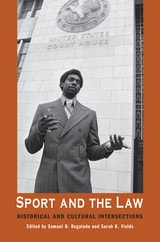
Sport and the Law
Historical and Cultural IntersectionsSamuel O. Regalado
University of Arkansas Press, 2014
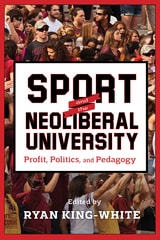
Sport and the Neoliberal University
Profit, Politics, and PedagogyKing-White, Ryan
Rutgers University Press, 2018
The contributors to Sport and the Neoliberal University examine how intercollegiate athletics became a contested terrain of public/private interests. They look at college sports from economic, social, legal, and cultural perspectives to cut through popular mythologies regarding intercollegiate athletics and to advocate for increased clarity about what is going on at a variety of campuses with regard to athletics. Focusing on current issues, including the NCAA, Title IX, recruitment of high school athletes, and the Penn State scandal, among others, Sport and the Neoliberal University shows the different ways institutions, individuals, and corporations are interacting with university athletics in ways that are profoundly shaped by neoliberal ideologies.
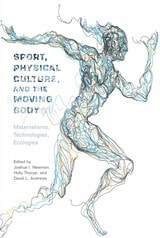
Sport, Physical Culture, and the Moving Body
Materialisms, Technologies, EcologiesJoshua I. Newman
Rutgers University Press, 2020
The moving body—pervasively occupied by fitness activities, intense training and dieting regimes, recreational practices, and high-profile sporting mega-events—holds a vital function in contemporary society. As the body moves—as it performs, sweats, runs, and jumps—it sets in motion an intricate web of scientific rationalities, spatial arrangements, corporate imperatives, and identity politics (i.e. politics of gender, race, social class, etc.). It represents vitality in its productive and physiological capacities, it drives a complex economy of experiences and products, and it is a meaningful site of cultural identities and politics.
Contributors to Sport, Physical Culture, and the Moving Body work from a simple premise: as it moves, the material body matters. Adding to the burgeoning fields of sport studies and body studies, the works featured here draw upon the traditions of feminist theory, posthumanism, actor network theory, and new materialism to reposition the physical, moving body as crucial to the cultural, political, environmental, and economic systems that it constitutes and within which is constituted. Once assembled, the book presents a study of bodies in motion—made to move in contexts where technique, performance, speed, strength, and vitality not only define the conduct therein, but provide the very reason for the body’s being within those economies and environments. In so doing, the contributors look to how the body moving for and about rational systems of science, medicine, markets, and geopolity shapes the social and material world in important and unexpected ways.
In Sport, Physical Culture, and the Moving Body, contributors explore the extent to which the body, when moving about both ostensibly active body spaces (i.e., the gymnasium, the ball field, exercise laboratory, the track or running trail, the beach, or the sport stadium) and those places less often connected to physical activity (i.e. the home, the street, the classroom, the automobile), is bounded to technologies of life and living; and to the political arrangements that seek to capitalize upon such frames of biological vitality. To do so, the authors problematize the rise of active body science (i.e. kinesiology, sport and exercise sciences, performance biotechnology) and the effects these scientific interventions have on embodied, lived experience.
Contributors to Sport, Physical Culture, and the Moving Body will be engaging a range of new and emerging theoretical perspectives, including new materialist, political ecology, developmental systems theory, and new material feminist approaches, to examine the actors and assemblages of movement-based material, political, and economic production. In so doing, contributors will vividly and powerfully illustrate the extent to which a focus on the fleshed body and its material conditions can bring forth new insights or ontological and epistemological innovation to the sociology of sport and physical activity. They will also explore the agency of the body as and amongst things. Such a performative materialist approach explicates how complex assemblages of sport and physical activity—bringing into association everything from muscle fibers and dietary proteins to stadium concrete or regional aquifers—are not only meaningful, but ecological.
By focusing on the confluence of agentive materialities, disciplinary technologies, vibrant assemblages, speculative realities, and vital performativities, Sport, Physical Culture, and the Moving Body promises to offer a groundbreaking departure from representationalist tendencies and orthodoxies brought about by the cultural turn in sport and physical cultural studies. It brings the moving body and its physics back into focus: recentering moving flesh and bones as locus of social order, environmental change, and the global political economy.
Sport, Play, and Ethical Reflection
Randolph Feezell
University of Illinois Press, 2006
Feezell builds on these conclusions, addressing important ethical issues, arguing that sportsmanship should be seen as a kind of Aristotelian mean between the extremes of over- and under-investment in sport. Chapters on cheating, running up the score, and character building stress sport as a rule-governed, tradition-bound practice with standards of excellence and goods internal to the practice. With clear writing and numerous illuminating examples, Feezell demonstrates deep insight into both of his subjects.
Sport
A NovelMick Cochrane
University of Minnesota Press, 2003

Sport
A Philosophical InquiryPaul Weiss
Southern Illinois University Press, 0
This seminal book breaks new ground and explores new paths: psychological and sociological forms of human behavior exhibited in games; the physiology of athletics, and the efforts of training and conditioning; and the motivation of athletics— the rhythm and aims of contests and games, and the meaning of team play. More importantly, however, Professor Weiss’ s unique contributions lie in his discussions of the distinct contributions that sport makes to civilization.
Professor Weiss discusses at length such topics as the Olympic Games and men and women as amateur and professional athletes— and their sacrifices, defeats, and humiliations. And he delineates the stages the athlete must go through in his progress toward self-completion.

Sport
Ship Dog of the Great LakesPamela Cameron
Wisconsin Historical Society Press, 2019
In this beautifully illustrated children’s book based on historical documents and photographs, readers share in Sport’s adventures while discovering the various ways lighthouse tender ships helped keep the lake safe for others. Helpful diagrams, a map, and a historical note supplement this engaging story for young readers.
2020 Wisconsin Library Association Outstanding Children’s Book of the Year
2020 Midwest Book Award Gold Medal
2020 Library of Michigan Notable Book Award
2019 Historical Society of Michigan State History Award
2019 Moonbeam Children’s Book Award
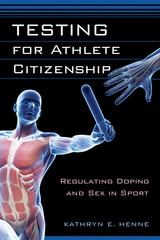
Testing for Athlete Citizenship
Regulating Doping and Sex in SportHenne, Kathryn E
Rutgers University Press, 2015

That Futebol Feeling
Sport and Play in Brazil's HeartlandDavid Faflik
Temple University Press, 2025
That Futebol Feeling captures the region’s enthrallment with “the beautiful game,” and shows us how and why play is central to the human condition. David Faflik profiles members of the most celebrated local team, Clube Atlético Mineiro (CAM), as well as its passionate, never-say-die fans, to show how futebol and fandom shape their everyday lives and perspectives. He discovers bonds of work and play, as well as pride, identity, and community. Additionally, Faflik’s analysis of Brazil’s futebol culture reflects sports fandom worldwide.
CAM stands as a symbol for a way of life in Minas Gerais, the birthplace of Pelé. Faflik interrogates what playing the game means to those who dedicate their lives to the sport. He writes, “The feelings that football inspires are the best of me.” That Futebol Feeling shares that special feeling with the rest of us.

The Architecture of the Playing Field
Shaping Space in SportRichard L. Cleary
University of Texas Press, 2025
A novel exploration of playing fields as aesthetic and architectural spaces that frame athletes’ creativity and spectators’ evolving experiences of sport.
The playing field is a laboratory of invention, where athletes and coaches create new uses for the human body in response to the constraints and affordance of space. The Architecture of the Playing Field explores the aesthetic and physical experiences of the grounds on which we compete, from translucent squash courts to the NBA three-point line to the city streets adopted by skateboarders.
Richard Cleary digs into the perspectives of spectators, athletes, coaches, and umpires, which have changed along with the shifting configuration of the playing surface and the mediation of the action, from early sports coverage to today’s high-tech TV broadcasts. He shows how rules governing the size, shape, and divisions of the field reflect sports’ entwinement with societies at large, in particular the politics of race and gender. Mindful as well that some sports resist containment, he analyzes the disruptive use of space by snowboarders and parkour athletes. The Architecture of the Playing Field sensitizes us to the interplay of settings and bodies in motion fundamental to the power of sport.
The Burden of Over-representation
Race, Sport, and PhilosophyGrant Farred
Temple University Press, 2018
The Burden of Over-representation artfully explores three curious racial moments in sport: Jackie Robinson’s expletive at a Dodgers spring training game; the transformation of a formality into an event at the end of the 1995 rugby World Cup in South Africa; and a spectral moment at the 2010 FIFA World Cup. Grant Farred examines the connotations at play in these moments through the lenses of race, politics, memory, inheritance and conciliation, deploying a surprising cast of figures in Western thought, ranging from Jacques Derrida and Friedrich Nietzsche to Judith Butler, William Shakespeare, and Jesus-the-Christ. Farred makes connection and creates meaning through the forces at play and the representational burdens of team, country and race.
Farred considers Robinson’s profane comments at black Dodgers fans, a post-match exchange of “thank yous” on the rugby pitch between white South African captain François Pienaar and Nelson Mandela, and being “haunted” by the ghost of Derrida on the occasion of the first FIFA World Cup on African soil. In doing so, The Burden of Over-representation provides a passionate, insightful analysis of the social, political, racial, and cultural consequences of conciliation at key sporting events.

The Culture and Sport of Skiing
From Antiquity to World War llE. John B. Allen
University of Massachusetts Press, 2007
Of all the individuals who contributed to the modernization of skiing before World War II, Allen identifies three who were especially influential: Fridtjof Nansen of Norway, whose explorations on skis paradoxically inspired the idea of skiing as sport; Arnold Lunn of England, whose invention of downhill skiing and the slalom were foundations of the sport's globalization; and Hannes Schneider, whose teachings introduced both speed and safety into the sport.
Underscoring the extent to which ancient ways persisted despite modernization, the book ends with the Russo-Finnish War, a conflict in which the Finns, using equipment that would have been familiar a thousand years before, were able to maneuver in snow that had brought the mechanized Soviet army to a halt.
More than fifty images not only illustrate this rich history but provide further opportunity for analysis of its cultural significance.
The Eternal Present of Sport
Rethinking Sport and ReligionDaniel A. Grano
Temple University Press, 2017
Grano asserts that it is precisely through sport’s highest religious ideals that controversies are taking shape and constituting points of political and social rupture. He examines issues of transcendence, “legacy”—e.g., “greatest ever,” or “all-time”—and “witnessing” through instant replay, which undermine institutional authority. Grano also reflects on elite athletes representing especially powerful embodiments of religious and social conflict, including around issues related to gender, sexuality, ability doping, traumatic brain injury, and institutional greed.
Elite sport is in a period of profound crisis. It is through the ideals Grano analyzes that we can imagine a radically alternative future for elite sport.
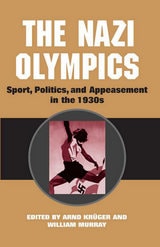
The Nazi Olympics
Sport, Politics, and Appeasement in the 1930sEdited by Arnd Krüger and William Murray
University of Illinois Press, 2003
The 1936 Olympic Games played a key role in the development of both Hitler’s Third Reich and international sporting competition. The Nazi Olympics gathers essays by modern scholars from prominent participating countries and lays out the issues--sporting as well as political--surrounding the involvement of individual nations.
The volume opens with an analysis of Germany’s preparations for the Games and the attempts by the Nazi regime to allay the international concerns about Hitler’s racist ideals and expansionist ambitions. Essays follow on the United States, Great Britain, and France--top-tier Olympian nations with misgivings about participation--as well as Germany's future Axis partners Italy and Japan. Other contributions examine the issues involved for Finland, Sweden, Norway, Denmark, and the Netherlands. Throughout, the authors reveal the high political stakes surrounding the Games and how the Nazi Olympics distilled critical geopolitical issues of the time into a spectacle of sport.

The Unlevel Playing Field
A Documentary History of the African American Experience in SportDavid K. Wiggins and Patrick B. Miller
University of Illinois Press, 2003
The Unlevel Playing Field offers a rich compendium of more than 100 primary sources that chart the intertwining history of African Americans and sport. Introductions and head-notes provided by David K. Wiggins and Patrick B. Miller place each document in context, shaping an unrivaled narrative.
Readers will find dozens of accounts by Frederick Douglass, W. E. B. DuBois, Booker T. Washington, Marcus Garvey, James Weldon Johnson, Richard Wright, A. S. “Doc” Young, Eldredge Cleaver, Nikki Giovanni, John Edgar Wideman, bell hooks, James Baldwin, Roy Wilkins, Henry Louis Gates, Gerald Early, and many others.
The documents range from discussions of the color line in organized baseball during the Jim Crow era and portraits of turn-of-the-century figures like the champion sprint cyclist Marshall “Major” Taylor and boxer Jack Johnson. Writers also look at modern-day issues like the participation of black athletes in the 1968 Olympics, the place of African American women in sport, and examine pioneering figures like Jackie Robinson, Muhammad Ali, Althea Gibson, Michael Jordan, Tiger Woods, and Venus and Serena Williams.

Ticket Operations and Sales Management in Sport
James T. Reese
FiT Publishing, 2013
In one of the most current and comprehensive textbooks on the topic of ticket operations and sales management, James T. Reese and a collection of academicians and practitioners provide insight, practical tips, and first-hand accounts of what it takes to excel in this growing and ever-changing industry. Chapters cover topics such as customer service, sales, pricing, distribution, the secondary ticket market, and new ticketing technology.
"This book is the 'how to' book on ticket operations and sales management. Students utilizing this book will be prepared to sell and operate one of the most important revenue streams in sport ticketing."
—From the foreword by Rick Nichols, owner of Admissions Sport Consulting