Results by title
7 books match the query 'Domestic Politics'

Crisis Bargaining and the State
The Domestic Politics of International ConflictSusan Peterson
University of Michigan Press, 1996
Peterson offers a comprehensive analysis of the domestic politics of crisis bargaining. She uses differences in state structure to explain variations in foreign policy processes and outcomes. By introducing domestic structure as a crucial intervening variable between the international environment and a state's foreign policy during an acute conflict, Peterson shows how existing cognitive and bureaucratic approaches provide complementary, not competing, explanations of crisis bargaining.
Crisis Bargaining and the State: The Domestic Politics of International Conflict applies recent research in the field of international political economy on the relationship between ideas, institutions, and the international environment to the issue of crisis bargaining. It will appeal to students, scholars, and policymakers interested in crisis bargaining, international security, and international relations.
Susan Peterson is Assistant Professor, Department of Government, The College of William & Mary.
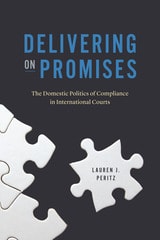
Delivering on Promises
The Domestic Politics of Compliance in International CourtsLauren J. Peritz
University of Chicago Press, 2022
When do international institutions effectively promote economic cooperation among countries and help them resolve conflict? Although the international system lacks any central governing authority, states have created rules, particularly around international economic relations, and empowered international tribunals to enforce those rules. Just how successful are these institutions? In Delivering on Promises Lauren J. Peritz demonstrates that these international courts do indeed deliver results—but they are only effective under certain conditions.
As Peritz shows, states are less likely to comply with international rules and international court decisions when domestic industries have the political ability to obstruct compliance in particular cases. The author evaluates the argument with an extensive empirical analysis that traces the domestic politics of compliance with the decisions of two international economic courts: the World Trade Organization’s dispute settlement mechanism and the Court of Justice of the European Union. At a time when international agreements are under attack, this book sheds light on the complex relationship between domestic politics and international economic cooperation, offering detailed evidence that international economic courts are effective at promoting interstate cooperation.
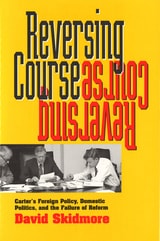
Reversing Course
Carter's Foreign Policy, Domestic Politics, and the Failure of ReformDavid Skidmore
Vanderbilt University Press, 1996
In Reversing Course, David Skidmore argues that President Carter's initial foreign policy agenda required a scaling back of U.S. commitments abroad, reflecting a decline in resources, as well as influence, in a world developing in ways necessarily reducing U.S. hegemony. By probing beneath the obvious and carefully sifting the abundant but poorly understood evidence, Skidmore finds at the root of Carter's failed effort an irresistible pressure to reverse a liberal foreign-policy agenda in order to address the effect at home of well-organized conservative criticism. For Skidmore, Carter's course "reversed" toward a traditional containment strategy vis-a-vis the Soviet Union not because of Soviet intransigence or faulty idealism but because Cold War politics sold better in the polls.
While offering significant theoretical arguments, Skidmore carefully anchors his thesis in the day-to-day political give and take among those personalities and events that provoked headlines and commentaries long before they were the stuff of history. Among the telling factors and events analyzed in this book are the Vance/Brzezinski conflict, the support and opposition of Howard Baker, the SALT II Treaty, the Panama Canal Treaties, and the Soviet occupation of Afghanistan, to mention only a few.
Although Skidmore draws conclusions that apply to the Reagan, Bush, and Clinton administrations as well, his focus is not on personality but on theory and underlying structures. He provides a demonstration that this structural approach can "be helpful not only in unraveling the mysteries of policy change under Carter but also in specifying the underlying sources of policy vacillation over much of the past two decades." .
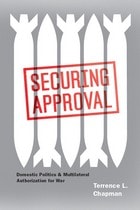
Securing Approval
Domestic Politics and Multilateral Authorization for WarTerrence L. Chapman
University of Chicago Press, 2011
Among the most momentous decisions that leaders of a state are called upon to make is whether or not to initiate warfare. How their military will fare against the opponent may be the first consideration, but not far behind are concerns about domestic political response and the reaction of the international community.
Securing Approval makes clear the relationship between these two seemingly distinct concerns, demonstrating how multilateral security organizations like the UN influence foreign policy through public opinion without ever exercising direct enforcement power. While UN approval of a proposed action often bolsters public support, its refusal of endorsement may conversely send a strong signal to domestic audiences that the action will be exceedingly costly or overly aggressive. With a cogent theoretical and empirical argument, Terrence L. Chapman provides new evidence for how multilateral organizations matter in security affairs as well as a new way of thinking about the design and function of these institutions.
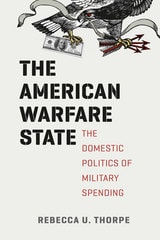
The American Warfare State
The Domestic Politics of Military SpendingRebecca U. Thorpe
University of Chicago Press, 2014
The Challenge of Hegemony
Grand Strategy, Trade, and Domestic PoliticsSteven E. Lobell
University of Michigan Press, 2005
"His conceptually rigorous and tightly reasoned study . . . reminds us that power is never value neutral but organizes commercial systems in liberal or imperial terms."
---Perspectives on Politics
"Lobell's book is tightly written, nicely argued and thoroughly researched to a fault. He seems to delight in historical detail. The complexity of his approach is refreshing."
---International Affairs
"The Challenge of Hegemony is a pleasure to read. It is both theoretically sophisticated and empirically rich."
---International Studies Review
"The Challenge of Hegemony offers a compelling reinterpretation of key historical cases and provides wise guidance as to how the United States should wield its power today."
--Charles A. Kupchan, Council on Foreign Relations
"Lobell demonstrates clearly how the international environment confronting great powers interacts with their domestic political coalitions to produce different grand strategies. Through a masterful sweep of history, Lobell shows us the alternative trajectories before the United States today."
--David A. Lake, University of California, San Diego
Win, Lose, or Draw
Domestic Politics and the Crucible of WarAllan C. Stam III
University of Michigan Press, 1996
While the factors affecting the initiation of war have been extensively studied, the factors that determine the outcome of war have been neglected. Using quantitative data and historical illustrations from the early 1800s to the late 1980s, Allan Stam investigates the relative effect on war outcomes of both the choices leaders must make during war and the resources they have at their disposal. Strategy choices, along with decisions about troop levels and defense spending, are not made in a vacuum, according to Stam, but are made in the crucible of domestic politics. Because of domestic political constraints, states must frequently choose less than optimal strategies in the international arena. Stam shows how we must go beyond simply counting resources and look at the process or strategy by which they are employed as the key factor determining who will win. Challenging the assumptions of many realist and neorealist thinkers on war and interstate conflict, Stam shows how domestic political factors affect the outcome of war. Using a rational choice analysis, Stam looks at the factors that affect the decisionmakers' preferences for different outcomes of military conflict, as well as how the payoffs of those outcomes are affected by both domestic and structural factors. Structural factors, such as the state's population, define a state's power relative to that of other states and will affect the probability of a policy succeeding. Domestic factors, such as the positions taken by domestic political groups, will affect the preferences of the leaders for particular outcomes and their willingness to bear the costs associated with the payoffs and probabilities of the various outcomes. This book will be of interest to political scientists studying war and conflict in the international system as well as to historians and military strategists interested in understanding the factors that predict the outcome of war.