Results by title
34 books match the query 'Dream'

A Castle in the Backyard
The Dream of a House in FranceBetsy Draine and Michael Hinden
University of Wisconsin Press, 2006
Like any romance, this one has had its ups and downs, and Betsy and Michael chart its course in this delightful memoir. They offer an intimate glimpse of a region little known to Americans—the Dordogne valley, its castles and prehistoric art, its walking trails and earthy cuisine—and describe the charms and mishaps of setting up housekeeping thousands of miles from home.
Along with the region’s terrain and culture, A Castle in the Backyard introduces us to the people of Périgord—the castle’s proprietor, the village children, the gossipy real-estate agent, the rascally mason, and the ninety-year-old widow with a tale of heartbreak. A celebration of a place and its people, the book also reflects on the future of historic Périgord as tourism and development pose a challenge to its graceful way of life.
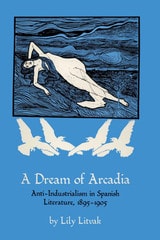
A Dream of Arcadia
Anti-Industrialism in Spanish LIterature, 1895–1905By Lily Litvak
University of Texas Press, 1975
The dream of “progress” that animated many nineteenth-century artistic and political movements gave way at the turn of the century to a dissatisfaction with the Industrial Civilization and a recurrent pessimism about a future dominated by mechanization. Art Nouveau, which was both a style and a movement, embodied this dissatisfaction, marking the turn-of-the-century period with an aesthetic that consciously set out to revolutionize literature, the arts, and society within the framework of a brutalizing, wildly burgeoning Industrial Civilization. Generally associated with northern European culture, Art Nouveau also had a great impact in the south, particularly in Spain.
A Dream of Arcadia is the first work to explore Spain’s fertile and imaginative Art Nouveau. Through the eyes of four major Spanish writers, Lily Litvak views several different aspects of the turn-of-the-century struggle against the advances of industrialism in Spain. Her interpretation of the early works of Ramón del Valle Inclán, Miguel de Unamuno, José Martínez Ruiz (Azorín), and Pío Baroja exposes a longing for a preindustrial arcadia based on a return to nature, the revival of handicrafts and medieval art, an attraction to rural primitive societies, and a revulsion against the modern city. Set against the European literary and artistic background of the period, her observations place the Spanish manifestations of Art Nouveau within the context of the better-known northern phenomena. Of particular interest is her discussion of the influences of John Ruskin, William Morris, and the Pre-Raphaelites, which demonstrates how the general European mood was articulated in Spain.
Litvak concludes that Valle Inclán, Unamuno, Azorín, and Baroja must be considered as more than simply fin de siècle writers, for they became part of a general movement, generated by Art Nouveau, that spans an entire century. A Dream of Arcadia demonstrates that Art Nouveau was more than a flash on Europe's artistic horizon; it is a philosophy with ramifications that have led to communes, handcrafted articles, and nomadic adolescents in search of truth.

A Dream of Resistance
The Cinema of Kobayashi MasakiPrince, Stephen
Rutgers University Press, 2017
A Dream of Resistance is the first book in English to explore Kobayashi’s entire career, from the early films he made at Shochiku studio, to internationally-acclaimed masterpieces like The Human Condition, Harakiri, and Samurai Rebellion, and on to his final work for NHK Television. Closely examining how Kobayashi’s upbringing and intellectual history shaped the values of his work, Stephen Prince illuminates the political and religious dimensions of Kobayashi’s films, interpreting them as a prayer for peace in troubled times. Prince draws from a wealth of rare archives, including previously untranslated interviews, material that Kobayashi wrote about his films, and even the young director’s wartime diary. The result is an unprecedented portrait of this singular filmmaker.

A Dream to Conjure
Emergent Forms in Caribbean Art and CinemaYasmine Espert
Duke University Press, 2027

A Kind of Dream
StoriesKelly Cherry
University of Wisconsin Press, 2014
The selves in this book include Nina, a writer, and her husband, Palmer, a historian, who, having settled into marriage and family life, are now faced with the bittersweetness of late life; BB and Roy, who make a movie in Mongolia; Tavy, Nina’s adopted daughter, a painter in her twenties who meets her birth mother for the first time; and Tavy’s young daughter, Callie, a budding violinist. Other vivid characters confront the awful fact of violence in America; try to cope with political ineptitude; and one devises his own code of sexual morality. Perhaps the most important character is Nina's dog, a salt-and-pepper cairn terrier of uncommon wisdom.
Fame, death, rash self-destruction, laughter, the excitement of making good art, love, marriage, being a mother, being a father, the appreciation of beauty, and always life—life itself, life in all its shapes and guises—it’s all here.
A Kind of Dream is the culminating book in a trilogy Kelly Cherry began with My Life and Dr. Joyce Brothers and The Society of Friends. Each book stands alone, but together they take us on a Dantean journey from midlife to Paradise. Cherry’s prose is hallmarked by lyric grace, sly wit, the energy of her intelligence, and profound compassion for and understanding of her characters. Set in Madison, Wisconsin, A Kind of Dream reveals a surprisingly wide view of the world and the authority of someone who has mastered her art. It is a book to experience and to reflect upon.
Best Books for General Audiences, selected by the American Association of School Librarians
Best Books for General Audiences, selected by the Public Library Reviewers
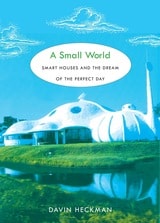
A Small World
Smart Houses and the Dream of the Perfect DayDavin Heckman
Duke University Press, 2007
Heckman’s narrative stretches from the early-twentieth-century introduction into the home of electric appliances and industrial time-management techniques, through the postwar advent of television and the space-age “house of tomorrow,” to the contemporary automated, networked “smart home.” He considers all these developments in relation to lifestyle and consumer narratives. Building on the tension between agency and control within the walls of homes designed to anticipate and fulfill desires, Heckman engages debates about lifestyle, posthumanism, and rights under the destabilizing influences of consumer technologies, and he considers the utopian and dystopian potential of new media forms. Heckman argues that the achievement of an environment completely attuned to its inhabitants’ specific wants and needs—what he calls the “Perfect Day”—institutionalizes everyday life as the ultimate consumer practice.

America, the Dream of My Life
Selections from the Federal Writers' Project's New Jersey Ethnic SurveyCohen, David Steven
Rutgers University Press, 1990

American Indians and the American Dream
Policies, Place, and Property in MinnesotaKasey R. Keeler
University of Minnesota Press, 2023
Understanding the processes and policies of urbanization and suburbanization in American Indian communities
Nearly seven out of ten American Indians live in urban areas, yet studies of urban Indian experiences remain scant. Studies of suburban Natives are even more rare. Today’s suburban Natives, the fastest-growing American Indian demographic, highlight the tensions within federal policies working in tandem to move and house differing groups of people in very different residential locations. In American Indians and the American Dream, Kasey R. Keeler examines the long history of urbanization and suburbanization of Indian communities in Minnesota.
At the intersection of federal Indian policy and federal housing policy, American Indians and the American Dream analyzes the dispossession of Indian land, property rights, and patterns of home ownership through programs and policies that sought to move communities away from their traditional homelands to reservations and, later, to urban and suburban areas. Keeler begins this analysis with the Homestead Act of 1862, then shifts to the Indian Reorganization Act in the early twentieth century, the creation of Little Earth in Minneapolis, and Indian homeownership during the housing bubble of the early 2000s.
American Indians and the American Dream investigates the ways American Indians accessed homeownership, working with and against federal policy, underscoring American Indian peoples’ unequal and exclusionary access to the way of life known as the American dream.
Cover alt text: Vintage photo of Native person bathing smiling child in the sink of a midcentury kitchen. Title in yellow.
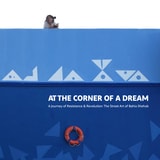
At the Corner of a Dream
A Journey of Resistance and Revolution: The Street Art of Bahia ShehabBahia Shehab
Gingko, 2019
At the Corner of a Dream offers extensive documentation of Shehab’s powerful street paintings. It also chronicles the stories of the people she meets along her journeys and includes her observations from the streets of each new city she visits. Shehab’s work is a manifesto, a cry for freedom and dignity, and a call to never stop dreaming.
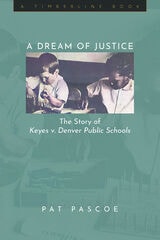
Dream of Justice
The Story of Keyes v. Denver Public Schoolsby Pat Pascoe
University Press of Colorado, 2023
Pascoe details Denver’s desegregation battle, beginning with the citizen studies that exposed the inequities of segregated schools and Rachel Noel’s resolution to integrate the system, followed by the momentous pro-integration Benton-Pascoe campaign of Ed Benton and Monte Pascoe for the school board in 1969. When segregationists won that election and reversed the integration plan for northeast Denver, Black, white, and Latino parents filed Keyes v. School District No. 1. This book follows the arguments in the case through briefs, transcripts, and decisions from district court to the Supreme Court of the United States and back, to its ultimate order to desegregate all Denver schools “root and branch.” It was the first northern city desegregation suit to be brought before the Supreme Court. However, with the end of court-ordered busing in 1995, schools quickly resegregated and are now more segregated than before Keyes was filed.
Pascoe asserts that school integration is a necessary step toward eliminating systemic racism in our country and should be the objective of every school board. A Dream of Justice will appeal to students, scholars, and readers interested in the history of civil rights in America, Denver history, and the history of US education.
Dream, Fantasy, and Visual Art in Roman Elegy
Emma Scioli
University of Wisconsin Press, 2015
By treating dreams as a mode for viewing, an analogy suggested by diverse ancient authors, Emma Scioli extracts new information from the poetry of Propertius, Tibullus, and Ovid about the Roman concept of “seeing” dreams. Through comparison with other visual modes of description, such as ekphrasis and simile, as well as with related types of visual experience, such as fantasy and voyeurism, Scioli demonstrates similarities between artist, dreamer, and poet as creators, identifying the dreamer as a particular type of both viewer and narrator.
Dreams Within a Dream
The Films of Peter WeirMichael Bliss
Southern Illinois University Press, 2000
"What we see, and what we seem, are but a dream, a dream within a dream." Michael Bliss views Miranda's voice-over at the beginning of Picnic at Hanging Rock as so pivotal in explaining the films of Peter Weir that he borrows her words to create the title of his own study of the Australian filmmaker's work.
Bliss views Weir as an artist whose values are rooted in the realm of the dream, of the unconscious. Surrealistic in technique, Weir avoids the pedestrian assurances of a material realm in favor of an irresolution that, while potentially frustrating, is nonetheless for him a more truthful representation of what he considers reality. For Weir, as for Plato, Bliss demonstrates, "empirical reality is nothing more than a shadow of what is real."
Bliss also considers Weir's heritage. Australian cinema, Bliss explains, is characterized by melodramatic narratives born of a desire to see good and evil portrayed in striking opposition. Weir, for example, dramatizes the contradictory forces of light versus darkness, reason versus mystery, and rationality versus magic in such films as Picnic at Hanging Rock and The Last Wave. This melodramatic emphasis is evident as well in the polarized characterizations in such films as Witness, Dead Poets Society, and The Truman Show.
Bliss also discusses Weir's use of another staple of Australian cinema— "mateship," the celebration of the bond between male companions. But by making self-knowledge dependent on action involving one's friends, Weir gives mateship a new meaning. Moreover, like other Australian filmmakers, Weir emphasizes the starkness of the Australian landscape, which functions either as a hazard or a deadly challenge, at least until American mythology caused him to see nature in a more positive light. Also prominent in Weir's films is an Australian spirit of rebellion coupled with the Aussie ambivalence toward all aspects of British culture.
To help explain Weir's films, Bliss looks to Freud and Jung, whom Weir has studied, and also to two other prominent purveyors of myth and archetype, Northrop Frye and Joseph Campbell. Virtually all Weir characters struggle toward a new mode of awareness, a psychological awareness based on archetypal truths. Many of his films involve archetypal journeys heading through conflict to spiritual unity. Weir's quest is to find out what we really know and how we know what we know.

Environmental Politics and the Creation of a Dream
Establishing the Apostle Islands National LakeshoreHarold C. Jordahl
University of Wisconsin Press, 2011
The Apostle Islands National Lakeshore is a breathtakingly beautiful archipelago of twenty-two islands in Lake Superior, just off the tip of northern Wisconsin. For years, the national park has been a favorite destination for tourists and locals alike, but the remarkable story behind its creation is little known. In Environmental Politics and the Creation of a Dream, Harold Jordahl, one of the primary advocates for designating the islands as a national park, discloses the full story behind the effort to preserve their natural beauty for posterity. He describes in detail the political and bureaucratic complexities of the national lakeshore campaign, augmented by his own personal recollections and those of such prominent figures as Wisconsin Senator Gaylord Nelson and President John F. Kennedy. Writing in collaboration with Annie Booth, Jordahl recounts how activists, legislators, media, local residents, and other players shaped the islands’ future establishment as a national park.
I Dream a World
The Operas of William Grant StillBeverly Soll
University of Arkansas Press, 2005
Imaginary Cities
A Tour of Dream Cities, Nightmare Cities, and Everywhere in BetweenDarran Anderson
University of Chicago Press, 2017
This book is about those cities. It’s neither a history of grand plans nor a literary exploration of the utopian impulse, but rather something different, hybrid, idiosyncratic. It’s a magpie’s book, full of characters and incidents and ideas drawn from cities real and imagined around the globe and throughout history. Thomas More’s allegorical island shares space with Soviet mega-planning; Marco Polo links up with James Joyce’s meticulously imagined Dublin; the medieval land of Cockaigne meets the hopeful future of Star Trek. With Darran Anderson as our guide, we find common themes and recurring dreams, tied to the seemingly ineluctable problems of our actual cities, of poverty and exclusion and waste and destruction. And that’s where Imaginary Cities becomes more than a mere—if ecstatically entertaining—intellectual exercise: for, as Anderson says, “If a city can be imagined into being, it can be re-imagined.” Every architect, philosopher, artist, writer, planner, or citizen who dreams up an imaginary city offers lessons for our real ones; harnessing those flights of hopeful fancy can help us improve the streets where we live.
Though it shares DNA with books as disparate as Calvino’s Invisible Cities and Jane Jacobs’s Death and Life of Great American Cities, there’s no other book quite like Imaginary Cities. After reading it, you’ll walk the streets of your city—real or imagined—with fresh eyes.
Life's a Dream (<i>La Vida es Sueño</i>)
Pedro Calderón de la Barca
University Press of Colorado, 2004
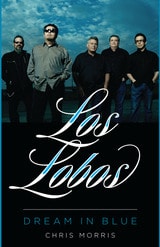
Los Lobos
Dream in BlueBy Chris Morris
University of Texas Press, 2015
Los Lobos leaped into the national spotlight in 1987, when their cover of “La Bamba” became a No. 1 hit. But what looked like an overnight achievement to the band’s new fans was actually a way station in a long musical journey that began in East Los Angeles in 1973 and is still going strong. Across four decades, Los Lobos (Cesar Rosas, Conrad Lozano, David Hidalgo, Louie Pérez, and Steve Berlin) have ranged through virtually the entire breadth of American vernacular music, from rockabilly to primal punk rock, R&B to country and folk, Mexican son jarocho to Tex-Mex conjunto and Latin American cumbia. Their sui generis sound has sold millions of albums and won acclaim from fans and critics alike, including three Grammy Awards.
Los Lobos, the first book on this unique band, traces the entire arc of the band’s career. Music journalist Chris Morris draws on new interviews with Los Lobos members and their principal collaborators, as well as his own reporting since the early 1980s, to recount the evolution of Los Lobos’s music. He describes the creation of every album, lingering over highlights such as How Will the Wolf Survive?, La Pistola y El Corazon, and Kiko, while following the band’s trajectory from playing Mexican folk music at weddings and dances in East L.A. to international stardom and major-label success, as well as their independent work in the new millennium. Giving one of the longest-lived and most-honored American rock bands its due, Los Lobos celebrates the expansive reach and creative experimentalism that few other bands can match.
Montage of a Dream
The Art and Life of Langston HughesEdited by John Edgar Tidwell & Cheryl R. Ragar, Foreword by Arnold Rampersad
University of Missouri Press, 2007
Over a forty-six-year career, Langston Hughes experimented with black folk expressive culture, creating an enduring body of extraordinary imaginative and critical writing. Riding the crest of African American creative energy from the Harlem Renaissance to the onset of Black Power, he commanded an artistic prowess that survives in the legacy he bequeathed to a younger generation of writers, including award winners Alice Walker, Paule Marshall, and Amiri Baraka.
Montage of a Dream extends and deepens previous scholarship, multiplying the ways in which Hughes’s diverse body of writing can be explored. The contributors, including such distinguished scholars as Steven Tracy, Trudier Harris, Juda Bennett, Lorenzo Thomas, and Christopher C. De Santis, carefully reexamine the significance of his work and life for their continuing relevance to American, African American, and diasporic literatures and cultures.
Probing anew among Hughes’s fiction, biographies, poetry, drama, essays, and other writings, the contributors assert fresh perspectives on the often overlooked “Luani of the Jungles” and Black Magic and offer insightful rereadings of such familiar pieces as “Cora Unashamed,” “Slave on the Block,” and Not without Laughter. In addition to analyzing specific works, the contributors astutely consider subjects either lightly explored by or unavailable to earlier scholars, including dance, queer studies, black masculinity, and children’s literature. Some investigate Hughes’s use of religious themes and his passion for the blues as the fabric of black art and life; others ponder more vexing questions such as Hughes’s sexuality and his relationship with his mother, as revealed in the letters she sent him in the last decade of her life.
Montage of a Dream richly captures the power of one man’s art to imagine an America holding fast to its ideals while forging unity out of its cultural diversity. By showing that Langston Hughes continues to speak to the fundamentals of human nature, this comprehensive reconsideration invites a renewed appreciation of Hughes’s work—and encourages new readers to discover his enduring relevance as they seek to understand the world in which we all live.
Not So Wild a Dream
Author & Intro by Eric Sevareid
University of Missouri Press, 1995

Obama's Race
The 2008 Election and the Dream of a Post-Racial AmericaMichael Tesler and David O. Sears
University of Chicago Press, 2010
Barack Obama’s presidential victory naturally led people to believe that the United States might finally be moving into a post-racial era. Obama’s Race—and its eye-opening account of the role played by race in the election—paints a dramatically different picture.
The authors argue that the 2008 election was more polarized by racial attitudes than any other presidential election on record—and perhaps more significantly, that there were two sides to this racialization: resentful opposition to and racially liberal support for Obama. As Obama’s campaign was given a boost in the primaries from racial liberals that extended well beyond that usually offered to ideologically similar white candidates, Hillary Clinton lost much of her longstanding support and instead became the preferred candidate of Democratic racial conservatives. Time and again, voters’ racial predispositions trumped their ideological preferences as John McCain—seldom described as conservative in matters of race—became the darling of racial conservatives from both parties. Hard-hitting and sure to be controversial, Obama’s Race will be both praised and criticized—but certainly not ignored.

Realizing the Dream of R. A. Kartini
Her Sisters’ Letters from Colonial JavaJoost J. Coté
Ohio University Press, 2008
Realizing the Dream of R. A. Kartini: Her Sisters’ Letters from Colonial Java presents a unique collection of documents reflecting the lives, attitudes, and politics of four Javanese women in the early twentieth century. Joost J. Coté translates the correspondence between Raden Ajeng Kartini, Indonesia’s first feminist, and her sisters, revealing for the first time her sisters’ contributions in defining and carrying out her ideals. With this collection, Coté aims to situate Kartini’s sisters within the more famous Kartini narrative–and indirectly to situate Kartini herself within a broader narrative.
The letters reveal the emotional lives of these modern women and their concerns for the welfare of their husbands and the success of their children in rapidly changing times. While by no means radical nationalists, and not yet extending their horizons to the possibility of an Indonesian nation, these members of a new middle class nevertheless confidently express their belief in their own national identity.
Realizing the Dream of R. A. Kartini is essential reading for scholars of Indonesian history, providing documentary evidence of the culture of modern, urban Java in the late colonial era and an insight into the ferment of the Indonesian nationalist movement in which these women and their husbands played representative roles.

Right to DREAM
Immigration Reform and America’s FutureWilliam A. Schwab
University of Arkansas Press, 2013
Selling The Dream
The Gulf American Corporation and the Building of Cape Coral, FloridaDavid Dodrill
University of Alabama Press, 1993
Examining real estate ambition and urban growth in Cape Coral’s creation.
The Gulf American Corporation played a significant role in the development and urbanization of the state of Florida, especially southwest Florida, during the late 1950s and 1960s. The Miami-based company promoted living in Florida to people residing throughout North America and in several foreign countries. It also enabled people of average incomes to purchase home sites in Florida on an installment basis. As a result, Gulf American had a heavy influence on the migration of people to Florida as early as 1957.
Leonard and Julius J. Rosen of Baltimore, Maryland, founded and controlled the corporation during its 12-year existence from 1957 to 1969. The sale and promotion of Florida real estate was an extension of their marketing style developed in previous years when they sold mail-order cosmetics and other products. Their innovative sales strategies ultimately resulted in conflicts with state and federal regulatory agencies in the mid 1960s over the firm’s aggressive sales methods. The struggle with the state of Florida over regulation, which degenerated into a personal conflict between Governor Claude Kirk and the Rosens, resulted in the Rosens’ selling the business to GAC Corporation of Allentown, Pennsylvania, in 1969. After a series of business setbacks and continuing accusations of misrepresentations by salespeople, GAC declared bankruptcy in 1975 and was eventually resurrected as Avatar Holding, Inc., in 1980.
Gulf American left a mixed legacy to the state of Florida by building several growing cities like Cape Coral and Golden Gate, while at the same time selling worthless underwater swampland near the Everglades. The building of their first development was planned by the company. In that sense, Cape Coral was designed to be the Rosens’ most elaborate sales tool.
Based on 31 personal interviews with former Gulf American Corporation, GAC/Avatar Holding company officials and supplemented by articles from 25 different newspapers, this book provides a comprehensive and fascinating look at the Gulf American Corporation—the largest land sales firm in the United States in the 1960s. In many ways the story of Gulf American is a rags-to-riches tale of Leonard and Julius (Jack) Rosen, complete with intrigue and the fluctuations of fortune that matched the rising tides that covered much of the land they sold.
South Africa and the Dream of Love to Come
Queer Sexuality and the Struggle for FreedomBrenna M. Munro
University of Minnesota Press, 2012
After apartheid, South Africa established a celebrated new political order that imagined the postcolonial nation as belonging equally to the descendants of indigenous people, colonizing settlers, transported slaves, indentured laborers, and immigrants. Its constitution, adopted in 1996, was the first in the world to include gays and lesbians as full citizens. Brenna M. Munro examines the stories that were told about sexuality, race, and nation throughout the struggle against apartheid in order to uncover how these narratives ultimately enabled gay people to become imaginable as fellow citizens. She also traces how the gay, lesbian, or bisexual person appeared as a stock character in the pageant of nationhood during the transition to democracy. In the process, she offers an alternative cultural history of South Africa.
Munro asserts that the inclusion of gay people made South Africans feel “modern”—at least for a while. Being gay or being lesbian was reimagined in the 1990s as distinctly South African, but the “newness” that made these sexualities apt symbols for a transformed nation can also be understood as foreign and un-African. Indeed, a Western-style gay identity is often interpreted through the formula “gay equals modernity equals capitalism.” As South Africa’s reentrance into the global economy has failed to bring prosperity to the majority of its citizens, homophobic violence has been on the rise.
Employing a wide array of texts—including prison memoirs, poetry, plays, television shows, photography, political speeches, and the postapartheid writings of Nobel Laureates Nadine Gordimer and J. M. Coetzee—Munro reports on how contemporary queer activists and artists are declining to remain ambassadors for the “rainbow nation” and refusing to become scapegoats for the perceived failures of liberation and liberalism.
Swingin' the Dream
Big Band Jazz and the Rebirth of American CultureLewis A. Erenberg
University of Chicago Press, 1998
"Swingin' the Dream is an intelligent, provocative study of the big band era, chiefly during its golden hours in the 1930s; not merely does Lewis A. Erenberg give the music its full due, but he places it in a larger context and makes, for the most part, a plausible case for its importance."—Jonathan Yardley, Washington Post Book World
"An absorbing read for fans and an insightful view of the impact of an important homegrown art form."—Publishers Weekly
"[A] fascinating celebration of the decade or so in which American popular music basked in the sunlight of a seemingly endless high noon."—Tony Russell, Times Literary Supplement
The Dream of Absolutism
Louis XIV and the Logic of ModernityHall Bjørnstad
University of Chicago Press, 2021
What was absolutism, and how did it work? What was the function of the ostentatious display surrounding Louis XIV at Versailles? What is gained—and what is lost—by approaching such expressions of absolutism as propaganda, as present-day scholars tend to do?
In this sweeping reconsideration of absolutist culture, Hall Bjørnstad argues that the exuberance of Louis XIV’s reign was not top-down propaganda in any modern sense, but rather a dream dreamt collectively, by king, court, image-makers, and nation alike. Bjørnstad explores this dream through a sustained close analysis of a corpus of absolutist artifacts, ranging from Charles Le Brun’s famous paintings in the Hall of Mirrors at Versailles via the king’s secret Mémoires to two little-known particularly extravagant verbal and textual celebrations of the king. The dream of absolutism, Bjørnstad concludes, lives at the intersection of politics and aesthetics. It is the carrier of a force that emerges as a glorious image; a participatory emotional reality that requires reality to conform to it. It is a dream, finally, that still shapes our collective political imaginary today.
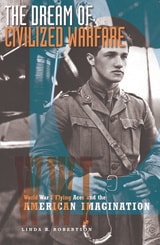
The Dream of Civilized Warfare
World War I Flying Aces and the American ImaginationLinda R. Robertson
University of Minnesota Press, 2005
Analyzes the link between “civilized warfare” and the American self-image
Linda R. Robertson argues that the development of the United States as a global military power arose from the influence of an image of air combat carefully constructed during World War I to mask the sordid realities of modern ground warfare. The Dream of Civilized Warfare carries this trajectory to its logical end, tracing the long history of the American desire to exert the nation’s will throughout the world without having to risk the lives of ground soldiers—a theme that continues to reverberate in public discussions, media portrayals, and policy decisions today.
Histories of American air power usually focus on World War II, when the air force became the foundation for the military strength of the United States. The equally fascinating story of World War I air combat is often relegated to a footnote, but it was the earlier war that first inspired the vision of the United States attaining dominance in world affairs through a massive air force. In The Dream of Civilized Warfare, Robertson presents the compelling story of the creation of the first American air force—and how, through the propaganda of the flying ace, a vision of “clean” or civilized combat was sold to politicians and the public. During World War I, air combat came to epitomize American ingenuity, technological superiority, adventure, leadership, and teamwork. Robertson reveals how the romantic and chivalric imagery associated with flying aces was a product of intentional propaganda and popular culture. Examining aviation history, military battles, films, literature, and political events, she looks at how the American public’s imagination was shaped—how flying aces offered not only a symbol of warfare in stark contrast to the muddy, brutal world of the trenches, but also a distraction to an American public resistant to both intervention in a European conflict and the new practice of conscription.
The Dream of a Common Movement
Selected Writings of Urvashi VaidUrvashi Vaid. Edited by Jyotsna Vaid and Amy Hoffman
Duke University Press, 2025
The Dreamer and the Dream
Afrofuturism and Black Religious ThoughtRoger A. Sneed
The Ohio State University Press, 2021
In The Dreamer and the Dream: Afrofuturism and Black Religious Thought, Roger A. Sneed illuminates the interplay of Black religious thought with science fiction narratives to present a bold case for Afrofuturism as an important channel for Black spirituality. In the process, he challenges the assumed primacy of the Black church as the arbiter of Black religious life. Incorporating analyses of Octavia Butler’s Parable books, Janelle Monáe’s Afrofuturistic saga, Star Trek’s Captain Benjamin Sisko, Marvel’s Black Panther, and Sun Ra and the Nation of Islam, Sneed demonstrates how Afrofuturism has contributed to Black visions of the future. He also investigates how Afrofuturism has influenced religious scholarship that looks to Black cultural production as a means of reimagining Blackness in the light of the sacred. The result is an expansive new look at the power of science fiction and Afrofuturism to center the diversity of Black spirituality.
The Hashemites
The Dream of ArabiaRobert McNamara
Haus Publishing, 2010
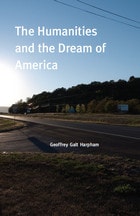
The Humanities and the Dream of America
Geoffrey Galt Harpham
University of Chicago Press, 2011
In this bracing and original book, Geoffrey Galt Harpham argues that today’s humanities are an invention of the American academy in the years following World War II, when they were first conceived as an expression of American culture and an instrument of American national interests. The humanities portray a “dream of America” in two senses: they represent an aspiration of Americans since the first days of the Republic for a state so secure and prosperous that people could enjoy and appreciate culture for its own sake; and they embody in academic terms an idealized conception of the American national character. Although they are struggling to retain their status in America, the concept of the humanities has spread to other parts of the world and remains one of America's most distinctive and valuable contributions to higher education.
The Humanities and the Dream of America explores a number of linked problems that have emerged in recent years: the role, at once inspiring and disturbing, played by philology in the formation of the humanities; the reasons for the humanities’ perpetual state of “crisis”; the shaping role of philanthropy in the humanities; and the new possibilities for literary study offered by the subject of pleasure. Framed by essays that draw on Harpham’s pedagogical experiences abroad and as a lecturer at the U.S. Air Force Academy, as well as his vantage as director of the National Humanities Center, this book provides an essential perspective on the history, ideology, and future of this important topic.
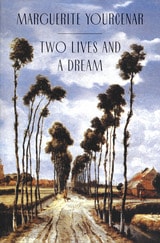
Two Lives and a Dream
Marguerite Yourcenar
University of Chicago Press, 1994
"An Obscure Man swarms with life. This intricately researched, imaginative, beautifully written tale of a young man's brief life in the mid-17th century is entirely engrossing."—Leona Weiss, San Francisco Chronicle
"In these three stories, [Yourcenar] succeeds in making the essences of these past lives a part of the reader's future through the sheer intensity of their portrayal."—Margaret Ezell, Houston Chronicle
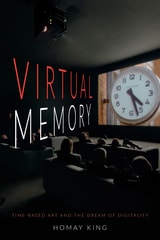
Virtual Memory
Time-Based Art and the Dream of DigitalityHomay King
Duke University Press, 2015
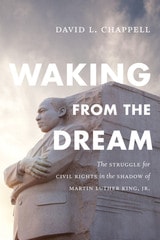
Waking from the Dream
The Struggle for Civil Rights in the Shadow of Martin Luther King, Jr.David L. Chappell
Duke University Press, 2016