Results by title
5 books match the query 'Drift'
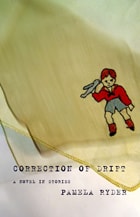
Correction of Drift
A Novel in StoriesPamela Ryder
University of Alabama Press, 2008
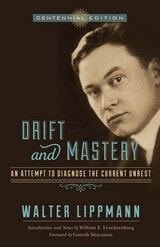
Drift and Mastery
An Attempt to Diagnose the Current UnrestWalter Lippmann, Introduction and notes by William E. Leuchtenburg, Foreword by Ganesh Sitaraman
University of Wisconsin Press, 2015
Lippman’s Drift and Mastery became one of the most important and influential documents of the Progressive Movement. It remains a valuable text for understanding the political thought of early twentieth-century America and a lucid exploration of timeless themes in American government and politics. Distinguished historian Walter Leuchtenberg’s 1986 introduction and notes are retained in this edition.
Empty Moments
Cinema, Modernity, and DriftLeo Charney
Duke University Press, 1998
Empty Moments creates a catalytic dialogue among those who, at the time of the invention of film, attempted to define the experience of the fleeting present. Interspersing philosophical discussions with stylistically innovative prose, Charney mingles Proust’s conception of time/memory with Cubism’s attempt to interpret time through perspective and Surrealism’s exploration of subliminal representations of the present. Other topics include Husserl’s insistence that the present can only be fantasy or fabrication and the focus on impossibility, imperfection, and loss in Kelvin’s laws of thermodynamics. Ultimately, Charney’s work hints at parallels among such examples, the advent and popularity of cinema, and early film theory.
A book with a structural modernity of its own, Empty Moments will appeal to those interested in cinema and its history, as well as to other historians, philosophers, literary, and cultural scholars of modernity.
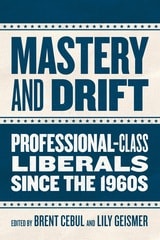
Mastery and Drift
Professional-Class Liberals since the 1960sEdited by Brent Cebul and Lily Geismer
University of Chicago Press, 2025
Since the 1960s, American liberalism and the Democratic Party have been remade along professional class lines, widening liberalism’s impact but narrowing its social and political vision. In Mastery and Drift, historians Brent Cebul and Lily Geismer have assembled a group of scholars to address the formation of “professional-class liberalism” and its central role in remaking electoral politics and the practice of governance. Across subjects as varied as philanthropy, consulting, health care, welfare, race, immigration, economics, and foreign conflicts, the authors examine not only the gaps between liberals’ egalitarian aspirations and their approaches to policymaking but also how the intricacies of contemporary governance have tended to bolster professional-class liberals’ power.
The contributors to Mastery and Drift all came of age amid the development of professional-class liberalism, giving them distinctive and important perspectives in understanding its internal limitations and its relationship to neoliberalism and the Right. With never-ending disputes over the meaning of liberalism, the content of its governance, and its relationship to a resurgent Left, now is the time to consider modern liberalism’s place in contemporary American life.

The Trustus Plays
The Hammerstone, Drift, and Holy GhostJon Tuttle
Intellect Books, 2009
The Trustus Plays collects three full-length, award-winning performance texts by American playwright Jon Tuttle. Each play was a winner of the national Trustus Playwrights Festival contest and was then produced by the Trustus Theatre in Columbia, South Carolina. The Hammerstone is a comedy about two professors aging gracelessly, Drift is a dark comedy about marriage and divorce, and Holy Ghost is the story of German POWs held in the camps in the American south. Jon Tuttle provides an introduction to the plays, and Trustus founder and artistic director, Jim Thigpen, offers a preface describing Tuttle’s work within the context of the Trustus theatre’s dedication to experimental, edgy social drama.