Results by title
9 books match the query 'Drug dealers'
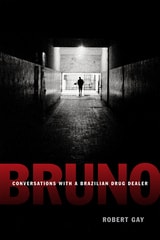
Bruno
Conversations with a Brazilian Drug DealerRobert Gay
Duke University Press, 2015
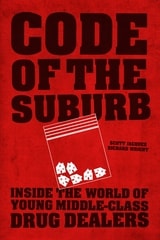
Code of the Suburb
Inside the World of Young Middle-Class Drug DealersScott Jacques and Richard Wright
University of Chicago Press, 2015
In Code of the Suburb, Scott Jacques and Richard Wright offer a fascinating ethnography of the culture of suburban drug dealers. Drawing on fieldwork among teens in a wealthy suburb of Atlanta, they carefully parse the complicated code that governs relationships among buyers, sellers, police, and other suburbanites. That code differs from the one followed by urban drug dealers in one crucial respect: whereas urban drug dealers see violent vengeance as crucial to status and security, the opposite is true for their suburban counterparts. As Jacques and Wright show, suburban drug dealers accord status to deliberate avoidance of conflict, which helps keep their drug markets more peaceful—and, consequently, less likely to be noticed by law enforcement.
Offering new insight into both the little-studied area of suburban drug dealing, and, by extension, the more familiar urban variety, Code of the Suburb will be of interest to scholars and policy makers alike.
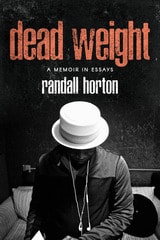
Dead Weight
A Memoir in EssaysRandall Horton
Northwestern University Press, 2022
The memoir begins with a conversation between Horton and Ralph Ellison’s Invisible Man statue in New York City. Their imagined dialogue examines the psychological impact of racism on Black men and boys, including Horton’s separation from his mother, immediately after his birth, in a segregated Alabama hospital. From his current life as a professor and prison reformer, Horton looks back on his experiences as a drug smuggler and trafficker during the 1980s–1990s as well as the many obstacles he faced after his release. He also examines the lasting impact of his drug activity on those around him, reflecting on the allure of economic freedom and the mental escapism that cocaine provided, an allure so strong that both sellers and users were willing to risk prison. Horton shares historical context and vivid details about people caught in the war on drugs who became unsuspecting protagonists in somebody else’s melodrama.
Lyrical and gripping, Dead Weight reveals the lifelong effects of one man’s incarceration on his psyche, his memories, and his daily experience of American society.
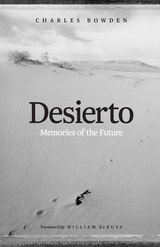
Desierto
Memories of the FutureBy Charles Bowden, foreword by William deBuys
University of Texas Press, 2018
“A dark, troubling vision of life in the desert, defined broadly; of mountain lions and drug kingpins, Mexican hopes and Indian feuds.”
—Los Angeles Times
“In these powerful epic tales of the Sonora Desert, Bowden peoples the harsh land on both sides of the US-Mexican border with saints and sinners, but his enduring hero is the desert itself.”
—Kirkus Reviews
Drug Smugglers on Drug Smuggling
Lessons from the InsideScott H. Decker and Margaret Townsend Chapman
Temple University Press, 2008
Quoting frequently from their interviews, Decker and Chapman explain how individuals are recruited into smuggling, why they stay in it, and how their roles change over time. They describe the specific strategies their interviewees employed to bring drugs into the country and how they previously escaped apprehension. Over-all, the authors find that drug smuggling is organized in a series of networks which are usually unconnected.
This extraordinarily informative book will be of particular interest to law enforcement officials and policymakers, but it will appeal to anyone who wants to know how the drug business actually works.
El Narcotraficante
Narcocorridos and the Construction of a Cultural Persona on the U.S.–Mexico BorderBy Mark Cameron Edberg
University of Texas Press, 2004
Since the late 1970s, a new folk hero has risen to prominence in the U.S.-Mexico border region and beyond—the narcotrafficker. Celebrated in the narcocorrido, a current form of the traditional border song known as the corrido, narcotraffickers are often portrayed as larger-than-life "social bandits" who rise from poor or marginalized backgrounds to positions of power and wealth by operating outside the law and by living a life of excess, challenging authority (whether U.S. or Mexican), and flouting all risks, including death. This image, rooted in Mexican history, has been transformed and commodified by the music industry and by the drug trafficking industry itself into a potent and highly marketable product that has a broad appeal, particularly among those experiencing poverty and power disparities. At the same time, the transformation from folk hero to marketable product raises serious questions about characterizations of narcocorridos as "narratives of resistance."
This multilayered ethnography takes a wide-ranging look at the persona of the narcotrafficker and how it has been shaped by Mexican border culture, socioeconomic and power disparities, and the transnational music industry. Mark Edberg begins by analyzing how the narcocorrido emerged from and relates to the traditional corrido and its folk hero. Then, drawing upon interviews and participant-observation with corrido listening audiences in the border zone, as well as musicians and industry producers of narcocorridos, he elucidates how the persona of the narcotrafficker has been created, commodified, and enacted, and why this character resonates so strongly with people who are excluded from traditional power structures. Finally, he takes a look at the concept of the cultural persona itself and its role as both cultural representation and model for practice.
Land of Opportunity
One Family's Quest for the American Dream in the Age of CrackWilliam M. Adler
University of Michigan Press, 2021
Living in the Crossfire
Favela Residents, Drug Dealers, and Police Violence in Rio de JaneiroAuthored by Maria Helena Moreira Alves and Philip Evanson
Temple University Press, 2011
For all of Brazil's efforts to reduce poverty-and its progress-the favelas in Rio de Janeiro still house one-third of the city's poor, and violence permeates every aspect of the city. As urban drug gangs and police wage war in the streets, favela residents who are especially vulnerable live in fear of being caught in the crossfire. Politicians, human rights activists, and security authorities have been working to minimize the social and economic problems at the root of this "war."
Living in the Crossfire presents impassioned testimony from officials, residents, and others in response to the ongoing crisis. Maria Helena Moreira Alves and Philip Evanson provide vivid accounts from grieving mothers and members of the police working to stop the war and, among officials, from Brazil's President Luis Inácio Lula da Silva, who discusses his efforts to improve public security.
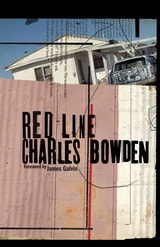
Red Line
By Charles Bowden, foreword by James Galvin
University of Texas Press, 2018
“At its best, Red Line can read like an original synthesis of Peter Matthiessen and William Burroughs . . . a brave and interesting book.”
—David Rieff, Los Angeles Times Book Review
“Charles Bowden’s Red Line is a look at America through the window of the southwest. His vision is as nasty, peculiar, brutal, as it is intriguing and, perhaps, accurate. Bowden offers consciousness rather than consolation, but in order to do anything about our nightmares we must take a cold look and Red Line casts the coldest eye in recent memory.”
—Jim Harrison
One of Charles Bowden’s earliest books, Red Line powerfully conveys a desert civilization careening over the edge—and decaying at its center. Bowden’s quest for the literal and figurative truth behind the assassination of a murderous border-town drug dealer becomes a meditation on the glories of the desert landscape, the squalors of the society that threatens it, and the contradictions inherent in trying to save it.