Results by title

9 books match the query 'Ecology in art'
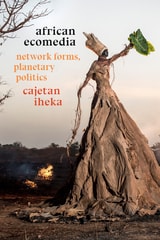
cover of African Ecomedia: Network Forms, Planetary Politics

African Ecomedia

Network Forms, Planetary Politics

Cajetan Iheka

Duke University Press, 2021

In African Ecomedia, Cajetan Iheka examines the ecological footprint of media in Africa alongside the representation of environmental issues in visual culture. Iheka shows how, through visual media such as film, photography, and sculpture, African artists deliver a unique perspective on the socioecological costs of media production, from mineral and oil extraction to the politics of animal conservation. Among other works, he examines Pieter Hugo's photography of electronic waste recycling in Ghana and Idrissou Mora-Kpai's documentary on the deleterious consequences of uranium mining in Niger. These works highlight not only the exploitation of African workers and the vast scope of environmental degradation but also the resourcefulness and creativity of African media makers. They point to the unsustainability of current practices while acknowledging our planet's finite natural resources. In foregrounding Africa's centrality to the production and disposal of media technology, Iheka shows the important place visual media has in raising awareness of and documenting ecological disaster even as it remains complicit in it.
[more]
cover of Beyond the World's End: Arts of Living at the Crossing

Beyond the World's End

Arts of Living at the Crossing

T. J. Demos

Duke University Press, 2020
In Beyond the World's End T. J. Demos explores cultural practices that provide radical propositions for living in a world beset by environmental and political crises. Rethinking relationships between aesthetics and an expanded political ecology that foregrounds just futurity, Demos examines how contemporary artists are diversely addressing urgent themes, including John Akomfrah's cinematic entanglements of racial capitalism with current environmental threats, the visual politics of climate refugees in work by Forensic Architecture and Teddy Cruz and Fonna Forman, and moving images of Afrofuturist climate justice in projects by Arthur Jafa and Martine Syms. Demos considers video and mixed-media art that responds to resource extraction in works by Angela Melitopoulos, Allora & Calzadilla, and Ursula Biemann, as well as the multispecies ecologies of Terike Haapoja and Public Studio. Throughout Demos contends that contemporary intersections of aesthetics and politics, as exemplified in the Standing Rock #NoDAPL campaign and the Zad's autonomous zone in France, are creating the imaginaries that will be crucial to building a socially just and flourishing future.
[more]
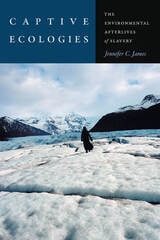
cover of Captive Ecologies: The Environmental Afterlives of Slavery

Captive Ecologies

The Environmental Afterlives of Slavery

Jennifer C. James

Duke University Press, 2026
Captive Ecologies makes a case for the ecological significance of slavery’s afterlife, tracing the complex entanglements between racial capitalism and Black ecological freedom. Attending to the ways that racial capitalism implicates both captive bodies and captive land, Jennifer C. James brings into relief the harm that racial capitalism does to Black people as well as the human and non-human worlds they inhabit. James looks to a range of case studies and media from the nineteenth, twentieth, and twenty-first centuries, including Black music, ecopoetics, literature, social history, biography, and Black feminist and queer art, tracing the various ways that the environmental stakes of racial capitalism have shaped the Black ecological imagination. In these works, the concept of captivity signals not only slavery but also Black life in the “wake”: carceral spaces and enclosures, exploitative economic systems, sacrifice zones, and more. James offers novel concepts and frameworks to generate new modes of ecocriticism that are equipped to grapple with the unique demands and stakes of captive ecologies.
[more]
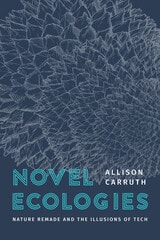
cover of Novel Ecologies: Nature Remade and the Illusions of Tech

Novel Ecologies

Nature Remade and the Illusions of Tech

Allison Carruth

University of Chicago Press, 2025

Tracing the convergence of ecology and engineering over the last three decades, this book pinpoints a new environmental paradigm that the author calls Nature Remade.

Allison Carruth’s Novel Ecologies shows how the tech industry has taken up the wilderness mythologies that shaped one strain of American environmentalism over the last century. Calling this twenty-first-century environmental imagination Nature Remade, Carruth describes a distinctly West Coast framework that is at once nostalgic and futuristic. Through three case studies (synthetic wildlife, the digital cloud, and space colonization), the book shows Nature Remade to be a quasi-religious belief in venture capitalism and big tech. This paradigm thus imagines a future in which species, ecosystems, and entire planets are re-generated and re-created through engineering.

Novel Ecologies challenges the conviction that climate change and other environmental crises must be met with ever larger-scale forms of technological intervention. Against the new worlds conjured by Google, Meta, Open AI, Amazon, SpaceX, and a host of lesser-known start-ups, Carruth marshals writers and artists who imagine provisionally hopeful environmental futures while refusing to forget the histories that have made the world what it is. On this track of the book, Carruth discusses the works of Octavia Butler, Becky Chambers, Jennifer Egan, Ruth Ozeki, Craig Santos Perez, Tracy K. Smith, Jeff VanderMeer, Saya Woolfalk, and many more. Their novels, poems, installation artworks, and expressive media offer a speculative world built on livable communities rather than engineered lifeforms.
[more]
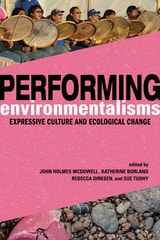
cover of Performing Environmentalisms: Expressive Culture and Ecological Change

Performing Environmentalisms

Expressive Culture and Ecological Change

Edited by John Holmes McDowell, Katherine Borland, Rebecca Dirksen, and Sue Tuohy

University of Illinois Press, 2021

Performing Environmentalisms examines the existential challenge of the twenty-first century: improving the prospects for maintaining life on our planet. The contributors focus on the strategic use of traditional artistic expression--storytelling and songs, crafted objects, and ceremonies and rituals--performed during the social turmoil provoked by environmental degradation and ecological collapse. Highlighting alternative visions of what it means to be human, the authors place performance at the center of people's responses to the crises. Such expression reinforces the agency of human beings as they work, independently and together, to address ecological dilemmas. The essays add these people's critical perspectives--gained through intimate struggle with life-altering force--to the global dialogue surrounding humanity's response to climate change, threats to biocultural diversity, and environmental catastrophe.

Interdisciplinary in approach and wide-ranging in scope, Performing Environmentalisms is an engaging look at the merger of cultural expression and environmental action on the front lines of today's global emergency.

Contributors: Aaron S. Allen, Eduardo S. Brondizio, Assefa Tefera Dibaba, Rebecca Dirksen, Mary Hufford, John Holmes McDowell, Mark Pedelty, Jennifer C. Post, Chie Sakakibara, Jeff Todd Titon, Rory Turner, Lois Wilcken
[more]
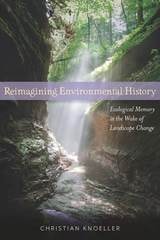
cover of Reimagining Environmental History: Ecological Memory in the Wake of Landscape Change

Reimagining Environmental History

Ecological Memory in the Wake of Landscape Change

Christian Knoeller

University of Nevada Press, 2017

Christian Knoeller presents a radical reinterpretation of environmental history set in the heartland of America. In an excellent model of narrative-based scholarship, this book dynamically reimagines American environmentalism across generations of writers, artists, and scientists. Knoeller starts out with Audubon, and cites Thoreau’s journals in the 1850s as he assesses an early 17th century account of New England’s natural resources by William Wood, showing the epic decline in game and bird populations in Concord. This reading of environmental history is replicated throughout with a gallery of novelists, poets, essayists, and other commentators as they explore ecological memory and environmental destruction. In apt discussions of Matthiessen, Lopez, Wendell Berry, William Stafford and many others, Knoeller offers vibrant insights into literary history. He also cites his own memoir of perpetual development on his family’s farm in Indiana, enriching the scholarship and making an urgent plea for the healing aesthetics of the imagination.
 
Reading across centuries and genres, Knoeller gives us a vibrant new appraisal of Midwestern/North American interior literary traditions and makes clear how vital environmental writing is to this region. To date, no one has written such an eloquent and comprehensive cross-genre analysis of Midwestern environmental literature.
[more]
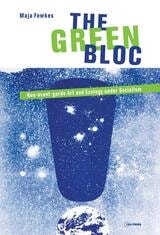
cover of The Green Bloc: Neo-avant-garde Art and Ecology under Socialism

The Green Bloc

Neo-avant-garde Art and Ecology under Socialism

Maja Fowkes

Central European University Press, 2015
Expanding the horizon of established accounts of Central European art under socialism, this book uncovers the neglected history of artistic engagement with the natural environment in the Eastern Bloc. The turbulent legacy of 1968, which saw the confluence of political upheaval, spread of counterculture, rise of ecological consciousness, and emergence of global conceptual art, provides the setting for Maja Fowkes’s innovative reassessment of the environmental practice of the Central European neo-avant-garde. Focussing on artists and artist groups whose ecological dimension has rarely been considered, including the Pécs Workshop from Hungary, OHO in Slovenia, TOK in Croatia, Rudolf Sikora in Slovakia, and the Czech artist Petr Štembera, 'The Green Bloc: Neo-avant-garde Art and Ecology under Socialism' brings to light an array of distinctive approaches to nature, from attempts to raise environmental awareness among socialist citizens to the exploration of non-anthropocentric positions and the quest for cosmological existence in the midst of red ideology. Embedding artistic production in social, political, and environmental histories of the region, this book reveals the Central European artists’ sophisticated relationship to nature, at the precise moment when ecological crisis was first apprehended on a planetary scale.
[more]
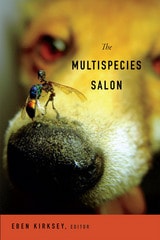
cover of The Multispecies Salon

The Multispecies Salon

Eben Kirksey

Duke University Press, 2014

A new approach to writing culture has arrived: multispecies ethnography. Plants, animals, fungi, and microbes appear alongside humans in this singular book about natural and cultural history. Anthropologists have collaborated with artists and biological scientists to illuminate how diverse organisms are entangled in political, economic, and cultural systems. Contributions from influential writers and scholars, such as Dorion Sagan, Karen Barad, Donna Haraway, and Anna Lowenhaupt Tsing, are featured along with essays by emergent artists and cultural anthropologists.

Delectable mushrooms flourishing in the aftermath of ecological disaster, microbial cultures enlivening the politics and value of food, and nascent life forms running wild in the age of biotechnology all figure in this curated collection of essays and artifacts. Recipes provide instructions on how to cook acorn mush, make cheese out of human milk, and enliven forests after they have been clear-cut. The Multispecies Salon investigates messianic dreams, environmental nightmares, and modest sites of biocultural hope.

For additional materials see the companion website:
www.multispecies-salon.org/

Contributors. Karen Barad, Caitlin Berrigan, Karin Bolender, Maria Brodine, Brandon Costelloe-Kuehn, David S. Edmunds, Christine Hamilton, Donna J. Haraway, Stefan Helmreich, Angela James, Lindsay Kelley, Eben Kirksey, Linda Noel, Heather Paxson, Nathan Rich, Anna Rodriguez, Dorion Sagan, Craig Schuetze, Nicholas Shapiro, Miriam Simun, Kim TallBear, Anna Lowenhaupt Tsing
 
[more]
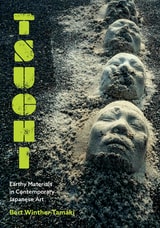
cover of Tsuchi: Earthy Materials in Contemporary Japanese Art

Tsuchi

Earthy Materials in Contemporary Japanese Art

Bert Winther-Tamaki

University of Minnesota Press, 2022

An examination of Japanese contemporary art through the lens of ecocriticism and environmental history

Collectively referred to by the word tsuchi, earthy materials such as soil and clay are prolific in Japanese contemporary art. Highlighting works of photography, ceramics, and installation art, Bert Winther-Tamaki explores the many aesthetic manifestations of tsuchi and their connection to the country’s turbulent environmental history, investigating how Japanese artists have continually sought a passionate and redemptive engagement with earth.

In the seven decades following 1955, Japan has experienced severe environmental degradation as a result of natural disasters, industrial pollution, and nuclear irradiation. Artists have responded to these ongoing catastrophes through modes of “mudlarking” and “muckracking,” utilizing raw elements from nature to establish deeper contact with the primal resources of their world and expose its unfettered contamination. Providing a comparative assessment of more than seventy works of art, this study reveals Japanese artists’ engagement with a richly diverse repertoire of earthy materialities, elucidating their aesthetic properties, changing conditions, and cultural significance. 

By focusing on the role of tsuchi as a convergence point for a wide range of creative practices, this book offers a critical reassessment of contemporary art in Japan and its intrinsic relationship to the environment. Situating art within the context of ecology and urbanization, Tsuchi shows artists striving to explore and reprocess raw forms of earth beneath the corruptions of human activity.

[more]