Results by title
300 books match the query 'Economic Development' and 20 start with a
A New Architecture for the U.S. National Accounts
Edited by Dale W. Jorgenson, J. Steven Landefeld, and William D. Nordhaus
University of Chicago Press, 2006
Since the United States economy accounts for almost thirty percent of the world economy, it is not surprising that accounting for this huge and diverse set of economic activities requires a decentralized statistical system. This volume outlines the major assignments among institutions that include the Bureau of Economic Analysis, the Bureau of Labor Statistics, the Department of Labor, the Census Bureau, and the Governors of the Federal Reserve System.
An important part of the motivation for the new architecture is to integrate the different components and make them consistent. This volume is the first step toward achieving that goal.
A Report of the International Commission for Central American Recovery and Development
William L. Ascher and Ann Hubbard, editors
Duke University Press, 1989
The International Commission for Central American Recovery and Development (ICCARD) was formed to provide a thorough diagnosis and analysis of Central America’s problems and to draft a comprehensive long-term strategy to move the region from decline to development. In this report ICCARD—through forty-five international experts in economics, public policy, management, and development it assembled for this purpose—attempts to rise above rhetoric and simplistic remedies to focus on well-reasoned, thorough, and realistic approaches to economic and social development.
This volume reviews the unequal access of marginal groups to political and economic participation, the precarious situation of Central American financial institutions, the international debt situation, the prospects for regional political and economic integration, and other aspects of regional development. Each of these challenges is addressed by specific recommendations to the Central American governments, the governments of the industrialized nations, and international organizations.

A Social Ecology of Capital
Éric Pineault
Pluto Press, 2022
An original theory of contemporary capitalist growth and its socio-ecological contradictions
Capital is pushing into motion ever larger global material flows. In doing so it has come to depend on massive expenditures of energy, putting to work fossil fuels and the machines they animate to transform the world, accumulate power and grow the economy. The ecological relations and crises of today’s societies are driven by the processes of extraction of the elements that come together as a throughput of material and energy flows controlled by capital and shaped by its imperative of valorization.
In A Social Ecology of Capital, Éric Pineault proposes an original model of the fossil social metabolism that has sustained the growth of advanced capitalism in the last century.
Drawing on ecological economics and critical political economy, the book analyses how the social structures of accumulation, production, consumption and waste determine and regulate the material flow and the accumulation of material artifacts. Showing how social relations shape the ecology of capital, the book highlights the contradictions humanity now faces.

A Society for International Development
Prospectus 1984Ann Mattis, ed.
Duke University Press, 1983
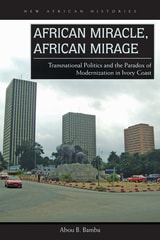
African Miracle, African Mirage
Transnational Politics and the Paradox of Modernization in Ivory CoastAbou B. Bamba
Ohio University Press, 2016
Throughout the 1960s and 1970s, Ivory Coast was touted as an African miracle, a poster child for modernization and the ways that Western aid and multinational corporations would develop the continent. At the same time, Marxist scholars—most notably Samir Amin—described the capitalist activity in Ivory Coast as empty, unsustainable, and incapable of bringing real change to the lives of ordinary people. To some extent, Amin’s criticisms were validated when, in the 1980s, the Ivorian economy collapsed.
In African Miracle, African Mirage, Abou B. Bamba incorporates economics, political science, and history to craft a bold, transnational study of the development practices and intersecting colonial cultures that continue to shape Ivory Coast today. He considers French, American, and Ivorian development discourses in examining the roles of hydroelectric projects and the sugar, coffee, and cocoa industries in the country’s boom and bust. In so doing, he brings the agency of Ivorians themselves to the fore in a way not often seen in histories of development. Ultimately, he concludes that the “maldevelopment” evident by the mid-1970s had less to do with the Ivory Coast’s “insufficiently modern” citizens than with the conflicting missions of French and American interests within the context of an ever-globalizing world.
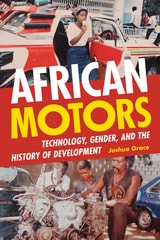
African Motors
Technology, Gender, and the History of DevelopmentJoshua Grace
Duke University Press, 2021
African Successes, Volume I
Government and InstitutionsEdited by Sebastian Edwards, Simon Johnson, and David N. Weil
University of Chicago Press, 2016
The first volume in the series, African Successes: Governments and Institutions considers the role governments and institutions have played in recent developments and identifies the factors that enable economists to predict the way institutions will function.
African Successes, Volume II
Human CapitalEdited by Sebastian Edwards, Simon Johnson, and David N. Weil
University of Chicago Press, 2016
The second volume in the series, African Successes: Human Capital turns the focus toward Africa’s human capital deficit, measured in terms of health and schooling. It offers a close look at the continent’s biggest challenges, including tropical disease and the spread of HIV.
African Successes, Volume III
Modernization and DevelopmentEdited by Sebastian Edwards, Simon Johnson, and David N. Weil
University of Chicago Press, 2016
The third volume in the series, African Successes: Modernization and Development looks at the rise in private production in spite of difficult institutional and physical environments. The volume emphasizes the ways that technologies, including mobile phones, have made growth in some areas especially dynamic.
African Successes, Volume IV
Sustainable GrowthEdited by Sebastian Edwards, Simon Johnson, and David N. Weil
University of Chicago Press, 2016
The fourth volume in the series, African Successes: Sustainable Growth combines informative case studies with careful empirical analysis to consider the prospects for future African growth.

After the Berlin Wall
A History of the EBRD, Volume 1Andrew Kilpatrick
Central European University Press, 2020
After the Berlin Wall tells the inside story of an international financial institution, the European Bank for Reconstruction and Development (EBRD), created in the aftermath of communism to help the countries of central and eastern Europe transition towards open market-oriented democratic economies.
The first volume of a history in two parts, After the Berlin Wall charts the EBRD’s life from a fledgling high-risk start-up investing in former socialist countries from 1991 to become an established member of the international financial community, which (as of April 2020) operates in almost 40 countries across three continents.
This volume describes the multilateral negotiations that created this cosmopolitan institution with a ‘European character’ and the emergence of the EBRD’s unique business model: a focus on the private sector and a mission to deliver development impact with sustainable financial returns. The author recounts the challenges that ‘transition’ countries faced in moving from a defunct to a functioning economic system and maps the EBRD’s response to critical events, from the dissolution of the Soviet Union, to the safe confinement of the Chernobyl disaster site, the debt default in Russia and the onset of the global financial crisis in 2008.
Agrarian Environments
Resources, Representations, and Rule in IndiaArun Agrawal, ed.
Duke University Press, 2000
Editors Arun Agrawal and K. Sivaramakrishnan claim that rural social change in India cannot be understood without exploring how environmental changes articulate major aspects of agrarian transformations—technological, cultural, and political—in the last two centuries. In order to examine these issues, they have reached beyond the confines of single disciplinary allegiances or methodological loyalties to bring together anthropologists, historians, political scientists, geographers, and environmental scientists who are significantly informed by interdisciplinary research. Drawing on extensive field and archival research, the contributors demonstrate the powerful political implications of blurring the boundaries between dichotomous cultural representations, combine conceptual analyses with specific case studies, and look at why competing powers chose to emphasize particular representations of land use or social relations. By providing a more textured analysis of how categories emerge and change, this work offers the possibility of creating crucial alliances across populations that have historically been assumed to lack mutual goals.
Agrarian Environments will be valuable to those in political science, Asian studies, and environmental studies.
Contributors. Arun Agrawal, Mark Baker, Molly Chattopadhyaya, Vinay Gidwani, Sumit Guha, Shubhra Gururani, Cecile Jackson, David Ludden, Haripriya Rangan, Paul Robbins, Vasant Saberwal, James C. Scott, K. Sivaramakrishnan, Ajay Skaria, Jennifer Springer, Darren Zook

Aid to Africa
So Much To Do, So Little DoneCarol Lancaster
University of Chicago Press, 1999
This balanced but tough-minded analysis does not reject the potential usefulness of foreign aid but does offer recommendations for fundamental changes in how governments and multilateral aid agencies can operate more effectively.
Ambition and Adjustment
The Making and Unmaking of Postcolonial Development in AfricaPriya Lal
University of Chicago Press, 2026
How the best intentions of African socialism became the useful tools of capitalism.
In the mid-twentieth century, skilled labor was seen as the key to national development. For newly independent African countries, this posed a formidable challenge: to build thriving economies, they needed to rapidly educate workers. As it turns out, that wasn’t their only obstacle.
Ambition and Adjustment reveals how responses to this human capital problem from the political left and right converged in unlikely ways to block Africa’s postcolonial progress. Focusing on nation-building projects in Zambia and Tanzania, Priya Lal recounts how the first generations of Africa’s professional class faced pressures on all sides—from foreign planners prioritizing economic growth and from local socialists decrying higher education and professionalization as wasteful and elitist. When African development stalled, international institutions like the World Bank took up parts of both approaches, justifying structural adjustment programs that defunded African universities and hospitals in the name of social equity. Indeed, Lal shows that neoliberal austerity in the 1990s was packaged in Africa’s socialist narratives from the 1960s.
By unearthing this forgotten history, Ambition and Adjustment upends traditional accounts of postcolonial development, exposing how socialism and capitalism both conflicted and overlapped to shape Africa’s trajectory since independence.
Anthropology and Development
Challenges for the Twenty-First CenturyKaty Gardner and David Lewis
Pluto Press, 2015
Aníbal Quijano
Foundational Essays on the Coloniality of PowerAnibal Quijano. Edited by Walter D. Mignolo, Rita Segato, and Catherine E. Walsh
Duke University Press, 2024
Apartheid’s Leviathan
Electricity and the Power of Technological AmbivalenceFaeeza Ballim
Ohio University Press, 2023

Applied General Equilibrium and Economic Development
Present Achievements and Future TrendsJean Mercenier and T. N. Srinivasan, Editors
University of Michigan Press, 1994
Austerities and Aspirations
A Comparative History of Growth, Consumption, and Quality of Life in East Central Europe since 1945Béla Tomka
Central European University Press, 2020
This monograph provides an analysis of the economic performance and living standard in Czechoslovakia and its successor states, Hungary, and Poland since 1945. The novelty of the book lies in its broad comparative perspective: it places East Central Europe in a wider European framework that underlines the themes of regional disparities and European commonalities. Going beyond the traditional growth paradigm, the author systematically studies the historical patterns of consumption, leisure, and quality of life—aspects that Tomka argues can best be considered in relation to one other. By adopting this “triple approach,” he undertakes a truly interdisciplinary research drawing from history, economics, sociology, and demography.
As a result of Tomka’s three-pillar comparative analysis, the book makes a major contribution to the debates on the dynamics of economic growth in communist and postcommunist East Central Europe, on the socialist consumer culture along with its transformation after 1990, and on how the accounts on East Central Europe can be integrated into the emerging field of historical quality of life research.

Aymara Indian Perspectives on Development in the Andes
Amy Eisenberg
University of Alabama Press, 2013
Aymara Indians are a geographically isolated, indigenous people living in the Andes Mountains near Chile’s Atacama Desert, one of the most arid regions of the world. As rapid economic growth in the area has begun to divert scarce water to hydroelectric and agricultural projects, the Aymara struggle to maintain their sustainable and traditional systems of water use, agriculture, and pastoralism.
In Aymara Indian Perspectives on Development in the Andes, Amy Eisenberg provides a detailed exploration of the ethnoecological dimensions of the tension between the Aymara, whose economic, spiritual, and social life are inextricably tied to land and water, and three major challenges: the paving of Chile Highway 11, the diversion of the Altiplano waters of the Río Lauca for irrigation and power-generation, and Chilean national park policies regarding Aymara communities, their natural resources, and cultural properties within Parque Nacional Lauca, the International Biosphere Reserve.
Pursuing collaborative research, Eisenberg performed ethnographic interviews with Aymara people in more than sixteen Andean villages, some at altitudes of 4,600 meters. Drawing upon botany, agriculture, natural history, physical and cultural geography, history, archaeology, and social and environmental impact assessment, she presents deep, multifaceted insights from the Aymara’s point of view.
Illustrated with maps and dramatic photographs by John Amato, Aymara Indian Perspectives on Development in the Andes provides an account of indigenous perspectives and concerns related to economic development that will be invaluable to scholars and policy-makers in the fields of natural and cultural resource preservation in and beyond Chile.