Results by title
18 books match the query 'Economic development projects'

Batman Saves the Congo
How Celebrities Disrupt the Politics of DevelopmentAlexandra Cosima Budabin
University of Minnesota Press, 2021
How celebrity strategic partnerships are disrupting humanitarian space
Can a celebrity be a “disrupter,” promoting strategic partnerships to bring new ideas and funding to revitalize the development field—or are celebrities just charismatic ambassadors for big business? Examining the role of the rich and famous in development and humanitarianism, Batman Saves the Congo argues that celebrities do both, and that understanding why and how yields insight into the realities of neoliberal development.
In 2010, entertainer Ben Affleck, known for his superhero performance as Batman, launched the Eastern Congo Initiative to bring a new approach to the region’s development. This case study is central to Batman Saves the Congo. Affleck’s organization operates with special access, diversified funding, and significant support of elites within political, philanthropic, development, and humanitarian circuits. This sets it apart from other development organizations. With his convening power, Affleck has built partnerships with those inside and outside development, staking bipartisan political ground that is neither charity nor aid but “good business.” Such visible and recognizable celebrity humanitarians are occupying the public domain yet not engaging meaningfully with any public, argues Batman Saves the Congo. They are an unruly bunch of new players in development who amplify business solutions.
As elite political participants, celebrities shape development practices through strategic partnerships that are both an innovative way to raise awareness and funding for neglected causes and a troubling trend of unaccountable elite leadership in North–South relations. Batman Saves the Congo helps illuminate the power of celebritized business solutions and the development contexts they create.
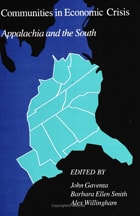
Communities In Economic Crisis
edited by John Gaventa, Barbara Ellen Smith and Alex Willingham
Temple University Press, 1990
Hard times are no stranger to the people of Appalachia and the South. Earlier books have documented the low wages of the textile industry, boom-and-bust cycles of coal mining, and debt peonage of Southern agriculture that have established a heritage of poverty that endures. This book is a unique collection of essays by people who are actively involved in the efforts to challenge economic injustice in these regions and to empower the residents to build democratic alternatives.
In the series Labor and Social Change, edited by Paula Rayman and Carmen Sirianni.

Constellations of Inequality
Space, Race, and Utopia in BrazilSean T. Mitchell
University of Chicago Press, 2017
In 1982, the Brazilian Air Force arrived on the Alcântara peninsula to build a state-of-the-art satellite launch facility. They displaced some 1,500 Afro-Brazilians from coastal land to inadequate inland villages, leaving many more threatened with displacement. Completed in 1990, this vast undertaking in one of Brazil’s poorest regions has provoked decades of conflict and controversy.
Constellations of Inequality tells this story of technological aspiration and the stark dynamics of inequality it laid bare. Sean T. Mitchell analyzes conflicts over land, ethnoracial identity, mobilization among descendants of escaped slaves, military-civilian competition in the launch program, and international intrigue. Throughout, he illuminates Brazil’s changing politics of inequality and examines how such inequality is made, reproduced, and challenged. How people conceptualize and act on the unequal conditions in which they find themselves, he shows, is as much a cultural and historical matter as a material one. Deftly broadening our understanding of race, technology, development, and political consciousness on local, national, and global levels, Constellations of Inequality paints a portrait of contemporary Brazil that will interest a broad spectrum of readers.
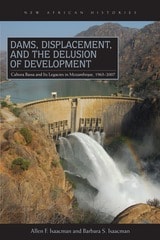
Dams, Displacement, and the Delusion of Development
Cahora Bassa and Its Legacies in Mozambique, 1965–2007Allen F. Isaacman
Ohio University Press, 2013
Cahora Bassa Dam on the Zambezi River, built in the early 1970s during the final years of Portuguese rule, was the last major infrastructure project constructed in Africa during the turbulent era of decolonization. Engineers and hydrologists praised the dam for its technical complexity and the skills required to construct what was then the world’s fifth-largest mega-dam. Portuguese colonial officials cited benefits they expected from the dam—from expansion of irrigated farming and European settlement, to improved transportation throughout the Zambezi River Valley, to reduced flooding in this area of unpredictable rainfall. “The project, however, actually resulted in cascading layers of human displacement, violence, and environmental destruction. Its electricity benefited few Mozambicans, even after the former guerrillas of FRELIMO (Frente de Libertação de Moçambique) came to power; instead, it fed industrialization in apartheid South Africa.” (Richard Roberts)
This in-depth study of the region examines the dominant developmentalist narrative that has surrounded the dam, chronicles the continual violence that has accompanied its existence, and gives voice to previously unheard narratives of forced labor, displacement, and historical and contemporary life in the dam’s shadow.

Dead in the Water
Global Lessons from the World Bank's Model Hydropower Project in LaosEdited by Bruce Shoemaker and William Robichaud; foreword by Yos Santasombat; afterword by Philip Hirsch
University of Wisconsin Press, 2019
In the 2000s, as the World Bank was reeling from revelations of past hydropower failures, it nonetheless promoted the enormous Nam Theun 2 project. NT2, the Bank believed, offered a new, wiser model of dam development that would alleviate poverty, protect the environment, engage locally affected people in a transparent fashion, and stimulate political transformation. This was a tall order. For the first time, this book shows in detail why, despite assertions of success from the World Bank and other agencies involved in the project, the dam's true story has been one of substantial loss for affected villagers and the regional environment. Nam Theun 2 is an important case study that illustrates much broader problems of global development policy.
Doing Development in West Africa
A Reader by and for UndergraduatesCharles Piot
Duke University Press, 2016

Dream Zones
Anticipating Capitalism and Development in IndiaJamie Cross
Pluto Press, 2014
Dream Zones explores the dreamed of and desired futures that constitute, sustain and disrupt capitalism in contemporary India.
Drawing on five years of research in and around India's Special Economic Zones (SEZs), the book follows the stories of regional politicians, corporate executives, rural farmers, industrial workers and social activists to show how the pursuit of growth, profit and development shapes the politics of industrialisation and liberalisation.
This book offers a timely reminder that the global economy is shaped by sentiment as much as reason and that un-realised expectations are the grounds on which new hopes for the future are sown.

Foxconned
Imaginary Jobs, Bulldozed Homes, and the Sacking of Local GovernmentLawrence Tabak
University of Chicago Press, 2021
When Wisconsin governor Scott Walker stood shoulder to shoulder with President Trump and Speaker of the House Paul Ryan at the White House in July 2017, they painted a glorious picture of his state’s future. Foxconn, the enormous China-based electronics firm, was promising to bring TV manufacturing back to the United States with a $10 billion investment and 13,000 well-paying jobs. They actually were making America great again, they crowed.
Two years later, the project was in shambles. Ten thousand construction workers were supposed to have been building what Trump had promised would be “the eighth wonder of the world.” Instead, land had been seized, homes had been destroyed, and hundreds of millions of municipal dollars had been committed for just a few hundred jobs—nowhere near enough for Foxconn to earn the incentives Walker had shoveled at them. In Foxconned, journalist Lawrence Tabak details the full story of this utter collapse, which was disturbingly inevitable.
As Tabak shows, everything about Foxconn was a disaster. But worse, he reveals how the economic incentive infrastructure across the country is broken, leading to waste, cronyism, and the steady transfer of tax revenue to corporations. Tabak details every kind of financial chicanery, from eminent domain abuse to good old-fashioned looting—all to benefit a coterie of consultants, politicians, and contractors. With compassion and care, he also reports the distressing stories of the many individuals whose lives were upended by Foxconn.

Girl Power?
A History of Girl-Focused Development from NairobiSarah Bellows-Blakely
University of Chicago Press, 2025
Girl-focused education programs have long been at the heart of international policymaking—when girls’ access to education is ensured, the reasoning goes, they are more likely to turn into productive adults who can drive economic growth. These ideas combine strands of feminism and capitalism that have a specific and understudied origin. In this book, historian Sarah Bellows-Blakely shows how a doctored study of girls’ education in East and Southern Africa led to the creation of international norms in the United Nations that would go on to guide policymaking on women’s rights and economic growth, promoting neoliberal feminist policy at the expense of other forms of gender-based justice.
Focusing on the growth of free-market feminism and girl-focused economic development planning through the relationship between UNICEF and the Nairobi-based NGO FEMNET, Bellows-Blakely reveals how their joint efforts set the blueprints for linked movements of economic development and women’s rights that are still ongoing. Through a narrative of the UNICEF-FEMNET lobbying campaign, Bellows-Blakely shows how multiple, contested girl-focused visions of economic programming and gender justice became selectively erased in favor of an approach to global policy centered on the free-market construction and strategic deployment of the African “girl child.”
Logics of Empowerment
Development, Gender, and Governance in Neoliberal IndiaAradhana Sharma
University of Minnesota Press, 2008
A critical look at the globally dominant development strategy of “empowerment”
Celebratory news features about India’s thriving middle class tell only part of the story of the country’s recent economic rise, frequently glossing over the 300 million Indians who live on the margins and struggle to survive under economic liberalization. How do those cast out of their country’s successes perceive and respond to their position and mobilize against disempowerment?
In Logics of Empowerment, Aradhana Sharma takes up these questions, focusing on the work of an innovative women’s program called Mahila Samakhya that is part governmental and part nongovernmental and strives to empower those rural Indian women who have been pushed aside. She details the awkward ideological articulations and paradoxical outcomes of this unique activist-cum-government organizational structure and usage of empowerment. Bringing much-needed specificity to the study of neoliberalism, Logics of Empowerment fosters a deeper understanding of development and politics in contemporary India.
Mekong Dreaming
Life and Death along a Changing RiverAndrew Alan Johnson
Duke University Press, 2020
Modernism’s Magic Hat
Architecture and the Illusion of Development without CapitalIjlal Muzaffar
University of Texas Press, 2024
Examines the role of architecture in the history of global development and decolonization.
In Modernism’s Magic Hat, Ijlal Muzaffar examines how modern architects and planners help resolve one of the central dilemmas of the mid-twentieth-century world order: how to make decolonization plausible without accounting for centuries of capital drain under colonial rule. In the years after World War II, architects and planners found extensive opportunities in new international institutions—such as the World Bank, the UN, and the Ford Foundation—and helped shape new models of global intervention that displaced the burden of change onto the inhabitants. Muzaffar argues that architecture in this domain didn’t just symbolically represent power, but formed the material domain through which new modes of power acquired sense. Looking at a series of architectural projects across the world, from housing in Ghana to village planning in Nigeria and urban planning in Venezuela and Pakistan, Muzaffar explores how architects and planners shaped new ideas of time, land, climate, and the decolonizing body, making them appear as sources of untapped value. What resulted, Muzaffar argues, is a widespread belief in spontaneous Third World “development” without capital, which continues to foreclose any global discussion of colonial theft.
Money and Power
Great Predators in the Political Economy of DevelopmentSarah Bracking
Pluto Press, 2009
Sarah Bracking explores the role of governments and development finance institutions in managing the markets in which the poorest countries operate. These institutions -- the 'Great Predators' -- are trapping the populations of the south in a permanent cycle of austerity.
Bracking examines the political economy relations between states. She shows how pseudo-public 'development' institutions retain complete economic control over Southern markets, yet the international system is itself unregulated. Operating in the interests of North America and the European Union, they have a political purpose, and yet serve to cloud the brute power relations between states.
This book will be of interest to anyone studying debt and development, global financial institutions, and the way the world economy is regulated and governed.
Palestine Is Throwing a Party and the Whole World Is Invited
Capital and State Building in the West BankKareem Rabie
Duke University Press, 2021

The Concepts, Process and Methods of Social Impact Assessment
Rabel Burdge
University Press of Colorado, 2015

Transforming Markets
A Development Bank for the 21st Century. A History of the EBRD, Volume 2Andrew Kilpatrick
Central European University Press, 2021
Under Construction
Technologies of Development in Urban EthiopiaDaniel Mains
Duke University Press, 2019
Workforce Development Politics
Civic Capacity And Performanceedited by Robert P. Giloth, Published in association with the Annie E. Casey Foundation.
Temple University Press, 2004