Results by title

13 books match the query 'Economic integration'

cover of A Report of the International Commission for Central American Recovery and Development

A Report of the International Commission for Central American Recovery and Development

William L. Ascher and Ann Hubbard, editors

Duke University Press, 1989

The 1980s were one of the most turbulent decades in Central America’s history, a history that has been marked by more than its share of strife and upheaval. The wars, economic hardship, and political unrest and instability that have dominated news of the region have been years in the making, the products of flawed and inequitable economic, social, and political structures.
The International Commission for Central American Recovery and Development (ICCARD) was formed to provide a thorough diagnosis and analysis of Central America’s problems and to draft a comprehensive long-term strategy to move the region from decline to development. In this report ICCARD—through forty-five international experts in economics, public policy, management, and development it assembled for this purpose—attempts to rise above rhetoric and simplistic remedies to focus on well-reasoned, thorough, and realistic approaches to economic and social development.
This volume reviews the unequal access of marginal groups to political and economic participation, the precarious situation of Central American financial institutions, the international debt situation, the prospects for regional political and economic integration, and other aspects of regional development. Each of these challenges is addressed by specific recommendations to the Central American governments, the governments of the industrialized nations, and international organizations.
[more]
cover of Beyond Smoke and Mirrors: Mexican Immigration in an Era of Economic Integration

Beyond Smoke and Mirrors

Mexican Immigration in an Era of Economic Integration

Douglas S. Massey

Russell Sage Foundation, 2002
Migration between Mexico and the United States is part of a historical process of increasing North American integration. This process acquired new momentum with the passage of the North American Free Trade Agreement in 1994, which lowered barriers to the movement of goods, capital, services, and information. But rather than include labor in this new regime, the United States continues to resist the integration of the labor markets of the two countries. Instead of easing restrictions on Mexican labor, the United States has militarized its border and adopted restrictive new policies of immigrant disenfranchisement. Beyond Smoke and Mirrors examines the devastating impact of these immigration policies on the social and economic fabric of the Mexico and the United States, and calls for a sweeping reform of the current system. Beyond Smoke and Mirrors shows how U.S. immigration policies enacted between 1986–1996—largely for symbolic domestic political purposes—harm the interests of Mexico, the United States, and the people who migrate between them. The costs have been high. The book documents how the massive expansion of border enforcement has wasted billions of dollars and hundreds of lives, yet has not deterred increasing numbers of undocumented immigrants from heading north. The authors also show how the new policies unleashed a host of unintended consequences: a shift away from seasonal, circular migration toward permanent settlement; the creation of a black market for Mexican labor; the transformation of Mexican immigration from a regional phenomenon into a broad social movement touching every region of the country; and even the lowering of wages for legal U.S. residents. What had been a relatively open and benign labor process before 1986 was transformed into an exploitative underground system of labor coercion, one that lowered wages and working conditions of undocumented migrants, legal immigrants, and American citizens alike. Beyond Smoke and Mirrors offers specific proposals for repairing the damage. Rather than denying the reality of labor migration, the authors recommend regularizing it and working to manage it so as to promote economic development in Mexico, minimize costs and disruptions for the United States, and maximize benefits for all concerned. This book provides an essential "user's manual" for readers seeking a historical, theoretical, and substantive understanding of how U.S. policy on Mexican immigration evolved to its current dysfunctional state, as well as how it might be fixed.
[more]
cover of Europe and the Euro

Europe and the Euro

Edited by Alberto Alesina and Francesco Giavazzi

University of Chicago Press, 2010
It is rare for countries to give up their currencies and thus their ability to influence such critical aspects of their economies as interest and exchange rates. Yet ten years ago a number of European countries did exactly that when they adopted the euro. Despite some dissent, there were a number of arguments in favor of this policy change: it would facilitate exchange of goods, money, and people by decreasing costs; it would increase trade; and it would enhance efficiency and competitiveness at the international level.
A decade is an ideal time frame over which to evaluate the success of the euro and whether it has lived up to expectations. To that aim, Europe and the Euro looks at a number of important issues, including the effects of the euro on reform of goods and labor markets; its influence on business cycles and trade among members; and whether the single currency has induced convergence or divergence in the economic performance of member countries. While adoption of the euro may not have met the expectations of its most optimistic proponents, the benefits have been many, and there is reason to believe that the euro is robust enough to survive recent economic shocks. This volume is an essential reference on the first ten years of the euro and the workings of a monetary union.
[more]
cover of Financial Deregulation and Integration in East Asia

Financial Deregulation and Integration in East Asia

Edited by Takatoshi Ito and Anne O. Krueger

University of Chicago Press, 1996

The increased mobility and volume of international capital flows is a striking trend in international finance. While countries worldwide have engaged in financial deregulation, nowhere is this pattern more pronounced than in East Asia, where it has affected in unanticipated ways the behavior of exchange rates, interest rates, and capital flows.

In these thirteen essays, American and Asian scholars analyze the effects of financial deregulation and integration on East Asian markets. Topics covered include the roles of the United States and Japan in trading with Asian countries, macroeconomic policy implications of export-led growth in Korea and Taiwan, the effects of foreign direct investment in China, and the impact of financial liberalization in Japan, Korea, and Singapore.

Demonstrating the complexity of financial deregulation and the challenges it poses for policy makers, this volume provides an excellent picture of the overall status of East Asian financial markets for scholars in international finance and Asian economic development.

[more]
cover of Forging an Integrated Europe

Forging an Integrated Europe

Barry Eichengreen and Jeffry Frieden, Editors

University of Michigan Press, 1998

As European integration has deepened and become more invasive, the tension between the authority of the European Union and the autonomy of member states has increased, while dissatisfaction with the political institutions of the European Union has increased dramatically. How fast and how far European integration will proceed are critical issues for scholars and policymakers in Europe and the United States. Barry Eichengreen and Jeffry Frieden have assembled a group of prominent economists and political scientists to discuss the most important--and most difficult--political and economic issues involved in European integration. The book focuses on three major issues: economic and monetary union, the reform and development of responsive political institutions for the Union, and the enlargement of the Union to include states to the east.
In examining these issues, the writers consider such prob-lems as the trade-off between the benefits of international economic cooperation and the ability to pursue domestic welfare policies; how to increase the political accountability of the institutions of the EU; and how the EU can both be enlarged in membership and deepened in terms of the powers given community institutions.
The contributors are Steven Arndt, Peter Bofinger, Christian de Boisseu, Michele Fratianni, Geoffrey Garrett, Jurgen von Hagen, Ander Todal Jenssen, Ken Kletzer, Lisa Martin, Jonathan Moses, Jean Pisani-Ferry, and Michael Wallerstein, in addition to the editors.
Barry Eichengreen is Professor of Economics, University of California, Berkeley. Jeffry Frieden is Professor of Government, Harvard University.
[more]
cover of History and Society in Central America

History and Society in Central America

By Edelberto Torres Rivas

University of Texas Press, 1993

First published in Chile in 1969 as Interpretación del desarrollo social centroamericano, this classic is now available in English. The first attempt at an integrated analysis of modern Central America's socioeconomic structure, Torres Rivas's work traces the social development of Central America from independence (1871) up to the 1960s.

Using a dependency framework, but not limited by it, Torres Rivas describes the various divisions of Central American society and their evolution within the liberal development model that has been so much a part of the past century of Central American economic history. The book is compelling in its explanation of the relationship between foreign and native elements in the social development of the region. Torres Rivas describes and analyzes the resulting long-term problems this development has posed for Central America. With a new chapter added for the English edition, History and Society in Central America remains vital for readers interested in the region.
[more]
cover of Interests and Integration: Market Liberalization, Public Opinion, and European Union

Interests and Integration

Market Liberalization, Public Opinion, and European Union

Matthew J. Gabel

University of Michigan Press, 1998

Integration in Europe has been a slow incremental process focusing largely on economic matters. Policy makers have tried to develop greater support for the European Union by such steps as creating pan-European political institutions. Yet significant opposition remains to policies such as the creation of a single currency. What explains continued support for the European Union as well as opposition among some to the loss of national control on some questions? Has the incremental process of integration and the development of institutions and symbols of a united Europe transformed public attitudes towards the European Union?
In this book, Matthew Gabel probes the attitudes of the citizens of Europe toward the European Union. He argues that differences in attitudes toward integration are grounded in the different perceptions of how economic integration will affect individuals' economic welfare and how perceptions of economic welfare effect political attitudes. Basing his argument on Easton's idea that where affective support for institutions is low, citizens will base their support for institutions on their utilitarian appraisal of how well the institutions work for them, Gabel contends that in the European Union, citizens' appraisal of the impact of the Union on their individual welfare is crucial because their affective support is quite low.
This book will be of interest to scholars studying European integration as well as scholars interested in the impact of public opinion on economic policymaking.
Matthew Gabel is Assistant Professor of Political Science, University of Kentucky.
[more]
cover of Media, Nationalism and European Identities

Media, Nationalism and European Identities

Karol Jakubowicz

Central European University Press, 2011
Explores patterns of interaction between the mass media and identity formation in the context of Europeanization. On the one hand, the major contribution of the volume is a comprehensive framework that considers media impacts on four levels of identity: European, regional, national, and ethnic minority identities. On the other hand, authors offer cutting edge analysis of the structural transformation of European media institutions, and policies that shape the future of European media.
[more]
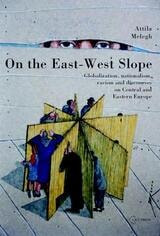
cover of On the East-West Slope: Globalization, Nationalism, Racism and Discourses on Eastern Europe

On the East-West Slope

Globalization, Nationalism, Racism and Discourses on Eastern Europe

Attila Melegh

Central European University Press, 2006
Melegh's work offers a powerful analysis of the sociological and symbolic meanings of East-West in Europe after the end of the Cold War. Melegh exposes the underbelly of liberal characterizations of East-West, highlighting the polarizing effect of extreme nationalism and ethnic racism. The theoretical underpinnings of this work involve the ideas of preeminent theorists such as Karl Mannheim, Michel Foucault and more recently Maria Todorova and Iver Neumann. The importance of this work lies in its ability to cast into fine relief how the "East-West Slope" oriented negatively from West to East has emerged from liberal characterizations of this project. In addition this is one of the first attempts to link post-colonial analysis to developments in Eastern Europe.
[more]
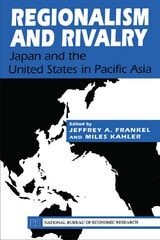
cover of Regionalism and Rivalry: Japan and the U.S. in Pacific Asia

Regionalism and Rivalry

Japan and the U.S. in Pacific Asia

Edited by Jeffrey A. Frankel and Miles Kahler

University of Chicago Press, 1993

As Japan's newfound economic power leads to increased political power, there is concern that Japan may be turning East Asia into a regional economic bloc to rival the U.S. and Europe. In Regionalism and Rivalry, leading economists and political scientists address this concern by looking at three central questions: Is Japan forming a trading bloc in Pacific Asia? Does Japan use foreign direct investment in Southeast Asia to achieve national goals? Does Japan possess the leadership qualities necessary for a nation assuming greater political responsibility in international affairs?

The authors contend that although intraregional trade in East Asia is growing rapidly, a trade bloc is not necessarily forming. They show that the trade increase can be explained entirely by factors independent of discriminatory trading arrangements, such as the rapid growth of East Asian economies. Other chapters look in detail at cases of Japanese direct investment in Southeast Asia and find little evidence of attempts by Japan to use the power of its multinational corporations for political purposes. A third group of papers attempt to gauge Japan's leadership characteristics. They focus on Japan's "technology ideology," its contributions to international public goods, international monetary cooperation, and economic liberalization in East Asia.
[more]
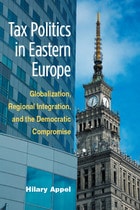
cover of Tax Politics in Eastern Europe: Globalization, Regional Integration, and the Democratic Compromise

Tax Politics in Eastern Europe

Globalization, Regional Integration, and the Democratic Compromise

Hilary Appel

University of Michigan Press, 2011

“This is the first book to systematically examine the variation in policies of Eastern European countries. There is a theoretical contribution to understandings of variation in tax policies, but just as impressive is the in-depth empirical analysis and in particular the data from interviews with key players in the process.”
—Yoshiko Herrera, University of Wisconsin-Madison

Post-Communist tax reform, like institutional reform in other areas of the post-Communist transition, holds tremendous material consequences for different groups in society. Consequently, one would expect the allocation of resources and the distribution of the financial burden of that allocation to be highly sensitive to domestic politics. Indeed the political stakes should be especially high since post-Communist tax reform requires not merely a simple adjustment at the margin, but the fundamental reallocation of the responsibility for government revenue. In Eastern Europe, however, important areas of tax policy do not reflect traditional domestic variables (e.g., interest groups and partisanship) so much as the international imperatives associated with regional and global economic integration.

In Tax Politics in Eastern Europe, Hilary Appel analyzes the domestic and international factors that drive tax policy. She begins with a review of the greatest challenges in the initial creation of the capitalist tax systems in former Communist states and then turns to the evolution of specific forms of taxation in order to gauge the relative impact of domestic politics on tax policy. Appel concludes that, although some tax areas, such as personal income taxes, remain politicized, most other taxes, such as corporate income taxes and all forms of consumption taxes, have been less subject to domestic political pressures because of powerful constraints resulting from regional and global economic integration.
[more]
cover of The Federal Future of Europe: From the European Community to the European Union

The Federal Future of Europe

From the European Community to the European Union

Dusan Sidjanski

University of Michigan Press, 2000

The European Union is building step-by-step a new federal system based on states, nations, and regions. In his authoritative and comprehensive book, Dusan Sidjanski describes the formation of the original European Community and the dynamics of the process of integration that has brought the Union to its current state. He then provides a sophisticated analytic framework for considering the future of the Union.
The author argues that federalism is the best antidote to the reemergence of nationalism in Europe. It is also the best guarantee for a peaceful community that balances the claims of national, regional, and local identity against the need for large-scale economies that springs from the forces of globalization, competition, and technical change. The Union preserves diversity within a flexible and innovating European system.
This major study of the development of the European project, informed by a thorough knowledge of the Community and Union over the years and by deep understanding of the relevant literatures in political science and political economy is important for all who study the European Union or work with it as officials and business people.
Dusan Sidjanski is founder and Professor Emeritus of the Department of Political Science, University of Geneva and Professor Emeritus, European Institute. He has authored numerous publications, most recently, The ECE in the Age of Change (United Nations Economic Commission for Europe, United Nations).

[more]
cover of Transforming Masculine Rule: Agriculture and Rural Development in the European Union

Transforming Masculine Rule

Agriculture and Rural Development in the European Union

Elisabeth Prügl

University of Michigan Press, 2011

"The premise of mainstreaming gender is to bring equality concerns into every aspect of policy-making, and this brave book offers a close look at how feminists have taken up the challenge to transform the hidden dynamics of male domination in agricultural policy in Europe. In contrast to the automatic assumption that (neo)liberal policy always works against women’s interests, Prügl demonstrates the potential for feminist ju-jitsu to take advantage of multiple levels of governance to empower women in some circumstances. Although feminists were not always successful, the story of their efforts to remake agricultural policy should encourage activists to look for points of leverage in this and other contested and changing multilevel power systems."
---Myra Marx Ferree, University of Wisconsin

"Information on policy development, conflicts about improving the status of farm women, and using rural development policies to foster gender equality is hard to access in English and extremely useful for researchers concerned with the specifics of gender equality policy in the EU."
---Alison Woodward, Institute for European Studies, Vrije Universiteit Brussel

"This book is a must-read for scholars interested in the gendered process of global restructuring. Elisabeth Prügl succeeds superbly in teasing out the power politics involved in European agricultural policy. Through the lens of a feminist-constructivist approach, she makes visible the multiple mechanisms of gendered power within the state. This very lucid narrative is a milestone in a new generation of feminist theoretical scholarship."
---Brigitte Young, University of Muenster, Germany

Taking West and East Germany as case studies, Elisabeth Prügl shows how European agricultural policy has cemented long-standing gender-based inequalities and how feminists have used liberalization as an opportunity to challenge such inequalities. Through a comparison of the EU’s rural development program known as LEADER as it played out in the Altmark region in the German East and in the Danube/Bavarian Forest region in the West, Prügl provides a close-up view of the power politics involved in government policies and programs.

In identifying mechanisms of power (refusal, co-optation, compromise, normalization, and silencing of difference), Prügl illustrates how these mechanisms operate in arguments over gender relations within the state. Her feminist-constructivist approach to global restructuring as a gendered process brings into view multiple levels of governance and the variety of gender constructions operating in different societies. Ultimately, Prügl offers a new understanding of patriarchy as diverse, contested, and in flux.

Jacket photograph: © iStockphoto.com/Wojtek Kryczka

[more]