Results by title
8 books match the query 'Education, Rural'
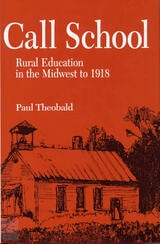
Call School
Rural Education in the Midwest to 1918Paul Theobald
Southern Illinois University Press, 1995
Paul Theobald chronicles the history of the one-room country schools that were spread throughout the rural Midwest during the nineteenth and early twentieth centuries.
Focusing on the region’s educational history in light of the religious, economic, and political atmosphere, Theobald explores the tight connection between educational preferences and religious views, between the economics of the countryside and the educational experiences of children, and between the politics of local power and the educational prospects of the powerless.
Basing his study on extensive archival research, including findings from eight midwestern states, Theobald neither condemns nor lauds the one-room school experience. Providing an objective evaluation, he examines rural school records, correspondence of early school officers, contemporary texts, and diaries and letters of rural students and teachers.
As he weaves together a contextualized account of the circumstances surrounding and within the one-room country schools of the Midwest, Theobald stresses that religion was of primary importance in nineteenth-century American life. Yet he also looks carefully at the shifting economic environment at work in the countryside, particularly in regard to the development of widespread farm tenancy and the consolidation of agricultural and related industries. He challenges readers to analyze how a national move from an agrarian to an industrial view caused conflict and confusion, thereby introducing irrevocable change into rural American life.
Theobald’s study illuminates the history of education on the plains and sheds light on the social foundations of the period.
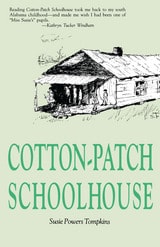
Cotton Patch Schoolhouse
Susie Powers Tompkins
University of Alabama Press, 1992
Step back into 1920s Alabama, where grit, laughter, and the red clay roads of the Black Belt shape one young woman’s unforgettable first year of teaching
Cotton-Patch Schoolhouse follows 18‑year‑old Susie Powers Tompkins as she takes on a one-room school with eight children, zero experience, and a Model T that’s always one mud puddle away from disaster. With warmth and wit, she discovers that the real curriculum is written not in textbooks—but in the faces, fears, and fierce hopes of her students.
In a world of cotton fields, nature walks, homemade art supplies, and potbellied stoves, Susie learns that teaching is as much about heart as it is about lessons. She navigates runaway love affairs, surprise pets (including an opinionated mouse), the hardships of rural poverty, and the extraordinary generosity of neighbors who have little but give much.
As contemporary readers grapple with educational inequities, rural depopulation, and renewed conversations about community, Cotton-Patch Schoolhouse feels strikingly fresh. It reminds us that creativity blooms under constraint, that relationships matter more than resources, and that small schools can make a big difference. Tompkins' memoir will delight lovers of Southern history, educators, memoir readers, rural studies enthusiasts, and anyone who enjoys heartfelt stories of resilience, community, and the transformative power of teaching
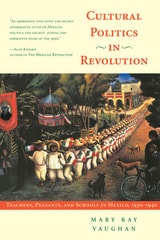
Cultural Politics in Revolution
Teachers, Peasants, and Schools in Mexico, 1930-1940Mary Kay Vaughan
University of Arizona Press, 1997
To show the significance of this facet of the Revolution, Mary Kay Vaughan analyzes the educational effort of the state during the 1930s, locating it within the broader sweep of Mexican history to illustrate how the government sought to nationalize and modernize rural society. Vaughan focuses on activities in rural schools, where central state policy makers, teachers, and people of the countryside came together to forge a national culture. She examines the cultural politics of schooling in four rural societies in the states of Sonora and Puebla that are representative of the peasant societies in revolutionary Mexico, and she shows how the state's program of socialist education became an arena for intense negotiations over power, culture, knowledge, rights, and gender practices. The real cultural revolution, Vaughan observes, lay not in the state's efforts at socialist education but in the dialogue between state and society that took place around this program. In the 1930s, rural communities carved out a space to preserve their local identities while the state succeeded in nurturing a multi-ethnic nationalism based on its promise of social justice and development.
Vaughan brings to her analysis a comparative understanding of peasant politics and educational history, extensive interviews, and a detailed examination of national, regional, and local archives to create an evocative and informative study of Mexican politics and society during modern Mexico's formative years. Cultural Politics in Revolution clearly shows that only by expanding the social arena in which culture was constructed and contested can we understand the Mexican Revolution's real achievements.
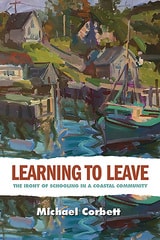
Learning to Leave
The Irony of Schooling in a Coastal CommunityMichael Corbett
West Virginia University Press, 2020
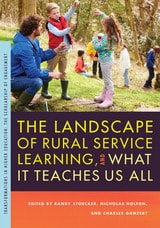
The Landscape of Rural Service Learning, and What It Teaches Us All
Randy Stoecker
Michigan State University Press, 2016
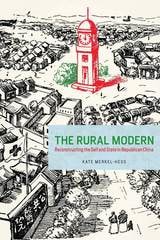
The Rural Modern
Reconstructing the Self and State in Republican ChinaKate Merkel-Hess
University of Chicago Press, 2016
In The Rural Modern, Merkel-Hess shows that Chinese reformers and intellectuals created an idea of modernity that was not simply about what was foreign and new, as in Shanghai and other cities, but instead captured the Chinese people’s desire for social and political change rooted in rural traditions and institutions. She traces efforts to remake village education, economics, and politics, analyzing how these efforts contributed to a new, inclusive vision of rural Chinese life. Merkel-Hess argues that as China sought to redefine itself, such rural reform efforts played a major role, and tensions that emerged between rural and urban ways deeply informed social relations, government policies, and subsequent efforts to create a modern nation during the communist period.
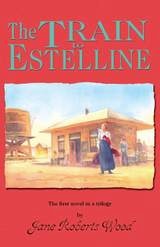
The Train to Estelline
The First Novel in a TrilogyJane Roberts Wood
University of North Texas Press, 2000
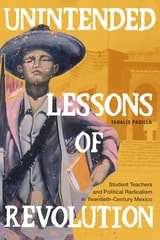
Unintended Lessons of Revolution
Student Teachers and Political Radicalism in Twentieth-Century MexicoTanalís Padilla
Duke University Press, 2021