Results by title
4 books match the query 'Education, Training & Supervision'
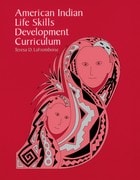
American Indian Life Skills Development Curriculum
Teresa D. LaFromboise
University of Wisconsin Press, 1996
Suicide is a significant problem for many adolescents in Native American Indian populations. American Indian Life Skills Development Curriculum is a course for high school students and some middle school students that is designed to drastically reduce suicidal thinking and behavior.
Created in collaboration with students and community members from the Zuni Pueblo and the Cherokee Nation of Oklahoma, this curriculum addresses key issues in Native American Indian adolescents’ lives and teaches such life skills as communication, problem solving, depression and stress management, anger regulation, and goal setting. The course is unique in its skills-based approach. After first increasing awareness and knowledge of suicide, it then teaches students specific methods to help a peer turn away from suicidal thinking and seek help from an appropriate help-giver.
The skills-based approach of this curriculum follows well-established teaching methods to develop social skills. Teachers and peers inform students of the rationale and components of a particular skill, model and demonstrate the skill for them, and later provide feedback on individual skill performance.

Educating Angels
Teaching for the Pursuit of HappinessTony Armstrong, Ph.D
Parkhurst Brothers, Inc., 2013
Educating Intuition
Robin M. Hogarth
University of Chicago Press, 2001
In Educating Intuition, Robin M. Hogarth lays bare this mysterious process so fundamental to daily life by offering the first comprehensive overview of what the science of psychology can tell us about intuition—where it comes from, how it works, whether we can trust it. From this literature and his own research, Hogarth finds that intuition is a normal and important component of thought that has its roots in processes of tacit learning. Environment, attention, experience, expertise, and the success of the scientific method all form part of Hogarth's perspective on intuition, leading him to the surprising—but natural—conclusion that we can educate our sixth sense. To this end he offers concrete suggestions and exercises to help readers develop their intuitive skills and habits for learning the "right" lessons from experience.
Artfully and accessibly combining cognitive science, the latest research in psychology, and Hogarth's own observations, Educating Intuition eschews the vague approach to the topic that has become commonplace and provides instead a wholly engaging and practical guide to enhancing our intuitive skills.
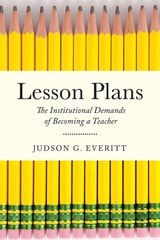
Lesson Plans
The Institutional Demands of Becoming a TeacherEveritt, Judson G.
Rutgers University Press, 2017
In Lesson Plans, Judson G. Everitt takes readers into the everyday worlds of teacher training, and reveals the complexities and dilemmas teacher candidates confront as they learn how to perform a job that many people assume anybody can do. Using rich qualitative data, Everitt analyzes how people make sense of their prospective jobs as teachers, and how their introduction to this profession is shaped by the institutionalized rules and practices of higher education, K-12 education, and gender. Trained to constantly adapt to various contingencies that routinely arise in schools and classrooms, teacher candidates learn that they must continually try to reconcile the competing expectations of their jobs to meet students’ needs in an era of accountability. Lesson Plans reveals how institutions shape the ways we produce teachers, and how new teachers make sense of the multiple and complicated demands they face in their efforts to educate students.