Results by title

11 books match the query 'Education (Secondary)'
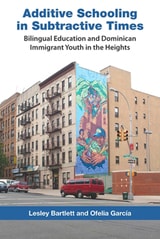
cover of Additive Schooling in Subtractive Times: Bilingual Education and Dominican Immigrant Youth in the Heights

Additive Schooling in Subtractive Times

Bilingual Education and Dominican Immigrant Youth in the Heights

Lesley Bartlett

Vanderbilt University Press, 2011

Additive Schooling in Subtractive Times documents the unusually successful efforts of one New York City high school to educate Dominican immigrant youth, at a time when Latino immigrants constitute a growing and vulnerable population in the nation's secondary schools. Based on four and a half years of qualitative research, the book examines the schooling of teens in the Dominican Republic, the social and linguistic challenges the immigrant teens face in Washington Heights, and how Gregorio Luperon High School works with the community to respond to those challenges. The staff at Luperon see their students as emergent bilinguals and adhere to a culturally and linguistically additive approach.

After offering a history of the school's formation, the authors detail the ways in which federal No Child Left Behind policies, New York State accountability measures, and New York City's educational reforms under Mayor Michael Bloomberg complicated the school's efforts. The book then describes the dynamic bilingual pedagogical approach adopted within the school to help students develop academic Spanish and English. Focusing on the lives of twenty immigrant youth, Bartlett and Garcia also show that, although the school achieves high completion rates, the graduating students nevertheless face difficult postsecondary educational and work environments that too often consign them to the ranks of the working poor.

[more]
cover of Blacked Out: Dilemmas of Race, Identity, and Success at Capital High

Blacked Out

Dilemmas of Race, Identity, and Success at Capital High

Signithia Fordham

University of Chicago Press, 1996

This innovative portrait of student life in an urban high school focuses on the academic success of African-American students, exploring the symbolic role of academic achievement within the Black community and investigating the price students pay for attaining it. Signithia Fordham's richly detailed ethnography reveals a deeply rooted cultural system that favors egalitarianism and group cohesion over the individualistic, competitive demands of academic success and sheds new light on the sources of academic performance. She also details the ways in which the achievements of sucessful African-Americans are "blacked out" of the public imagination and negative images are reflected onto black adolescents. A self-proclaimed "native" anthropologist, she chronicles the struggle of African-American students to construct an identity suitable to themselves, their peers, and their families within an arena of colliding ideals. This long-overdue contribution is of crucial importance to educators, policymakers, and ethnographers.
[more]
cover of Downed by Friendly Fire: Black Girls, White Girls, and Suburban Schooling

Downed by Friendly Fire

Black Girls, White Girls, and Suburban Schooling

Signithia Fordham

University of Minnesota Press, 2016

Most Americans would never willingly revisit their high school experiences; the nation’s school systems reflect the broader society’s hierarchical emphasis on race, class, and gender. While schools purport to provide equal opportunities for all students, this rarely happens in actuality—particularly for girls. 

In Downed by Friendly Fire, Signithia Fordham unmasks and examines female-centered bullying in schools, arguing that it is essential to unmask female aggression, bullying, and competition, all of which directly relate to the structural violence embedded in the racialized and gendered social order. For two and a half years, Fordham conducted field research at “Underground Railroad High School,” a suburban high school in upstate New York. Through a series of composite student profiles, she examines the girls’ relationships to academic achievement, social competition, and aggression toward one another. Fordham argues that girls academically “compete to lose,” which only perpetuates their subordination through the misrecognition of their own competitive behaviors. She goes further to expand the meaning of violence to include what is seen as normal, including suffering, humiliation, and social and economic abuse. 

Using the concept “symbolic violence,” Fordham theorizes the psychological and social damage suffered especially by black girls in schools. The five narratives in Downed by Friendly Fire ultimately highlight the pain and suffering this violence produces as well as the ways in which it promotes inequality, exclusion, and marginalization among girls. 
[more]
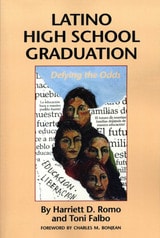
cover of Latino High School Graduation: Defying the Odds

Latino High School Graduation

Defying the Odds

By Harriett D. Romo and Toni Falbo

University of Texas Press, 1996

While high school drop-out rates have steadily declined among white and African American students over the 1970s and 1980s a constant 35 percent of Latino students continued to quit school before graduation. In this pioneering work, Harriett Romo and Toni Falbo reveal how a group of at-risk Latino students defied the odds and earned a high school diploma.

Romo and Falbo tracked the progress of 100 students in Austin, Texas, from 1989 to 1993. Drawing on interviews with the students and their parents, school records, and fieldwork in the schools and communities, the authors identify both the obstacles that caused many students to drop out and the successful strategies that other students and their parents pursued to ensure high school graduation.

The authors conclude with seven far-reaching recommendations for changes in the public schools. Sure to provoke debate among all school constituencies, this book will be required reading for school administrators, teachers, parents, legislators, and community leaders.

[more]
cover of Returning Home: Diné Creative Works from the Intermountain Indian School

Returning Home

Diné Creative Works from the Intermountain Indian School

Farina King, Michael P. Taylor, and James R. Swensen With Contributions by Robert Dodson, Rena Dunn, Terence Wride, and Students of the Intermountain Indian School

University of Arizona Press, 2021

Returning Home features and contextualizes the creative works of Diné (Navajo) boarding school students at the Intermountain Indian School, which was the largest federal Indian boarding school between 1950 and 1984. Diné student art and poetry reveal ways that boarding school students sustained and contributed to Indigenous cultures and communities despite assimilationist agendas and pressures.

This book works to recover the lived experiences of Native American boarding school students through creative works, student interviews, and scholarly collaboration. It shows the complex agency and ability of Indigenous youth to maintain their Diné culture within the colonial spaces that were designed to alienate them from their communities and customs. Returning Home provides a view into the students’ experiences and their connections to Diné community and land. Despite the initial Intermountain Indian School agenda to send Diné students away and permanently relocate them elsewhere, Diné student artists and writers returned home through their creative works by evoking senses of Diné Bikéyah and the kinship that defined home for them.

Returning Home uses archival materials housed at Utah State University, as well as material donated by surviving Intermountain Indian School students and teachers throughout Utah, Arizona, and New Mexico. Artwork, poems, and other creative materials show a longing for cultural connection and demonstrate cultural resilience. This work was shared with surviving Intermountain Indian School students and their communities in and around the Navajo Nation in the form of a traveling museum exhibit, and now it is available in this thoughtfully crafted volume. By bringing together the archived student arts and writings with the voices of living communities, Returning Home traces, recontextualizes, reconnects, and returns the embodiment and perpetuation of Intermountain Indian School students’ everyday acts of resurgence.
[more]
[more]
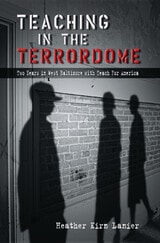
cover of Teaching in the Terrordome: Two Years in West Baltimore with Teach for America

Teaching in the Terrordome

Two Years in West Baltimore with Teach for America

Heather Kirn Lanier

University of Missouri Press, 2012

Only 50 percent of kids growing up in poverty will earn a high school diploma. Just one in ten will graduate college. Compelled by these troubling statistics, Heather Kirn Lanier joined Teach For America (TFA), a program that thrusts eager but inexperienced college graduates into America’s most impoverished areas to teach, asking them to do whatever is necessary to catch their disadvantaged kids up to the rest of the nation. 
            With little more than a five-week teacher boot camp and the knowledge that David Simon referred to her future school as “The Terrordome,” the altruistic and naïve Lanier devoted herself to attaining the program’s goals but met obstacles on all fronts. The building itself was in such poor condition that tiles fell from the ceiling at random. Kids from the halls barged into classes all day, disrupting even the most carefully planned educational activities. In the middle of one lesson, a wandering student lit her classroom door on fire. Some colleagues, instantly suspicious of TFA’s intentions, withheld their help and supplies. (“They think you’re trying to ‘save’ the children,” one teacher said.) And though high school students can be by definition resistant, in west Baltimore they threw eggs, slashed tires, and threatened teachers’ lives. Within weeks, Lanier realized that the task she was charged with—achieving quantifiable gains in her students’ learning—would require something close to a miracle. 
            Superbly written and timely, Teaching in the Terrordome casts an unflinching gaze on one of America’s “dropout factory” high schools. Though Teach For America often touts its most successful teacher stories, Lanier’s powerful memoir illuminates a more common experience of “Teaching For America” with thoughtful complexity, a poet’s eye, and an engaging voice. As hard as Lanier worked to become a competent teacher, she found that in “The Terrordome”, idealism wasn’t enough. To persevere, she had to rely on grit, humility, a little comedy, and a willingness to look failure in the face. As she adjusted to a chaotic school administration, crumbling facilities, burned-out colleagues, and students who perceived their school for the failure it was, she gained perspective on the true state of the crisis TFA sets out to solve. Ultimately, she discovered that contrary to her intentions, survival in the so-called Charm City was a high expectation.
[more]
cover of The Color of Strangers, the Color of Friends

The Color of Strangers, the Color of Friends

Alan Peshkin

University of Chicago Press, 1991

Peshkin examines the role played by ethnicity in the daily life of a town he calls "Riverview" and its only high school. Immersing himself in the daily life of halls and classrooms of Riverview's high school and the streets of its neighborhoods, Peshkin coaxes from both young and old their own reflections on the town's early days, on the period of ethnic strife sparked by the assassination of Martin Luther King, Jr., and on the way they see Riverview today.

"Peshkin strikes a hopeful chord, revealing what social encounters among ethnic groups—at their best—can be like in America."—Education Digest

[more]
cover of The Creative Underclass: Youth, Race, and the Gentrifying City

The Creative Underclass

Youth, Race, and the Gentrifying City

Tyler Denmead

Duke University Press, 2019

As an undergraduate at Brown University, Tyler Denmead founded New Urban Arts, a nationally recognized arts and humanities program primarily for young people of color in Providence, Rhode Island. Along with its positive impact, New Urban Arts, under his leadership, became entangled in Providence's urban renewal efforts that harmed the very youth it served. As in many deindustrialized cities, Providence's leaders viewed arts, culture, and creativity as a means to drive property development and attract young, educated, and affluent white people, such as Denmead, to economically and culturally kick-start the city. In The Creative Underclass, Denmead critically examines how New Urban Arts and similar organizations can become enmeshed in circumstances where young people, including himself, become visible once the city can leverage their creativity to benefit economic revitalization and gentrification. He points to the creative cultural practices that young people of color from low-income communities use to resist their subjectification as members of an underclass, which, along with redistributive economic policies, can be deployed as an effective means with which to both oppose gentrification and better serve the youth who have become emblematic of urban creativity.
[more]
cover of Transforming Women's Education: Liberal Arts and Music in Female Seminaries

Transforming Women's Education

Liberal Arts and Music in Female Seminaries

Jewel A. Smith

University of Illinois Press, 2019
Female seminaries in nineteenth-century America offered middle-class women the rare privilege of training in music and the liberal arts. A music background in particular provided the foundation for a teaching career, one of the few paths open to women. Jewel A. Smith opens the doors of four female seminaries, revealing a milieu where rigorous training focused on music as an artistic pursuit rather than a social skill. Drawing on previously untapped archives, Smith charts women's musical experiences and training as well as the curricula and instruction available to them, the repertoire they mastered, and the philosophies undergirding their education. She also examines the complex tensions between the ideals of a young democracy and a deeply gendered system of education and professional advancement. An in-depth study of female seminaries as major institutions of learning, Transforming Women's Education illuminates how musical training added to women's lives and how their artistic acumen contributed to American society.
[more]
cover of Transiciones: Pathways of Latinas and Latinos Writing in High School and College

Transiciones

Pathways of Latinas and Latinos Writing in High School and College

Todd Ruecker

Utah State University Press, 2015

Transiciones is a thorough ethnography of seven Latino students in transition between high school and community college or university. Data gathered over two years of interviews with the students, their high school English teachers, and their writing teachers and administrators at postsecondary institutions reveal a rich picture of the conflicted experience of these students as they attempted to balance the demands of schooling with a variety of personal responsibilities.

Todd Ruecker explores the disconnect between students’ writing experiences in high school and higher education and examines the integral role that writing plays in college. Considering the almost universal requirement that students take a writing class in their critical first year of college, he contends that it is essential for composition researchers and teachers to gain a fuller understanding of the role they play in supporting and hindering Latina and Latino students’ transition to college.

Arguing for situating writing programs in larger discussions of high school/college alignment, student engagement, and retention, Transiciones raises the profile of what writing programs can do while calling composition teachers, administrators, and scholars to engage in more collaboration across the institution, across institutions, and across disciplines to make the transition from high school to college writing more successful for this important group of students.

[more]