Results by title
2 books match the query 'Electric automobiles'
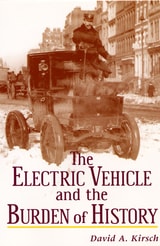
The Electric Vehicle and the Burden of History
Kirsch, David A
Rutgers University Press, 2000
In the late 1890s, at the dawn of the automobile era, steam, gasoline, and electric cars all competed to become the dominant automotive technology. By the early 1900s, the battle was over and internal combustion had won. Was the electric car ever a viable competitor? What characteristics of late nineteenth-century American society led to the choice of internal combustion over its steam and electric competitors? And might not other factors, under slightly differing initial conditions, have led to the adoption of one of the other motive powers as the technological standard for the American automobile?
David A. Kirsch examines the relationship of technology, society, and environment to choice, policy, and outcome in the history of American transportation. He takes the history of the Electric Vehicle Company as a starting point for a vision of an “alternative” automotive system in which gasoline and electric vehicles would have each been used to supply different kinds of transport services. Kirsch examines both the support—and lack thereof—for electric vehicles by the electric utility industry. Turning to the history of the electric truck, he explores the demise of the idea that different forms of transportation technology might coexist, each in its own distinct sphere of service.
A main argument throughout Kirsch’s book is that technological superiority cannot be determined devoid of social context. In the case of the automobile, technological superiority ultimately was located in the hearts and minds of engineers, consumers and drivers; it was not programmed inexorably into the chemical bonds of a gallon of refined petroleum. Finally, Kirsch connects the historic choice of internal combustion over electricity to current debates about the social and environmental impacts of the automobile, the introduction of new hybrid vehicles, and the continuing evolution of the American transportation system.
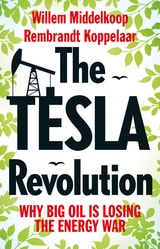
The Tesla Revolution
Why Big Oil is Losing the Energy WarRembrandt Koppelaar
Amsterdam University Press, 2017
In clear, unsensational style, Willem Middelkoop and Rembrandt Koppelaar offer a layman's tour of the energy landscape, now and to come. They show how rapid technological advances in batteries and solar technologies are already driving large-scale transformations in power supply, while economic and geopolitical changes, combined with a growing political awareness that there are alternatives to fossil fuels will combine in the coming years to bring an energy revolution ever closer. Within in our lifetimes, the authors argue, we will see changes that will reshape economics, the balance of political power, and even the most mundane aspects of our daily lives.
Determinedly forward-looking and optimistic, though never straying from hard facts, The Tesla Revolution paints a striking picture of our global energy future.