Results by title
39 books match the query 'Electronic information resources'

ALA Guide to Sociology and Psychology Reference
Denise Beaubien Bennett
American Library Association, 2011
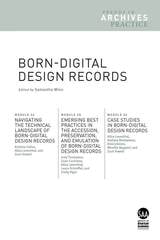
Born-Digital Design Records
Samantha Winn
Society of American Archivists, 2022
Cloud-Based Services for Your Library
A LITA GuideErik T. American Library Association
American Library Association, 2013
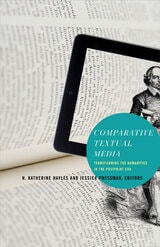
Comparative Textual Media
Transforming the Humanities in the Postprint EraN. Katherine Hayles
University of Minnesota Press, 2013
For the past few hundred years, Western cultures have relied on print. When writing was accomplished by a quill pen, inkpot, and paper, it was easy to imagine that writing was nothing more than a means by which writers could transfer their thoughts to readers. The proliferation of technical media in the latter half of the twentieth century has revealed that the relationship between writer and reader is not so simple. From telegraphs and typewriters to wire recorders and a sweeping array of digital computing devices, the complexities of communications technology have made mediality a central concern of the twenty-first century.
Despite the attention given to the development of the media landscape, relatively little is being done in our academic institutions to adjust. In Comparative Textual Media, editors N. Katherine Hayles and Jessica Pressman bring together an impressive range of essays from leading scholars to address the issue, among them Matthew Kirschenbaum on archiving in the digital era, Patricia Crain on the connection between a child’s formation of self and the possession of a book, and Mark Marino exploring how to read a digital text not for content but for traces of its underlying code.
Primarily arguing for seeing print as a medium along with the scroll, electronic literature, and computer games, this volume examines the potential transformations if academic departments embraced a media framework. Ultimately, Comparative Textual Media offers new insights that allow us to understand more deeply the implications of the choices we, and our institutions, are making.
Contributors: Stephanie Boluk, Vassar College; Jessica Brantley, Yale U; Patricia Crain, NYU; Adriana de Souza e Silva, North Carolina State U; Johanna Drucker, UCLA; Thomas Fulton, Rutgers U; Lisa Gitelman, New York U; William A. Johnson, Duke U; Matthew G. Kirschenbaum, U of Maryland; Patrick LeMieux; Mark C. Marino, U of Southern California; Rita Raley, U of California, Santa Barbara; John David Zuern, U of Hawai‘i at Mānoa.

Critical Library Pedagogy Handbook Volume One
Essays and Workbooks ActivitiesNicole Pagowsky
Assoc of College & Research Libraries, 2016
Critical Library Pedagogy Handbook Volume Two
Lesson PlansNicole Pagowsky
Assoc of College & Research Libraries, 2016
Databrarianship
The Academic Data Librarian in Theory and PracticeLynda Kellam
Assoc of College & Research Libraries, 2016
Developing and Managing Electronic Collections
The EssentialsPeggy Johnson
American Library Association, 2013
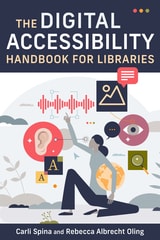
Digital Accessibility Handbook for Libraries
Carli Spina and Rebecca Albrecht Oling
American Library Association, 2025
Winner of the 2026 SUNYLA Excellence in Scholarship Award
A complicated topic encompassing many disparate facets, digital accessibility in libraries is in constant flux as new technologies emerge and design standards continue to evolve. This makes it challenging for library workers to ensure that their libraries meet legal requirements while also fostering inclusion for all their community members. Incorporating advice from a range of outside accessibility experts and practitioners, this guide is here to help. It delves into practical steps you can take to ensure that your library’s online presence is welcoming to everyone and that all your digital offerings avoid barriers that can exclude users with disabilities. No matter your level of experience or type of library, from this book you will
- come to understand what is meant by disability and why libraries have obligations to support disabled users;
- learn about a wide range of software and hardware for creating inclusive spaces and services regardless of your budget limitations or staffing levels;
- get comfortable with the overarching principles of online accessibility and how they specifically apply to library websites, digital media and files, digital communications, and emerging technologies such as augmented reality, virtual reality, and artificial intelligence (AI);
- discover how libraries can verify the accessibility of the tools they develop or subscribe to, including best practices for working with vendors to optimize the accessibility of their library products;
- be invited to reflect upon the future of digital accessibility, particularly concerning education and hiring to ensure that accessibility remains central to the work done at all libraries.
Both Spina and Oling have worked within SUNY - The State University of New York to hone skills and thinking in this area, resulting in the Library Procurement Accessibility Toolkit, an ongoing project. They currently co-chair a subcommittee reviewing the SUNY libraries' implementation of the Electronic Information Accessibility Policy.
Digital Humanities In The Library
Challenges AndAdrianne Hartsell-Gundy
Assoc of College & Research Libraries, 2015
Digital Humanities in the Library
Challenges and Opportunities for Subject SpecialistsArianne Hartsell-Gundy
Assoc of College & Research Libraries, 2015
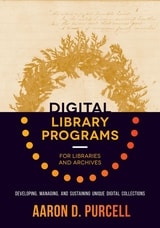
Digital Library Programs for Libraries and Archives
Developing, Managing, and Sustaining Unique Digital CollectionsAaron D. Purcell
American Library Association, 2016
Digitizing Your Collection
Public Library Success StoriesSusanne Caro
American Library Association, 2015
Exploring Discovery
The Front Door to Your Library's Licensed and Digitized ContentKenneth J. Varnum
American Library Association, 2016
Fundamentals of Electronic Resources Management
Alana Verminski
American Library Association, 2022
Whether it's networking with vendor reps or poring over data, the continually evolving field of electronic resources management (ERM) is always throwing something new your way. Alana Verminski and Kelly Marie Blanchat were once new on the job themselves, crossing over from research instruction and the vendor side of scholarly publishing. They share what they've learned along the way in this hands-on guide. Cutting through the complexity of a role that's changing rapidly, inside you'll find to-the-point advice on methods and tools that will help you stay on top of things, including coverage of such key topics as
- the full range of purchasing options, from Big Deals to unbundling to pay-per-view;
- conversation starters that will help build productive relationships with vendor reps;
- questions to ask vendors about accessibility;
- common clauses of licensing agreements and what they mean;
- understanding the four types of authentication;
- using a triage approach to troubleshooting hitches in accessing articles;
- conducting an overlap analysis to evaluate new content;
- the basic principles of usage statistics, and four ways to use COUNTER reports when evaluating renewals;
- tips for activating targets in your knowledge base;
- five steps to developing an effective marketing plan; and
- how to master the lingo, with clear explanations of jargon, important terms, and acronyms.
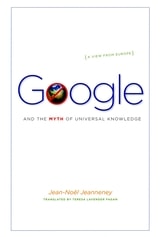
Google and the Myth of Universal Knowledge
A View from EuropeJean-Noël Jeanneney
University of Chicago Press, 2006
The recent announcement that Google will digitize the holdings of several major libraries sent shock waves through the book industry and academe. Google presented this digital repository as a first step towards a long-dreamed-of universal library, but skeptics were quick to raise a number of concerns about the potential for copyright infringement and unanticipated effects on the business of research and publishing.
Jean-Noël Jeanneney, president of France’s Bibliothèque Nationale, here takes aim at what he sees as a far more troubling aspect of Google’s Library Project: its potential to misrepresent—and even damage—the world’s cultural heritage. In this impassioned work, Jeanneney argues that Google’s unsystematic digitization of books from a few partner libraries and its reliance on works written mostly in English constitute acts of selection that can only extend the dominance of American culture abroad. This danger is made evident by a Google book search the author discusses here—one run on Hugo, Cervantes, Dante, and Goethe that resulted in just one non-English edition, and a German translation of Hugo at that. An archive that can so easily slight the masters of European literature—and whose development is driven by commercial interests—cannot provide the foundation for a universal library.
As a leading librarian, Jeanneney remains enthusiastic about the archival potential of the Web. But he argues that the short-term thinking characterized by Google’s digital repository must be countered by long-term planning on the part of cultural and governmental institutions worldwide—a serious effort to create a truly comprehensive library, one based on the politics of inclusion and multiculturalism.
Improving the Visibility and Use of Digital Repositories
Kenneth Arlitsch
American Library Association, 2013
Library Technology Buying Strategies
Marshall Breeding
American Library Association, 2016
Licensing Digital Content
A Practical Guide for LibrariansLesley Ellen Harris
American Library Association, 2018
Licensing Digital Content
A Practical Guide for LibrariansLesley Ellen Harris
American Library Association, 2009
Linked Data for Cultural Heritage
Ed Jones
American Library Association, 2016
Managing Electronic Resources
Ryan Weir
American Library Association, 2012
Marketing Your Library's Electronic Resources
Marie R. Kennedy
American Library Association, 2018
Modern Pathfinders
Creating B Etter Research GuidesJason Puckett
Assoc of College & Research Libraries, 2015
Modern Pathfinders
Creating Better Research GuidesJason Puckett
Assoc of College & Research Libraries, 2015
Module 8
Becoming a Trusted Digital RepositorySteve Marks
Society of American Archivists, 2015
Reengineering the Library
Issues in Electronic Resources ManagementGeorge Stachokas
American Library Association, 2022
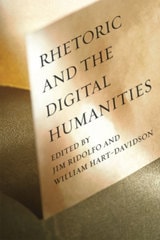
Rhetoric and the Digital Humanities
Edited by Jim Ridolfo and William Hart-Davidson
University of Chicago Press, 2015
Rhetoric and the Digital Humanities is a timely, multidisciplinary collection that is the first to bridge scholarship in rhetorical studies and the digital humanities. It offers much-needed guidance on how the theories and methodologies of rhetorical studies can enhance all work in digital humanities, and vice versa. Twenty-three essays over three sections delve into connections, research methodology, and future directions in this field. Jim Ridolfo and William Hart-Davidson have assembled a broad group of more than thirty accomplished scholars. Read together, these essays represent the cutting edge of research, offering guidance that will energize and inspire future collaborations.
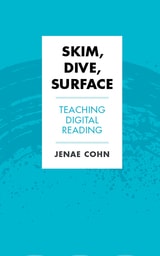
Skim, Dive, Surface
Teaching Digital ReadingJenae Cohn
West Virginia University Press, 2021
Students are reading on screens more than ever—how can we teach them to be better digital readers?
Smartphones, laptops, tablets: college students are reading on-screen all the time, and digital devices shape students’ understanding of and experiences with reading. In higher education, however, teachers rarely consider how digital reading experiences may have an impact on learning abilities, unless they’re lamenting students’ attention spans or the distractions available to students when they’re learning online.
Skim, Dive, Surface offers a corrective to these conversations—an invitation to focus not on losses to student learning but on the spectrum of affordances available within digital learning environments. It is designed to help college instructors across the curriculum teach digital reading in their classes, whether they teach face-to-face, fully online, or somewhere in between. Placing research from cognitive psychology, neuroscience, learning science, and composition in dialogue with insight from the scholarship of teaching and learning, Jenae Cohn shows how teachers can better frame, scaffold, and implement effective digital reading assignments. She positions digital reading as part of a cluster of literacies that students should develop in order to communicate effectively in a digital environment.
Techniques for Electronic Resource Management
TERMS and the Transition to OpenJill Emery
American Library Association, 2020
Technology Disaster Response and Recovery Planning
A LITA GuideMary Mallery
American Library Association, 2015
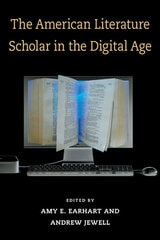
The American Literature Scholar in the Digital Age
Edited by Amy E. Earhart and Andrew Jewell
University of Michigan Press, 2010
"By casting the collection explicitly as an outreach to the larger community of Americanists---not primarily those who self-identify as 'digital scholars'---Earhart and Jewell have made an important choice, and one that will likely make this a landmark publication."
---Andrew Stauffer, University of Virginia
The American Literature Scholar in the Digital Age, which features a wide range of practitioner-scholars, is the first of its kind: a gathering of people who are expert in American literary studies and in digital technologies, scholars uniquely able to draw from experience with building digital resources and to provide theoretical commentary on how the transformation to new technologies alters the way we think about and articulate scholarship in American literature. The volume collects articles from those who are involved in tool development, usability testing, editing and textual scholarship, digital librarianship, and issues of race and ethnicity in digital humanities, while also situating digital humanities work within the larger literary discipline. In addition, the volume examines the traditional structures of the fields, including tenure and promotion criteria, modes of scholarly production, the skill sets required for scholarship, and the training of new scholars.
The American Literature Scholar in the Digital Age will attract practitioners of digital humanities in multiple fields, Americanists who utilize digital materials, and those who are intellectually curious about the new movement and materials.
Amy E. Earhart is Assistant Professor in the Department of English at Texas A&M University.
Andrew Jewell is Associate Professor of Digital Projects, University Libraries, at the University of Nebraska–Lincoln.
Cover art: Book background ©iStockphoto.com/natashika
digitalculturebooks is an imprint of the University of Michigan Press and the Scholarly Publishing Office of the University of Michigan Library dedicated to publishing innovative and accessible work exploring new media and their impact on society, culture, and scholarly communication. Visit the website at www.digitalculture.org.
The College Student's Research Companion
Finding, Evaluating, and Citing the Resources You Need to SucceedArlene Rodda Quaratiello
American Library Association, 2010
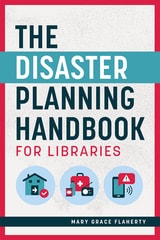
The Disaster Planning Handbook for Libraries
Mary Grace Flaherty
American Library Association, 2021
Your library is a vital information hub and resource provider every single day, and that’s doubly true when calamity strikes. In fact, your library’s role as an “essential community function” during disasters is now encoded in U.S. law. Engaging as a partner in planning and preparedness will build much-needed community support should disaster strike, and even a basic plan will also save you time and stress later on. No matter where your library is in the disaster planning cycle, this handbook will make the process clearer and less daunting. You’ll get tools, activities, easy-to-adapt templates, and hands-on guidance on such topics as
- the six phases of disaster response;
- 15 first-hand accounts of library disaster planning or responses, helping you identify the library services most needed during a disaster;
- three essential factors that will shape the form of your disaster plan;
- preparing for hurricanes, tornadoes, fires, floods, and earthquakes;
- ideas for connecting with your community’s emergency response teams;
- federal government planning resources;
- pointers on working with state and local governments;
- a sample Memorandum of Understanding to outline mutual support for a speedier recovery;
- recommended courses and training, many of which are free;
- targeted advice for archives and special collections;
- sample building inspection checklists; and
- recommended games to help children and families prepare.
The Electronic Resources Troubleshooting Guide
Holly Talbott
American Library Association, 2020
A library user can’t access an article. Your log in credentials won’t work. In the realm of electronic resources everything runs smoothly—until suddenly, without warning, it doesn’t. Invariably, systems will break down, but a trial and error approach to finding out what’s wrong is highly inefficient. This hands-on guide from two expert ERM librarians walks you through the essentials of troubleshooting. It outlines a methodical process that will help you identify the source of a problem even when it’s not obvious and take steps to reach a resolution. With the goal of developing a library-wide workflow in mind, this guide will teach you how to
- familiarize yourself with the components of electronic resources, using flowchart diagrams of common access chains such as discovery services, knowledge bases, research guides, and library services platforms;
- navigate the complete triage and troubleshooting workflow, illustrated through 14 in-depth examples;
- recognize the symptoms of common access disruptions;
- conduct efficient troubleshooting interviews;
- manage help tickets and design problem reports that capture key information without overburdening the user;
- create publicly available help pages for problems originating with users’ devices or computers;
- communicate with vendors and IT personnel for speedy resolutions, providing dozens of clear definitions of library and technology terms that will help you minimize confusion; and
- customize your own troubleshooting workflow chart for common use across departments and staff hierarchies.
The High-Impact Digital Library
Innovative Approaches for Outreach and InstructionAnna Neatrour, Jeremy Myntti, Rachel Jane Wittmann, Rebekah Cummings, Jane Monson, and Megan Myres McMillan, in collaboration with Core Publishing
American Library Association, 2025
- discusses the results of a unique survey that provides new and structured information on digital library outreach and instruction;
- presents outreach case studies illustrating uses of social media promotion, integration of digital collections into teaching and instruction activities, partnerships with external campus units or community organizations, and other activities;
- explores many types of instruction, from drop-in class sessions and training to course-integrated instruction and ways that digital library practitioners can contribute to the Open Educational Resources (OER) and open pedagogy movements;
- details the digital humanities and digital scholarship programs developed at the University of Utah by many of the authors through cross-departmental collaboration;
- describes the ways in which the pandemic spurred many institutions to use rapid response collecting to practice community engagement; and
- speculates on future directions for outreach and instruction for digital libraries.
Understanding Data and Information Systems for Recordkeeping
Philip C. Bantin
American Library Association, 2008
Using Digital Analytics for Smart Assessment
Tabatha Farney
American Library Association, 2017
Using Massive Digital Libraries
Andrew Weiss
American Library Association, 2014