Results by title
12 books match the query 'Encyclopedia'
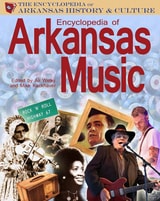
Encyclopedia of Arkansas Music
Ali Welky
Butler Center for Arkansas Studies, 2013
What do a rockabilly musician turned cinematic swamp monster, a composer of player-piano music, an avant-garde cellist, a musical instrument that lent its name to a weapon, a rock musician turned Catholic monk, some of the best audio speakers in the world, and the creator of Schoolhouse Rock! have in common? That’s right–they all come from Arkansas.
Encyclopedia of Arkansas Music is a special project of the Encyclopedia of Arkansas History & Culture (EOA), an online encyclopedia launched in 2006 by the Butler Center for Arkansas Studies at the Central Arkansas Library System.
This colorful, photo-filled reference work spanning all aspects of Arkansas’s musical past and present includes more than 150 entries on musicians, ensembles, musical works, and events.
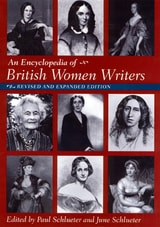
Encyclopedia of British Women Writers
Schlueter, Paul
Rutgers University Press, 1999
Paul Schlueter and June Schlueter have individually and jointly written and edited a number of critical and reference works, including The English Novel: Twentieth Century Criticism (Vol. 2: Twentieth Century Novelists) and Modern American Literature (Supplement 2). Paul Schlueter's books include The Novels of Doris Lessing and Shirley Ann Grau. June Schlueter, Provost, and Dana Professor of English at Lafayette College, has edited Feminist Readings of Modern American Drama and Modern American Drama: The Female Canon.
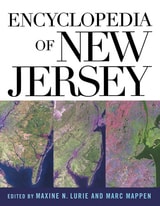
Encyclopedia of New Jersey
Lurie, Maxine
Rutgers University Press, 2004
Named an Outstanding Reference Work by the New Jersey Studies Academic Alliance
The Encyclopedia of New Jersey is the most extensive reference work ever published on the Garden State. The Encyclopedia contains nearly 3,000 original articles, along with 585 illustrations and 130 maps, collecting a wealth of information about the state in one volume. The Encyclopedia is filled with fascinating and interesting entries ranging from New Jersey's earliest history to the present. For example-Did you know that New Jersey was once divided into two parts-East Jersey and West Jersey? That streptomycin was first isolated at Rutgers University? Or that the first vote cast by an African American under the Fifteenth Amendment was in Perth Amboy? How about that New Jersey was the site of the first intercollegiate football game? These facts, and thousands more, can be found in the pages of the Encyclopedia of New Jersey. This volume will provide the answers to questions about New Jersey that you never even knew you had!
Whether you are merely perusing the pages or are researching a particular subject, the Encyclopedia of New Jersey is your definitive source for information on the Garden State, covering a broad range of subject areas, including:
* Architecture, decorative arts, painting, and sculpture
* Biographies
* Business and economics
* Communications and media
* Education
* Ethnicity
* Folklore, museums, and theater
* Geography
* History
* Government, law, politics, and public policy
* Literature
* Medicine and health
* Municipalities and counties
* Recreation and sports
* Religion
* Science and technology
* Transportation
* and many more subjects

Encyclopedia of Romantic Nationalism in Europe, Vol. 1 and 2
Edited by Joep Leerssen
Amsterdam University Press, 2016
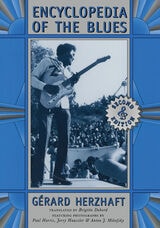
Encyclopedia of the Blues, 2nd Edition
Gerard Herzhaft
University of Arkansas Press, 1997
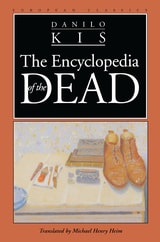
Encyclopedia of the Dead
Danilo Kis
Northwestern University Press, 1997
Preliminary Discourse to the Encyclopedia of Diderot
Jean Le Rond d'Alembert
University of Chicago Press, 1995
The Encyclopedia of Caribbean Religions
Volume 1: A - L; Volume 2: M - ZPatrick Taylor
University of Illinois Press, 2012
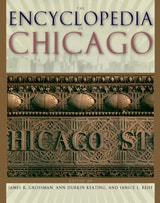
The Encyclopedia of Chicago
Edited by James R. Grossman, Ann Durkin Keating, and Janice L. Reiff
University of Chicago Press, 2004
Developed by the Newberry Library with the cooperation of the Chicago Historical Society, The Encyclopedia of Chicago is the definitive historical reference on metropolitan Chicago. More than a decade in the making, the Encyclopedia brings together hundreds of historians, journalists, and experts on everything from airlines to Zoroastrians to explore all aspects of the rich world of Chicagoland, from its geological prehistory to the present.
The main alphabetical section of the Encyclopedia, comprising more than 1,400 entries, covers the full range of Chicago's neighborhoods, suburbs, and ethnic groups, as well as the city's cultural institutions, technology and science, architecture, religions, immigration, transportation, business history, labor, music, health and medicine, and hundreds of other topics. The Encyclopedia has the widest geographical reach of any city encyclopedia of its kind, encompassing eight of the region's counties, including suburbs. Nearly 400 thumbnail maps pinpoint Chicago neighborhoods and suburban municipalities; these maps are complemented by hundreds of black-and-white and color photographs and thematic maps that bring the history of metropolitan Chicago to life. Additionally, contributors have provided lengthy interpretive essays—woven into the alphabetical section but set off graphically—that take a long view of such topics as the built environment, literary images of Chicago, and the city's often legendary and passionate sports culture.
The Encyclopedia also offers a comprehensive biographical dictionary of more than 2,000 individuals important to Chicago history and a detailed listing of approximately 250 of the city's historically significant business enterprises. A color insert features a timeline of Chicago history and photo essays exploring nine pivotal years in this history.
The Encyclopedia of Chicago is one of the most significant historical projects undertaken in the last twenty years, and it has everything in it to engage the most curious historian as well as settle the most boisterous barroom dispute. If you think you know how Chicago got its name, if you have always wondered how the Chicago Fire actually started and how it spread, if you have ever marveled at the Sears Tower or the reversal of the Chicago River—if you have affection, admiration, and appreciation for this City of the Big Shoulders, this Wild Onion, this Urbs in Horto, then The Encyclopedia of Chicago is for you.
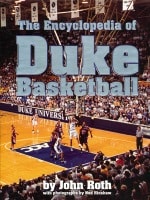
The Encyclopedia of Duke Basketball
John Roth
Duke University Press, 2006
The Encyclopedia of Duke Basketball is the ultimate reference source for true-blue fans, with profiles of great games, classic finishes (both wins and losses), and compelling personalities, including players, coaches, and opponents. While it is filled with a wealth of statistical information, the Encyclopedia goes well beyond the numerical record to deliver insights on people and performances and anecdotes that will surprise even the most seasoned Duke supporter.
The Encyclopedia features:
— A timeline of key events in men’s and women’s basketball history.
— Capsules of the most important men’s and women’s games in the program’s history, including the men’s buzzer-beating overtime win against Kentucky in 1992 and the women’s stunning victory over Tennessee to reach the Final Four in 1999.
— An alphabetical encyclopedia with entries on players from Alaa Abdelnaby to Bill Zimmer and on coaches, customs, opponents, venues, and records.
— Exclusive interviews in which standout players, including Danny Ferry, Mike Gminski, Grant Hill, Christian Laettner, and Jason Williams, recount moments they’ll never forget.
— A statistical record book covering every season through 2005–06.
—130 photographs of Duke basketball history.
A source of entertainment as well as information, this volume will be a great resource for fans hoping to settle arguments, relive favorite games, or simply enjoy hours of pleasurable reading.
The Encyclopedia of Native Music
More Than a Century of Recordings from Wax Cylinder to the InternetBrian Wright-McLeod
University of Arizona Press, 2005
In addition to the widely heard sounds of Carlos Nakai’s flute, Native music embraces a wide range of forms: country and folk, jazz and swing, reggae and rap. Brian Wright-McLeod, producer/host of Canada’s longest-running Native radio program, has gathered the musicians and their music into this comprehensive reference, an authoritative source for biographies and discographies of hundreds of Native artists.
The Encyclopedia of Native Music recognizes the multifaceted contributions made by Native recording artists by tracing the history of their commercially released music. It provides an overview of the surprising abundance of recorded Native music while underlining its historical value.
With almost 1,800 entries spanning more than 100 years, this book leads readers from early performers of traditional songs like William Horncloud to artists of the new millennium such as Zotigh. Along the way, it includes entries for jazz and blues artists never widely acknowledged for their Native roots—Oscar Pettiford, Mildred Bailey, and Keely Smith—and traces the recording histories of contemporary performers like Rita Coolidge and Jimmy Carl Black, “the Indian of the group” in the original Mothers of Invention. It also includes film soundtracks and compilation albums that have been instrumental in bringing many artists to popular attention. In addition to music, it lists spoken-word recordings, including audio books, comedy, interviews, poetry, and more.
With this unprecedented breadth of coverage and extensively cross-referenced, The Encyclopedia of Native Music is an essential guide for enthusiasts and collectors. More than that, it is a gateway to the authentic music of North America—music of the people who have known this land from time immemorial and continue to celebrate it in sound.
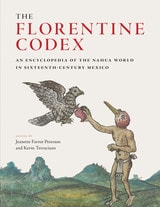
The Florentine Codex
An Encyclopedia of the Nahua World in Sixteenth-Century MexicoEdited by Jeanette Favrot Peterson and Kevin Terraciano
University of Texas Press, 2019
Honorable Mention, 2021 LASA Mexico Humanities Book Prize, Latin American Studies Association, Mexico Section
In the sixteenth century, the Franciscan friar Bernardino de Sahagún and a team of indigenous grammarians, scribes, and painters completed decades of work on an extraordinary encyclopedic project titled General History of the Things of New Spain, known as the Florentine Codex (1575–1577). Now housed in the Biblioteca Medicea Laurenziana in Florence and bound in three lavishly illustrated volumes, the codex is a remarkable product of cultural exchange in the early Americas.
In this edited volume, experts from multiple disciplines analyze the manuscript’s bilingual texts and more than 2,000 painted images and offer fascinating, new insights on its twelve books. The contributors examine the “three texts” of the codex—the original Nahuatl, its translation into Spanish, and its painted images. Together, these constitute complementary, as well as conflicting, voices of an extended dialogue that occurred in and around Mexico City. The volume chapters address a range of subjects, from Nahua sacred beliefs, moral discourse, and natural history to the Florentine artists’ models and the manuscript’s reception in Europe. The Florentine Codex ultimately yields new perspectives on the Nahua world several decades after the fall of the Aztec empire.