Results by title
5 books match the query 'Energy conservation'

Building Science 101
Scott Osgood
American Library Association, 2010
Ecology, Economy, Equity
The Path to a Carbon-Neutral LibraryMandy Henk
American Library Association, 2014
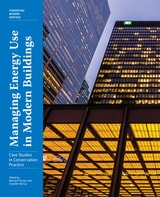
Managing Energy Use in Modern Buildings
Case Studies in Conservation PracticeBernard Flaman
J. Paul Getty Trust, The, 2021
This collection of ten case studies addresses the issues surrounding the improvement of energy consumption and thermal comfort in modern buildings built between 1928 and 1969 and offers valuable lessons for other structures facing similar issues. These buildings, international in scope and diverse in type, style, and size, range from the Shulman House, a small residence in Los Angeles, to the TD Bank Tower, a skyscraper complex in Toronto, and from the Calouste Gulbenkian Foundation, a cultural venue in Lisbon, to the Van Nelle Factory in Rotterdam, now an office building. Showing ingenuity and sensitivity, the case studies consider improvements to such systems as heating, cooling, lighting, ventilation, and controls. They provide examples that demonstrate best practices in conservation and show ways to reduce carbon footprints, minimize impacts to historic materials and features, and introduce renewable energy sources, in compliance with energy codes and green-building rating systems.
The Conserving Modern Heritage series, launched in 2019, is written by architects, engineers, conservators, scholars, and allied professionals. The books in this series provide well-vetted case studies that address the challenges of conserving twentieth-century heritage.
Public Libraries Going Green
Kathryn American Library Association
American Library Association, 2010
The Three Sustainabilities
Energy, Economy, TimeAllan Stoekl
University of Minnesota Press, 2021
Bringing the word sustainability back from the brink of cliché—to a substantive, truly sustainable future
Is sustainability a hopelessly vague word, with meager purpose aside from a feel-good appeal to the consumer? In The Three Sustainabilities, Allan Stoekl seeks to (re)valorize the word, for a simple reason: it is useful. Sustainability designates objects in time, their birth or genesis, their consistency, their survival, their demise. And it raises the question, as no other word does, of the role of humans in the survival of a world that is quickly disappearing—and perhaps in the genesis of another world.
Stoekl considers a range of possibilities for the word, touching upon questions of object ontology, psychoanalysis, urban critique, technocracy, and religion. He argues that there are three varieties of sustainability, seen from philosophical, cultural, and economic perspectives. One involves the self-sustaining world “without us”; another, the world under our control, which can run the political spectrum from corporatism to Marxism to the Green New Deal; and a third that carries a social and communitarian charge, an energy of the “universe” affirmed through, among other things, meditation and gifting. Each of these carves out a different space in the relations between objects, humans, and their survival and degradation. Each is necessary, unavoidable, and intimately bound with, and infinitely distant from, the others.
Along the way, Stoekl cites a wide range of authors, from philosophers to social thinkers, literary theorists to criminologists, anthropologists to novelists. This beautifully written, compelling, and nuanced book is a must for anyone interested in questions of ecology, energy, the environmental humanities, contemporary theories of the object, postmodern and posthuman aesthetics, or religion and the sacred in relation to community.