Results by title
23 books match the query 'Engineering'
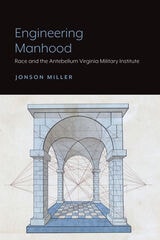
Engineering Manhood
Race and the Antebellum Virginia Military InstituteJonson Miller
Lever Press, 2020
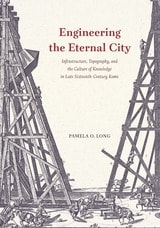
Engineering the Eternal City
Infrastructure, Topography, and the Culture of Knowledge in Late Sixteenth-Century RomePamela O. Long
University of Chicago Press, 2018
This portrait of an early modern Rome examines the many conflicts, failures, and successes that shaped the city, as decision-makers tried to control not only Rome’s structures and infrastructures but also the people who lived there. Taking up visual images of the city created during the same period—most importantly in maps and urban representations, this book shows how in a time before the development of modern professionalism and modern bureaucracies, there was far more wide-ranging conversation among people of various backgrounds on issues of engineering and infrastructure than there is in our own times. Physicians, civic leaders, jurists, cardinals, popes, and clerics engaged with painters, sculptors, architects, printers, and other practitioners as they discussed, argued, and completed the projects that remade Rome.
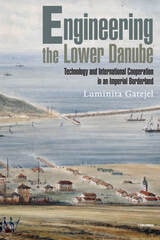
Engineering the Lower Danube
Technology and Territoriality in an Imperial Borderland, Late Eighteenth and Nineteenth CenturiesLuminita Gatejel
Central European University Press, 2023
The Lower Danube—the stretch of Europe’s second longest river between the Romanian-Serbian border and the confluence to the Black Sea—was effectively transformed during the late eighteenth and nineteenth centuries. In describing this lengthy undertaking, Luminita Gatejel proposes that remaking two key stretches—the Iron Gates and the delta—not only physically altered the river but also redefined it in a legal and political sense.
Since the late eighteenth century, military conflicts and peace treaties changed the nature of sovereignty over the area, as the expansionist tendencies of the Habsburg and British Empires encountered rival Ottoman and Russian imperial plans. The inconvenience that the river’s physical shape obstructed free navigation and the growth of commercial traffic, was an increasing concern to all parties. This book shows that alongside imperial aspirations, transnational actors like engineers, commissioners and entrepreneurs were the driving force behind the river regulation. In this highly original, deeply researched, and carefully crafted study, Gatejel explores the formation of international cooperation, the emergence of technical expertise and the emergence of engineering as a profession. This constellation turned the Lower Danube into a laboratory for experimenting with new forms of international cooperation, economic integration, and nature transformation.
Engineering the Metaverse
Enabling technologies, platforms and use casesPethuru Raj
The Institution of Engineering and Technology, 2025
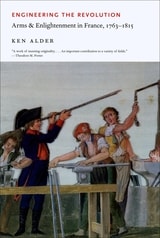
Engineering the Revolution
Arms and Enlightenment in France, 1763-1815Ken Alder
University of Chicago Press, 2010
Engineering the Revolution documents the forging of a new relationship between technology and politics in Revolutionary France, and the inauguration of a distinctively modern form of the “technological life.” Here, Ken Alder rewrites the history of the eighteenth century as the total history of one particular artifact—the gun—by offering a novel and historical account of how material artifacts emerge as the outcome of political struggle. By expanding the “political” to include conflict over material objects, this volume rethinks the nature of engineering rationality, the origins of mass production, the rise of meritocracy, and our interpretation of the Enlightenment and the French Revolution.
Essays on the History of Transportation and Technology
EMORY L. KEMP
West Virginia University Press, 2014
Emory Kemp is the founder and director of the Institute for the History of Technology and Industrial Archaeology at West Virginia University, where he also served as a chair and professor of civil engineering and a professor of history. This collection of essays encompasses over fifty years of his research in the field of the history of technology.
Within these twelve essays, Kemp describes and analyzes nineteenth century improvements in building materials such as iron, steel, and cement; roads and bridges, especially the evolution of the suspension bridge; canals and navigable rivers, including the Ohio River and its tributaries; and water supply systems. As one of the few practicing American engineers who also researches and writes as an academic, Kemp adds an important historical context to his work by focusing not only on the construction of a structure but also on the analytical science that heralds a structure’s design and development.
Essentials of STEM Librarianship
Alexander J. Carroll and Joshua Borycz; Foreword by Carol Tenopir
American Library Association, 2025
Amid overall falling enrollment figures for higher education, the growing success of STEM programs bucks the trend. Ensuring that these programs flourish has become a priority for administrators at the provost level and above. But this emphasis on STEM poses challenges for academic libraries, many of which have instead historically focused on the humanities and social sciences. This primer helps to fill that knowledge gap, demystifying the scientific teaching and research processes for LIS students and current academic librarians alike. Regardless of their background or level of experience, readers of this guide will
- gain an overview of the contemporary STEM teaching and research enterprise by learning about the roles and needs of STEM community members such as program administrators, tenure track principal investigators (PIs), non-tenure track teaching faculty, research staff, graduate students, and undergraduate students;
- become familiarized with the “research group,” the organizational structure through which these different personas come together to advance the university research enterprise;
- get pointers on building teaching and learning programs that enhance student success and designing research support services that integrate into STEM researchers' actual workflows;
- receive proven outreach strategies for engaging STEM communities;
- learn approaches for incorporating AI (artificial intelligence) and LLMs (large language models) into information literacy programs for scientists and engineers; and
- discover how library leaders can support both nascent and established STEM librarians to advance STEM education and research at their local institutions.
Latin* Students in Engineering
An Intentional Focus on a Growing PopulationLara Perez-Felkner
Rutgers University Press, 2024
Winner of the American Association of Hispanics in Higher Education Edited Volume Book of the Year Award
Winner of the 2026 Distinguished Contributions to Gender Equity in Educational Research Award from the American Educational Research Association
The growing population of engineering students who identify as Latin* are underrepresented in the field of engineering. Latin* refers to an individual of Latin American origin or descent, without restricting to a specific gender. The asterisk (*) includes related identity terms such as Latina/é/o/u/x.There is, however, a rising need to train U.S. students in engineering skills to meet the demands of our increasingly technological workforce. Structurally excluding Latin* students hinders their economic and educational opportunities in engineering. Latin* Students in Engineering examines the state of Latin* engineering education at present as well as considerations for policy and practice regarding engineering education aimed at enhancing opportunity and better serving Latin* students. The essays in this volume first consider, theoretically and empirically, the experiences of Latin* students in engineering education and then expand beyond the student level to focus on institutional and social structures that challenge Latin* students' success and retention. Finally, it illuminates emergent work and considers future research, policy, and practice.
Maintaining Effective Engineering Leadership
A new dependence on effective processRaymond Morrison
The Institution of Engineering and Technology, 2013
Nanovision
Engineering the FutureColin Milburn
Duke University Press, 2008
Milburn illuminates the practices of nanotechnology by examining an enormous range of cultural artifacts, including scientific research articles, engineering textbooks, laboratory images, popular science writings, novels, comic books, and blockbuster films. In so doing, he reveals connections between the technologies of visualization that have helped inaugurate nano research, such as the scanning tunneling microscope, and the prescient writings of Robert A. Heinlein, James Blish, and Theodore Sturgeon. He delves into fictive and scientific representations of “gray goo,” the nightmare scenario in which autonomous nanobots rise up in rebellion and wreak havoc on the world. He shows that nanoscience and “splatterpunk” novels share a violent aesthetic of disintegration: the biological body is breached and torn asunder only to be refabricated as an assemblage of self-organizing machines. Whether in high-tech laboratories or science fiction stories, nanovision deconstructs the human subject and galvanizes the invention of a posthuman future.

Pairing STEAM with Stories
46 Hands-On Activities for ChildrenElizabeth M. McChesney
American Library Association, 2020

Replaceable You
Engineering the Body in Postwar AmericaDavid Serlin
University of Chicago Press, 2004
Science and Engineering Careers in the United States
An Analysis of Markets and EmploymentEdited by Richard B. Freeman and Daniel L. Goroff
University of Chicago Press, 2009
Beginning in the early 2000s, there was an upsurge of national concern over the state of the science and engineering job market that sparked a plethora of studies, commission reports, and a presidential initiative, all stressing the importance of maintaining American competitiveness in these fields. Science and Engineering Careers in the United States is the first major academic study to probe the issues that underlie these concerns.
This volume provides new information on the economics of the postgraduate science and engineering job market, addressing such topics as the factors that determine the supply of PhDs, the career paths they follow after graduation, and the creation and use of knowledge as it is reflected by the amount of papers and patents produced. A distinguished team of contributors also explores the tensions between industry and academe in recruiting graduates, the influx of foreign-born doctorates, and the success of female doctorates. Science and Engineering Careers in the United States will raise new questions about stimulating innovation and growth in the American economy.

Skills Development for Engineers
Innovative model for advanced learning in the workplaceKevin Hoag
The Institution of Engineering and Technology, 2001

The Busy Librarians Guide To Information Literacy In
Jeanne Davidson
Assoc of College & Research Libraries, 2012
The Busy Librarian’s Guide to Information Literacy in Science and Engineering
Katherine O'Clair
Assoc of College & Research Libraries, 2012
The Engineer in America
A Historical Anthology from Technology and CultureEdited by Terry S. Reynolds
University of Chicago Press, 1991
Spanning two centuries and the various subdisciplines of the field, these essays demonstrate the paradoxical role engineers have played in building (although usually not controlling) the infrastructure on which America's prosperity is based. This collection of seventeen essays traces the rise of the engineering profession and its evolving contribution to the development of America's material and economic success. Topics addressed include:
*American engineering's birth from European traditions
*Impact of science on engineering practice
*Changing relationship between engineers and bureaucratic organizations
*Growth of engineering professional institutions
Thoughtfully organized and unique in its scope, this volume will be a welcome overview for both students and scholars of the history of technology.
These essays were originally published in the journal Technology and Culture.
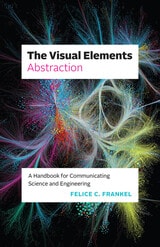
The Visual Elements—Abstraction
A Handbook for Communicating Science and EngineeringFelice C. Frankel
University of Chicago Press, 2026
For anyone interested in visual communication, a training guide for evaluating and developing visual representations for the big ideas in science and technology, essential skills for journal submissions, grant applications, and public understanding.
As a scientist, engineer, or other researcher, you may have written an abstract. In a paragraph, you explain the purpose of your research, your approach, the questions you have asked and answered, and your work’s impact. The abstract is a summary and an invitation—to read the paper, attend your talk, and join you in your thinking. You may even have been asked to create a visual abstract—a single image—to achieve the same goals. As a designer or public information officer, you may have had a similar brief—to explain a compelling subject with a visual for a journal cover or press release. And yet, this important skill—devising visual metaphors—isn’t typically taught. With her decades of experience creating compelling images and instructing MIT researchers, award-winning photographer and science communicator Felice C. Frankel helps readers evaluate and create their own visual abstractions.
Like in her other books in the Visual Elements series, on photography and design, Frankel asks readers to evaluate different choices—for example, in conveying the uncertainty of a hurricane’s path or the organization of the Standard Model for elementary particles. But in Abstraction, she offers more. With examples from science, engineering, and beyond, the book helps readers consider and evaluate the visuals around them and determine how they work and when they fail: Is this representation the best for communication? Will these abstractions encourage others to engage with my work? Will they mislead? Will they help my ideas evolve? Frankel invites researchers to think about the many meanings behind their images—and, in turn, to think more deeply about their research.
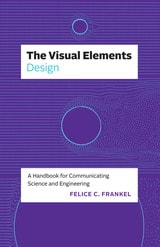
The Visual Elements—Design
A Handbook for Communicating Science and EngineeringFelice C. Frankel
University of Chicago Press, 2024
In this short handbook, award-winning science communicator Felice C. Frankel offers a quick guide for scientists and engineers who want to share—and better understand—their research by designing compelling graphics for journal submissions, grant applications, presentations, and posters. Like all the books in the Visual Elements series, this handbook is also a training tool for researchers. Distilling her celebrated books and courses to the essentials, Frankel shows scientists and engineers, from students to primary investigators, the importance of thinking visually. This crucial volume in the Visual Elements series offers a wealth of engaging design examples. Case studies and advice from designers at prestigious publications and researchers’ own before-and-after examples show how even the smallest changes—to color, type, composition, and layering—can greatly improve communication. Ideal for researchers who want a foothold for presenting and preparing their work for everything from conferences to publications, the book explains the steps for creating a concise and communicative graphic to highlight the most important aspects of research—and to clarify researchers’ own thinking. The resulting book is an essential element of any scientist’s, engineer’s, or designer’s library.
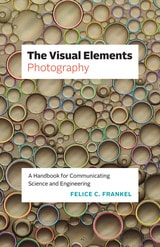
The Visual Elements—Photography
A Handbook for Communicating Science and EngineeringFelice C. Frankel
University of Chicago Press, 2023
Award-winning photographer Felice C. Frankel, whose work has graced the covers of Science, Nature, and Scientific American, among other publications, offers a quick guide for scientists and engineers who want to communicate—and better understand—their research by creating compelling photographs. Like all the books in the Visual Elements series, this short guide uses engaging examples to train researchers to learn visual communication. Distilling her celebrated books and courses to the essentials, Frankel shows scientists and engineers the importance of thinking visually. When she creates stunning images of scientific phenomena, she is not only interested in helping researchers to convey understanding to others in their research community or to gain media attention, but also in making these experts themselves “look longer” to understand more fully. Ideal for researchers who want a foothold for presenting and preparing their work for conferences, journal publications, and funding agencies, the book explains four tools that all readers can use—a phone, a camera, a scanner, and a microscope—and then offers important advice on composition and image manipulation ethics. The Visual Elements—Photography is an essential element in any scientist’s, engineer’s, or photographer’s library.
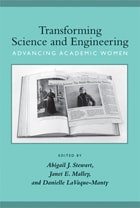
Transforming Science and Engineering
Advancing Academic WomenAbigail J. Stewart, Janet E. Malley, and Danielle LaVaque-Manty, Editors
University of Michigan Press, 2010
"If you have thrown up your hands in despair after trying to retain women science and engineering in the academy, read this book. It offers detailed descriptions of a wide array of tried-and-true programs that have been tested out by the NSF ADVANCE program."
---Joan C. Williams, 1066 Foundation Chair & Distinguished Professor of Law Director, Center for WorkLife Law University of California
"Solid and practical, this volume details the first years of NSF funded institutional change to remake gender dynamics inside U.S. science. What works? What doesn't? And why?"
---Londa Schiebinger, John L. Hinds Professor of History of Science and Barbara D. Finberg Director, Michelle R. Clayman Institute for Gender Research at Stanford University, and author of Has Feminism Changed Science?
"This book's time has come. Transforming Science and Engineering is important, and lots of people can learn from what has happened in the ADVANCE universities."
---Lotte Bailyn, Professor of Management, Behavioral and Policy Sciences Department, Sloan School of Management, MIT; author of Breaking the Mold: Redesigning Work for Productive and Satisfying Lives; and coauthor of Beyond Work-Family Balance: Advancing Gender Equity and Workplace Performance
"This collection profiles 16 NSF ADVANCE grant successes, sandwiched between an interview with Dr. Alice Hogan and Dr. Lee Harle's summary of cost-effective practices from ADVANCE programs, giving so many 'biggest bang for the buck' examples in so few pages that it will easily justify both the cost of the book and the reading time. These accounts do not continue the too-common vague referrals to 'unhealthy environment' or 'chilly climate,' but rather expound the situations before and after the interventions, something necessary in order to transplant the programs, or even to use the programs for idea generation. Transforming Science and Engineering is a model of excellence, and will be extremely useful for those women, men, faculty, or administrators wanting to help their universities move into the 21st century and attract to their campuses qualified women and men who want opportunities to attain their full potentials."
---Donna J. Nelson, Associate Professor of Chemistry, University of Oklahoma
In 2001, the National Science Foundation's ADVANCE Institutional Transformation program began awarding five-year grants to colleges and universities to address a common problem: how to improve the work environment for women faculty in science and engineering. Drawing on the expertise of scientists, engineers, social scientists, specialists in organizational behavior, and university administrators, this collection is the first to describe the variety of innovative efforts academic institutions around the country have undertaken.
Focusing on a wide range of topics, from how to foster women's academic success in small teaching institutions, to how to use interactive theater to promote faculty reflection about departmental culture, to how a particular department created and maintained a healthy climate for women's scientific success, the contributors discuss both the theoretical and empirical aspects of the initiatives, with emphasis on the practical issues involved in creating these approaches. The resulting evidence shows that these initiatives have the desired effects. The cases represented in this collection depict the many issues women faculty in science and engineering face, and the solutions that are presented can be widely accepted at academic institutions around the United States. The essays in Transforming Science and Engineering illustrate that creating work environments that sustain and advance women scientists and engineers benefits women, men, and underrepresented minorities.
Abigail J. Stewart is Sandra Schwartz Tangri Distinguished University Professor of Psychology and Women's Studies at the University of Michigan.
Janet E. Malley is a psychologist and Associate Director of the Institute for Research on Women and Gender at the University of Michigan.
Danielle LaVaque-Manty, former Research Associate at the Institute for Research on Women and Gender at the University of Michigan, teaches composition at U-M's Sweetland Writing Center.
Cover photo: Joanne Leonard
Wanting Children
Family-Planning Policies and the Engineering of America’s PopulationLeonard M. Lopoo
University of Chicago Press, 2026
On the eugenic origins of US reproductive laws—and the surprising policy changes needed to remedy it.
The US government spends hundreds of millions of dollars every year to promote and facilitate contraception. Whereas other wealthy countries support broader fertility interventions under the banner of “family planning,” the United States remains committed only to helping Americans—and especially poorer Americans—plan not to have a family.
In an unflinching treatise on one of the century’s defining social issues, Leonard M. Lopoo shows how the US’s asymmetric reproductive approach is a vestige of the country’s earlier sins: America’s first reproductive policies were authored by some of the twentieth century’s most prominent eugenicists, a group whose primary goal was birth prevention among lower economic classes and racial minorities. These origins have consequently created a contradictory position for the country today, in which contraception for the lowest-income Americans is subsidized, while many upper-class Americans employ technologies to have children with preferable traits.
Lopoo recasts this personal and politicized topic in elegant, stark terms. If the United States is to legislate reproduction, the only defensible approach is equity: helping people who want children to have children. Wanting Children posits a new and elevating criterion for how we think about fertility in the twenty-first century.
Women and Ideas in Engineering
Twelve Stories from IllinoisLaura D. Hahn, Angela S. Wolters
University of Illinois Press, 2018