Results by title
21 books match the query 'Engineers'

Buckminster Fuller
Anthology for the MillenniumEdited by Thomas T. K. Zung
Southern Illinois University Press, 2014
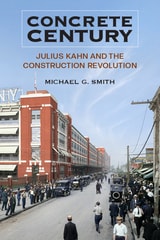
Concrete Century
Julius Kahn and the Construction RevolutionMichael G. Smith
University of Michigan Press, 2024
Drawing upon Kahn’s personal correspondence, architectural drawings, company records, and contemporary news and journal articles, Michael G. Smith reveals how this man—whose family had immigrated to the US to escape antisemitism in Germany—played an important role in the rise of concrete. Concrete not only turned the tide against widespread destruction of buildings by fire, it also paved the way for our modern economy. Concrete Century will delight readers intrigued by architecture and construction technology alike with the true origin story of modern concrete buildings.

Continuing Professional Development
A practical approachJohn Lorriman
The Institution of Engineering and Technology, 1997
Effective Team Leadership for Engineers
Pat Wellington
The Institution of Engineering and Technology, 2009
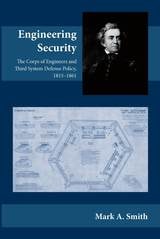
Engineering Security
The Corps of Engineers and Third System Defense Policy, 1815–1861Mark A. Smith
University of Alabama Press, 2009
Thorough examination of the antebellum fortifications that formed the backbone of U.S. military defense during the National Period
The system of coastal defenses built by the federal government after the War of 1812 was more than a series of forts standing guard over a watery frontier. It was an integrated and comprehensive plan of national defense developed by the US Army Corps of Engineers, and it represented the nation’s first peacetime defense policy.
Known as the Third System since it replaced two earlier attempts, it included coastal fortifications but also denoted the values of the society that created it. The governing defense policy was one that combined permanent fortifications to defend seaports, a national militia system, and a small regular army. The Third System remained the defense paradigm in the United States from 1816 to 1861, when the onset of the Civil War changed the standard. In addition to providing the country with military security, the system also provided the context for the ongoing discussion in Congress over national defense through annual congressional debates on military funding.
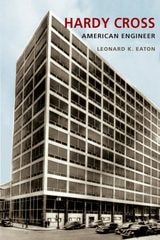
Hardy Cross
American EngineerLeonard K. Eaton
University of Illinois Press, 2006

Intellectual Property Rights for Engineers
Vivien Irish
The Institution of Engineering and Technology, 2005
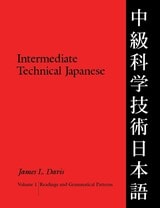
Intermediate Technical Japanese, Volume 1
Readings and Grammatical PatternsJames L. Davis
University of Wisconsin Press, 2002
Learn how to read and translate technical manuals, research publications, and reference works. This two-volume set is designed to help the intermediate-level learner of Japanese build a technical vocabulary, reinforce understanding of frequently used grammatical patterns, improve reading comprehension, and practice translating technical passages. The glossary in volume 2 clarifies words and phrases that often puzzle beginning readers.
The sample readings on technical topics are drawn from a broad range of specialties, from mathematics and computer science to electronics and polymer science. The initial grammar lesson and the first nine field-specific lessons constitute the common core to be used by all instructors or students. Topics of interest from the remaining thirty-one field-specific lessons may be selected to produce a customized course of study. Intermediate Technical Japanese is designed to fulfill a typical two-semester sequence.
Volume 1 contains:
o information about 600 key kanji
o explanations of 100 important grammatical patterns
o more than 700 scientific or technical essays
o an index of the grammatical patterns.
Volume 2 contains:
o a complete glossary
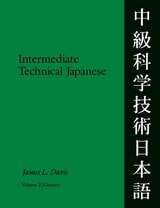
Intermediate Technical Japanese, Volume 2
GlossaryJames L. Davis
University of Wisconsin Press, 2002
Learn how to read and translate technical manuals, research publications, and reference works. This two-volume set is designed to help the intermediate-level learner of Japanese build a technical vocabulary, reinforce understanding of frequently used grammatical patterns, improve reading comprehension, and practice translating technical passages. The glossary in volume 2 clarifies words and phrases that often puzzle beginning readers.
The sample readings on technical topics are drawn from a broad range of specialties, from mathematics and computer science to electronics and polymer science. The initial grammar lesson and the first nine field-specific lessons constitute the common core to be used by all instructors or students. Topics of interest from the remaining thirty-one field-specific lessons may be selected to produce a customized course of study. Intermediate Technical Japanese is designed to fulfill a typical two-semester sequence.
Volume 1 contains:
o information about 600 key kanji
o explanations of 100 important grammatical patterns
o more than 700 scientific or technical essays
o an index of the grammatical patterns.
Volume 2 contains:
o a complete glossary
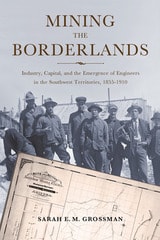
Mining the Borderlands
Industry, Capital, and the Emergence of Engineers in the Southwest Territories, 1855-1910Sarah E. M. Grossman
University of Nevada Press, 2018
At the dawn of the twentieth century, the US-Mexico border was home to some of the largest and most technologically advanced industrial copper mines. This despite being geographically, culturally, and financially far-removed from traditional urban centers of power. Mining the Borderlands argues that this was only possible because of the emergence of mining engineers—a distinct technocratic class of professionals who connected capital, labor, and expertise.
Mining engineers moved easily between remote mining camps and the upscale parlors of east coast investors. Working as labor managers and technical experts, they were involved in the daily negotiations, which brought private US capital to the southwestern border. The success of the massive capital-intensive mining ventures in the region depended on their ability to construct different networks, serving as intermediaries to groups that rarely coincided.
Grossman argues that this didn’t just lead to bigger and more efficient mines, but served as part of the ongoing project of American territorial and economic expansion. By integrating the history of technical expertise into the history of the transnational mining industry, this in-depth look at borderlands mining explains how American economic hegemony was established in a border region peripheral to the federal governments of both Washington, D.C. and Mexico City.
Science and Engineering Careers in the United States
An Analysis of Markets and EmploymentEdited by Richard B. Freeman and Daniel L. Goroff
University of Chicago Press, 2009
Beginning in the early 2000s, there was an upsurge of national concern over the state of the science and engineering job market that sparked a plethora of studies, commission reports, and a presidential initiative, all stressing the importance of maintaining American competitiveness in these fields. Science and Engineering Careers in the United States is the first major academic study to probe the issues that underlie these concerns.
This volume provides new information on the economics of the postgraduate science and engineering job market, addressing such topics as the factors that determine the supply of PhDs, the career paths they follow after graduation, and the creation and use of knowledge as it is reflected by the amount of papers and patents produced. A distinguished team of contributors also explores the tensions between industry and academe in recruiting graduates, the influx of foreign-born doctorates, and the success of female doctorates. Science and Engineering Careers in the United States will raise new questions about stimulating innovation and growth in the American economy.

Secret Origins of Modern Microeconomics
Dupuit and the EngineersRobert B. Ekelund Jr. and Robert F. Hébert
University of Chicago Press, 1999
"A very fine piece of work that provides material I have never seen before, is well written, and has undoubtable merits."—William Baumol, C.V. Starr Center for Applied Economics, New York University
"By bringing to the forefront the achievements of French engineer Jules Dupuit, this work changes our view of the history of microeconomics. Secret Origin of Modern Microeconomics is a commentary on our discipline's mythology of origins: it reminds us that, in the construction and maintenance of canonical authority, the recoginition of founding fathers requires simultaneous, often subtle, gestures of exclusion."—Philippe Fontaine, école Normale Supèrieure de Cachan
Skills Development for Engineers
Innovative model for advanced learning in the workplaceKevin Hoag
The Institution of Engineering and Technology, 2001
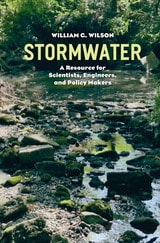
Stormwater
A Resource for Scientists, Engineers, and Policy MakersWilliam G. Wilson
University of Chicago Press, 2016
As Wilson shows, rivers of runoff flowing from manmade surfaces—such as roads, sidewalks, and industrial sites—carry a glut of sediments and pollutants. Unlike soil, pavement does not filter or biodegrade these contaminants. Oil, pesticides, road salts, metals, automobile chemicals, and bacteria all pour into stormwater systems. Often this runoff discharges directly into waterways, uncontrolled and untreated, damaging valuable ecosystems. Detailing the harm that can be caused by this urban runoff, Wilson also outlines methods of control, from restored watersheds to green roofs and rain gardens, and, in so doing, gives hope in the face of an omnipresent threat. Illustrated throughout, Stormwater will be an essential resource for urban planners and scientists, policy makers, citizen activists, and environmental educators in the stormy decades to come.
Technoscientific Imaginaries
Conversations, Profiles, and MemoirsEdited by George E. Marcus
University of Chicago Press, 1995
In these penetrating essays, twenty-four distinguished contributors from a broad range of fields present the voices of the scientists themselves—through interviews, conversations, and memoirs. We hear from Lithuanian physicists who discuss science after Communism and their own fantasies about what Western science is; a Japanese-American woman struggling with her ambivalence over designing nuclear weapons; political activists in India who examine relations among science, environmental politics, and government ideology in the aftermath of the Bhopal disaster; and many others, including biologists, physicians, corporate researchers, and scientists working with virtual reality and other cutting-edge technologies.
The contributors to this volume are Mario Biagioli, Maria E. Carson, Gary Lee Downey, Joseph Dumit, Michael M. J. Fischer, Mary-Jo DelVecchio Good, Hugh Gusterson, Diana L. L. Hill, James Holston, Herbert C. Hoover, Jr., Gudrun Klein, Leszek Koczanowicz, Irene Kuter, Kim Laughlin, Rita Linggood, George E. Marcus, Kathryn Milun, Livia Polanyi, Christopher Pound, Simon Powell, Paul Rabinow, Kathleen Stewart, Allucquere Rosanne Stone, and Sharon Traweek.
The Accidental Network
How a Small Company Sparked a Global Broadband TransformationRouzbeh Yassini-Fard
West Virginia University Press, 2025
The Accidental Network shares the untold story of the invention of the cable modem by the small, struggling tech company LANcity in the early 1990s, illustrating how Yassini-Fard overcame a cascade of technical challenges, investment community naysayers, and unnerving business obstacles to create the cable modem technology that has changed the way billions of individuals across the globe now manage their daily lives and commerce. The cable modem delivered broadband, with speeds ranging from 10 megabits per second (Mbps) to 10 gigabits per second (Gbps)—a big leap from the dial-up speeds of 56 kilobits per second (Kbps). This platform, along with the adoption of the DOCSIS (Data Over Cable Service Interface Specification) standard, engendered the modern revolution in broadband Internet access. Shunned by venture capitalists and surviving on a shoestring budget, Yassini-Fard and his colleagues were willing to bet it all (including the deed for Yassini-Fard’s home) on the creation of the cable modem and the pursuit of global adoption.
The Accidental Network is both a valuable history of technology innovation and an engrossing account of business conducted at high speed. The book details Yassini-Fard’s journey from electrical engineer to entrepreneur in the race to secure technology partners, create a wholly new marketplace, and convince cable industry executives that a bold business awaited in transmitting data to households at a time when skepticism about the reach of personal computing was the norm.
Written from the lens of a devoted idealist and WVU alum known as “the father of the cable modem,” this book reveals how a perfect storm of forces—the rise of cable television, the onset of the personal computing era, a growing awareness of the Internet for information and commerce, and the development of the cable modem—converged to usher in the age of broadband access.
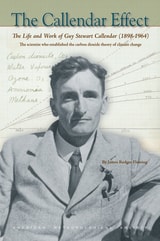
The Callendar Effect
The Life and Work of Guy Stewart Callendar (1898-1964)James Rodger Fleming
American Meteorological Society, 2007
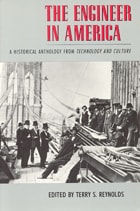
The Engineer in America
A Historical Anthology from Technology and CultureEdited by Terry S. Reynolds
University of Chicago Press, 1991
Spanning two centuries and the various subdisciplines of the field, these essays demonstrate the paradoxical role engineers have played in building (although usually not controlling) the infrastructure on which America's prosperity is based. This collection of seventeen essays traces the rise of the engineering profession and its evolving contribution to the development of America's material and economic success. Topics addressed include:
*American engineering's birth from European traditions
*Impact of science on engineering practice
*Changing relationship between engineers and bureaucratic organizations
*Growth of engineering professional institutions
Thoughtfully organized and unique in its scope, this volume will be a welcome overview for both students and scholars of the history of technology.
These essays were originally published in the journal Technology and Culture.

Two Years Below the Horn
Operation Tabarin, Field Science, and Antarctic SovereigntyAndrew Taylor
University of Manitoba Press, 2017
U.S. Engineering in a Global Economy
Edited by Richard B. Freeman and Hal Salzman
University of Chicago Press, 2018
The volume provides insights on engineering education, practice, and careers that can inform educational institutions, funding agencies, and policy makers about the challenges facing the United States in developing its engineering workforce in the global economy.
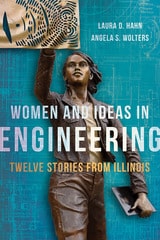
Women and Ideas in Engineering
Twelve Stories from IllinoisLaura D. Hahn, Angela S. Wolters
University of Illinois Press, 2018