Results by title
15 books match the query 'Environmental & Land Art'
Abiayalan Pluriverses
Bridging Indigenous Studies and Hispanic StudiesGloria E. Chacon
Amherst College Press, 2024
Between Two Pines
Ushering in a Sustainable Future Through an Art-Science PracticeEdgar Cardenas
Michigan Publishing Services, 2019
“I am truly thankful that Dr. Edgar Cardenas’s thoughtful research is now available in this beautiful book. I have recommended his work to more people, both in my personal and professional spheres of my life, than I can count, and I’m glad to have this provocative and elegant publication to put into people’s hands. Cardenas shows us how each of us really can make a difference.”
“Between Two Pines anticipates and leads the discussion of scholarship around questions of land and landscape. This work brilliantly and ethically refocuses our vision, from distanced scrutiny to connection and proximity, rooted in daily care-taking and ecological efforts. Thoughtfully imaged, the photographs offer an aesthetic that is based in balanced, enduring reflection, rather than on the grand view. These beautiful images reveal discoveries that bridge the arts, ecology, and sociology, and will serve to reconnect every reader with the world in their backyard and beyond.”
“Drawing from a long photographic tradition of examining the relationship between humans and their environment, Edgar Cardenas has found a voice that is as compassionate as it is poignant. Yet he is not content for his photographs to be mere observations, recording the relationship. Between Two Pines is a call to action – a platform by which we might imagine together, with all of the tools in our tool kit, a sustainable future.”
Deep Horizons
A Multisensory Archive of Ecological Affects and ProspectsBrianne Cohen
Amherst College Press, 2023
The specifics of ecological destruction often take a cruel turn, affecting those who can least resist its impacts and are least responsible for it. Deep Horizons: A Multisensory Archive of Ecological Affects and Prospects gathers contributions from multiple disciplines to investigate intersectional questions of how the changing planet affects specific peoples, communities, wildlife species, and ecosystems in varying and inequitable ways. A multisensory, artistic-archival supplement to the Mellon Sawyer Environmental Futures Project, the volume enriches current conversations bridging the environmental humanities and affect theory with insights from Native and Indigenous philosophies as well as by highlighting artistic practices that make legible the long-term durational effects of ecological catastrophe.
Poems, nonfiction essays, sound-texts, photographs, and other artworks invite readers and viewers to consider the less visible losses and prospects of environmental transformation. Gathering contributions from multiple disciplines, this multimodal, multisensorial volume pushes the boundaries of scholarship with an experimental, born-digital format that offers a set of responses to collective traumas such as climate change, environmental destruction, and settler colonialism. The artists and authors honor the specificity of real historical and material injustices while also reflecting the eclectic nature of such assorted feelings, working through them in creative and border-crossing modes.
With contributions from Robert Bailey, Nina Elder, Erin Espelie, Hock E Aye Vi Edgar Heap of Birds, Maya Livio, Erika Osborne, Craig Santos Perez, Kim Tallbear, Julianne Warren, and Kyle Powys White.
"The compelling juxtaposition of poetry, music, video, audio, photography, printmaking, and traditional essays is among Deep Horizons' considerable strengths. I don’t know of any other project quite like this one. The subject is timely—indeed, urgent—and the innovative approach to archiving environmental change will interest scholars and artists in a range of disciplines and resonate with a wide audience." —Jennifer Ladino, University of Idaho
Dismantling the Nation
Contemporary Art in ChileEdited by Florencia San Martín, Carla Macchiavello Cornejo, and Paula Solimano
Amherst College Press, 2023

From Hedge to Living Bridge
Re-Imagining the Kirstenbosch National Botanical GardenMelanie Boehi
University of Michigan Press, 2027
Offering a micro-history of the Kirstenbosch National Botanical Garden in Cape Town, From Hedge to Living Bridge situates the botanical garden in the context of colonial botany and local and global struggles to decolonize space and place. At the time of its establishment in 1913, the botanical garden was imagined as a vehicle to promote white South African nationalism. During the apartheid era, the state deployed the botanical garden in international image campaigns to counter international isolation. In the post-apartheid period, the botanical garden attempted to transform its colonial and apartheid displays to accommodate the new democratic nation.
Melanie Boehi reveals that while the botanical garden was designed as a white space, Black people always claimed belonging to it, as it was built on land shaped by Indigenous presence, slavery, and apartheid forced removals.
Drawing from multispecies ethnography, Boehi expands the conventional concept of the archive to include the landscape and the garden’s plants. While the botanical garden was imagined as a colonial tool of separation, it also has the potential to function as a living bridge between people who were segregated by colonialism and apartheid, as well as between humans and nonhuman nature.
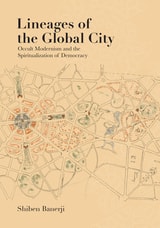
Lineages of the Global City
Occult Modernism and the Spiritualization of DemocracyShiben Banerji
University of Texas Press, 2025
2026 PROSE Award in Architecture & Urban Planning, Association of American Publishers (AAP)
2026 Book Prize Shortlist, Modernist Studies Association (MSA)
The forgotten history of the occult foundations of the early twentieth-century global city.
War, revolution, genocide, rebellion, slump. The economic and political turmoil of the early twentieth century seemed destined to rip asunder the ties that bound colonizers and the colonized to one another. The upheaval represented an opportunity, and not just to nationalists who imagined new homelands or to socialists who dreamed of international brotherhood. For modernists in the orbit of various occultisms, the crisis of empire also represented an opportunity to reveal humanity’s fundamental unity and common fate.
Lineages of the Global City recounts a continuous, if also contentious, transnational exchange among modernists and occultists across the Americas, Europe, South Asia, and Australia between 1905 and 1949. At stake were the feelings and affect of a new global subject who would perceive themselves as belonging to humanity as a unified whole, and the urban environment that would foster their subjectivity. The interventions in this debate, which drew in the period’s most renowned modernists, took the form of a succession of plans for cities, suburbs, and communes, as well as experiments in building, drawing, printmaking, filmmaking, and writing. Weaving together postcolonial, feminist, and Marxist insight on subject formation, Shiben Banerji advances a new way of understanding modernist urban space as the design of subjective effects.
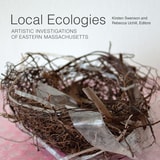
Local Ecologies
Artistic Investigations of Eastern MassachusettsEdited by Kirsten Swenson and Rebecca Uchill
Amherst College Press, 2026
Local Ecologies: Artistic Investigations of Eastern Massachusetts is an innovative multimedia exploration of the entangled natural and cultural ecologies of Eastern Massachusetts. The book’s rich archive of essays, interviews, and artistic projects reveals the region’s layered Indigenous, colonial, and industrial histories, showing how art can deepen understanding of place. The volume foregrounds multiple ways of knowing and making place—through observation, research, memory, and collective action—offering the reader models for ongoing engagement with the region and beyond.
Developed through a multiyear collaboration among artists, scholars, activists, and community stakeholders, this volume takes its name from an initiative hosted by three University of Massachusetts campuses (Boston, Dartmouth, and Lowell) in 2019 and 2020. Through essays, videos, sound artworks, artist books, and other intermedia offerings, the book’s contributors reflect on sites such as Walden Pond, Deer Island in Boston Harbor, New Bedford Harbor, and the Merrimack River, tracing histories of use and interpretation of place, and exploring contemporary responses to those legacies through creative acts of reclamation. At a moment when the infrastructures of cultural memory are increasingly under threat, Local Ecologies insists on art as a vital mode of collective reckoning and possibility.
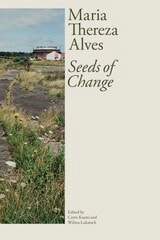
Maria Thereza Alves
Seeds of Changeedited by Carin Kuoni and Wilma Lukatsch
Amherst College Press, 2022
The project examines the influx and significance of imported plants, materializing at port cities across several continents: Marseille, Reposaari, Liverpool, Exeter and Topsham, Dunkerque, Bristol, Antwerp, and most recently New York, where it was awarded the Jane Lombard Prize for Art and Social Justice by the Vera List Center for Art and Politics at The New School. In each city, Seeds of Change has revealed the entangled relationship between “alien” plant species and the colonial maritime trade of goods and enslaved peoples, contrasting their seemingly innocuous beauty with the violent history associated with their arrival. By focusing on ballast flora, Alves invites us to de-border postcolonial historical narratives and consider a “borderless history.”
The first monograph of Alves’s historic project, Seeds of Change is edited by Carin Kuoni and Wilma Lukatsch and features essays by the artist as well as Katayoun Chamany, Seth Denizen, Jean Fisher, Yrjö Haila, Richard William Hill, Heli M. Jutila, J. Kēhaulani Kauanui, Lara Khaldi, Tomaž Mastnak, Marisa Prefer, and Radhika Subramaniam.
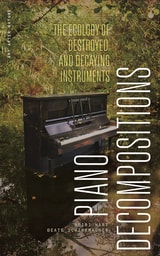
Piano Decompositions
The Ecology of Destroyed and Decaying InstrumentsHeidi Hart
University of Minnesota Press, 2026
Examining musical instrument destruction through an ecological and intermedial lens
Musical instruments are typically seen as objects both used and maintained with ritualistic care. But what happens when they’re tossed from homes in mudslides, burned during ecstatic parties, or waterlogged by pop stars in viral videos—and how do these elemental interactions transform the way we see and play instruments? Piano Decompositions asks what happens when we let go of controlling musical instruments. What kind of meanings start to sound when instruments are moved out of the protected cultural space and engage with their surrounding elements?
Heidi Hart and Beate Schirrmacher trace the history of destroyed and decaying pianos, both sorting them within the realm of artistic violence against instruments and following their return journeys into water, sand, and soil. They parse the artistic vision of Annea Lockwood, whose iconic burning, drowning, and decaying Piano Transplants presented a novel means of drawing attention to the increasing threats of climate change in the 1960s and ’70s. Turning to instruments made from found materials and others played collaboratively with wind and water, they demonstrate how human sound making is entangled in the more-than-human world.
Showing how the piano can transform conversations around the Anthropocene and environmental destruction, Hart and Schirrmacher find the instrument to be a potent creative and ecological force, a medium to connect with environments in an explorative, attentive way. Piano Decompositions unearths new ways to relate our concepts of curiosity, pleasure, and music to the natural world.
Retail e-book files for this title are screen-reader friendly with images accompanied by short alt text and/or extended descriptions.
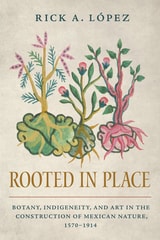
Rooted in Place
Botany, Indigeneity, and Art in the Construction of Mexican Nature, 1570–1914Rick A. López
University of Arizona Press, 2025
Prize for Best Book in Environmental Studies, Latin American Studies Association
Honorable mention for Best Book Prize in Visual Culture, Latin American Studies Association
Honorable mention for Best Book on Mexico, Latin American Studies Association
Since the first moment of conquest, colonizers and the colonized alike in Mexico confronted questions about what it meant to be from this place, what natural resources it offered, and who had the right to control those resources and on what basis.
Focusing on the ways people, environment, and policies have been affected by political boundaries, historian Rick A. López explores the historical connections between political identities and the natural world. López analyzes how scientific intellectuals laid claim to nature within Mexico, first on behalf of the Spanish Empire and then in the name of the republic, during three transformative moments: the Hernández expedition of the late sixteenth century; the Royal Botanical Expedition of the late eighteenth century; and the heyday of scientific societies such as the Sociedad Mexicana de Historia Natural of the late nineteenth century.
This work traces how scientific intellectuals studied and debated what it meant to know and claim the flora that sprang from Mexican soil—ranging from individual plants to forests and vegetated landscapes—and the importance they placed on indigeneity. It also points to the short- and long-term consequences of these efforts. López draws on archival and published sources produced from the sixteenth century through the start of the twentieth century and gives special attention to the use of visual images such as scientific illustrations and landscape art. López employs the term “visualization” in recognition of the degree to which officials, botanists, and draftsmen produced imagery and also how they and others viewed nature.
Rooted in Place reveals how scientific endeavors were not just about cataloging flora but were deeply intertwined with the construction of identity and the political landscape at three pivotal moments in Mexican history.
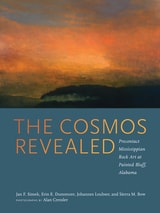
The Cosmos Revealed
Precontact Mississippian Rock Art at Painted Bluff, AlabamaBy Jan F. Simek, Erin E. Dunsmore, Johannes Loubser, and Sierra M. Bow
University of Alabama Press, 2021
The definitive rock art book on Painted Bluff, Alabama and the visual language of a Native American cosmos.
Boasting more than 130 paintings and engravings, Painted Bluff is perhaps the most elaborate prehistoric pictograph site east of the Mississippi River. Positioned at several levels on a dramatic sandstone cliff along the Tennessee River in northern Alabama, the spectacular paintings and engravings depict mythical creatures, dancing humans, and mystical portals. The Cosmos Revealed: Precontact Mississippian Rock Art at Painted Bluff, Alabama is the first complete documentation of one of the most important archaeological sites in eastern North America. Through art, the site materializes a model or “cosmogram” of the Mississippian Native American view of the universe, offering connections between the visible and invisible worlds for Native spiritual leaders and other visitors.
Discovered by Euro-Americans in the early 1800s, the site became known as “Painted Bluff” because of its pictographs, but inexplicably it has only recently been subjected to the intensive archaeological study it deserves. Under the auspices of the Tennessee Valley Authority (TVA), the authors of this volume have documented and assessed the site since 2005, and efforts have been made to reverse some of the vandalism that has occurred over many decades and to stabilize natural degradation of the cliff and its artwork.
Including more than one hundred remarkable prehistoric paintings on the cliff face that have been recorded, mapped, and photographed, this book synthesizes the research done on Painted Bluff to date and documents the entire site. Richly illustrated chapters cover the historical background, geology and archaeology, documentation methods, types of rock art, stratigraphy, paint recipes, TVA management, graffiti removal, and a summary that broadly synthesizes the meaning, timeframe, artistry, organization, conceptual boundaries, and the cosmos revealed. This groundbreaking study features 113 color photographs and a complete catalog of the pictographs and petroglyphs at the site.
The Green Bloc
Neo-avant-garde Art and Ecology under SocialismMaja Fowkes
Central European University Press, 2015

The Sun Tunnels Encyclo
Exploring Nancy Holt's Earthwork through Perception and SiteHikmet Sidney Loe
University of Utah Press, 2027
The Sun Tunnels Encyclo: Exploring Nancy Holt’s Earthwork through Perception and Site affords new information on the artist’s iconic work of land art. American artist Nancy Holt (1938-2014) extended her practice into the land, employing light, vision, and perception through photography, film, installations, and poetics. By creating her expansive earthwork Sun Tunnels (1973-76), Holt became a leader within the land art movement. Through her eponymous essay (1977) and film (1978), Holt presents the work through interdisciplinary topics: scientific (astronomical, mathematical, geologic, architectural) and regional (historical, cultural). Land use (Indigenous peoples, migration, military, industrial) joins poetry and philosophy to extend the work’s site-specificity. Through these myriad subjects, The Sun Tunnels Encyclo explores Holt’s pronouncement: “the center of the work becomes the center of the world.”
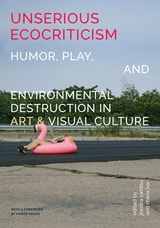
Unserious Ecocriticism
Humor, Play & Environmental Destruction in Art & Visual CultureEdited by Jessica Landau and Maria Lux
Amherst College Press, 2026
Climate change, biodiversity loss, and environmental injustice are complex, messy, and gravely important issues. In addressing these concerns, traditional ecocriticism understandably has taken itself very seriously. Unserious Ecocriticism, by contrast, highlights alternative responses to the challenges of environmental collapse and catastrophe. By theorizing an unserious ecocriticism, contributors to this volume validate and empower alternatives to mainstream environmentalism, scholarship, and artmaking. The essays, artworks, and non-traditional scholarly formats of this edited collection demonstrate that the creative tools available to artists and those who study them are particularly well positioned to inventively disrupt normative modes of ecocritical presentation and environmentalist thought.
Rather than approach environmental crises through tragic and dire warnings, contributors take seriously the unexpected or easily dismissed, play with format and form, embrace the bodily and abject, take pleasure in their subjects of study, have fun, and crack jokes. In Unserious Ecocriticism, humor, playfulness, parody, and irreverence become tools to challenge expectations, cope with complicated problems, and imagine new futures.
Edited by Jessica Landau and Maria Lux, with a foreword by Aaron Sachs and contributions from Allie ES Wist, Deke Weaver, Kathleen McDermott, Annie Ronan, Kimiko Matsumura, Ina Linge, Paula Kupfer, Craig Carey, Anna Ialeggio, Topher Lineberry, Stentor Danielson, Patrick Gonder, Matthew Teti, Nicole Seymour, with Emily Eliza Scott, Rob Gioielli, and Jenny Price, Phaan Howng, and Jennifer Schell.

Walking in Art Education
Ecopedagogical and A/r/tographical Encounters.Edited by Nicole Rallis, Ken Morimoto, Michele Sorensen, Valerie Triggs, and Rita Irwin
Intellect Books, 2024
In Walking in Art Education, authors explore walking and a/r/tography in their local contexts. As a result, the book finds that kinship and relationality are significant themes that permeate across a/r/tographic practices focused on ecopedagogy and learning with the land. These walking practices serve as ecopedagogical moments that attune us to human-land and more-than-human relationships, while also moving us past Western-centric understandings of land and place. More than this, the book situates this work in a/r/tographic practices taking up walking as one method for engagement.